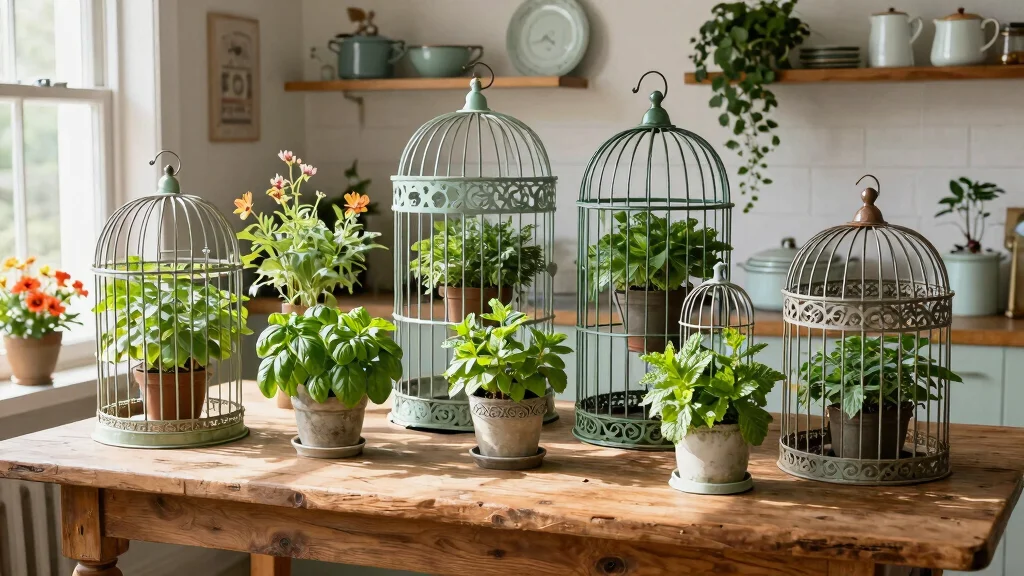
Transforming vintage finds into beautiful decor is a passion many of us share. With the rise of upcycling, there’s never been a better time to breathe new life into those forgotten treasures. If you’re like me and have a soft spot for quirky garden decor, you might be craving some fresh ideas to elevate your space. That’s why I created this post about bird cage planters. They offer a unique way to combine gardening with creativity, turning plain old bird cages into stunning focal points in your home or garden.
This post is for anyone who loves gardening, vintage decor, or simply wants to add a touch of whimsy to their space. Whether you’re a seasoned gardener or a beginner, you’ll find that repurposing bird cages can be a delightful and fulfilling project. Each idea presented here will inspire you to get your hands dirty and create charming displays that reflect your personality and style.
You’ll discover 15 innovative bird cage planter ideas that are not only visually appealing but also practical for cultivating herbs or succulents. From indoor herb havens to whimsical fairy gardens, these projects are perfect for adding a splash of life to any corner of your home. Get ready to dive into a world of creativity and make your vintage finds shine!
Key Takeaways
– Bird cage planters are a fun and creative way to upcycle vintage finds into beautiful garden decor that showcases your unique style.
– Perfect for indoor herb gardens, these planters can enhance your cooking while bringing greenery into your living space.
– Explore a range of ideas, from charming succulent displays to whimsical fairy gardens, perfect for various tastes and spaces.
– Transform your decor with simple yet impactful projects that can enhance both indoor and outdoor settings.
– Get inspired to create personalized gifts or seasonal displays that add character and warmth to any environment.
1. Herb Haven: The Ultimate Indoor Garden
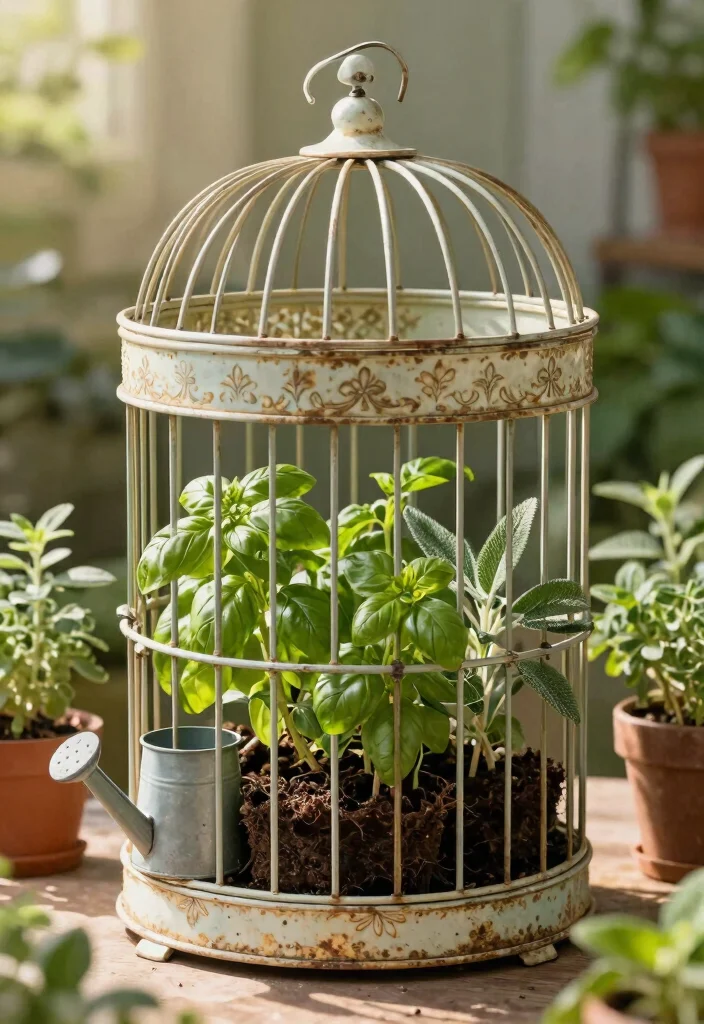
Are you looking for a way to bring fresh herbs into your kitchen? Transforming a vintage bird cage into a cozy indoor herb haven is a delightful solution. It allows you to grow culinary favorites like basil, rosemary, and thyme right at your fingertips. Not only does this project add a splash of greenery to your home, but it also provides you with fresh ingredients for your meals. Plus, it’s surprisingly easy to set up! Just follow these simple steps to create your herb garden.
Ingredients:
– 1 vintage bird cage
– Small rocks for drainage
– Potting soil
– Herb plants (basil, rosemary, thyme, etc.)
– Optional: colorful pots or decorative stones
Instructions:
1. Begin by selecting a vintage bird cage with enough vertical space.
2. Line the bottom with small rocks for drainage.
3. Add potting soil, filling the cage about halfway.
4. Plant your herbs in a cheerful arrangement, ensuring they have enough space to grow.
5. Place the cage in a sunny spot to promote healthy growth.
6. Water regularly and fertilize occasionally to keep your herbs lush.
FAQs:
– Can I use any bird cage? Yes, just ensure it has good drainage.
– Can I grow herbs in low light? Some herbs can tolerate low light, but most prefer sunlight.

UNIQUE DESIGN: The creatively designed bird cage shape of this frame adds a modern aesthetic and will look stylish in any space. It also features a cute little iron bird near the top. Its simple but quirky appearance fits with any home decor theme

Elegant Birdcage Hanging Planter Set – Features a 14.96-inch black metal birdcage-style hanging basket with a 9.45-inch sturdy chain and hook, plus a 7.08 x 7.08 x 4.13 inch jute liner bag. A perfect blend of rustic charm and durability, ideal for displaying flowers, succulents, or herbs in style.

UNIQUE DESIGN: The creatively designed bird cage shape of this frame adds a modern aesthetic and will look stylish in any space. It also features a cute little iron bird near the top. Its simple but quirky appearance fits with any home decor theme
How To Choose the Right Bird Cage Planter
Choosing the perfect bird cage planter can enhance your indoor herb garden or outdoor decor beautifully. Here are some essential criteria to consider to ensure you find the best fit for your gardening needs.
1. Size Matters
Consider the size of your space and the plants you want to grow. A larger bird cage planter will hold more soil and allow for bigger plants, while a smaller one may suit compact herbs. Measure the area where you plan to place the planter to ensure a good fit. Aim for a cage that is at least 12 inches tall to provide enough room for roots to grow.
2. Material Quality
Look at the materials used in the bird cage planter. Metal cages are durable but can rust over time if not treated. Wire cages offer good drainage but may require a liner to hold soil. Wooden cages can provide a rustic charm but ensure they are treated for moisture resistance. Opt for materials that complement your existing decor and are suitable for the plants you will use.
3. Drainage Features
Good drainage is crucial for healthy plants. Check if the bird cage planter has openings at the bottom or mesh sides for excess water to escape. If it doesn’t have built-in drainage, you might need to add gravel or rocks to the bottom to prevent water from pooling. This will help prevent root rot and keep your herbs thriving.
4. Design and Aesthetic
Choose a bird cage planter that matches your style and home decor. Vintage finds can add character to your space, but ensure the overall design fits your vision. Look for decorative elements like intricate wirework or colorful paint. A charming bird cage can serve as a statement piece while housing your favorite plants.
5. Budget Consideration
Determining your budget is essential. Bird cage planters come in various price ranges, so decide how much you want to spend before shopping. Keep an eye out for sales or consider upcycled options that fit within your budget. Investing a little more in quality can mean a longer-lasting planter that adds beauty to your garden.
Pro Tip: Don’t forget to consider how you will water your plants! Make sure you can easily access the planter for regular maintenance. 🪴

Size: 5.5"(L)x4.8"(W)x5"(H)/13.9cmx12.1cmx12.7cm

Accent Piece: Hanging birdcage decor is half round shape and distressed, go well with farmhouse decor. It is ideal for display small plant pots, little fries, fake birds, succulents, flowers and lights. It left a spot big enough to add decorations to the inside easily.

OPEN-WIRE METAL HOLDERS: Each heart-shaped bird nesting material holder features an open metal mesh that helps keep loose nesting supplies together while allowing small wild birds to pull material through the openings
2. Charming Succulent Display
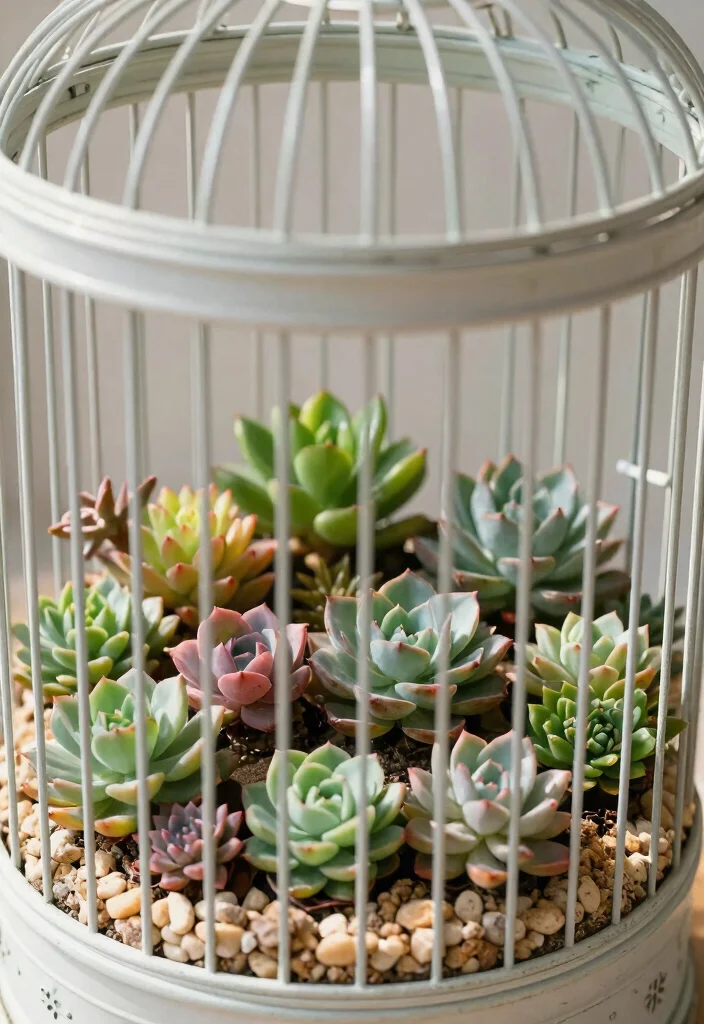
Do you love low-maintenance plants that add a pop of color? Succulents are perfect for creating a stunning bird cage planter. Their vibrant hues and unique shapes make for a beautiful display that can brighten any space. Plus, they’re easy to care for, requiring minimal watering and attention. Let’s dive into how you can create this charming succulent arrangement!
Ingredients:
– 1 open-design bird cage
– Assorted succulents (Echeveria, Haworthia, Sedum)
– Sand or decorative pebbles
– Optional: small figurines or decorative stones
Instructions:
1. Choose a bird cage that allows for good air circulation.
2. Fill the bottom with sand or decorative pebbles for a coastal vibe.
3. Arrange your succulents inside the cage, mixing different varieties for visual interest.
4. Position the cage near a window to provide bright light.
5. Water sparingly; succulents prefer to dry out between waterings.
6. Add figurines or stones for a playful touch.
FAQs:
– Can I use regular soil for succulents? It’s best to use a well-draining soil mix.
– Can I keep succulents indoors? Yes, as long as they get enough light!

Birdcage Planter Size: The overall size of the wrought iron bird cage flower stand is 7.2"L x 7.2"W x 11.8"H, weight 1.32 lbs.

Birdcage Planter Size: The overall size of the wrought iron bird cage flower stand is 7.2"L x 7.2"W x 11.8"H, weight 1.32 lb.

VINTAGE DESIGN: Features a charming rustic round silhouette crafted from durable iron for timeless decorative appeal.
3. Rustic Coffee Table Centerpiece
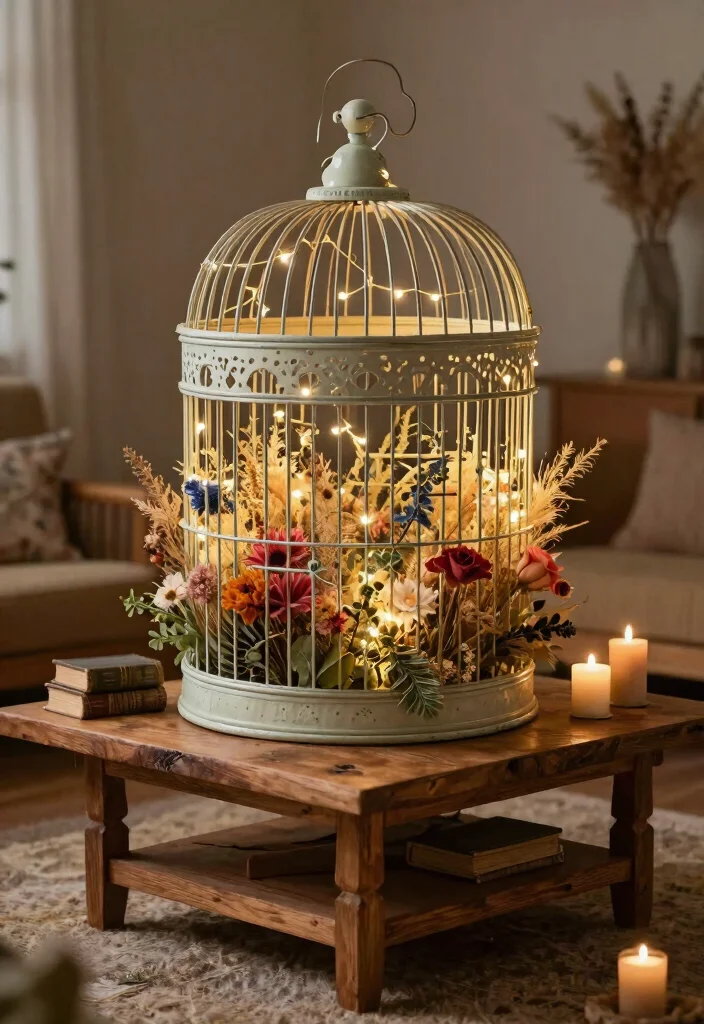
Are you searching for a unique centerpiece to elevate your living room? A bird cage can serve as a rustic coffee table centerpiece that adds warmth and charm to your home. By filling it with seasonal flowers or dried plants, you create a stunning focal point that can transform your space. It’s a wonderful way to blend nature with decor. Let’s explore how to make this eye-catching arrangement!
Ingredients:
– 1 large bird cage
– Seasonal flowers or dried plants (lavender, eucalyptus)
– Optional: fairy lights for ambiance
Instructions:
1. Select a large bird cage that fits your table nicely.
2. Fill the cage with a variety of seasonal flowers or dried plants.
3. Consider adding fairy lights for a cozy evening glow.
4. Place the cage on your coffee table and enjoy your new centerpiece.
5. Change the arrangement with each season for variety.
FAQs:
– Can I use artificial flowers? Yes, they can be a long-lasting option.
– Can I use the cage for other decor? Absolutely! It’s versatile for different themes.
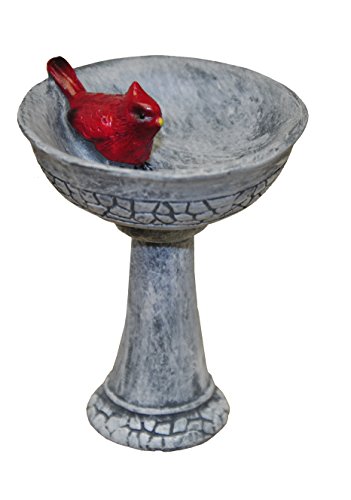
DURABLE POLYRESIN CONSTRUCTION: Crafted from high-quality polyresin, this miniature birdbath is designed to withstand outdoor conditions while maintaining its charm. The material ensures long-lasting durability, making it a suitable addition to your fairy garden for years of enjoyment. Its resilient design allows it to retain its vibrant details even in various weather conditions, ensuring that your garden decoration remains a delightful feature throughout the seasons

MINI 4-INCH SIZE — Measures 4 x 3 x 4 inches. Designed for tiny succulents, cuttings, moss or faux plants. Please check the dimensions before ordering.
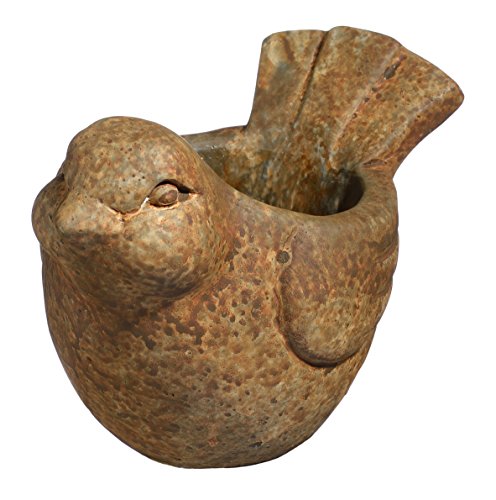
CONTEMPORARY DESIGN: This animal plant pot adds an adorable touch to any space. You can use this cute planter as a display piece indoors on your deck, desk, or table or outdoors on your porch or patio.
4. Minimalist Wall Art Display
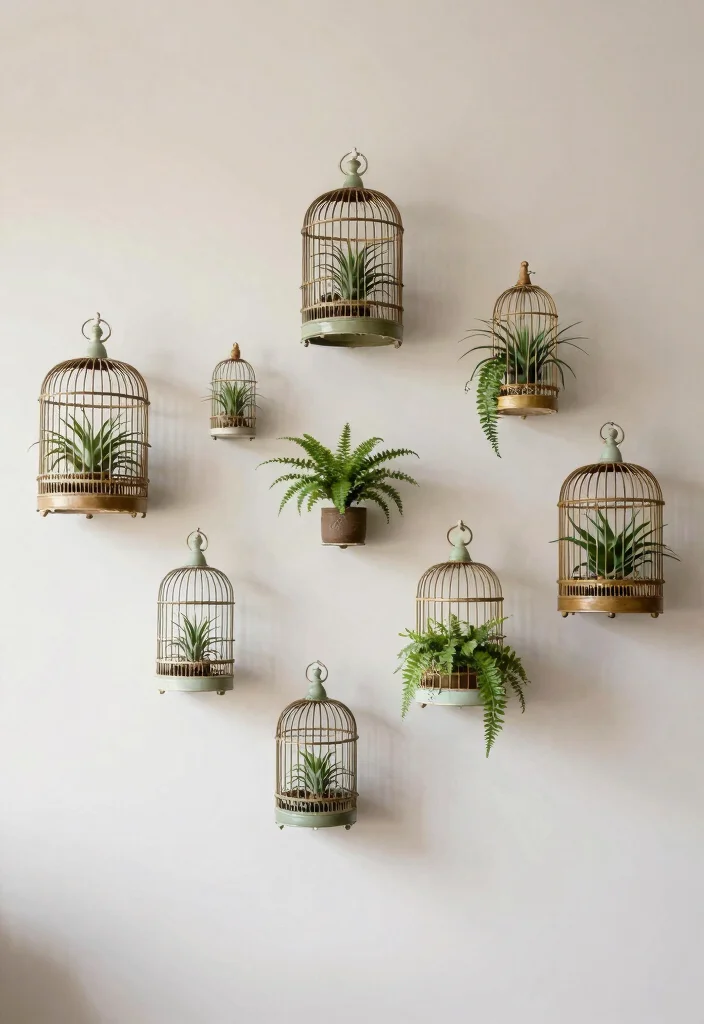
Are you in need of a creative way to decorate your walls? Using bird cages as minimalist wall art can bring a fresh and unique touch to your home. This idea allows you to showcase a variety of plants while adding depth and interest to your decor. It’s a fun project that enhances your space without overwhelming it. Here’s how to create your own gallery display!
Ingredients:
– Small bird cages
– Different types of plants (air plants, ferns)
– Hooks or wall mounts
Instructions:
1. Choose smaller bird cages for a gallery-style look.
2. Fill each cage with a different type of plant for variety.
3. Hang the cages at different heights for a dynamic effect.
4. Ensure the plants are suitable for the lighting conditions of the area.
5. Arrange the cages to create a cohesive and attractive wall display.
FAQs:
– Can I use fake plants? Yes, they can also look great in bird cages.
– Can I hang them in low-light areas? Choose plants that thrive in low light for those spots.

【Package & Size】Package: 1 pound colorful pebbles. Size:3/8 inch(0.5-1 cm). Perfect size is ideal for decorating succulents, cacti and other small potted plants

Natural Calcium Pumice Stone Construction: Made of calcium-rich pumice stone, this bird food and water dish creates rough resting surface to naturally trim birds’ beaks and grind claws during feeding, releasing calcium elements beneficial for small parrots.

Eco-Friendly Recycled Smart Gravel: Made in the USA from 100% recycled plastics to help reduce environmental waste and plastic pollution
5. Vibrant Outdoor Garden Decor
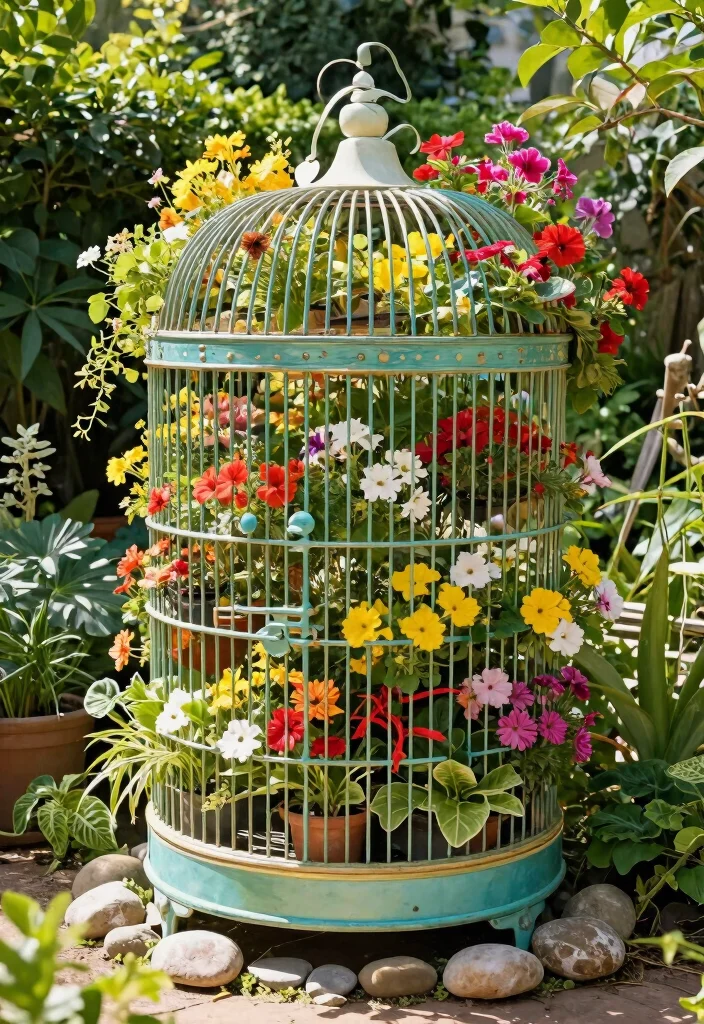
Do you want to add a whimsical touch to your garden? Larger bird cages can be transformed into stunning outdoor planters. They not only soften hardscapes but also provide a captivating focal point. You can plant colorful flowers or trailing vines that spill over the edges, creating a lush look. Let’s explore how to bring this enchanting idea to life!
Ingredients:
– 1 vintage bird cage
– Colorful flowers or trailing vines
– Optional: outdoor paint for a fresh look
Instructions:
1. Choose a vintage bird cage that complements your garden style.
2. Plant colorful flowers or vines that can trail over the edges.
3. Optionally, paint the cage in a bright color to add personality.
4. Position the cage among other plants for a layered effect.
5. Regularly check for pests and ensure proper watering.
FAQs:
– Can I use any plant for this? Choose plants that thrive outdoors.
– Can I leave it out in winter? Some plants may need protection from frost.

Classic and Dlicate: Metal material, European style hollow pattern design, making your house warmth and charming.

Package Includes: You will receive 2 pcs garden bird netting plant cover for vertical strawberry planter, the size is 39 x 20 inch (Please measure the overall size of your planter plus the canopy width of your plants before purchasing), appropriate size is suitable for 3-5 tier stackable planter pot, ideal for protecting strawberry from insects, birds and many other animals. (NOT include stackable planter)

🌿【DUAL-FUNCTION VINTAGE BIRDCAGE DESIGN】 This charming piece combines the classic silhouette of a birdcage with a distressed green and copper finish, topped with a cute bird figurine. It works seamlessly as both a planter for succulents or herbs and a decorative candle holder for pillar or LED candles, making it a versatile addition to any space.
6. Bird Cage Herb Wall
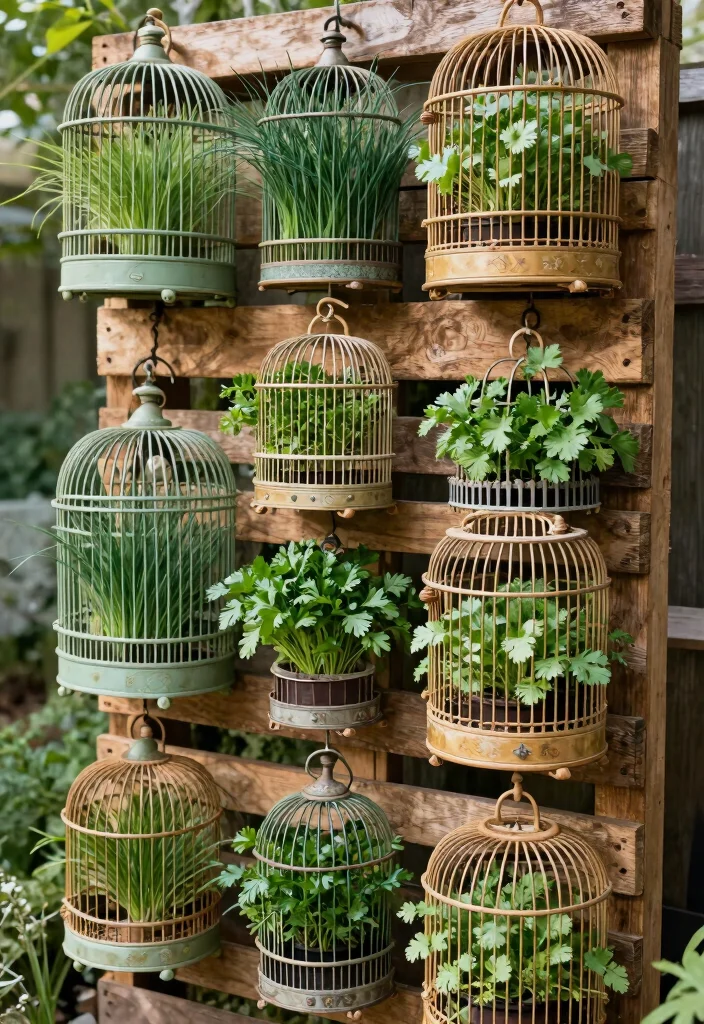
Are you short on gardening space but want fresh herbs? A bird cage herb wall is a clever way to showcase your gardening passion. By mounting small bird cages on a wooden pallet or directly on the wall, you create a vertical garden that saves space and adds character to your home. Each cage can hold different herbs for easy access and fresh cooking. Let’s get started on this stylish project!
Ingredients:
– Small bird cages
– Wooden pallet or wall mounts
– Various herbs (chives, parsley, etc.)
Instructions:
1. Mount the bird cages on a wooden pallet or directly on a wall.
2. Fill each cage with different herbs that suit vertical growth.
3. Position the wall so it receives plenty of sunlight.
4. Group herbs with similar water needs for easier maintenance.
5. Personalize the wall with art or decorations behind the cages.
FAQs:
– Can I grow herbs indoors? Yes, many herbs thrive indoors.
– Can I change the herbs seasonally? Absolutely! Rotate as needed.
Turn tight spaces into fresh flavor with a bird cage herb wall—your bird cage planter keeps basil, thyme, and mint within arm’s reach. It’s a simple, stylish vertical garden that proves small spaces can grow big, fragrant results every day.

【Size】Measures 17x32.5cm, offering ample space for hanging , ferns, plants, or decorative arrangements

Adorable Bird Shape Plant Holder. Adding a dash of unique ornament to your desks, bookshelves, tables, window sills, countertops and more, they will look quite adorable and unique.

Cage birdcage:creative shape, fine workmanship, which is a delicate micro landscape DIY landscaping,vintage bird cage
7. Colorful Seasonal Displays
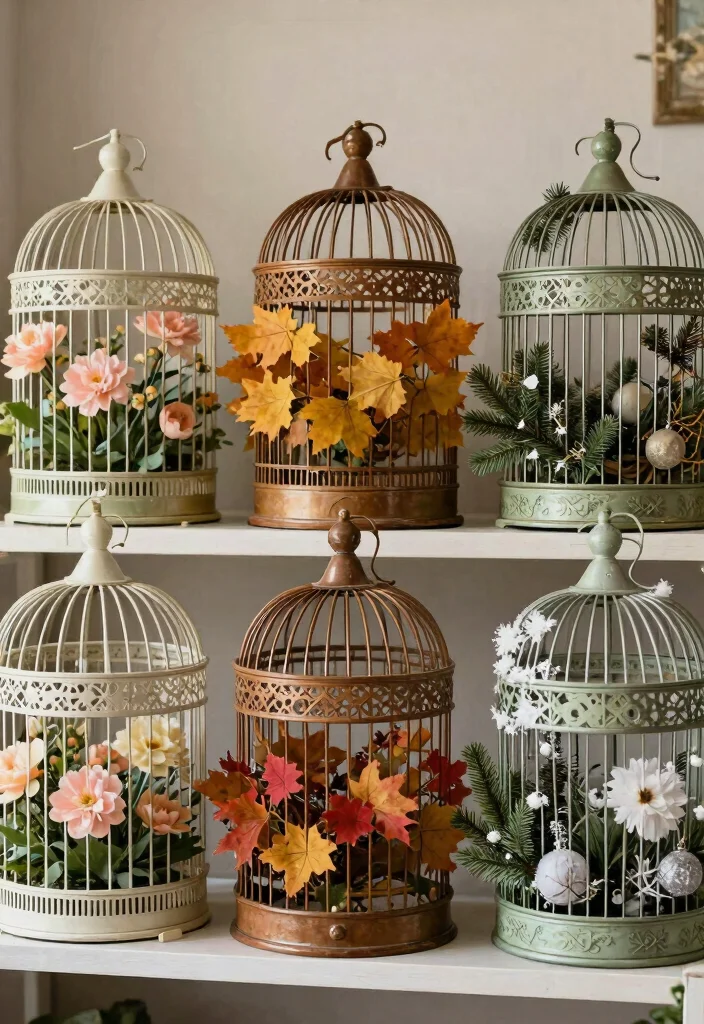
Are you looking for a fun way to keep your decor fresh? Rotating your bird cage planters with the seasons is a creative solution. Each season brings new colors and themes, from pastel flowers in spring to warm-toned foliage in fall. This ongoing transformation keeps your home lively and engaging. Here’s how to create seasonal displays that wow!
Ingredients:
– Bird cages
– Seasonal flowers or decorative elements (pinecones, leaves)
Instructions:
1. Choose a bird cage to use for seasonal displays.
2. Fill the cage with seasonal flowers or foliage, changing them throughout the year.
3. Use decorations like pinecones or leaves to enhance each seasonal theme.
4. Incorporate fairy lights for a magical touch during colder months.
5. Keep a journal of your seasonal changes for inspiration.
FAQs:
– Can I use artificial flowers? Yes, they can work well for seasonal changes.
– Can I keep the same cage year-round? Absolutely, just change the contents!

【Elegant White & Gold Distressed Design】:Shabby-chic white finish with glimmering gold quatrefoil patterns + a tiny bird accent on the cage top — blends vintage charm with subtle luxury (perfect for farmhouse, cottage, or French country styles).

Classic and Dlicate: Metal material, European style hollow pattern design, making your house warmth and charming.

BUILT TO LAST: Made of durable, weather-resistant resin with a large 0.8 gallon basin to save water and keep your birds cool during the hotter months
8. Whimsical Fairy Garden
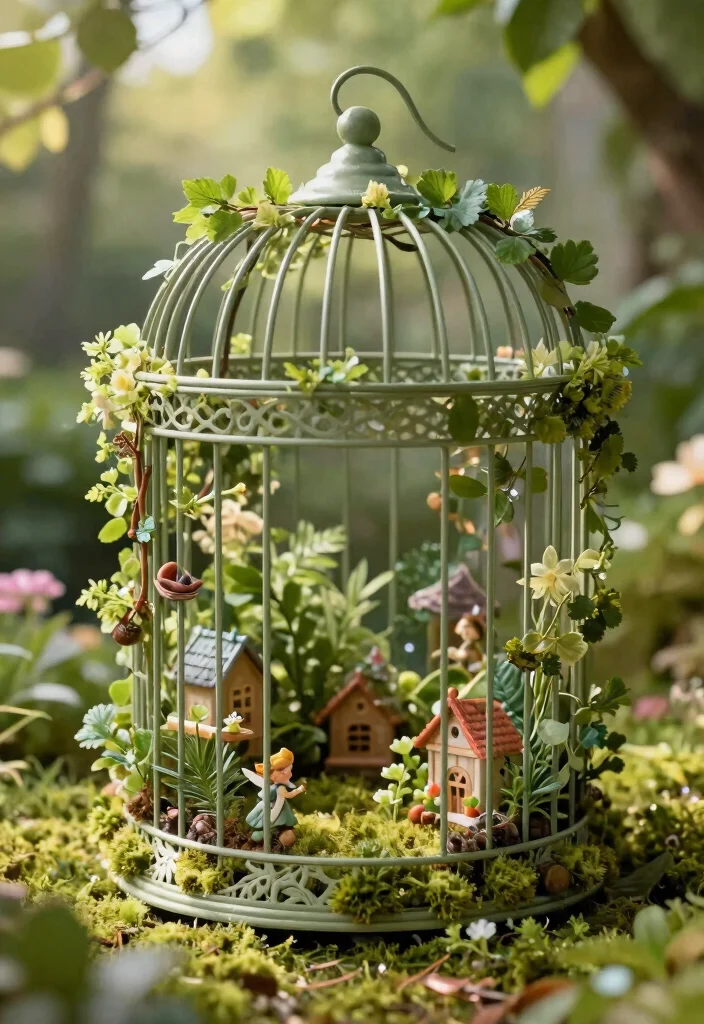
Want to create a magical retreat at home? A vintage bird cage can serve as the perfect base for a whimsical fairy garden. Start by filling the bottom with soil and moss, then add tiny decorations like houses and fairy figurines. Small plants, such as miniature ferns, enhance the lush atmosphere. This creative project can be a delightful addition to both indoor and outdoor spaces. Let’s build your enchanting fairy garden!
Ingredients:
– 1 vintage bird cage
– Soil and moss
– Miniature decorations (houses, figurines)
– Small plants (mini ferns, succulents)
Instructions:
1. Fill the bottom of the cage with soil and moss.
2. Arrange miniature decorations inside for a whimsical touch.
3. Add small plants to create a lush habitat.
4. Position the cage in an area where it can be appreciated.
5. Change out decorations seasonally to keep it fresh.
FAQs:
– Can I use larger plants? Choose smaller varieties to fit the cage.
– Can I keep it indoors? Yes, it works great as an indoor display!

Compact Size with Stake: Measures 8.5 inches high with pick included, making it easy to place in any miniature garden setting

A lovely stoneware planter that has two cute birds perched on the rim and a reactive glaze in multi colors

Measures approximately 7 1/2" x 6 1/8" x 4 1/2"
9. Vertical Garden with String Lights
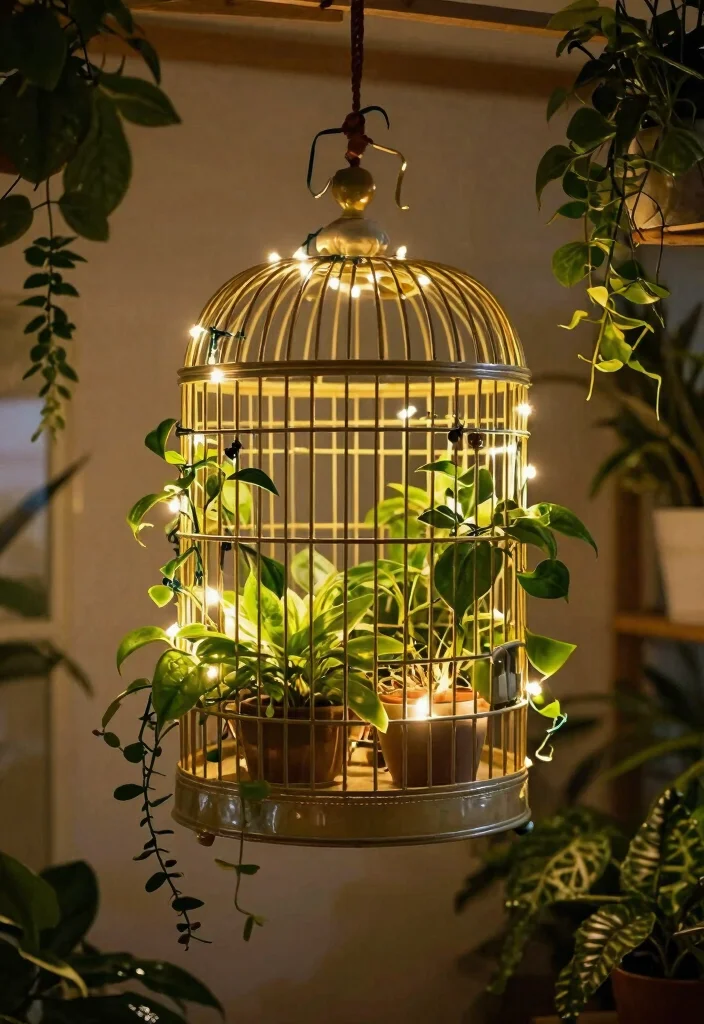
Are you looking to add charm to your vertical garden? Incorporating string lights into your bird cage planter can create a stunning visual effect. Hang a bird cage filled with trailing plants and wrap string lights around it for inviting illumination. This setup is perfect for evenings, adding warmth and ambiance to your space. Let’s create this beautiful combination!
Ingredients:
– 1 bird cage
– Trailing plants or blooms
– String lights (LED fairy lights)
Instructions:
1. Choose a bird cage and fill it with cascading plants.
2. Drape or wrap string lights around the cage.
3. Hang the cage in a location where it can shine, either indoors or outdoors.
4. Use a timer for lights to automatically set the mood.
5. Switch light styles with the seasons for a fun change.
FAQs:
– Can I use any plants? Choose those with a cascading look for best results.
– Can I leave the lights on all night? Yes, but consider energy usage for longer durations.

【Versatile Decoration】These gravel are widely used in aquariums, fish tanks, succulent displays, bamboo arrangements, glass jars, vases, and even as sidewalk embellishments. They enhance the beauty of any space.

Natural Pumice Material: This physical bird bowl utilizes calcium rich stone to provide a highly textured surface for your pets. It naturally conditions their beaks and grinds their claws during daily feeding sessions, delivering beneficial minerals continuously for healthy physical growth

A uniquely styled home for your small bird
10. Personal Touch with Photo Display
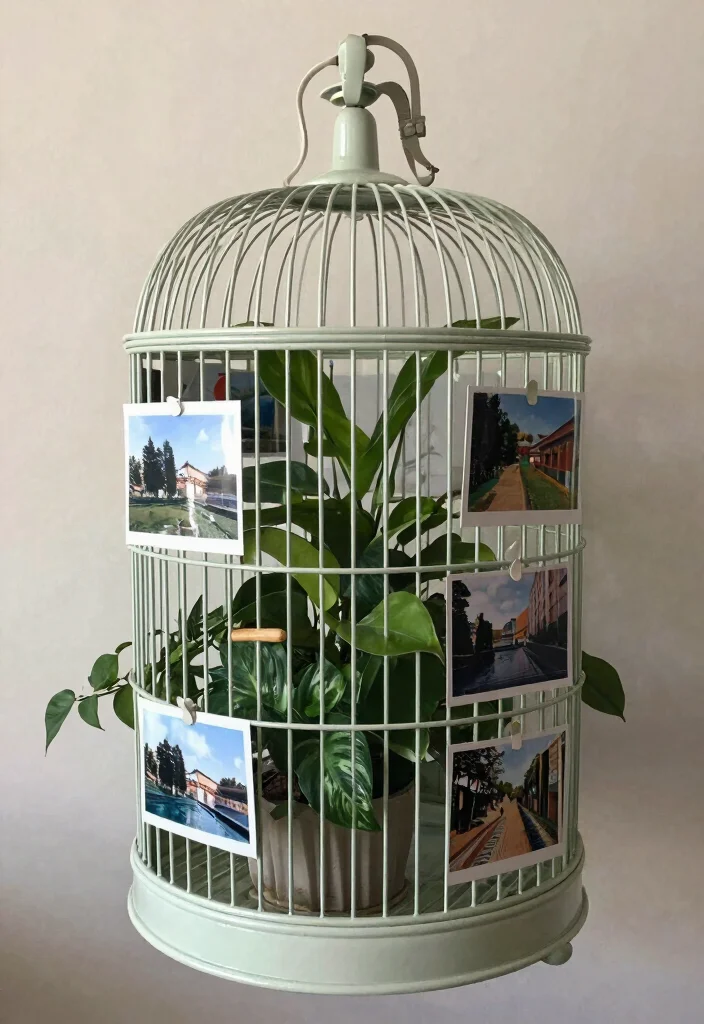
Looking for a unique way to showcase your favorite memories? Transform your bird cage into a personalized photo display while incorporating plants. Clip cherished photos onto the sides of the cage, allowing plants to grow inside. This creative mix adds sentimental value and liveliness to your decor. Let’s explore how to make this heartwarming display!
Ingredients:
– 1 bird cage
– Photos and clips
– Plants (small ones that fit inside)
Instructions:
1. Select a bird cage that fits your style.
2. Clip photos onto the sides using small clips.
3. Add plants inside the cage for a lively touch.
4. Regularly change out photos to keep the display fresh.
5. Arrange the cage in a visible spot for enjoyment.
FAQs:
– Can I use large photos? Stick to smaller, lightweight options for balance.
– Can I personalize it further? Absolutely! Add small charms or trinkets.
11. Indoor Zen Garden
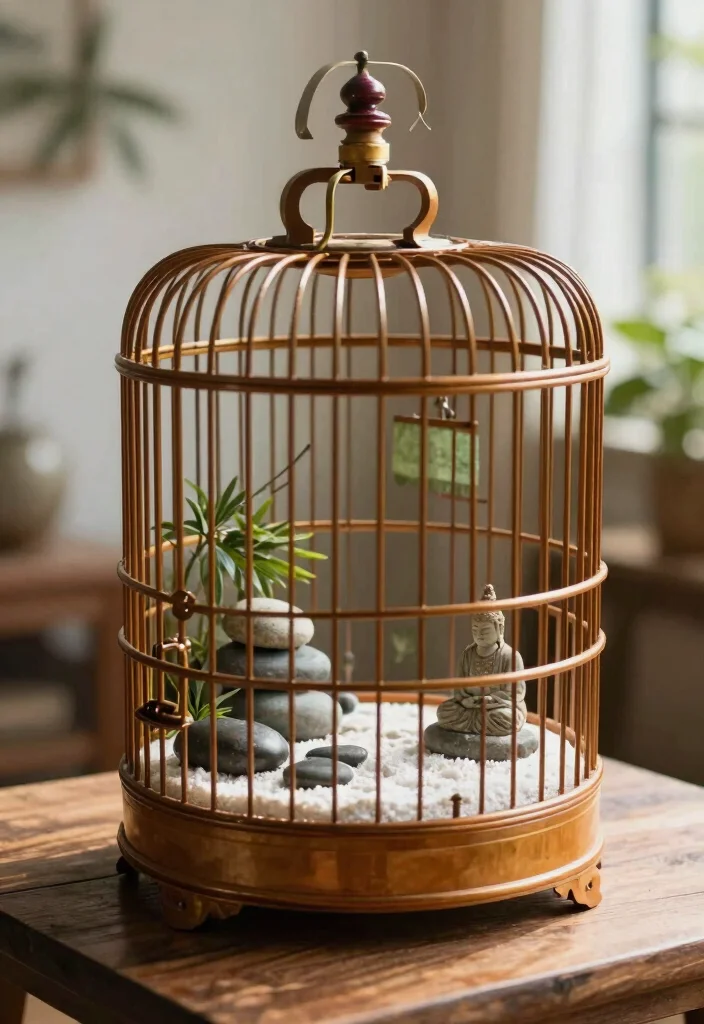
Want to create a calming oasis at home? A bird cage can be transformed into an indoor zen garden filled with tranquility. Start by filling the bottom with sand or stones, then add decorative elements like small Buddha figurines. Using low-maintenance plants like peace lilies will enhance the serene vibe. Let’s create this peaceful retreat together!
Ingredients:
– 1 bird cage
– Sand or decorative stones
– Zen garden elements (figurines, tiny rakes)
– Low-maintenance plants (peace lilies, snake plants)
Instructions:
1. Fill the bottom of the cage with sand or stones.
2. Arrange decorative elements like figurines and tiny rakes.
3. Add low-maintenance plants for a calming effect.
4. Regularly change the arrangement for new inspiration.
5. Consider adding essential oils for an aromatic experience.
FAQs:
– Can I use larger plants? Smaller varieties work best for this setup.
– Can I change the decor? Yes, feel free to personalize it!
Transform a bird cage planter into a zen garden: layer sand, add tiny Buddha figurines, and plant a peace lily for effortless serenity. A calm corner at home proves that simple, practical ideas can grow big mood upgrades.
12. Bird Cage as Decorative Storage
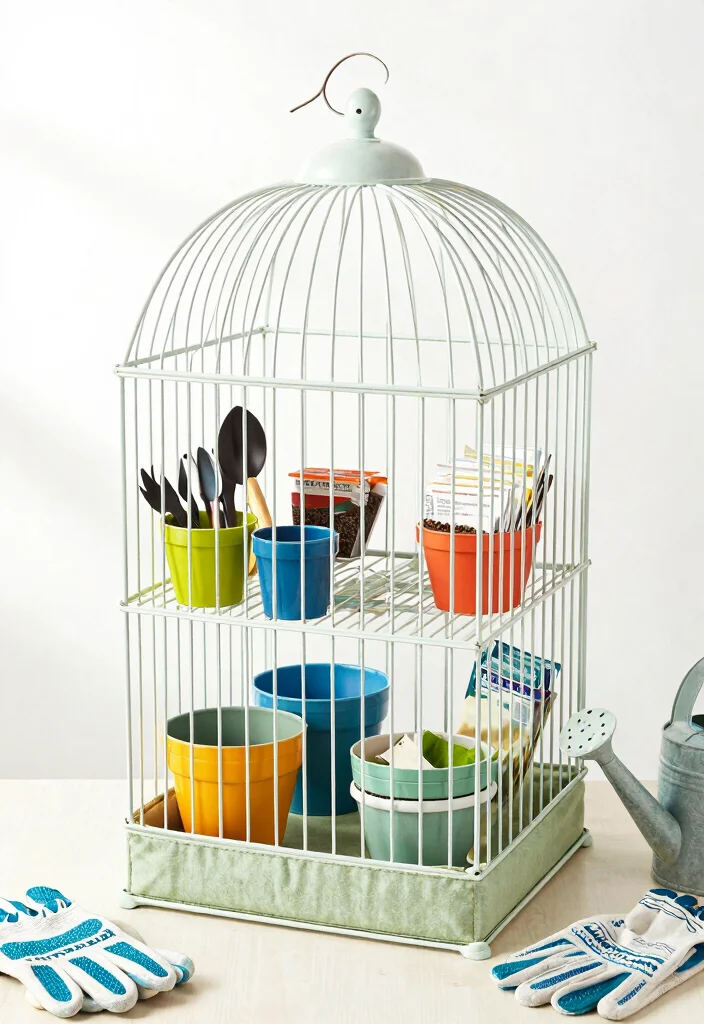
Do you need a stylish way to organize small gardening tools? Repurposing a bird cage as a decorative storage solution is both practical and charming. This approach keeps your tools accessible while allowing the vintage cage to shine as decor. Let’s explore how to make this functional project work for you!
Ingredients:
– 1 bird cage
– Small plant pots
– Decorative paper or fabric (optional)
Instructions:
1. Line the bottom of the cage with decorative paper or fabric.
2. Use small plant pots to keep tools organized.
3. Place the cage near your gardening area for easy access.
4. Ensure tools are clean and dry before storing.
5. Add labels for easy identification of contents.
FAQs:
– Can I store larger tools? This works best for smaller items.
– Can I use it indoors? Yes, it looks great in any space!
Pro tip: A bird cage can hide a toolbox of herbs and small tools—without sacrificing style. When you turn it into decorative storage, tidying up becomes a creative habit, and your bird cage planter becomes your go-to garden organizer.
13. Halloween Haunted House Decor
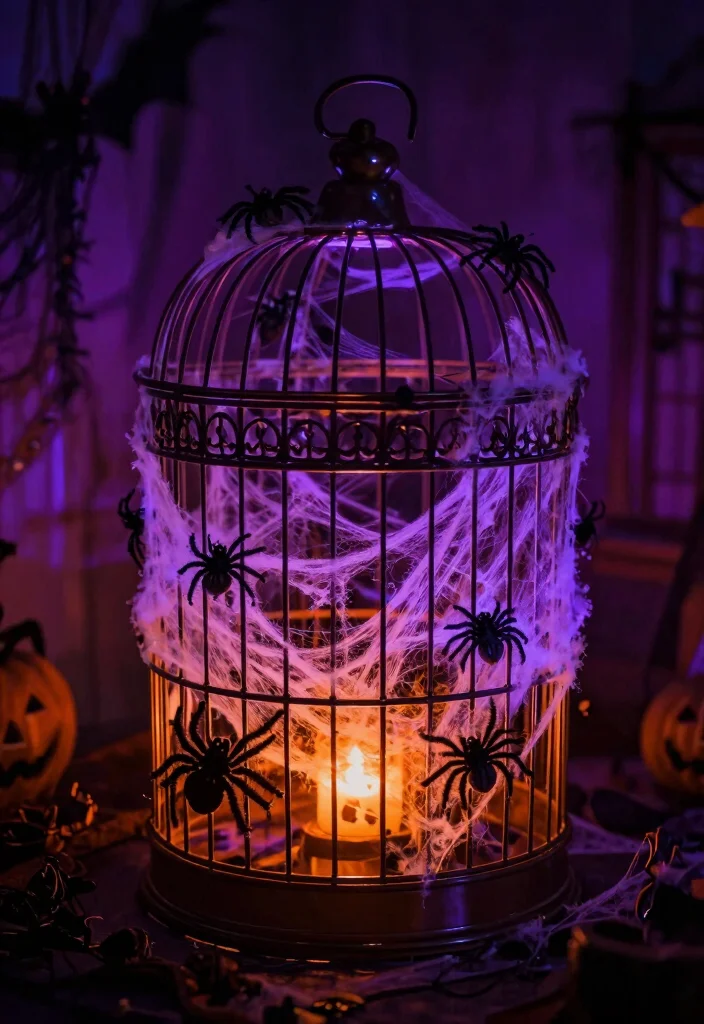
Are you ready to spook up your Halloween decor? Transform your bird cage into a haunted house centerpiece by filling it with faux spiders and cobwebs. This creative idea adds a unique twist to your Halloween decorations, making it a fun focal point. Let’s get started on creating this eerie display!
Ingredients:
– 1 bird cage
– Faux spiders and cobwebs
– Dark-colored plants or moss
– Optional: small Halloween ornaments
Instructions:
1. Fill the cage with faux spiders and cobwebs.
2. Add dark-colored plants or moss to enhance the spooky theme.
3. Incorporate small Halloween ornaments for added flair.
4. Place the cage in a visible spot for maximum impact.
5. Easily disassemble after Halloween for your next decor.
FAQs:
– Can I use real plants? It’s best to use faux for Halloween displays.
– Can I leave it out after Halloween? Absolutely, just switch the contents!
14. Garden Party Decor
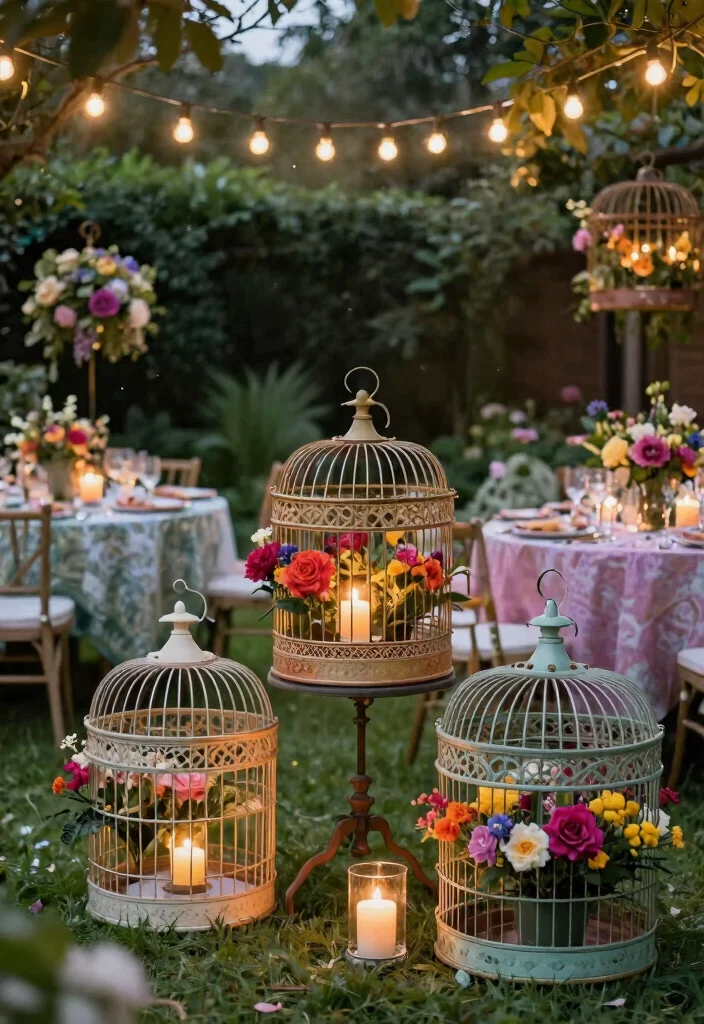
Are you hosting an outdoor gathering soon? Bird cages can be transformed into lovely decor pieces for your garden party. Use them as table centerpieces or hang them filled with flowers and candles around your patio. This charming setup will surely impress your guests and create an enchanting atmosphere. Let’s make your party unforgettable!
Ingredients:
– Bird cages
– Flowers, candles, or fairy lights
– Optional: matching decor
Instructions:
1. Choose bird cages that fit your party theme.
2. Fill them with flowers, candles, or fairy lights for ambiance.
3. Arrange cages as centerpieces or hang them around your patio.
4. Customize each cage to match your overall decor scheme.
5. Enjoy the compliments from your guests!
FAQs:
– Can I use artificial flowers? Yes, they can look beautiful too.
– Can I switch themes for different parties? Absolutely! Get creative!
15. Personalized Gift Idea
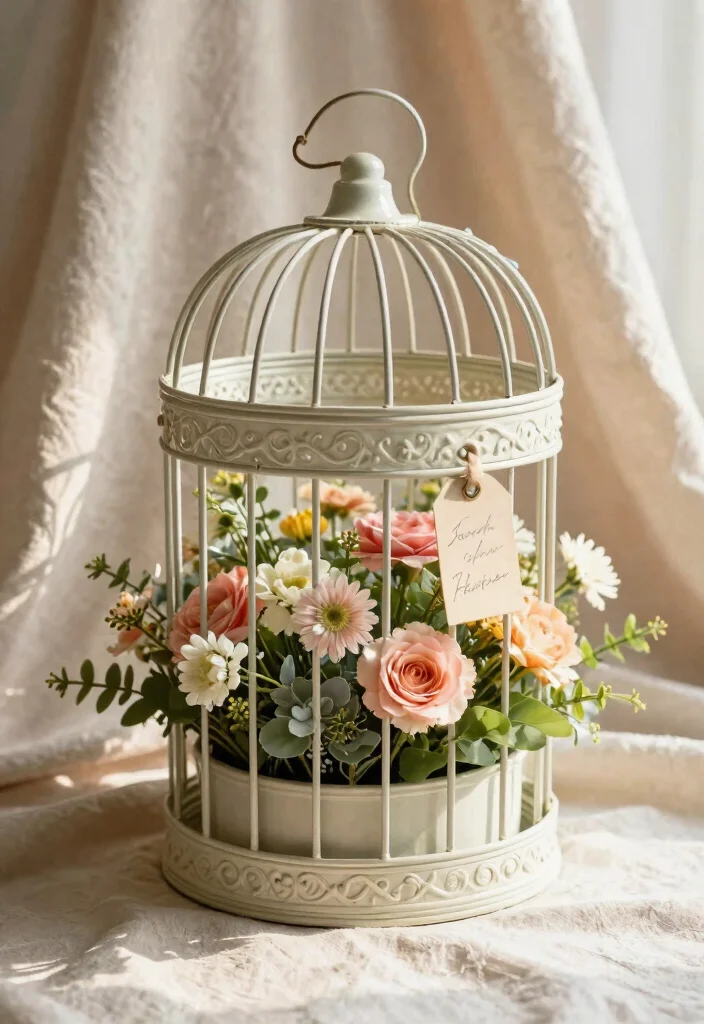
Looking for a heartfelt gift that stands out? A bird cage planter can be transformed into a thoughtful present. Fill it with the recipient’s favorite plants or flowers, and include a handwritten note expressing your sentiments. This unique gift is not just a bouquet; it grows and evolves over time. Let’s explore how to create a memorable gift!
Ingredients:
– 1 vintage bird cage
– Favorite plants or flowers
– Handwritten note
Instructions:
1. Choose a bird cage that reflects the recipient’s style.
2. Fill it with their favorite plants or flowers.
3. Include a small handwritten note for a personal touch.
4. Wrap the cage in decorative paper or fabric for presentation.
5. Customize it further with personal items or trinkets.
FAQs:
– Can I use any plants? Choose ones that fit their preferences.
– Can I gift it for any occasion? Yes, it’s versatile for any celebration!
Conclusion
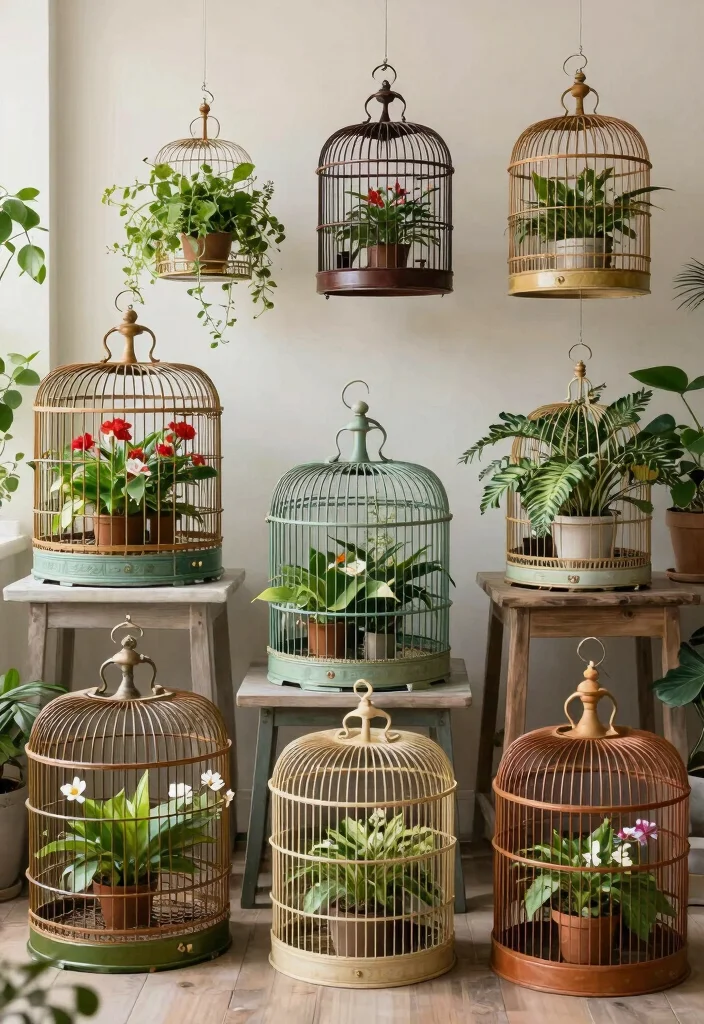
Repurposing vintage bird cages as planters not only breathes new life into outdated decor but also adds a personal, creative touch to your space.
These ideas offer endless possibilities for adding charm and character to your home or garden. Whether you choose to grow herbs for culinary uses or create whimsical displays, your vintage bird cage can become a focal point in your decor. Don’t hesitate to mix, match, and personalize to truly make it your own!
Frequently Asked Questions
How can I turn a vintage bird cage into an indoor herb garden?
Start by picking a bird cage planter in good condition with enough airflow. Line the bottom with a shallow tray or small pots to control drainage, then fill with a light, well-draining herb mix. Plant herbs like basil, thyme, and parsley in individual pots inside the cage, or use a tray with multiple compartments for a neat look. Place the cage near a sunny window or under grow lights for 6–8 hours of light, and water when the top inch of soil dries. Secure the setup on a stable surface and consider a weathered paint touch-up to enhance the vintage vibe. This upcycled planter can become a charming indoor herb garden in seconds.
What herbs thrive best in a bird cage planter for an indoor herb garden?
For a thriving indoor herb garden inside a bird cage planter, choose compact, sun-loving varieties like basil, thyme, oregano, chives, and parsley. Cilantro can work if you have bright light but tends to bolt in hot rooms. Use smaller pots or individual sections to prevent root crowding, and ensure good drainage. Pairing these herbs with a bit of decorative moss or gravel turns your cage into stylish vintage garden decor while keeping fresh herbs at reach.
How do I ensure proper drainage and airflow in a bird cage planter?
Start with liners or removable pots that have drainage holes so excess water can escape without soaking the cage’s structure. Use a lightweight potting mix (with perlite or vermiculite) to improve drainage, and place a shallow tray under the cage to catch runoff. Avoid overwatering by checking soil moisture regularly, and rotate herbs weekly so all sides get sun. Keeping airflow steady around the cage also helps prevent mold and keeps your bird cage planter looking fresh as part of your creative gardening ideas.
Can I use a bird cage planter outdoors, and how should I protect it from weather?
Yes, a bird cage planter can double as charming outdoor decor, but you’ll want to weatherproof it. Seal metal cages to resist rust, or line with a waterproof liner if you’re keeping soil inside. Bring delicate herbs indoors during freezing temperatures and strong storms, and place the cage in a bright, sheltered spot to reduce sun bleaching. Use weatherproof pots inside the cage and consider a protective stand to prevent water pooling. This approach blends outdoor decor ideas with upcycled planters for a cohesive look that still prioritizes plant health.
What are stylish ways to blend vintage flair with a bird cage planter inside?
Lean into the charm of vintage garden decor by giving the cage an aged finish—think a patina, soft whites, or muted greens. Add tiny trellises, moss, or jute wrap to soften the metal, and label herbs with small chalkboard tags for a quaint touch. Group multiple bird cage decor pieces with other upcycled planters to create a vignette that feels curated yet cozy. This is a creative gardening ideas approach that keeps the decor alive and practical in your indoor herb garden.
Related Topics
bird cage planter
vintage garden decor
upcycled planters
indoor herb garden
creative gardening ideas
repurposed decor
outdoor decor ideas
DIY vintage planters
easy gardening projects
home decor
eco-friendly gardening
plant styling