

A bedroom reset routine prevents clutter from building into an hour-long project, but only if you clean in the right order.
Most people dust after they vacuum, which means furniture and nightstands end up covered again by the time they finish.
This checklist runs top to bottom in 6 steps, starting with trash and ending with a mopped floor, and takes 10 to 15 minutes daily or 30 to 45 minutes weekly.
1. Gather Your Cleaning Tools and Clear the Trash

Start by gathering every cleaning supply you’ll need so you won’t stop mid-task to hunt for a spray bottle or clean cloth. Here’s what to collect before you touch a single surface:
- Trash bag or small bin for garbage and wrappers
- Basket with handles for items that belong in other rooms
- Microfiber cloths (at least three, different colors help if you want one for dusting, one for glass, one for general messes)
- All-purpose cleaner or a DIY mix of one gallon hot water, one capful of Mr. Clean, and a squirt of Dawn
- Glass cleaner for mirrors and windows
- Vacuum with attachments (crevice tool for baseboards and edges)
- Optional: baking soda for mattresses, disinfectant wipes, furniture polish if you have wood pieces
Once your supplies are ready, clear the trash first. Walk through and toss anything obviously garbage: wrappers, empty bottles, receipts.
Then pull visible clutter off shelves, dresser tops, and floors. Put away anything that belongs in the bedroom and drop the rest in your basket to sort later.
2. Strip the Bed and Start Laundry

Strip the Bed and Start Laundry
Get the bed linens in the washer before anything else so they can run while you clean. Sheets collect dust, dead skin, and hair, and washing them makes the biggest single difference in how the room feels when you’re done.
- Strip sheets, pillowcases, and any blankets off the bed.
- Load them straight into the washer with hot water if the fabric allows.
- If you have a spare set, keep it ready so you can remake the bed right away.
- For a quick reset rather than a full clean, skip the wash and just make the bed tight and smooth.
Starting with the bed works on two levels: the laundry runs in parallel with the rest of the room, and you have to put clean sheets back on first anyway, so it makes sense to wash them first.
If you keep pets on the bed, add a dryer sheet to pull off the lingering hair.
3. Dust High Surfaces First, Then Work Down

Dust settles downward, so start at the ceiling and work your way to the floor. Cleaning in that order means you won’t knock fresh dust onto surfaces you just wiped.
- Ceiling fans: Use a microfiber cloth or pillowcase slipped over each blade to capture dust without spreading it around the room.
- Light fixtures: Wipe fixtures gently with a microfiber cloth. Change any burnt-out bulbs while you’re up there.
- Crown molding and high corners: Run an extendable duster along the ceiling line to clear cobwebs and accumulated dust.
- Shelves, picture frames, and wall decor: Dust the tops of frames and high shelves before moving to furniture-height surfaces.
I work top to bottom every time. Skipping that order means re-cleaning tables and nightstands after dust from the fan lands on them, and nobody wants to circle back.
4. Wipe Furniture and Flat Surfaces

A microfiber cloth and a quick pass over your nightstand, dresser, and headboard take no time and make an immediate difference. Wipe the front, top, sides, and handles—not just the flat tops where you set things down.
Furniture polish or a damp cloth with mild cleaner both work.
If dust has built up, start with the damp cloth to loosen it, then follow with polish for a bit of shine. For weekly maintenance, a dry microfiber cloth traps dust without needing any product.
- Mirrors and glass surfaces: Use glass cleaner to remove smudges and fingerprints.
- Handles, light switches, and doorknobs: Wipe with a damp cloth or disinfectant—these high-touch spots collect grime faster than the surfaces around them.
- Picture frames, lamps, and decor: A quick wipe-down freshens the whole room without adding much time.
Move furniture away from the wall if the back side is accessible and dusty enough to warrant it. Otherwise, focus on what shows.
5. Vacuum and Mop the Floor Last
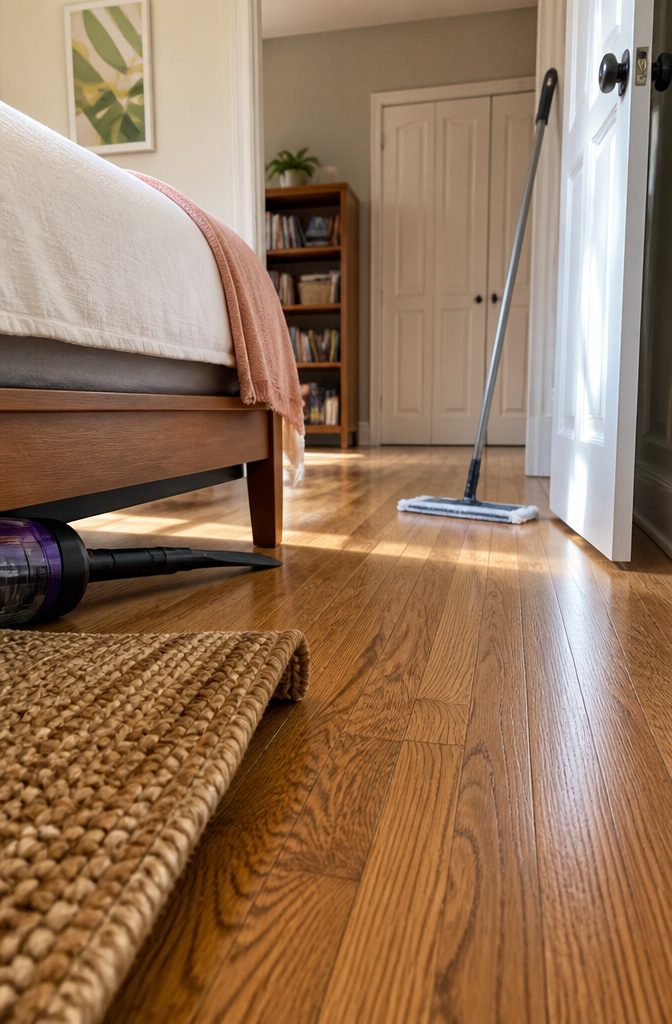
Vacuum from the back corner toward the door so you don’t walk over what you’ve just cleaned.
If you have carpet or rugs, use a strong suction setting and the brush roll to lift dust and pet hair. For hardwood, switch to the hard-floor setting or sweep first to catch loose debris before you vacuum.
- Get under the bed with a crevice tool or long attachment — dust settles there fast and rarely gets touched.
- Pull the vacuum tight into corners and around furniture legs where dirt collects.
- Shake area rugs outside before you put them back.
- If you have hard floors, mop after vacuuming with a cleaner suited to your surface. Don’t leave excess water sitting, especially on wood or laminate.
I like saving the floor for last because everything from dusting to wiping surfaces drops debris down, and a freshly mopped floor stepped on halfway through the room looks worse than one you hadn’t started yet.
6. Put Items Back and Finish the Reset

With the hard work behind you, finishing the reset keeps the room from sliding back into clutter.
- Return every item to its designated spot: books back on the shelf, chargers to the nightstand drawer, folded clothes to the closet. If something has no home yet, assign one now so tomorrow’s reset takes seconds instead of minutes.
- Remake the bed with clean linens if you stripped them earlier. Smooth corners and a taut duvet make the whole room feel finished.
- Empty the trash and replace the liner. A full bin undoes the clean smell faster than anything else.
- Wipe down your nightstand one last time if keys or a water glass left a ring while you worked.
Optional touches include swapping burned-out bulbs, changing the air filter if it’s been a few months, or lighting a candle.
Those moves matter more for a deep clean than a fast reset, but if a dead bulb has been bothering you for weeks, now is the time.
When to Do This Daily and When to Go Deeper

The quick daily pickup I describe in the steps above takes ten to fifteen minutes most mornings, and that keeps the mess from piling into something worse.
Weekly cleaning is where you actually touch surfaces and deal with dust. Set aside thirty to forty-five minutes for that if you stick to one room, closer to an hour or two if you work through the whole bedroom properly.
Daily cleaning tasks shouldn’t take up more than 15 minutes, while your weekly tasks should only take about an hour or two, depending on how thorough you want to be.
That lines up with what I see work in practice.
The daily reset handles visible clutter and keeps the bed made. The weekly pass is where you vacuum the whole floor, wipe down nightstands and door handles, and deal with anything the quick pickup misses.
Deep cleaning is the seasonal job: every three to four months, you pull furniture away from walls, wash curtains, and scrub baseboards.
That one takes a few hours and belongs on a weekend when you have the time to finish it right.
What Cleaners and Tools You Need
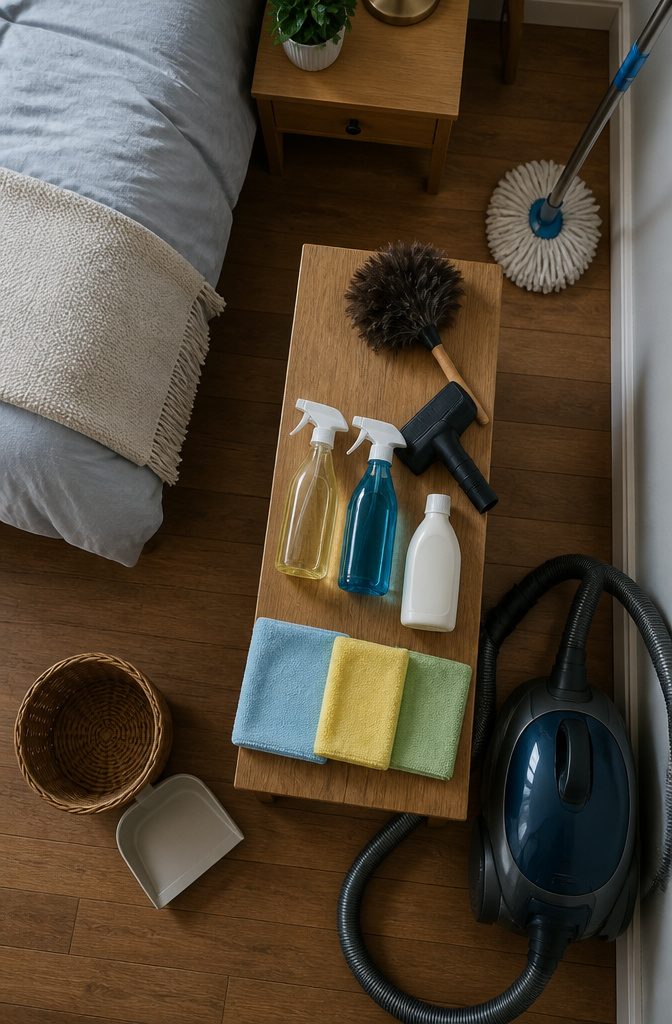
You’ll need a small set of supplies, nothing specialized:
- All-purpose cleaner — Mrs. Meyers or a mix of Mr. Clean and Dawn dish soap in hot water handle most surfaces.
- Microfiber cloths — at least three, so you can use one for dusting, one for glass, and one for general wiping without cross-contaminating grime.
- Vacuum with HEPA filter — recommended if allergies are a concern. A Roomba puts the job on autopilot; otherwise, any upright with attachments works.
- Glass cleaner — for mirrors and windows. Newspaper wipes streak-free if you skip paper towels.
- Furniture polish or damp cloth — laminate surfaces can take all-purpose cleaner; wood usually wants polish.
- Duster — a Swiffer duster or extendable version reaches ceiling corners and lamp shades without scattering dust.
- Mop or Swiffer WetJet — for hard floors after vacuuming.
Damp microfiber traps dust instead of pushing it around, which keeps the air cleaner and cuts down on how often you need to repeat the job.
Frequently Asked Questions
How long does it take to clean a bedroom?
Daily tidying takes 10 to 15 minutes.
Weekly cleaning runs 30 to 45 minutes for one room, up to an hour or two if you work through the whole bedroom properly. A deep clean takes a few hours and belongs on a weekend.
What supplies do you need to clean a bedroom?
You need an all-purpose cleaner, at least 3 microfiber cloths, a vacuum with attachments, glass cleaner, furniture polish or a damp cloth, a duster, and a mop or Swiffer WetJet for hard floors.
A HEPA filter vacuum helps if allergies are a concern.
How often should a bedroom be cleaned?
Daily tasks like making the bed and clearing visible clutter take 10 to 15 minutes.
Weekly cleaning covers dusting, vacuuming, and wiping surfaces in 30 to 45 minutes. Deep cleaning every 3 to 4 months handles baseboards, curtains, and furniture moved away from walls.
What is the best step-by-step way to clean a room?
Clean from top to bottom so dust settles onto surfaces you haven’t wiped yet. Start with ceiling fans and high corners, then move to furniture and flat surfaces, and finish with vacuuming and mopping the floor last.
How do professionals clean a bedroom so fast?
Professionals stage all their tools before starting, use a one-pass rule to avoid backtracking, and move in one continuous circle around the room. Gathering supplies first saves time otherwise spent hunting for a spray bottle or clean cloth mid-task.
What areas in a room are most often forgotten?
Fan blades, window tracks, air vents, remotes, picture frames, and door molding get skipped most often. These spots collect dust and grime but sit outside the usual sweep of a quick cleanup.
How do you clean a messy bedroom?
Remove trash and sort clutter first, then clean from ceiling to floor. Walk through and toss wrappers, empty bottles, and receipts, put away items that belong in the bedroom, and drop the rest in a basket to sort later.
What goes on a room cleanliness inspection checklist?
High-touch and low-visibility areas like light switches, door handles, the tops of door frames, window tracks, and the space under the bed. These spots collect grime and dust but get missed during a quick pass.