

Baking soda paste, vinegar and fifteen minutes of sitting time will get most oven glass streak-free, but the method changes if grime has baked on through months of roasting or if residue sits trapped between the double panes.
Bar Keepers Friend cuts through heavy buildup faster than plain baking soda, and reaching the space between panes means either disassembling the door or threading a rag on a skewer through the bottom vent.
1. Let the Oven Cool Completely and Protect the Floor

Turn the oven off and wait until the glass is completely cool to the touch before you start.
Cold water on hot glass can crack it—thermal shock splits the pane, and there is no reversing that. If the oven has a plug, pull it.
Lay newspaper on the floor directly under the door.
Drips land there, and baking soda paste especially travels. I keep a few sheets down through the whole job; catching it on paper beats mopping it out of grout.
Wear gloves. The cleaners themselves are mild, but scrubbing for twenty minutes without them leaves your hands dry and tight.
2. Wipe Away Loose Crumbs and Grime

Before you reach for any cleaner, wipe the glass with a damp cloth or paper towel to pick up loose crumbs and baked-on debris sitting on the surface.
This step takes thirty seconds and keeps you from grinding grit into the glass when you start scrubbing.
I skip it sometimes when the door looks clean, then regret it halfway through when a stray crumb turns into a smear that takes twice as long to remove.
A plain damp cloth works fine. You’re not trying to clean the glass yet, just clear away anything that could scratch it once you apply pressure.
If the door has heavy buildup around the edges or along the bottom seal, a second pass with the cloth catches what the first one missed.
3. Clean the Outside Glass With Vinegar or Natural Glass Cleaner
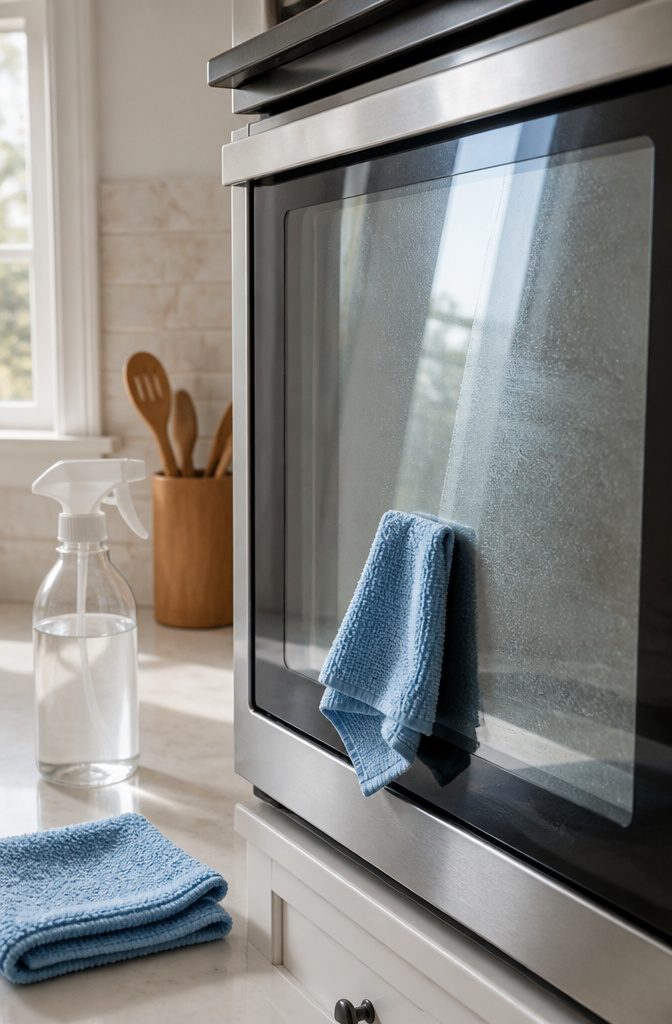
Spray distilled white vinegar or lemon juice straight onto the exterior glass, or use a natural glass cleaner if you keep one around.
I grab a microfiber cloth and wipe downward in long strokes rather than circles—it clears the cleaner and any surface dust in one pass.
If the first wipe leaves streaks or a hazy film, spray again and go over it a second time.
Once the glass looks clear, I take a dry microfiber cloth and buff it out with a few quick passes to catch any remaining streaks. The outside usually comes clean easily since the grime hasn’t been baking on.
4. Make a Baking Soda Paste for the Interior Glass

The most common approach uses ½ cup baking soda mixed with water to a shaving-cream consistency.
That texture spreads easily without dripping, and it clings to vertical glass long enough to break down baked-on grease. I mix mine in a small bowl until it holds its shape on a spoon.
For lighter residue, dish soap and warm water do the job without needing a paste.
When the buildup is heavier, Mr. Clean Magic Eraser Kitchen With Dawn or Bar Keepers Friend Powder Cleanser cut through it faster than plain baking soda.
The Magic Eraser works like very fine sandpaper—gentle enough for glass but more aggressive than a cloth alone. Bar Keepers Friend is an oxalic acid cleaner, sold as a powder you mix with a little water.
5. Spread the Paste and Let It Sit 15 to 20 Minutes

Spread the paste across the interior glass in a thin, even layer, then leave it for fifteen to twenty minutes.
That wait gives the baking soda time to soften baked-on grease without you standing there scrubbing. If the glass is especially grimy, letting it sit closer to twenty minutes makes the wipe-down easier.
Bar Keepers Friend works faster. Spread the cleanser in a circular motion, but rinse it within one minute to avoid any residue or dulling on the glass.
Magic Eraser skips the wait entirely. Wet the sponge under the tap, squeeze it three or four times to activate the foam, then start wiping.
The foam does the work as you go, so there’s no sitting time and no paste to rinse later. I like this route when the glass isn’t too far gone and I’d rather finish the job in one motion.
6. Scrub With a Soft Cloth or Sponge and Repeat if Needed

Wipe the paste off with a damp microfiber cloth or sponge, working in small areas rather than sweeping across the whole pane at once.
For grime that softened but did not lift, apply fresh paste and scrub with a scouring pad—repeat as needed until the glass clears.
Stubborn, baked-on spots that resist paste can be gently scraped with the flat edge of a razor blade, keeping the blade flush against the glass to avoid scratching.
Some cleaners warn against razors entirely, arguing the risk of scratches outweighs the benefit, while others consider them safe when used flat and with care.
If you choose to scrape, test in a corner first and stop immediately if you feel resistance or hear scraping. A scouring pad with more paste usually gets the job done without the risk.
7. Rinse Off All Residue and Dry the Glass
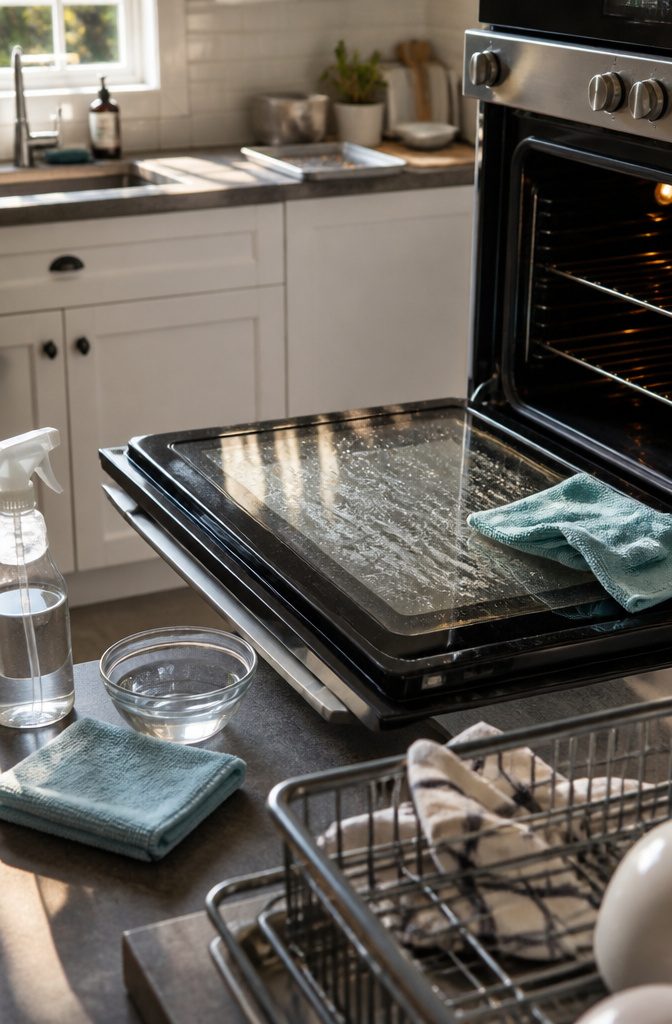
Once the grease and grime are gone, the last step is getting rid of any cleaner left behind.
I wipe down the glass with a clean, damp cloth, rinsing the cloth as I go so I’m not just spreading paste around.
If the baking soda mixture was thick, a spray bottle filled with plain water works faster—spray, wipe, spray again until the glass runs clear.
Make sure to give your oven door glass a rinse to remove any extra suds before firing up your oven again.
Leaving cleaner on the glass means streaks when the oven heats up, and nobody wants to smell baking soda smoke during dinner.
Rinse until the water runs clean, then dry the glass with a microfiber cloth or a fresh paper towel.
The microfiber buffs out any water spots better than paper, but either works if you dry it right away instead of letting it air-dry.
8. Reach Grime Trapped Between the Panes
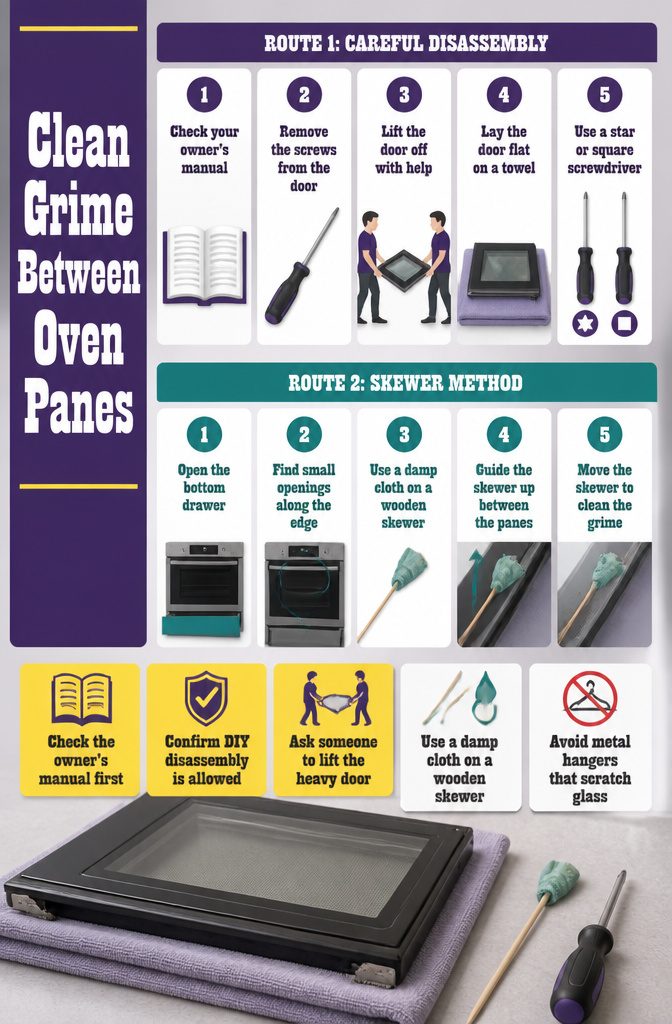
Check your owner’s manual before you start. Disassembling the door can void the warranty on some models, and a few require a service technician to take apart safely.
If yours allows DIY access, the most common method removes screws—typically two above the window, sometimes two at the base—so you can separate the door halves.
The door is heavy, so ask someone to help you lift it off and lay it flat on a towel. You’ll likely need a star or square screwdriver depending on your model.
If taking the door apart sounds like too much, try the skewer method.
Open the bottom drawer and feel along the edge of the door for small openings. Thread a damp rag or scouring pad onto a long wooden skewer and guide it up between the panes.
Owners on Reddit report good results with this approach for light grime, though it takes patience. Skip the metal coat hanger—it can scratch the glass even if you’re careful.
Use Dish Soap or Soft Cleanser for Light Maintenance
Use Dish Soap or Soft Cleanser for Light Maintenance
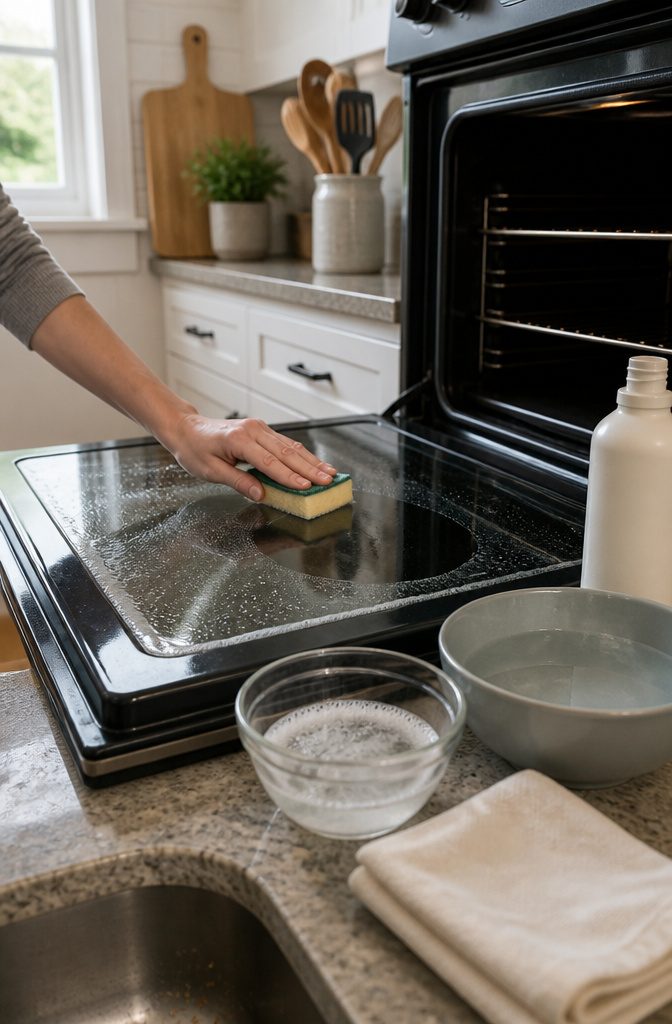
When the glass only has light residue, you can skip the heavy-duty paste and reach for a few drops of dish soap mixed with warm water.
Dip a soft sponge into the solution, wipe the glass gently, rinse with clean water, and dry thoroughly to avoid streaks. This method works best when you clean regularly and the buildup never gets a chance to bake on.
For slightly more stubborn film, Bar Keepers Friend Soft Cleanser or BKF Multipurpose Cooktop Cleaner handles the job without requiring the same sit time as baking soda.
Shake the bottle well, squeeze a small amount onto a damp sponge, and spread it across the door in a circular motion.
Rinse within one minute and wipe dry. I prefer this step for the interior glass when I notice a haze starting to form but before it turns into the kind of crust that needs real scrubbing.
Keeping up with gentle cleaning this way means you reach for harsher methods less often.
Clean Every 1 to 3 Months and Wipe Splatters Promptly
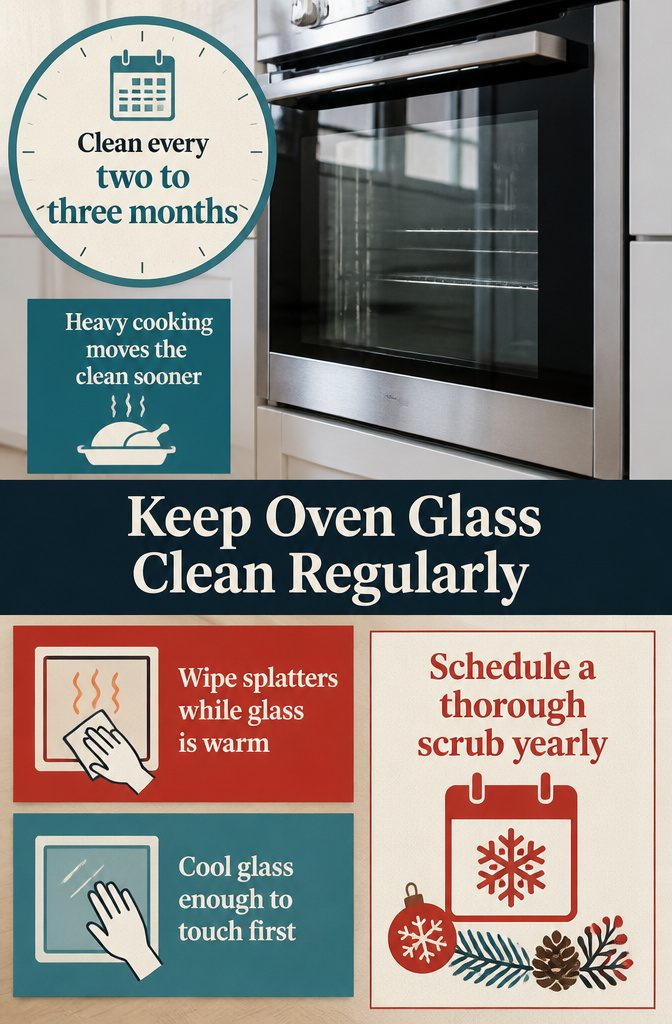
I clean my oven glass every two to three months during regular use, though that rhythm shifts based on how much roasting and baking happens.
Weeks of heavy cooking push the schedule forward; lighter months let it stretch to three. The interval matters less than consistency — waiting half a year turns a simple wipe-down into scrubbing baked-on carbon.
The real work is what happens right after cooking. Wiping splatters while the oven is still warm keeps grease from hardening into the kind of residue that needs real elbow grease later.
I let the glass cool enough to touch, then take a damp cloth to anything visible. That single habit cuts the deep-cleaning workload in half.
Once a year, I time a thorough scrub to a major holiday — Thanksgiving or Christmas, when the oven sees the most use and when a clean appliance feels worth the effort.
That annual pass catches anything the monthly cleanings missed and resets the baseline.
When to Call for Help Instead of Taking the Door Apart

If the glass looks permanently cloudy or etched after you have cleaned the outer surface with vinegar and the inner with baking soda paste, call a technician rather than taking the door apart yourself.
True etching sits in the glass itself, and no amount of scrubbing will remove it. The same goes if you have worked through every method in the manual and visibility has not improved.
Disassembly may also void your warranty.
Check the owner’s manual before you remove screws or separate panels; some manufacturers require a service call for anything that involves taking the door apart, and doing it yourself can mean losing coverage on a repair that would otherwise have been free.
If you are uncomfortable with the disassembly process once you have read the instructions, stop.
Forcing panels apart without understanding how the seals and hardware fit together can damage gaskets or crack the glass, and a replacement door costs more than the service call you were trying to avoid.
Frequently Asked Questions
Is vinegar safe to use on oven door glass?
Yes, white vinegar is safe for oven glass and cuts through grease effectively. Spray it directly on the glass and wipe with a microfiber cloth for streak-free results.
Can baking soda scratch oven glass?
Baking soda is mildly abrasive but won’t scratch oven glass when you use it with a soft sponge or cloth. Mix it to a paste consistency and apply gentle pressure while scrubbing.
How often should oven door glass be cleaned?
Clean your oven glass every 1 to 3 months depending on how often you cook. Wiping splatters right after cooking prevents heavy buildup and keeps the glass clear between deep cleans.
Can I use a razor blade to scrape oven glass?
You can use a razor blade carefully if you keep it flat against the glass, but many manufacturers advise against it because corners can scratch. A scouring pad with baking soda paste usually removes stubborn spots without the risk.
Does the self-cleaning oven cycle clean the glass?
Self-cleaning cycles may reduce some interior residue, but they rarely leave the door glass completely clear. You’ll still need to clean the glass manually with vinegar or baking soda paste.
How do you get burnt on grease off a glass oven door?
Spread a baking soda paste on the glass and let it sit for 15 to 20 minutes to soften the grease, then scrub with a damp sponge or cloth.
For heavier buildup, use a Magic Eraser or Bar Keepers Friend, which cut through baked-on residue faster.
Can I use Windex to clean the glass on my oven door?
Windex works fine for the outside of the door where grease hasn’t been baking on. For the interior glass, distilled white vinegar or a baking soda paste handles baked-on buildup better than standard glass cleaners.