

A vacuum with a soft brush attachment and light pressure removes dust from popcorn ceilings in one pass without damaging the texture.
Moisture is the real risk: even a damp sponge can pull the coating off the drywall, and homes built before 1978 require an asbestos test before you touch the surface at all.
1. Check the Ceiling and Test the Method

Homes built before 1978 may have asbestos mixed into the popcorn texture, and disturbing the surface releases microscopic fibers linked to serious respiratory disease.
If your ceiling dates from that era, have a certified asbestos professional collect samples before you touch it.
Testing costs a few hundred dollars but removes all guesswork; if asbestos turns up, leave the ceiling alone or hire an abatement contractor to handle removal.
Even in newer homes, always test your cleaning method on a hidden corner first. Sticky lint rollers can pull off texture if the adhesive grabs too firmly, and moisture or cleaners may dissolve the finish or loosen the coating altogether.
I check a spot near a closet door or behind a ceiling fan blade, wait a few minutes, and inspect for damage before moving to visible areas.
If the texture flakes or darkens, the method is too aggressive for that particular surface.
2. Protect the Room and Yourself
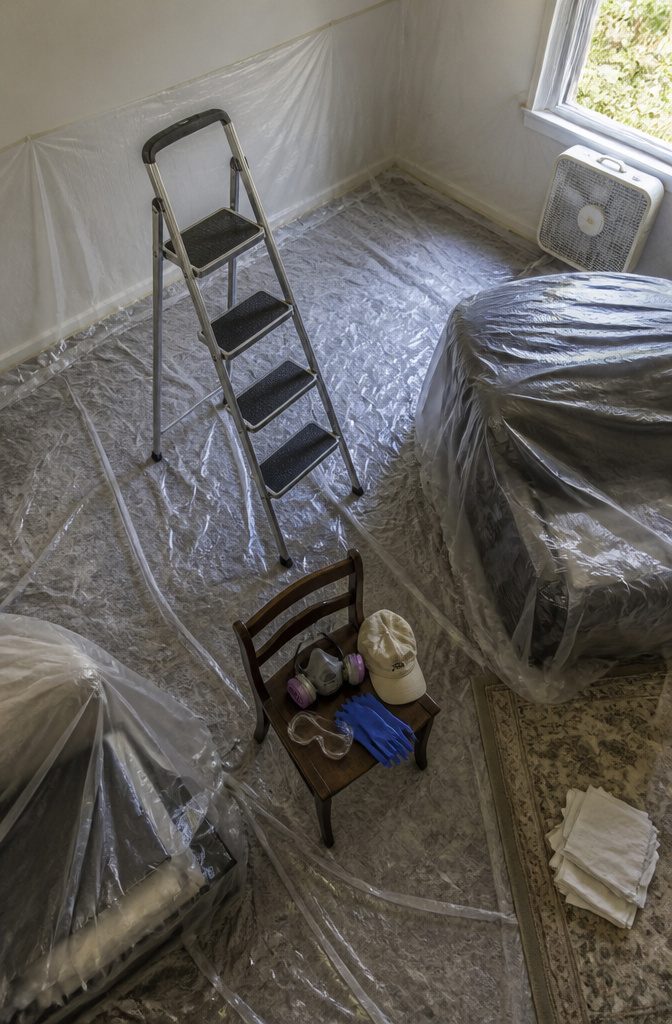
Before anything touches that popcorn surface, cover the floor and furniture completely with drop cloths or plastic sheeting.
Dust will fall the moment you start working, and bits of texture may come down with it if the ceiling is older or the paint has loosened.
I use plastic sheeting for floors because it stays put better than fabric, and I tuck it into corners so nothing shifts when I move the ladder.
Wear a respirator or mask rated for dust, safety goggles, rubber gloves, and a hat.
The texture traps years of dust, and disturbing it puts particles in the air whether you see them or not. Position your stepladder on stable ground and check that you have good lighting overhead.
Open windows and set up a fan to push air through the room while you work. Ventilation helps with drying later and keeps the air breathable now.
3. Remove Loose Dust and Cobwebs Gently

A vacuum with a soft brush attachment pulls dust and cobwebs from the texture without crushing it.
Keep the pressure light—popcorn ceilings crumble when you press hard or scrub, and strong suction can yank chunks off. Work from a stepladder and move the brush gently across the surface, letting the vacuum do the lifting.
If you can’t reach with the hose, a soft-bristled broom or feather duster works the same way.
Brush lightly and let the dust fall onto the drop cloth below. A lint roller picks up particles that settle into the grooves after the first pass, and it gets into tighter spots the vacuum head can’t manage.
Test a corner first to make sure the adhesive isn’t too strong for the finish.
Skip the microfiber cloth unless it stays completely dry. Moisture weakens popcorn texture fast, and even a damp wipe can pull it down or leave stains.
4. Treat Stains According to Type

Different stains call for different solutions.
Water or mildew stains respond to one part bleach mixed with three to four parts water in a spray bottle. Lightly mist the area, let it dry, and repeat if the mark persists.
Grease or smoke stains need a gentler approach: 1 teaspoon dish soap to 1 quart warm water, dabbed on with a sponge. Hydrogen peroxide works too—spray the stain, wait about five minutes, then dab with a damp sponge.
Test any solution on an inconspicuous corner first. Popcorn texture crumbles when oversaturated, so mist or dab rather than soaking the surface.
If a stain refuses to lift after a second treatment, painting over it with a stain-blocking primer and ceiling paint is the next move. Use a thick roller to cover the texture without flattening it.
5. Deep-Clean Only If Needed, With Limited Moisture
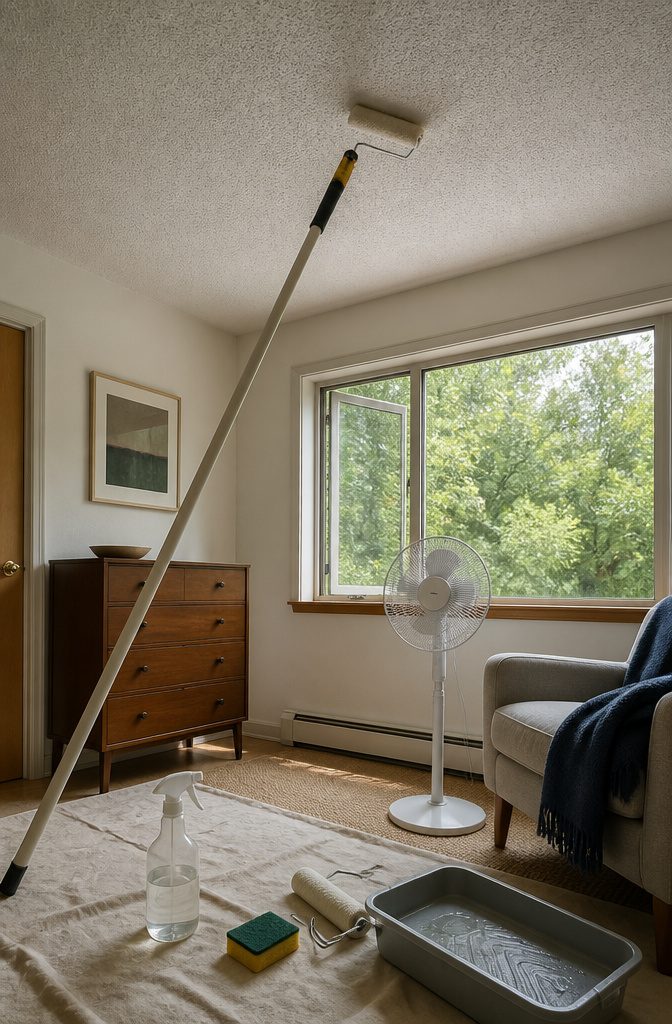
If dusting and spot treatment still leave the ceiling looking tired, a deeper clean can help. Mix equal parts white vinegar and warm water in a spray bottle, mist a small area, and blot gently with a clean, damp sponge.
Rubbing or scrubbing pulls the texture off the drywall, so blot only and let the solution do the work.
For larger areas, dry-foam cleaner and a barely damp paint roller move faster than a sponge.
Work in 4-by-4-foot sections, rolling just enough to lift the dirt, then follow immediately with a dry roller to pull moisture off the surface.
Popcorn texture loosens when it stays wet, so keeping the roller nearly dry matters more than the cleaning agent itself.
Let each section dry completely before moving to the next, and run a fan or open a window to speed drying.
The texture should feel firm to the touch within an hour; if it still feels soft or cool, you used too much water.
6. Dry the Ceiling and Decide Whether Further Action Is Needed

Once the ceiling dries, wait at least 24 hours before you inspect it closely or close the room back up.
Run fans or open windows during that time; popcorn texture that holds moisture can sag or fall. Dampness is what the texture hates most.
If stains are still visible after drying, painting over them is faster than a second cleaning attempt.
I use a stain-blocking primer first—oil-based for water and rust marks, latex for grease—then roll on flat ceiling paint that matches the existing color.
A thick-nap roller applies both without flattening the texture, and two coats usually cover what the primer did not block. Roll in one direction only.
Call someone in for asbestos concerns, mold beyond a dinner-plate-sized patch, texture that crumbles when you touch it lightly, or any situation where reaching the ceiling safely is not obvious.
Cleaning Frequency

Once a year is plenty for most homes. The texture does not need the same attention you give walls or floors, and cleaning too often raises the risk that the surface will start to flake.
If your ceilings do not collect much dust, you can stretch the interval to every few years.
More frequent cleaning makes sense if you have pets, live in a dusty or humid climate, or notice smoke stains, cooking residue, or mildew spots.
Light cleaning every six to twelve months keeps dust buildup in check, especially in kitchens, hallways, and high-traffic areas.
Before cleaning any popcorn ceiling in a pre-1978 home, be sure to have it tested for asbestos. If it tests positive, don’t touch it—you need a certified asbestos abatement contractor.
That test matters. Once you know the surface is safe to touch, the less you disturb it, the longer the texture lasts.
When to Call a Professional

I handle most popcorn-ceiling cleaning myself, but I call a professional when asbestos is suspected, when water or mold damage shows up, or when the texture is already peeling.
Any home built before 1980 should be tested for asbestos before you touch the ceiling — disturbing it releases fibers that cause serious lung disease, and removal by a certified specialist runs up to $6,000 depending on the space.
Water stains and widespread flaking usually mean improper installation, and trying to clean over structural failure makes it worse.
High ceilings that need scaffolding or respiratory issues aggravated by dust also tip the balance toward hiring out. Professional cleaning costs $118–$236 per hour; minor repair work runs around $441.
Frequently Asked Questions
How do you clean popcorn ceilings?
Use a vacuum with a soft brush attachment to gently remove dust and cobwebs, keeping pressure light to avoid damaging the texture.
For stains, mist lightly with a cleaning solution appropriate to the stain type (bleach solution for water stains, dish soap for grease) and blot with a damp sponge. Always test for asbestos in homes built before 1978 before touching the ceiling.
Can you clean popcorn ceilings with a vacuum?
Yes, but only with a soft brush attachment and gentle pressure.
Popcorn texture crumbles easily when pressed hard or when strong suction pulls at it. Move the brush lightly across the surface and let the vacuum lift the dust rather than scrubbing.
How often should popcorn ceilings be cleaned?
Once a year is enough for most homes.
Light cleaning every 6 to 12 months makes sense if you have pets, live in a dusty or humid climate, or notice smoke stains or mildew. Cleaning too often raises the risk of flaking and texture damage.
What tools are best for popcorn ceiling cleaning?
A vacuum with a soft brush attachment is the most effective tool for removing dust without damage.
A lint roller works for grooves the vacuum misses, and a dry microfiber duster or feather duster reaches tight spots. For stains, use a spray bottle and a barely damp sponge or paint roller.
How to cover up stains on popcorn ceiling?
Paint over stubborn stains with a stain-blocking primer first, then apply flat ceiling paint with a thick-nap roller.
Use oil-based primer for water and rust marks, latex for grease. Two coats usually cover what the primer did not block, and rolling in one direction keeps the texture intact.