
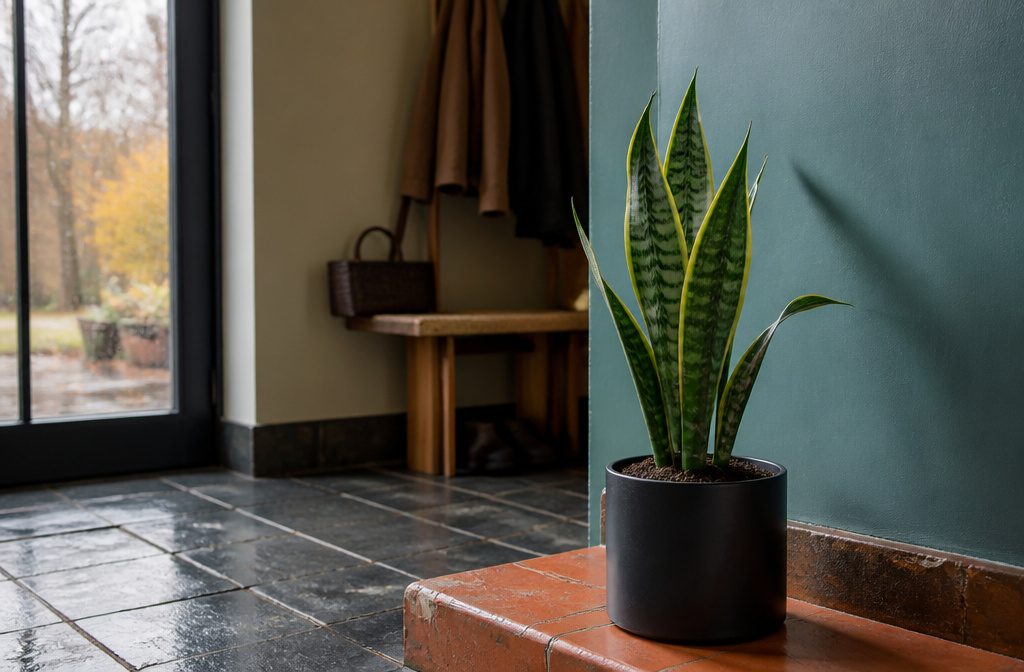
A healthy snake plant stands upright with firm, thick leaves and vivid green coloring. Most problems trace back to watering: too much moisture rots the roots and softens the leaves, while prolonged dryness causes curling or wrinkling.
The tricky part is that drooping, yellowing, and soft texture all point to overwatering, but the fix depends on checking the soil by feel rather than following a schedule.
What a Healthy Snake Plant Looks Like
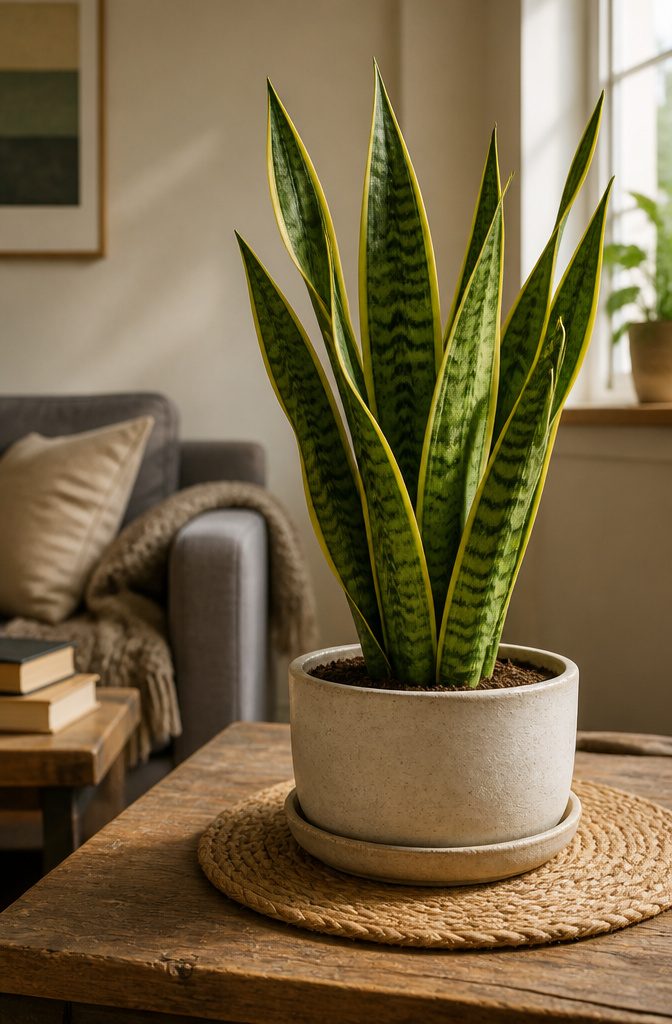
A healthy snake plant shows firm, upright leaves that stand straight in the air without support. The texture feels thick and solid when you press a leaf between your fingers, never soft or squishy.
Most varieties display green coloring with horizontal stripes running across the blade, though the exact pattern shifts by type: some edge the leaves in yellow, others mark them with lighter green variegation, and a few stay dark green throughout.
The leaves themselves resemble giant blades of grass, long and blade-shaped, rising from shallow roots called rhizomes. When the plant is doing well, those leaves hold their vertical line cleanly.
Variegation stays visible and consistent across the foliage. The green looks rich rather than dull or faded, and the leaf edges stay intact with no browning or curling inward.
1. Check the Leaves for Color Changes
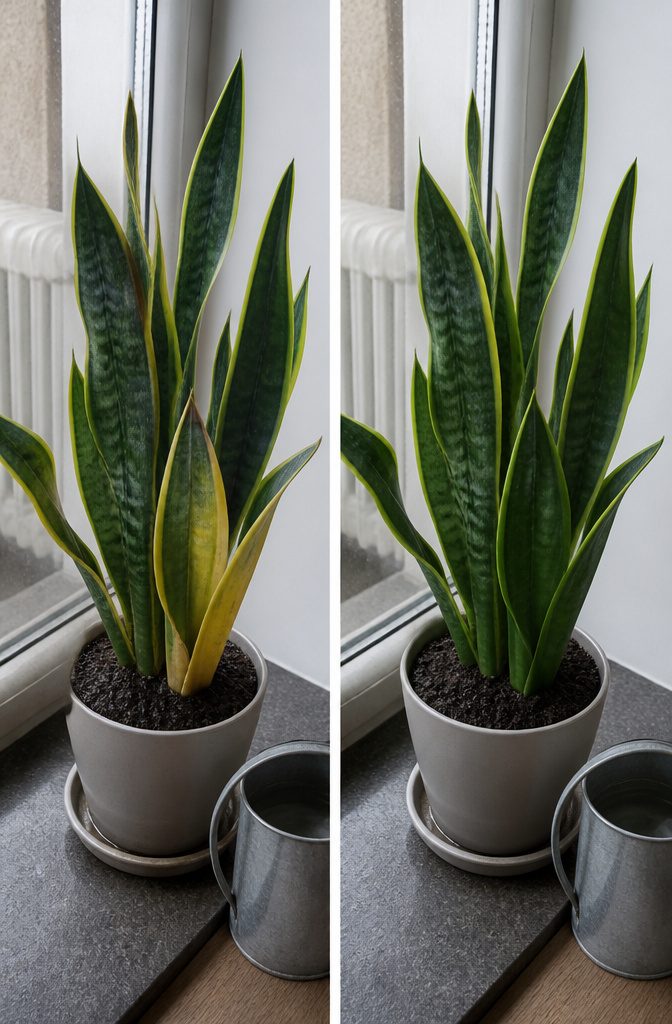
Yellowing leaves usually point to a water imbalance or a nutrient shortage, though the pattern matters more than the presence of yellow alone.
When only the oldest outer leaves yellow one at a time, that is natural aging and no cause for alarm. Widespread yellowing across multiple leaves signals a systemic problem, most often overwatering.
The yellow typically starts at the base and climbs as root rot progresses, and if those leaves feel mushy or smell foul, the roots are already damaged from sitting in waterlogged soil too long.
Browning shows up for different reasons depending on where it appears. Brown tips and edges come from inconsistent watering, low humidity, or salt buildup from tap water.
Large brown patches or spots suggest fungal infection or pest damage instead. One symptom rarely points to a single cause, so check the soil moisture, the watering pattern, and the light before you assume what went wrong.
2. Look for Texture and Firmness Problems

Press a healthy snake plant leaf and it pushes back: firm, thick, and holding its shape. Soft or mushy leaves signal something wrong, and nine times out of ten the cause is overwatering.
Too much water breaks down the tissue inside the leaf, turning what should be rigid into something that feels squishy or gives under your thumb.
The same texture problem shows up even when you think you’re watering correctly if the pot has no drainage holes or the soil stays compacted. Water sits instead of moving through, and the leaves rot from the inside.
If you find soft spots, the next stop is checking the roots and soil — mushy leaves usually mean mushy roots, and both need attention before the plant stabilizes.
Pull the plant, trim anything black or slimy at the roots, and repot in gritty soil made for succulents. Cut back damaged leaves to push new growth.
3. Watch for Drooping, Bending, or Falling Over
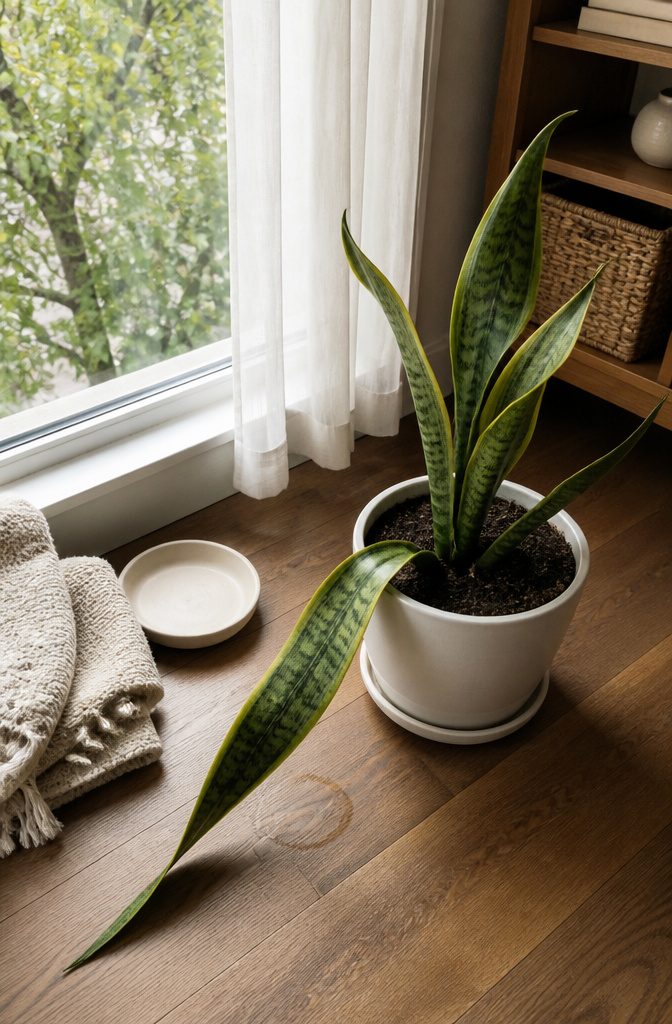
Leaves that droop, bend, or fall over signal a problem with watering nine times out of ten.
Snake plants are built to stand rigid and upright, and when they lose that firm stance, the roots are usually sitting in soggy soil or badly dried out.
Overwatering is the more common culprit: too much moisture keeps roots from breathing, triggers rot, and leaves the plant unable to support its own weight.
The leaves store water in thick, succulent tissue, and when overwatered they soften at the base, crease, and tip over.
Underwatering causes drooping too, but it takes months of complete neglect before a snake plant wilts from thirst—owners on Reddit confirm these plants can go an absurdly long time without water before they actually collapse.
Light matters here as well. Sold as low-light tolerant, snake plants actually prefer very bright conditions, and in prolonged dim spots the leaves thin at the base and lose their rigidity.
Move the plant closer to a window with bright indirect light if the leaves look floppy without feeling wet or mushy. Temperature stress from baking sun or cold drafts can also cause bending, though less often than the watering extremes.
4. Spot Wrinkling, Curling, or Narrow Leaves
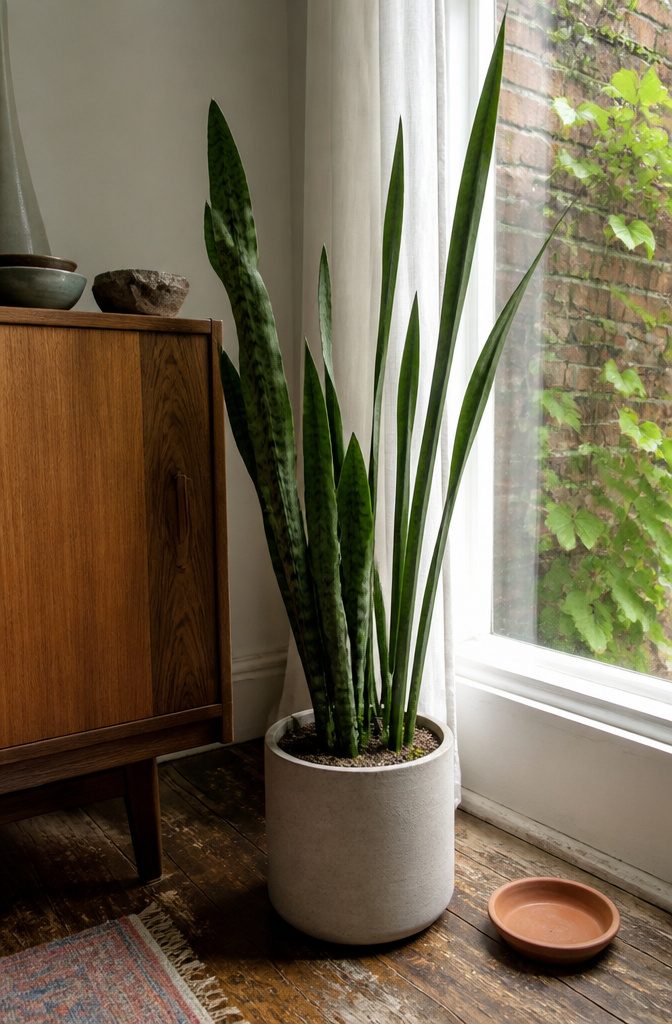
Leaves that curl inward, wrinkle, or grow narrower than usual point to either light or water stress.
When a snake plant doesn’t get enough water for an extended stretch, the leaves pull moisture inward to survive, which shows up as a curl or wrinkle across the surface. The leaves may also bend rather than standing upright.
Too much direct sunlight can cause the same curling by speeding up transpiration faster than the roots can replace what the leaves lose. The plant dehydrates, and the leaves curl to hold on to whatever moisture remains.
Narrow, stretched leaves are the opposite problem. When light is too low, the plant reaches toward the nearest source and grows thin, elongated leaves that look weaker than normal.
That stretching won’t reverse once it happens, but moving the plant to brighter indirect light stops new growth from doing the same.
If the damage is severe, wait for new shoots and repot those, or propagate from the healthiest leaves and start over.
5. Inspect the Roots and Soil
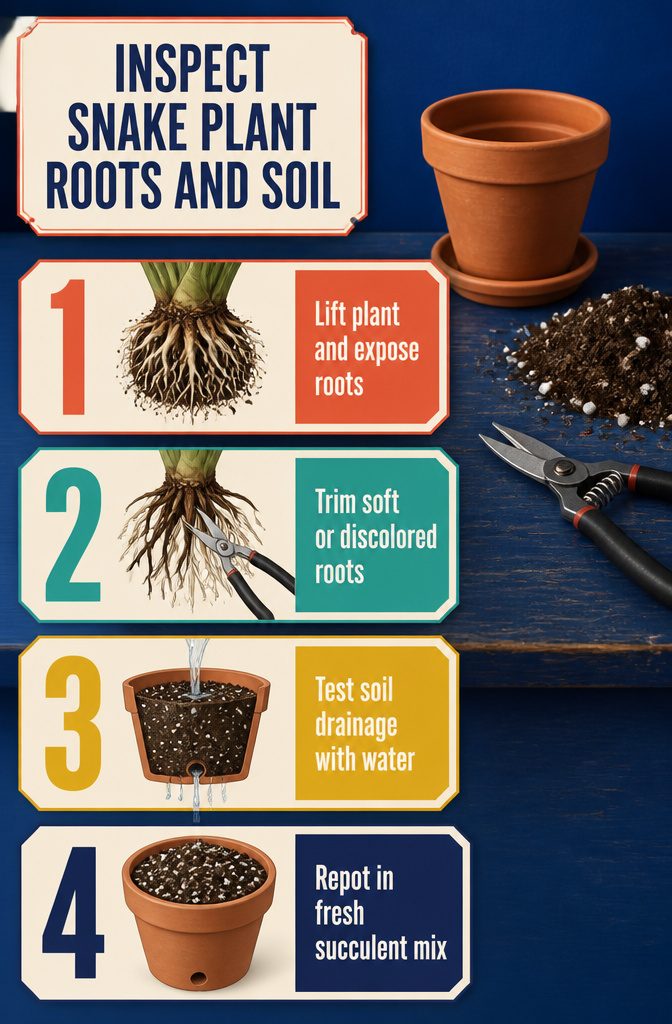
- Pull the plant from its pot and gently shake off enough soil to see the root mass. Healthy roots are white to light tan, firm when you press them, and smell like fresh soil. Brown or black roots that feel slimy or fall apart when touched signal rot, usually from water sitting too long in the pot.
- Check for a foul smell near the roots or soil surface. A rotten odor means bacterial or fungal decay has set in, and the problem has likely spread through the root system. Trim off all soft or discolored roots with clean shears until only firm, pale tissue remains.
- Test the soil by watering and watching how fast it drains. Water should flow through within a few minutes, not pool on the surface or sit in the pot. Soil that stays wet between waterings or feels dense and compacted blocks air from reaching the roots and keeps them waterlogged.
- Repot in fresh, well-draining mix made for succulents or cacti—standard potting soil holds too much moisture for snake plants. Add perlite, coarse sand, or pumice to improve drainage, and make sure the new pot has at least one drainage hole at the bottom.
6. Match the Sign to Watering Problems

Most of the trouble with snake plants comes down to watering too often or keeping the soil damp too long between waterings.
Drooping leaves, yellowing, or a soft base all point back to the same root problem: wet soil that never quite dries out.
The fix is simpler than keeping a fixed schedule. Check the soil with your finger before you water, and wait until the top inch feels dry.
Some sources push that further and recommend waiting until the soil is dry almost all the way down, or even letting it stay dry for several days before adding water.
That might mean watering every two to four weeks, but the actual gap depends on pot size, temperature, and how much light the plant gets.
A snake plant would rather sit dry than damp, and adjusting by feel beats following a calendar.
7. Adjust Light if Leaves Look Weak or Scorched
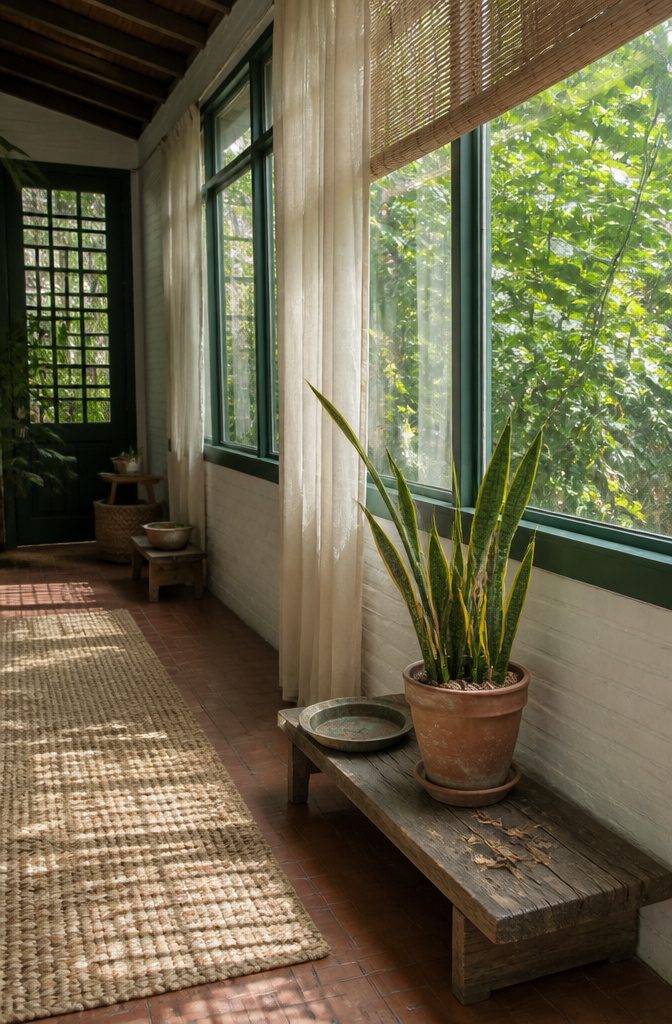
Snake plants tolerate low light better than most houseplants, but bright, indirect light keeps the leaves thick, upright, and strong.
A plant stuck in a dim corner will still survive, but it grows slowly and eventually stretches toward the nearest light source.
That stretching, called etiolation, produces narrow, weak leaves that flop over and lose the clean, architectural look a healthy snake plant should have.
Sansevieria are said to grow in low light situations but they really need a few hours of light daily to become established and strong.
If your plant’s leaves look thin or lanky, moving it closer to a window usually fixes the problem over the next few months of growth.
The flip side is too much direct sun.
A plant that has been sitting in low light can scorch if you suddenly move it into full sun. Yellow or brown patches on the leaves signal sun damage.
If your plant has been in a dim spot and you want to give it more light, do it gradually: start with two hours of morning sun and add another hour every week or two until the plant adjusts.
Avoid direct sun between 10 a.m. and 3 p.m. during summer, when it hits hardest.
8. Check for Pests and Disease

Spider mites, mealybugs, scale, and thrips can all damage a snake plant by feeding on the sap inside the leaves, which pulls nutrients away and causes yellowing or deformation.
Small pests like mites and thrips are tough to spot until the leaves start looking misshapen or off. Scale appears as white spots that cluster on the leaves and can suffocate them if left alone.
When you water, take a minute to inspect:
- Look closely at both sides of the leaves for tiny bugs, webbing, or sticky residue that signals an infestation.
- Treat pests early with insecticidal soap, neem oil, or horticultural oil before the damage spreads.
- Remove heavily infested leaves by cutting them off and throwing them away rather than trying to save them.
- Wipe leaves with a damp cloth every so often to clear dust, which attracts pests and can encourage fungal problems in humid conditions.
Fungal disease is less common indoors but can settle in during hot, humid weather and cause soft or rotting patches.
If the problem is minor, prune off the affected sections or apply an organic fungicide. A severe infection that keeps spreading means the plant may need to go before it reaches others nearby.
Frequently Asked Questions
How often should I water my snake plant?
Check the soil with your finger before watering and wait until the top inch feels completely dry. That typically means watering every 2 to 4 weeks, though the actual interval depends on pot size, temperature, and light conditions.
Snake plants tolerate dry soil better than damp, so err on the side of waiting too long rather than watering too soon.
How much light does my snake plant need?
Snake plants do best in bright, indirect light, which keeps the leaves thick and upright.
They tolerate low light better than most houseplants and will survive in a dim corner, but they grow slowly and eventually stretch toward the nearest light source. A spot near a window with filtered light gives you the strongest growth.
What’s the best temperature for my snake plant?
Snake plants prefer temperatures between 70–90°F and should stay above 10°C year-round.
Protect them from cold drafts near windows in winter, as temperature stress can cause leaves to bend or droop. They handle most indoor temperatures without trouble as long as they stay warm and out of direct drafts.
Should I repot my snake plant?
Repot when roots start emerging from drainage holes or the plant has clearly outgrown its container, ideally in spring.
Use a pot with drainage holes and fill it with a succulent or cactus mix that drains quickly rather than standard potting soil. Snake plants grow slowly, so repotting every 2 to 3 years is usually enough.
Why are my snake plant leaves turning yellow?
Yellowing usually signals overwatering or a nutrient shortage, especially when it spreads across multiple leaves rather than just the oldest outer ones.
The yellow typically starts at the base and climbs as root rot sets in from waterlogged soil. If the leaves feel mushy or smell bad, the roots are already damaged and need attention.
Can too much direct sunlight cause my snake plant leaves to curl?
Yes, too much direct sun speeds up transpiration faster than the roots can replace lost moisture, which dehydrates the plant and causes curling.
If your snake plant has been in low light, move it to brighter conditions gradually over a few weeks to avoid scorching. Avoid direct sun between 10 a.m. and 3 p.m. during summer when it hits hardest.
What does an unhealthy snake plant look like?
An unhealthy snake plant shows soft or mushy leaves, widespread yellowing, drooping or falling over, and brown or black roots that feel slimy.
The leaves may also wrinkle, curl inward, or lose their firm upright stance. Most of these problems trace back to overwatering, though underwatering and low light can also weaken the plant over time.
What is the average lifespan of a snake plant?
Snake plants can live for decades with proper care, often outlasting many other houseplants.
They grow slowly and tolerate neglect better than most indoor plants, which contributes to their long lifespan. As long as you avoid overwatering and give them enough light, they continue producing new shoots and leaves for years.
Where should you not put a snake plant?
Avoid placing a snake plant in a windowless room with no natural light, a bathroom or other high-humidity spot, or near cold drafts from windows in winter.
They also suffer in pots without drainage holes, where water sits and causes root rot. A warm, dry room with bright indirect light suits them best.
Should I water a snake plant every day?
No, watering a snake plant daily will kill it.
These plants store water in their thick leaves and need the soil to dry out completely between waterings, which usually takes 2 to 4 weeks. Overwatering is the most common cause of root rot and leaf damage in snake plants.