
I’ve laid vinyl in three homes now. You don’t always need underlayment, but skipping it blindly is how you end up with that hollow click-clack sound that makes midnight bathroom trips sound like a marching band.
If your planks have pre-attached padding or you’re going over cushioned vinyl, you’re in good shape. Bare plywood or concrete requires that cushion and moisture protection.
Match your underlayment to your subfloor reality, not whatever’s on sale. Your floor will maintain its soft feel underfoot for years when you make this choice thoughtfully.
Do You Actually Need Underlayment for Vinyl Flooring?

Why do we even ask this question? Because nobody wants to waste money on stuff they don’t need, and I get it. I’ve stood in that aisle, staring at rolls of underlayment, wondering if I’m being upsold.
Underlayment isn’t always mandatory. If your vinyl plank has that cozy attached pad, you’re golden. When laying flooring over bare plywood or crusty old vinyl without cushioning, underlayment becomes essential. It smooths imperfections, reduces footstep noise, and improves comfort underfoot.
Subfloor compatibility matters significantly. Concrete slabs require underlayment that doubles as a moisture barrier, since concrete absorbs and releases moisture. Even with waterproof planks, that extra moisture buffering protects seams from swelling and separation over time.
Verify your subfloor first, then make your decision based on what you find.
When You Can Skip Underlayment Entirely

I’ve learned there are a few options where you can skip the extra layer entirely: when your vinyl planks come with pre-attached padding already built in, or when you’re laying over existing cushion-backed vinyl that feels like a yoga mat underfoot. You can also install bare-bones over below-grade tile, that cold stuff in basements, since it’s already doing the heavy lifting for you. Just double-check your manufacturer’s specs first, because assuming you can skip this step without verification often leads to installation problems.
Pre-Attached Padding Present
How lucky can you get? Some vinyl planks come with pre-attached padding already stuck to the bottom, like finding fries at the bottom of your takeout bag. I installed these beauties in my basement last spring, and skipping that extra vinyl underlayment step saved time and money.
That built-in layer isn’t just fluff. It’s often a moisture barrier too, which means you’re protected against damp concrete without buying separate rolls. I unboxed mine, admired that gray foam backing, and went straight to clicking planks together without wrestling with underlayment seams.
Check your manufacturer’s specs though. Some tricky situations still want extra protection. But for most installations, that pre-attached padding means one less trip to the hardware store and reduces your project timeline and labor costs.
Existing Cushioned Surfaces
Sometimes you hit the jackpot without even buying a ticket. That’s exactly how I felt when I discovered my old cushioned vinyl already had everything I needed. No extra underlayment, no extra headaches.
Cushioned surfaces are already doing the heavy lifting. That built-in squish is your cushion. That vinyl backing often doubles as a moisture barrier, keeping dampness at bay without extra layers.
However, stacking underlayments can wreck your locking system, creating a wobbly mess instead of that seamless float you’re aiming for. I learned this the hard way.
Always check those manufacturer guidelines first. I’ve seen warranties evaporate faster than morning coffee because someone skipped this step. Reading that fine print prevents voided coverage later.
Below-Grade Tile Bases
Why haul extra materials downstairs when your tile’s already doing the work? I’ve spent time in basements wondering if I’m overthinking this, and sometimes the answer is yes.
Below-grade tile bases can satisfy your underlayment requirements without additional materials. That existing surface becomes your foundation.
What matters for below-grade tile installation:
- Check that your tile is flat, stable, and crack-free. Wobbly planks indicate inadequate preparation.
- Verify you have a proper moisture barrier in place; basements retain moisture.
- Clean thoroughly, because debris creates bumps, and bumps create gaps.
- Double-check manufacturer specifications, since some brands have restrictions on below-grade installations.
Verify your conditions before proceeding.
Plywood or Concrete: Which Subfloor Needs Underlayment?
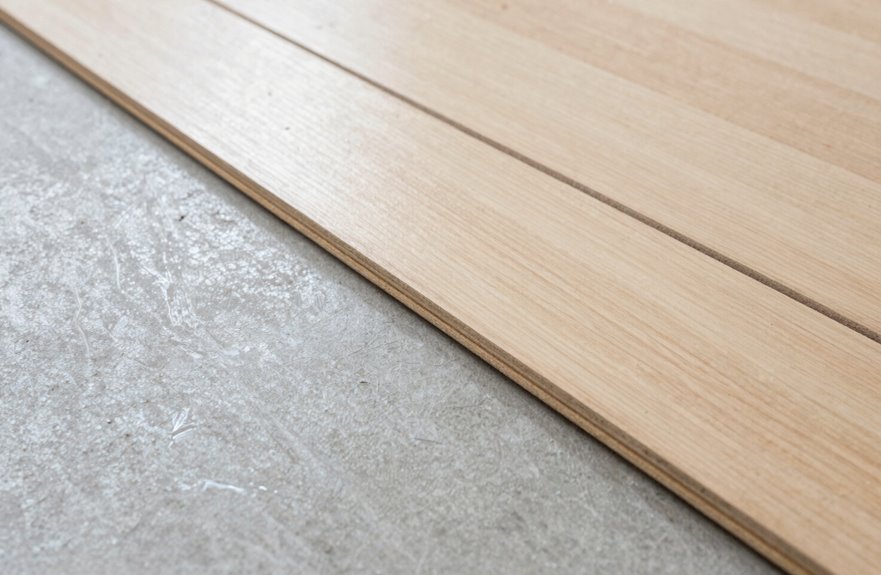
I’ve installed vinyl over both surfaces, and plywood and concrete require different underlayment approaches. With plywood, underlayment provides a cushioned feel underfoot and reduces hollow sounds. Moisture protection isn’t the primary concern since plywood doesn’t absorb water the way concrete does. Concrete, however, requires underlayment with serious moisture protection and insulation. Concrete slabs conduct cold and can allow moisture vapor to migrate upward, which will compromise flooring and cause damage if left unaddressed.
Plywood Subfloor Basics
How exactly do you know what your plywood subfloor needs from an underlayment? It’s simpler than you’d think.
When working with plywood subfloor, moisture control is less critical than it would be with concrete. Plywood provides inherent moisture resistance.
The key priorities are:
- Cushioning that makes vinyl feel comfortable, not like a thin plastic layer
- Sound-dampening to reduce noise transmission to lower levels
- Smoothing out subfloor imperfections that would otherwise show through the flooring
- Class II moisture retardant only in humid environments
Products like Whisper Step or SoundCheck provide the right balance of comfort and subtle moisture protection without unnecessary features. Your plywood subfloor needs underlayment that works with its natural strengths.
Concrete Subfloor Needs
Concrete subfloors require different preparation than other flooring bases. Concrete sweats, shifts, and conducts cold, making proper underlayment essential.
You absolutely need a moisture barrier to prevent damp, musty odors from developing. Some LVP comes with built-in protection, which saves a step, but always verify this with product specifications. Underlayment provides cushioning, warmth, and smoothing for the tiny bumps concrete typically has. Sound reduction is an additional benefit in homes with multiple levels. Always verify manufacturer guidelines to maintain warranty coverage.
Moisture Barrier Differences
Why does moisture protection matter more for concrete than plywood? Concrete subfloors seep dampness like a sponge. That basement project I’ll never forget. Plywood breathes easier and needs less maintenance. You want your underlayment working where it counts.
Here’s what I’ve figured out:
- Plywood plays nicer; a Class II moisture retardant slows things down just fine
- Concrete demands full armor, cushioning plus protection in one underlayment package
- Some options come with attached moisture barrier, felt backing, vapor seal
- Even waterproof vinyl needs backup at the seams, moisture sneaks everywhere
Pick your subfloor and pick your strategy. Proper moisture protection prevents structural damage and extends floor lifespan significantly.
When Your Vinyl Plank Already Has Attached Padding

What a relief when you peel back that vinyl plank and spot the fuzzy gray backing already stuck there, like finding out your new couch comes with free throw pillows. That attached padding means you’re skipping an entire step and saving time on installation.
This built-in underlayment usually packs its own moisture barrier, so you’re covered on damp days, but you should still double-check the manual if you’re laying over concrete. Basements can trap moisture beneath flooring. The cushioning feels warmer underfoot, quiets your footsteps, and saves you from buying separate materials.
Adding another layer can mess with those click-lock edges and void your warranty, so avoid it. Just match your planks to your subfloor and follow the directions.
Best Underlayment Types for Vinyl Flooring: Foam, Cork, Rubber, or Felt

How do you even pick when the aisle looks like a foam party exploded across the hardware store? I’ve stood there, overwhelmed, clutching samples like life preservers. Let me break down the underlayment types that actually matter for your vinyl journey.
- Foam keeps your wallet happy on plywood subfloors, though you’ll need extra moisture protection since it absorbs water readily
- Cork delivers sound insulation and resists mildew, making it suitable if you’re sensitive to allergens
- Rubber offers moisture protection, sound insulation, and thermal comfort in one bouncy package
- Felt provides an eco-friendly, thin option but requires a vapor barrier attachment for moisture resistance
Match your budget, your subfloor reality, and what your feet actually want. The right choice depends on your specific installation conditions and performance priorities.
The Double Underlayment Mistake That Voids Warranties
Where’d I go wrong? I doubled up on underlayment, thinking more cushioning meant better comfort, a big mistake. My planks started buckling, seams gapping, and suddenly my underlayment warranty was void. I learned that floor installation guidelines exist for a reason; they protect your investment. Most vinyl already has built-in backing, so adding another layer plus that separate moisture barrier creates a squishy sandwich that breaks locking systems. Manufacturers are strict. Deviate, and you’re on your own. Check those warranty terms first. One proper layer handles subfloor prep and moisture control without complications. Proper installation prevents the warped planks that result from double underlayment.
How Underlayment Extends Your Vinyl Floor’s Lifespan
Underlayment is essential protection for vinyl flooring, functioning as a critical foundation layer. Here’s how it serves your floor:
Underlayment is essential protection for vinyl flooring, functioning as a critical foundation layer that serves your floor in multiple ways.
- Cushion and quiet – provides a soft step without the clack-clack-clack echoing through hallways
- Smoothing those subfloor bumps – corrects imperfections that would crack planks over time
- Moisture barrier magic – prevents warped floors and water damage
- Deflection control – keeps everything aligned with no gaps or buckling
Subfloor protection prevents mold, cupping, and warranty issues. Following manufacturer specifications for WPC, SPC, or other core materials ensures your floor receives the proper foundation it needs. Your flooring will outlast changing design preferences when properly installed with quality underlayment.