
A full shower clean takes about 30 minutes and pulls buildup from every surface without scratching what it’s supposed to protect.
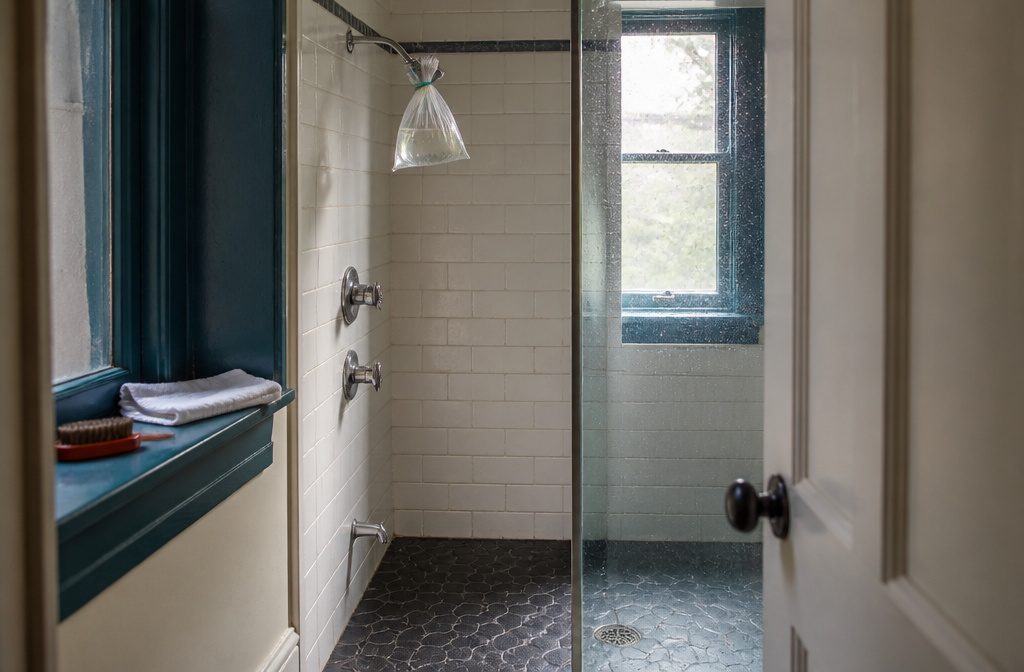
Most people skip the overnight showerhead soak, which means mineral deposits stay lodged inside the nozzle and weak water pressure comes back within days. The fix: a plastic bag of cleaning vinegar tied around the head while you sleep.
1. Remove Items and Clear Loose Debris
Remove Items and Clear Loose Debris
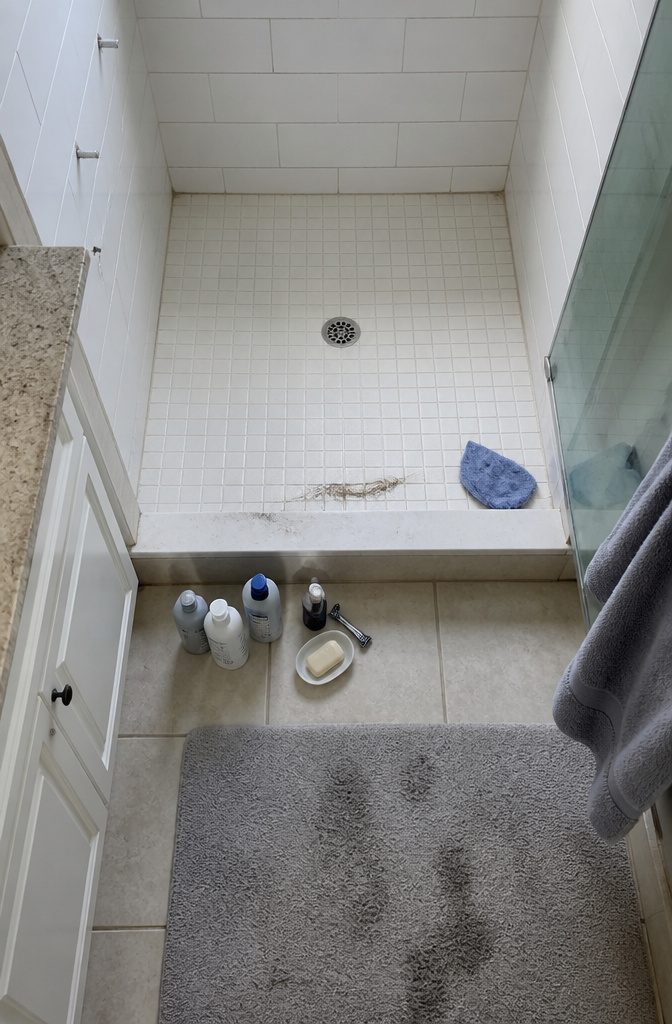
The shower looks more cluttered than dirty until you move the bottles. I pull everything out before I start: shampoo, conditioner, body wash, razors, soap dishes, all of it.
That clears the corners where buildup hides and lets you reach the edges of the caddy, the base of the walls, and the shelf brackets without working around plastic.
Once the bottles are out, I wipe down loose hair, dust, and soap residue with a dry microfiber cloth or paper towel.
This step takes two minutes and makes the actual cleaning faster. Trying to scrub over loose debris just pushes grime around instead of lifting it, and wet dirt turns into a paste that smears across tile.
Getting rid of the surface layer first means the cleaner you spray next makes contact with the buildup that matters, not the dust that would rinse away on its own.
2. Soak the Showerhead Overnight in Vinegar
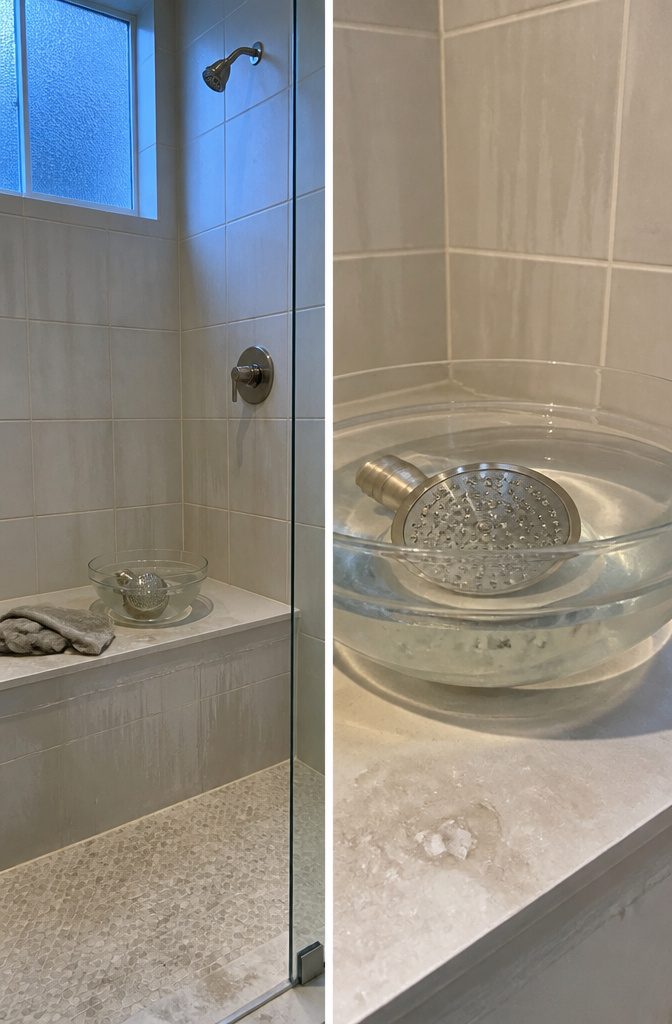
Mineral deposits clog showerhead holes over time, and the fix depends on whether the head unscrews.
If it comes off easily, remove it and drop it in a bowl of cleaning vinegar overnight. The acid breaks down the buildup inside and out, and you rinse it clean in the morning before screwing it back on.
For a fixed showerhead, the bag method works just as well. Fill a plastic bag with cleaning vinegar, tie it around the head so the nozzle sits submerged, and leave it overnight.
The vinegar reaches every angle without the need to unscrew anything. Run hot water through it the next morning to flush out loosened deposits, and the flow comes back strong.
I prefer removing the head when I can because it lets me see what came out, but the bag approach gets the same result with less fiddling.
3. Clean Tile Walls With a Six-Stage Method

- Rinse the tiles with warm water to loosen surface dirt and soap residue before you bring in any cleaner.
- Spray your cleaner evenly across the tile. A 50/50 white vinegar and water mix works on porcelain and ceramic; skip it on natural stone since the acid can etch the surface.
- Let it sit for 5 minutes, up to 10 for heavy soap scum. That dwell time breaks down the buildup so you scrub less.
- Scrub gently with a soft brush or sponge in circular motions, focusing on corners where residue collects.
- Rinse thoroughly with clean water to remove all traces of cleaner.
- Dry the surface with a microfiber cloth to prevent streaks and water spots from forming as the tile air-dries.
4. Treat Fiberglass Without Abrasives

Fiberglass scratches if you treat it like tile, so the cleaner and the tool both matter.
Start with a non-abrasive cleaner formulated for fiberglass — something mild enough to lift soap scum without roughing up the surface. A soft sponge does the actual work; anything coarser leaves marks you’ll see every time the light hits wrong.
Stubborn stains call for baking soda. Mix it with just enough water to form a paste, spread it on the problem spots, and let it sit long enough to break down what the first pass missed.
The paste works as a gentle abrasive without the scratching risk that comes with harsher powders or scrub pads.
Rinse it all off with warm water, then wipe the floor dry with a soft cloth so you’re not leaving streaks or residue behind.
Citric acid-based products handle limescale on synthetic shower floors where vinegar would do more harm than good. Skip bleach and harsh acids entirely — they compromise the finish faster than the buildup ever would.
5. Use pH-Neutral Cleaners on Stone

Stone surfaces need a pH-neutral stone cleaner and nothing else.
Acidic cleaners like vinegar will etch or dull marble, limestone and travertine, even when diluted. I keep a stone-safe spray on hand because anything harsher damages what it is supposed to protect.
Use a soft cloth or microfiber sponge to wipe down the stone after each shower.
For stains, apply a stone-safe cleaner as soon as you notice them. Waiting lets the stain set, and natural stone is porous enough that prompt action makes the difference between a quick wipe and a permanent mark.
Rinse completely after cleaning. Residue left on stone can dull the finish over time, and some cleaners require more rinsing than others.
If your stone is sealed, check the manufacturer’s recommendation for resealing intervals. Unsealed stone picks up stains faster, but not every stone type needs a seal to begin with.
6. Squeegee Glass Doors After Each Use

Glass shower doors look clear only as long as you keep water from drying on them.
The fix that makes the difference: a squeegee pass right after each shower, before water spots and soap film get a chance to bond to the surface.
A weekly scrub with vinegar or all-purpose cleaner mixed with water handles any buildup that sneaks past, and a microfiber cloth finishes the job without streaks.
I keep the squeegee hung inside the shower so it never gets skipped. The blade pulls water off the glass in about 30 seconds, and that half-minute saves the kind of scrubbing that turns a quick clean into an afternoon project.
After squeegeeing, a dry microfiber cloth picks up what the blade missed and leaves the glass genuinely clear.
The same routine works on the frame and any metal trim, which stops both limescale and the orange soap residue stains that show up in joints.
7. Scrub Grout Lines With Baking Soda Paste
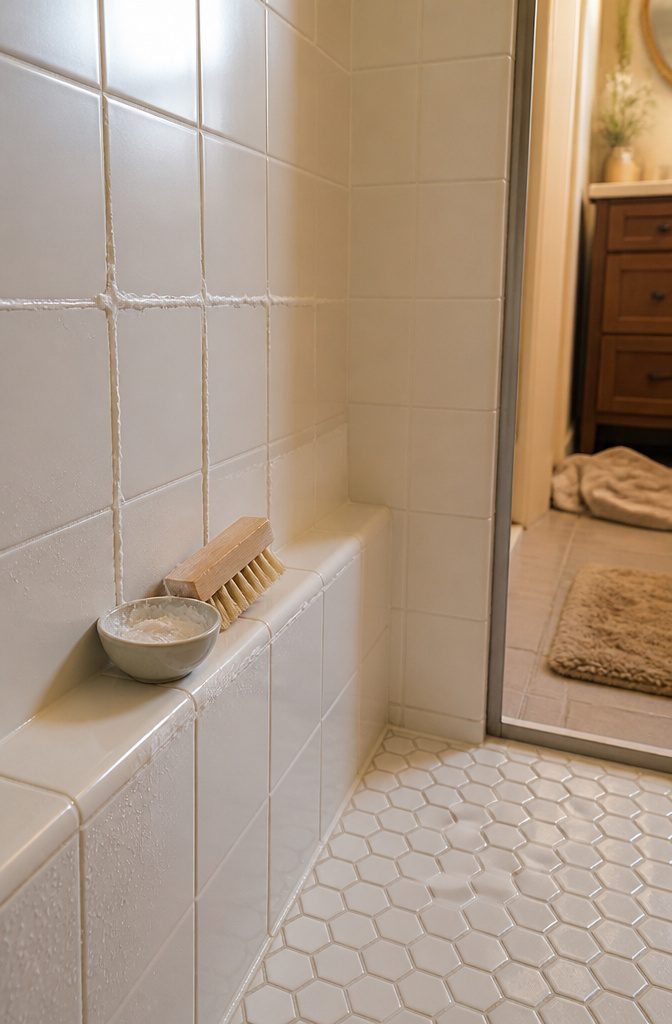
Grout lines collect moisture and stains faster than the tile around them, and a thick paste of baking soda and a little water pulls both out without eating into the surface.
I work it into the lines with a grout brush or an old toothbrush, making sure every line gets covered, then leave it alone for 10–15 minutes before scrubbing.
The paste needs that time to break down what soap and water left behind.
When the stains are darker and mildew has taken hold, I swap the water for hydrogen peroxide and let the paste sit for at least 15 minutes.
The bubbling that starts is the peroxide lifting the mildew out of the pores, and it does most of the work before the brush ever touches down.
After scrubbing, a thorough rinse washes away what came loose, and drying the grout afterward keeps new stains from moving in while it’s still damp.
8. Wipe Fixtures and Clean the Shower Tray
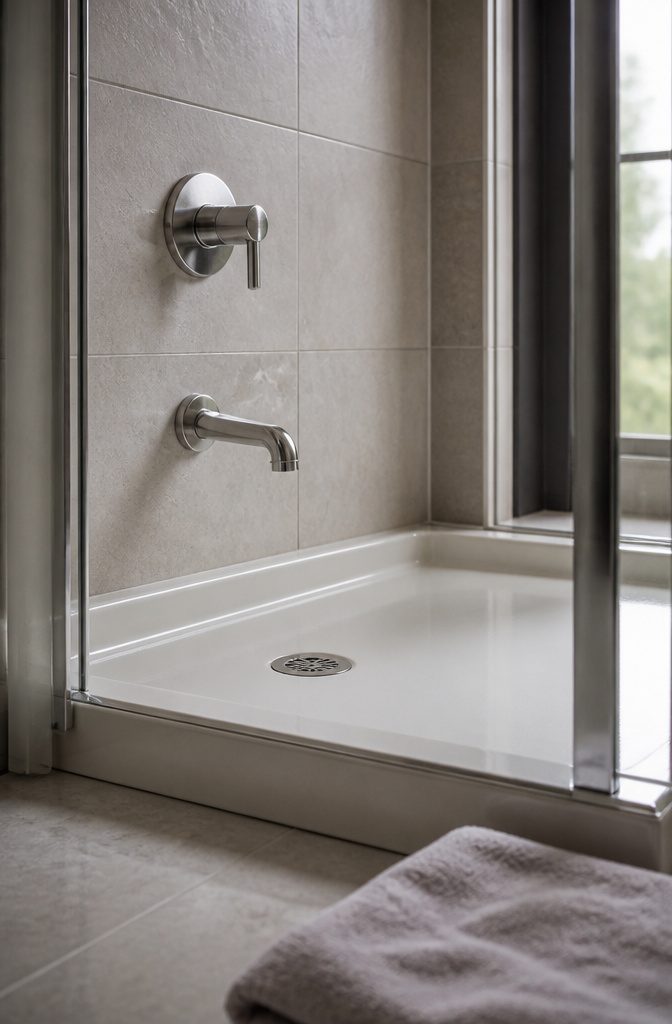
Fixtures respond well to a soft cloth and a gentle cleaner that won’t scratch the finish.
I wipe down the handles, spout, and any trim with a microfiber cloth dampened with a mild all-purpose spray, which brings back the shine without leaving streaks or dull spots behind.
Letting the cleaner sit for a minute helps if there’s any buildup around the base of the tap, but most of the time a quick wipe is enough.
The shower tray takes a different approach depending on what it’s made from.
For synthetic trays, I stick with warm water, a soft sponge, and a mild cleaner, avoiding anything with harsh acids, vinegar, or abrasive scrubbers that can scratch the surface.
Limescale comes off with a citric acid-based product, then a cold water rinse clears away any residue.
Solid Surface trays handle a bit more: a soft sponge and mild detergent work for routine cleaning, and an abrasive like Cif takes care of limescale without damaging the material.
A warm water rinse and a pass with a soft cloth finish it.
9. Clear Hair From the Drain and Flush With Baking Soda
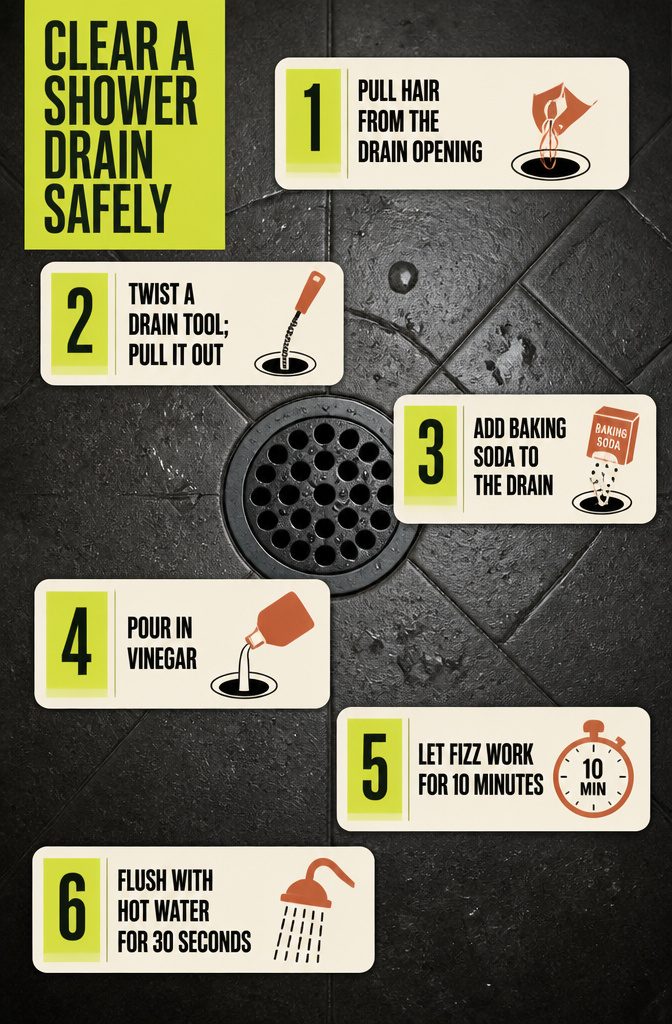
Clear Hair From the Drain and Flush With Baking Soda
- Pull hair and debris from the drain opening with your fingers or a paper towel. Most clogs start at the surface.
- Push a wire or drain-cleaning tool down into the drain to loosen buildup farther down. Twist and pull it back out to bring up more hair.
- Pour a few tablespoons of baking soda directly into the drain.
- Follow with a cup of vinegar. The mixture will foam immediately.
- Let the fizz work for 10 minutes. The reaction breaks down soap residue and loosens what the wire left behind.
- Flush the drain with hot water. Run it for at least 30 seconds to push everything through.
This method clears light clogs without caustic chemicals, and the baking soda leaves the drain smelling clean instead of sour. For stubborn blockages that survive this treatment, a plumber’s snake gets deeper than a wire will.
10. Rinse Everything and Dry Surfaces
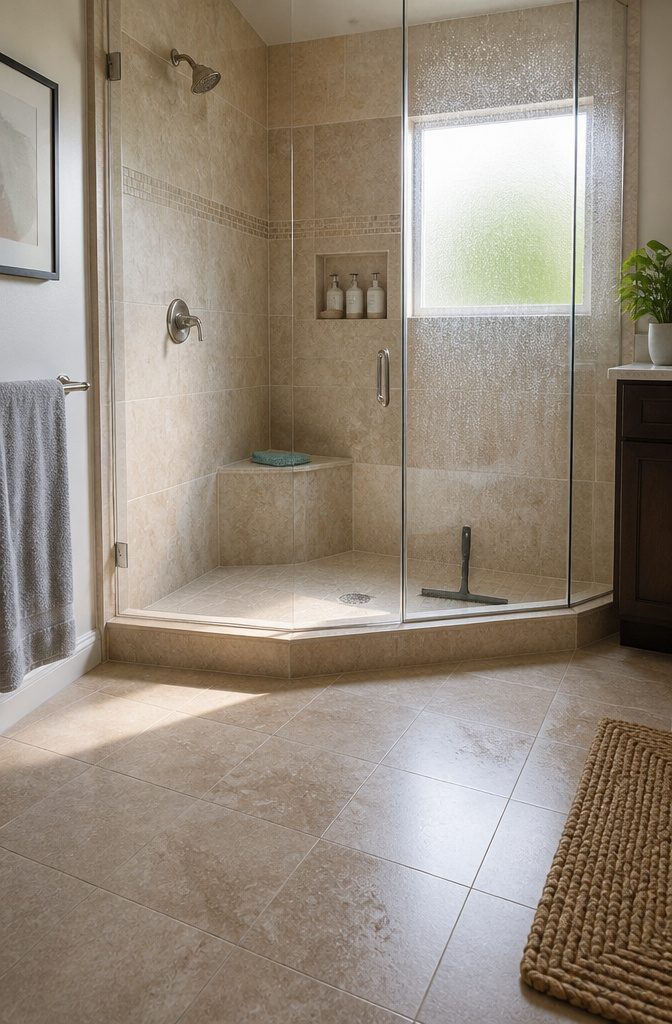
Once you finish scrubbing and treating every surface, rinse everything thoroughly with warm water to wash away any cleaning solution that is left behind.
Residue that dries on tile, glass or fiberglass will leave streaks and can actually attract new buildup faster than a clean surface would, so this step matters more than it looks like at first glance.
After rinsing, dry the surfaces with a microfiber cloth or run a squeegee down the walls and glass.
Water left to air-dry brings minerals with it, and those minerals show up as spots and film within a day or two. The squeegee handles large flat areas faster, but corners and edges need the cloth.
Owners on Reddit mention that this part of the routine can feel tedious, especially after the scrubbing is already done, but skipping it means you will be back to clean those water spots within the week.
Keep the Shower Dry Between Deep Cleans

The fastest way to keep buildup from taking hold is to wipe or squeegee surfaces after each shower.
That single habit eliminates around 80 percent of the water marks, soap scum and mildew before they have a chance to dry and bond to the walls.
I keep a squeegee hanging inside the shower so it never requires a second thought.
Ventilation matters just as much.
Opening a window for about 30 minutes or running the exhaust fan for 20–30 minutes after the last shower of the day pulls moisture out of the air and stops mold from forming in corners and grout lines.
A timer switch makes this automatic if you tend to forget.
For most households, a full deep clean once a month is enough to stay ahead of buildup.
If the shower gets heavy use or you live in an area with hard water, bumping that schedule to every two weeks keeps mineral deposits and soap scum from hardening into something that requires serious scrubbing.
Products and Tools That Suit Each Surface
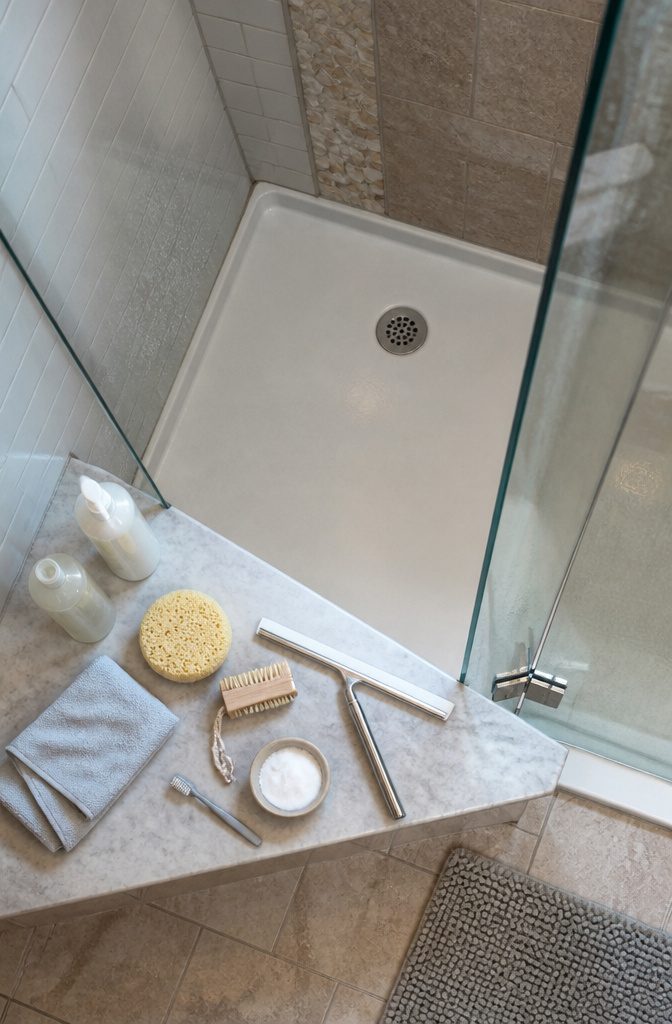
Choosing the right cleaner depends on what you’re scrubbing. Vinegar and water work for tile and glass, but skip them on natural stone — the acid etches marble and travertine.
For stone, stick with pH-neutral cleaners. Baking soda paste handles grout and stubborn spots on fiberglass without scratching.
Use Pine-Sol full-strength to clean extra-tough mineral deposits or shower scum.
— Pine-Sol
For routine cleaning, dilute ⅛ cup Pine-Sol in 1 gallon warm water, or go full-strength when buildup is thick.
On tools, soft matters more than you’d think:
- Microfiber cloths and sponges for walls, fixtures and glass — no lint, no streaks
- Soft-bristle brush for tile and the tub floor
- Old toothbrush for grout lines and faucet bases
- Squeegee to prevent water spots between deep cleans
Branch Basics Concentrate and Oxygen Boost cover most surfaces without harsh chemicals. For synthetic shower trays, avoid abrasives entirely.
Solid Surface trays tolerate Cif for limescale but still need a soft touch. Rain X keeps glass clearer longer after the initial scrub.
Why Soap Scum and Mineral Deposits Build Up
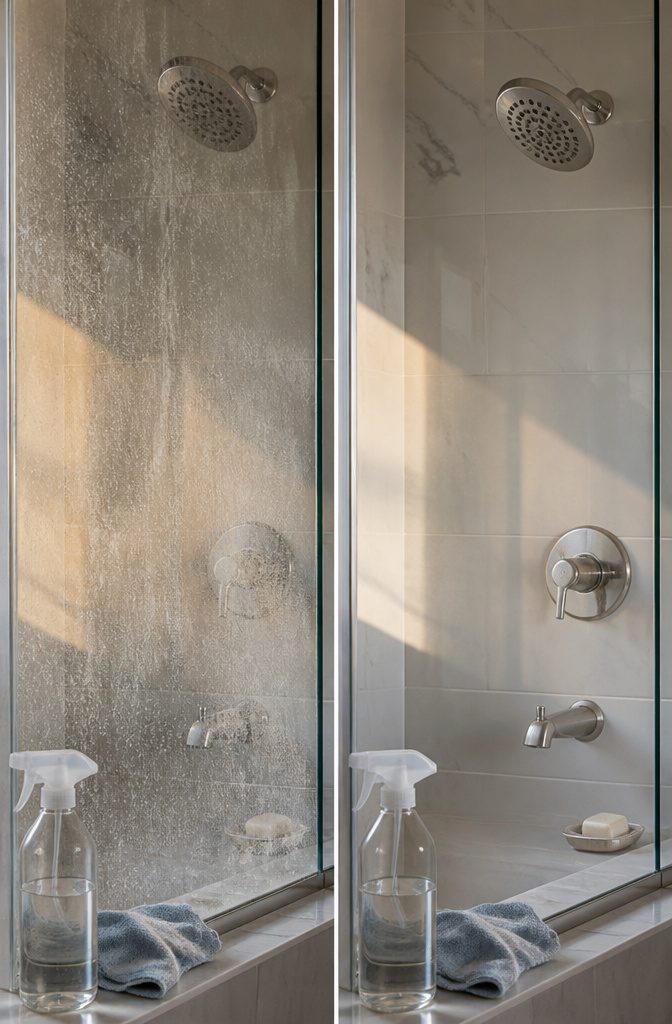
Soap scum forms when the fatty acids in bar soap bind with minerals in your water, leaving a filmy residue on glass, tile, and fixtures.
Hard water accelerates the problem. The higher the mineral content, the faster calcium and magnesium deposits build up as chalky white stains, especially on glass doors and metal showerheads.
Body oils cling to surfaces and trap more grime, and without regular cleaning those layers harden into something that resists a quick wipe.
Distilled white vinegar breaks down mineral deposits and soap scum because the mild acid dissolves the bonds holding them to the surface. Spray it on glass and let it sit for 5–10 minutes before wiping with a microfiber cloth.
For really stubborn buildup on faucets or showerheads, a longer soak works better. The same vinegar method shines fixtures and removes watermarks.
One caution: acidic cleaners damage stone. If you have marble, travertine, or limestone tile, skip the vinegar entirely and use a pH-neutral cleaner instead.
After any deep clean, dry the surfaces with a towel or microfiber cloth to prevent new mineral deposits from forming as water evaporates.
Never Mix These Cleaners
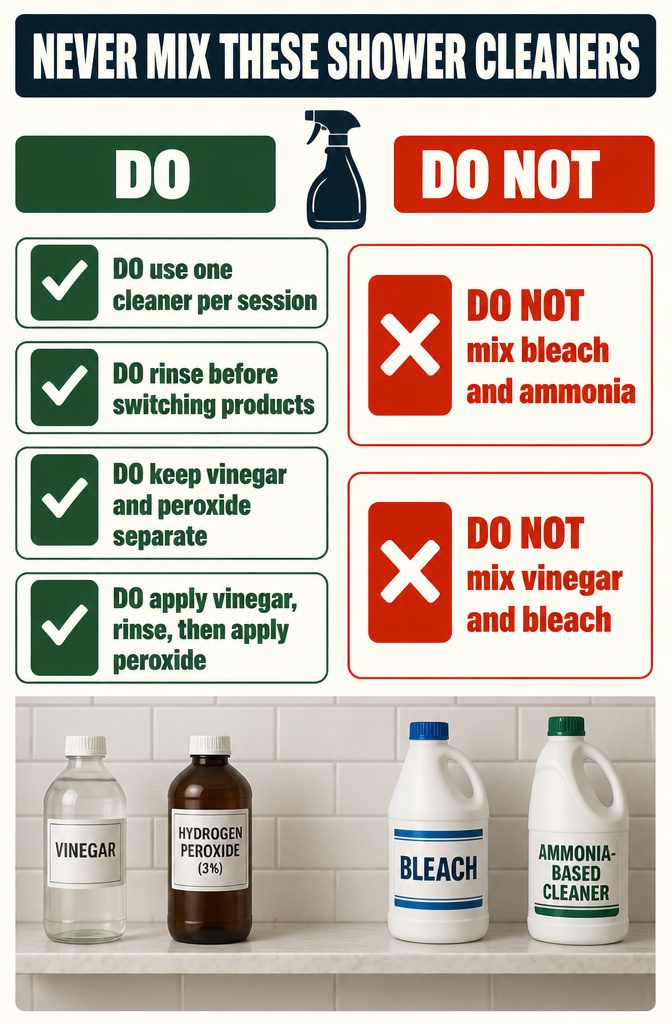
Mixing the wrong cleaners can release fumes that irritate your lungs or worse. Keep these combinations apart:
- Never mix vinegar and hydrogen peroxide (the 3% kind in the brown bottle) in the same container. Both are safe on their own, but storing or mixing them together creates harmful vapors. Use separate spray bottles.
- Never combine bleach with ammonia-based cleaners. The reaction produces dangerous gases. If you’re using bleach on mold or stubborn stains, dilute it first: 1 part bleach to 10 parts water.
- Don’t mix vinegar with bleach products either. The acidity forms corrosive compounds that damage surfaces and your airways.
I stick to one cleaner per session and rinse the surface completely before switching to a different product. If a method calls for vinegar followed by peroxide, I apply vinegar, rinse thoroughly, then spray peroxide as a second step.
Frequently Asked Questions
Is it better to clean a shower wet or dry?
Wet surfaces work better because water loosens dirt and grime before you scrub.
How do I deep clean my shower naturally?
White vinegar dissolves soap scum and mineral deposits on tile and glass, baking soda paste scrubs grout and stubborn spots on fiberglass, and hydrogen peroxide lifts mildew stains when mixed with baking soda.
Use these separately, rinse between products, and avoid vinegar on natural stone since the acid will etch the surface.
What is the best cleaner for shower tiles?
A 50/50 mix of white vinegar and water handles soap scum on porcelain and ceramic tile. Natural stone like marble or travertine needs a pH-neutral stone cleaner instead, since acidic products will damage the finish.
How do I prevent mold on shower tiles?
Run the exhaust fan for 20 to 30 minutes after the last shower of the day or open a window for 30 minutes to pull moisture out.
Wipe or squeegee surfaces after each use and clean grout lines monthly to stop mold from taking hold in damp spots.
How do I remove hard water stains from shower tiles?
Spray white vinegar on the stains, let it sit for 5 to 10 minutes, then scrub gently with a soft brush and rinse.
For glass, the same vinegar method works, but skip it entirely on natural stone and use a pH-neutral cleaner instead.
Should I dry my shower after use?
Yes.
A squeegee pass right after each shower stops water spots and soap film from bonding to glass and tile, which eliminates about 80% of buildup before it starts. Corners and edges need a microfiber cloth to catch what the blade missed.
How do you remove soap scum naturally?
Spray distilled white vinegar on the glass or tile, let it sit for 5 to 10 minutes, then wipe with a microfiber cloth.
The acid breaks down the fatty deposits that bind soap to the surface, and the cloth lifts it away without streaks.
Can you mix vinegar and hydrogen peroxide?
No.
Both are safe on their own, but mixing or storing them together creates harmful fumes. Keep them in separate spray bottles and rinse the surface completely after using vinegar before you spray peroxide as a second step.
What can I use instead of bleach to clean my shower?
Baking soda paste removes grout stains and mildew without the fumes, and hydrogen peroxide lifts mold when you let it sit for 15 minutes. Branch Basics Oxygen Boost handles watermarks and tough stains on most surfaces without harsh chemicals.
How do you unclog a shower drain naturally?
Pull out hair and debris, push a wire or drain tool down to loosen buildup, then pour a few tablespoons of baking soda followed by a cup of vinegar.
Let the fizz work for 10 minutes, then flush with hot water for 30 seconds.
How often should I deep clean my shower?
Once a month works for most homes. If the shower gets heavy use or you have hard water, move to every 2 weeks to stop mineral deposits and soap scum from hardening into something that requires serious scrubbing.
Is it safe to use bleach on my grout?
Bleach can damage colored grout and some tile finishes, so use it with caution. If you do use bleach for stubborn mold, dilute it first at 1 part bleach to 10 parts water and rinse the area thoroughly afterward.
What’s the best way to stop soap scum from building up?
Switch from bar soap to liquid body wash, since bar soap contains fats that bind with hard water minerals to form that filmy residue.
After each shower, squeegee glass and tile to remove water and soap before it dries, which takes 30 seconds and prevents the buildup from bonding in the first place.