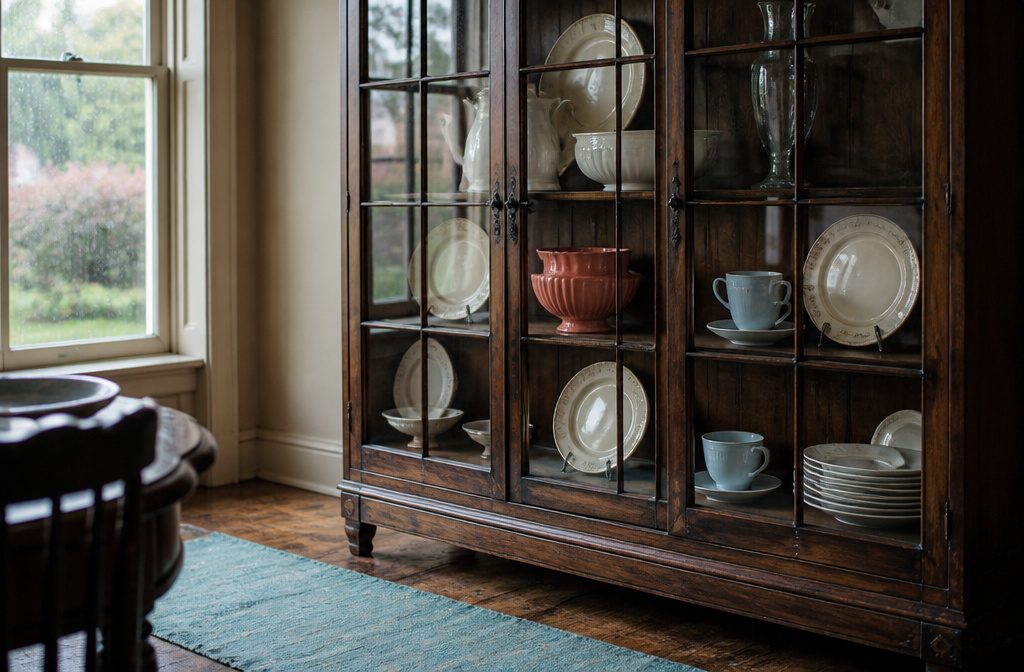
A well-arranged china cabinet layers pieces from back to front, groups by color or function, and mixes heights to guide the eye through the display.
The setup takes an afternoon if you empty and clean first, but most arrangements fail because people try to work around what’s already there instead of pulling everything out.
Stacking plates by height and securing them with plate stands or museum putty prevents shifting, and limiting the palette to no more than 2 main colors keeps the cabinet from turning into visual noise.
1. Empty and Clean the Cabinet First

I pull everything off the shelves before I start. Working around what’s already there is the fastest way to end up with the same arrangement you’re trying to improve, and it blocks you from cleaning properly.
An empty cabinet lets you see the layout with fresh eyes and gives you access to the back corners and glass panels that have been collecting dust behind stacked plates for months.
The cleaning part matters more than it sounds like it should.
Once the china is back in place, you won’t be able to reach those spots again without another full teardown, so this is the time to wipe down every surface.
I keep a dust rag and wood cleaner on hand if the shelves need more than a dry wipe. The glass gets attention too, because smudges show through from both sides and muddy the whole display.
Starting from zero takes longer up front, but it makes the arranging work faster and gives you a result that actually looks different.
2. Gather Your Collection and Choose What to Feature
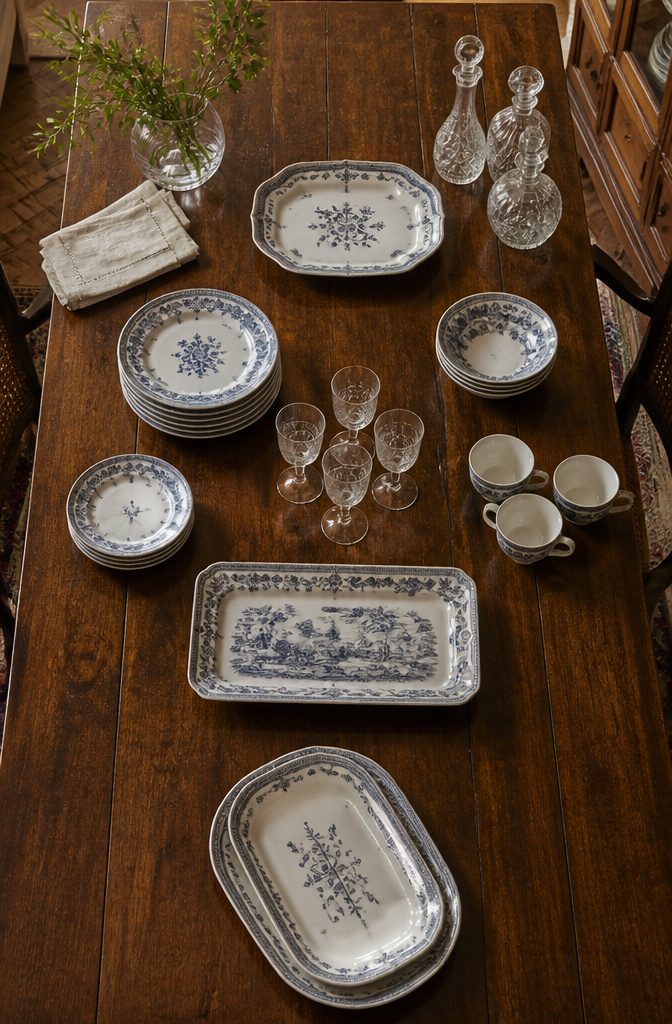
Pull everything out of the cabinet and spread it on a dining table or the floor.
Seeing the full collection at once—plates grouped with plates, bowls with bowls, teacups together, platters in a row—shows you what you have to work with and makes pairing pieces much easier than arranging straight from the cupboard.
A small collection is fine. One example that works: 6 place settings, 1 platter, and 4 bowls.
Before you start arranging, decide what mood you want. A spring refresh looks different from cozy autumn, and knowing the direction first keeps the final display from feeling random.
Pick your favorite pieces—the platter from your grandmother, the pitcher with the best shape, whatever you love most—and build around those.
Gather more than you need so you have options, and include variety: tall pitchers, short bowls, round plates, rectangular trays.
Stick to no more than 2 main colors, though 3 can work if they hold together.
That includes crystal, wood, and plants—nontraditional hues count toward the limit. The restriction prevents visual chaos and gives the whole cabinet a uniting thread.
3. Place Large Anchor Pieces and Establish Height
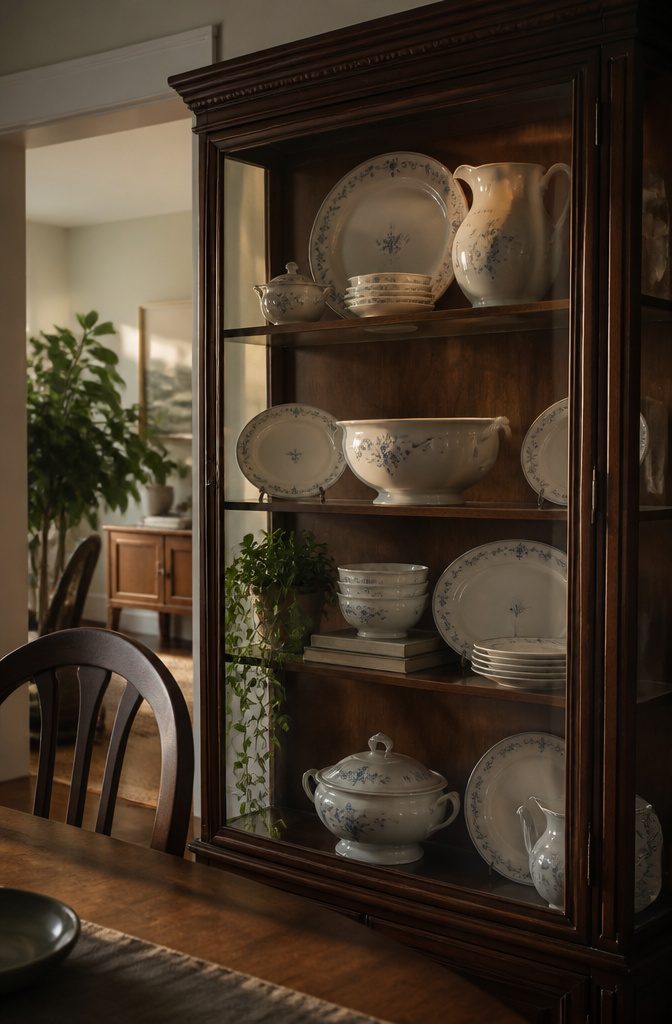
I start with the largest, heaviest pieces and spread them across the cabinet rather than loading up a single shelf.
A big platter, a tall pitcher, a substantial serving bowl: these are the anchors, and they go in first. If I try to squeeze them in later, they end up awkward or crowded.
Once the anchors are placed, I can fill in around them. I look for variety in height: a tall pitcher next to a shorter stack of bowls, a cascading plant softening a shelf edge.
Create peaks and valleys that guide the eye through the cabinet, not a flat line where everything sits at the same level.
For my largest piece, I center it on a shelf. Then I add dinner plates around it and use stacked smaller dishes or vintage books to lift certain items and create different levels across the display.
4. Layer From Back to Front
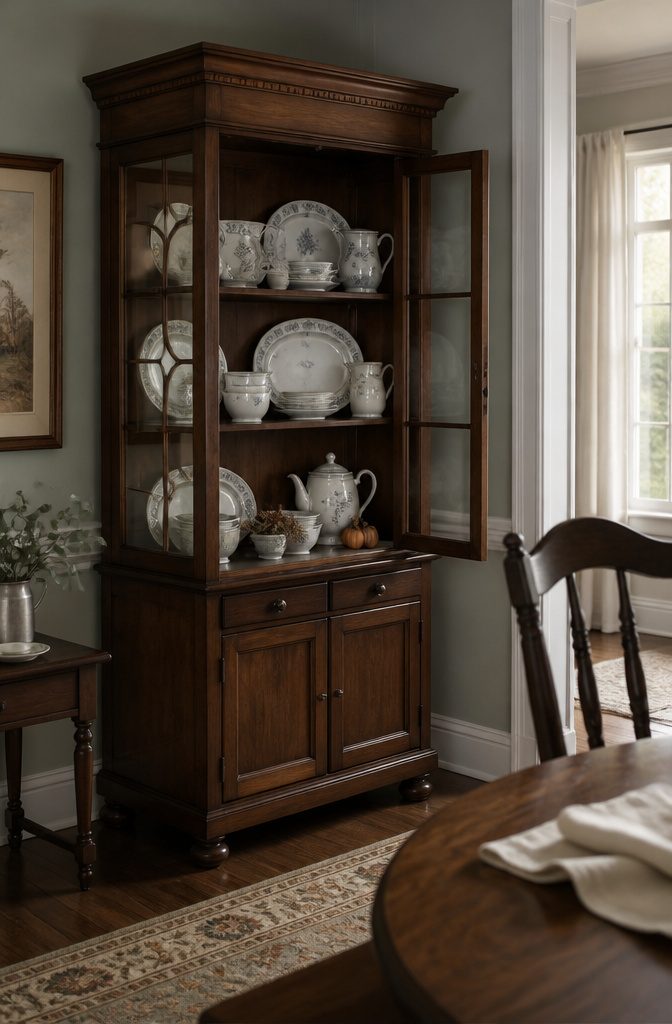
Start at the back of the shelf with your tallest pieces—dinner plates stood upright on stands, large platters, or tall pitchers—and build forward from there. Think of it in three zones: background, midground, foreground.
The tall backdrop pieces frame everything else, so place your functional items like stacked bowls or a teapot in the middle, and finish with the smallest details at the front—a teacup and saucer, a small creamer, maybe a seasonal accent.
Keep background pieces visible as you layer forward by shifting midground and foreground items slightly to one side so the tall pieces behind them peek through.
That interplay between layers is what gives the display real depth instead of looking like a flat row.
5. Arrange Stacks and Secure Plates

Stacking plates by height gives the display rhythm, so I mix a tall stack of dinner plates with a shorter grouping of salad or dessert plates on the same shelf.
The variation keeps the eye moving rather than landing on identical columns. For a more relaxed look, offset each plate slightly in the stack instead of lining up the edges perfectly; that casual shift reads as intentional rather than haphazard.
I slip a coffee filter or a felt liner between delicate or hand-painted pieces to prevent scratching. It adds maybe half an inch to the stack, but the protection matters more than the height.
Plates that stand upright need anchoring. Plate stands work when shelf depth allows, and they tilt the piece toward you for better visibility.
In tighter cabinets I use a thumbtack pressed into the shelf just in front of the rim; it disappears once the surrounding pieces fill in.
Museum putty and silicone bumpers are two other options that prevent shifting without taking up space, though putty can leave residue on certain finishes.
6. Add Complementary Objects and Refine the Balance
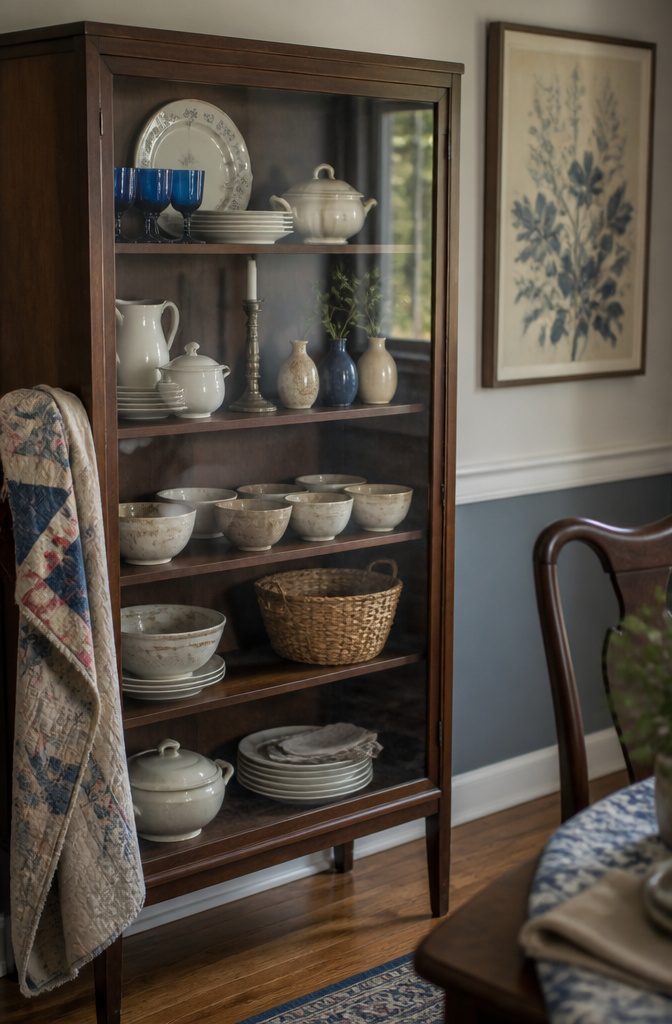
Once china and glassware are placed, add objects that introduce texture and personal meaning.
Stacking vintage books, layering in baskets, or draping a quilt over one side can soften the display and give the eye something other than porcelain to settle on.
Cobalt blue glasses, ironstone pieces, and small plants work especially well if the china itself skews neutral.
I group these additions in odd numbers—one candlestick, three small vases, five worn pottery bowls—because symmetry in count tends to read formal, while odd groupings feel more collected than composed.
Watch for crowding.
If a shelf starts to feel like a thrift store, pull one piece. Breathing room matters as much as the objects themselves, and consistent spacing between groups keeps the arrangement from blurring into clutter.
Balance color and volume across shelves rather than mirroring left to right; two dominant colors plus neutrals usually hold the display together without making it too matchy.
7. Step Back, Edit, and Let the Display Settle
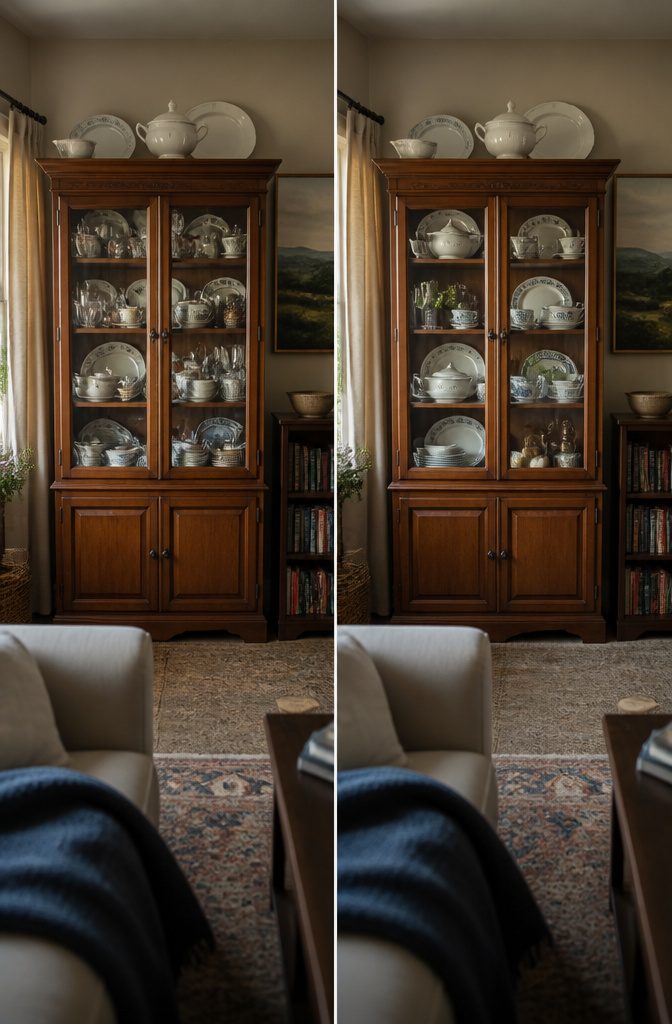
Once everything is in place, step back from the cabinet and give the arrangement a day or two before you make final adjustments.
The display often looks different from across the room than it does when you’re standing right in front of it, and living with it for a short stretch lets you notice whether a shelf feels too crowded or a piece sits awkwardly.
Small edits after that first pass usually land better than changes made on the spot.
Rotating the display keeps the cabinet from feeling static. Swapping pieces seasonally or bringing different china forward every few months gives you a reason to use more of the collection and keeps the arrangement from going stale.
Adding flowers or a few sprigs of greenery inside the cabinet brings a personal touch, and the top of the cabinet works well for stacking a few large white dishes, a vintage soup tureen, or setting out a vase that picks up a color from the china.
The contrast between permanent pieces and fresh accents makes the whole display feel more deliberate.
What Belongs in a China Cabinet Beyond Fine China

A china cabinet doesn’t have to hold only china. Fine porcelain, ironstone, jadeite, and milk glass all belong, along with glassware, serving pieces, and heirloom linens.
If you don’t own formal dinnerware or just don’t want it on display, the cabinet works just as well for books, decorative vases, sculptures, framed art, ginger jars, and family keepsakes.
I favor mixing practical storage with pieces that mean something. Stacked everyday dishes can share a shelf with vintage teacups, and florals or greenery add color without crowding the china.
Named sets like Noritake, Royal Albert, and Lenox look sharp grouped together, but a cabinet filled entirely with matching formal ware can read stiff. Texture matters: wood, ceramic, and glass together give the display depth.
- Fine china and formal dinnerware (dinner plates, serving platters, bowls)
- Glassware and crystal (wine glasses, vases, bowls)
- Collectible or heirloom pieces (milk glass, jadeite, ironstone)
- Decorative objects (sculptures, ginger jars, trinkets)
- Books and framed art
- Live or faux greenery and flowers
Grouping, Layering, and Visual Balance
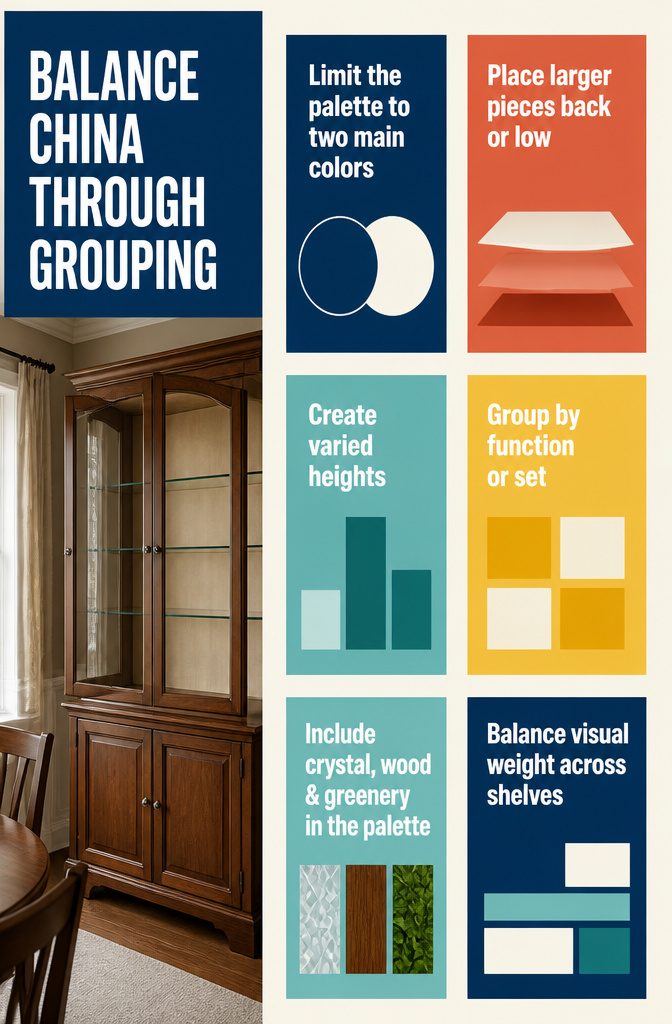
Grouping similar pieces gives the eye a path to follow rather than scattering attention across the cabinet.
I arrange by color, by function, or by set: teacups on one shelf, serving platters on another, or a full dinner service gathered together rather than split apart.
Grouping by color keeps the display from turning into visual noise, and limiting the palette to two main colors makes that easier.
Blue paired with white accents runs through an entire cabinet without looking forced, and the rule counts crystal, wood, and greenery toward the color total.
Larger pieces belong at the back or on lower shelves, smaller ones forward and higher. That layering creates depth and lets every piece register rather than disappearing behind what sits in front of it.
Varying height matters just as much: stacked bowls and plates break up a flat line, and a plate stand lifts a single dish into view instead of leaving it propped flat.
Balance does not mean perfect symmetry, but it does mean watching weight and volume across the whole cabinet. If one side feels heavy with dark pieces or tall stacks, the other side needs enough presence to answer it.
Consistent spacing between groupings keeps the arrangement from blurring into one crowded mass, and leaving a little breathing room around each piece lets the display read as intentional.
Cabinet Styles, Features, and Backdrop Choices

The cabinet itself sets the baseline for what comes next. Cabinet style should echo the pattern on the china, not fight it.
Queen Anne cabinets suit monochromatic or restrained sets where the carved legs can register. Mission and Shaker pieces lean on straight lines and medium-to-dark wood tones, which work when the china carries bold color or Southwest pattern.
Farmhouse styles run wide, from French Country to contemporary rustic, usually in warm neutrals or soft pastels with visible grain. Modern cabinets mix materials—aluminum framing, tempered glass—and sit better with geometric or minimal pieces than with florals.
Wood choice matters more than catalog photos suggest.
Oak, mahogany, and cherry each hold stain differently and age at their own pace. Adjustable shelves let you fit tall serving pieces without dead space above shorter stacks.
Mirrored backs double the visual weight of what sits inside.
Touch LED lights or LED strips make the collection readable after dark. Small spotlights give more control but need placement thought.
UV-protected glass slows fading if the cabinet faces a window. Lockable doors and humidity control appear on higher-end pieces meant for fragile or valuable sets.
For the backdrop, natural pine reads casual.
Chantilly Lace White or Simply White brighten the interior and suit a farmhouse direction. Wallpaper adds pattern but competes with busy china.
Safety and Preservation

Keep space between pieces so they’re not touching during cabinet vibration — even a small bump from closing the door too quickly can chip a rim or crack a handle. A few basics help:
- Secure plates with plate stands or museum putty so they don’t slide or tip. Position larger platters at the back and layer smaller pieces in front for stability.
- Use felt pads under bases to prevent scratches and absorb minor shifts.
- Keep china out of direct sunlight. Rotate displayed pieces every few months if one side of the cabinet gets steady light exposure.
- For valuable collections, lockable doors add security. UV-protected glass and humidity control preserve delicate finishes over time.
I check that nothing wobbles before I close the cabinet, and I don’t cram pieces in just to fit more — the breathing room matters more than filling every shelf.
Seasonal Rotation and Living Accents
A china cabinet shouldn’t look like it was arranged once and sealed under glass.
Rotating seasonal accents keeps the display tied to the rest of the house and gives you a reason to pull pieces forward or tuck them back a few times a year.
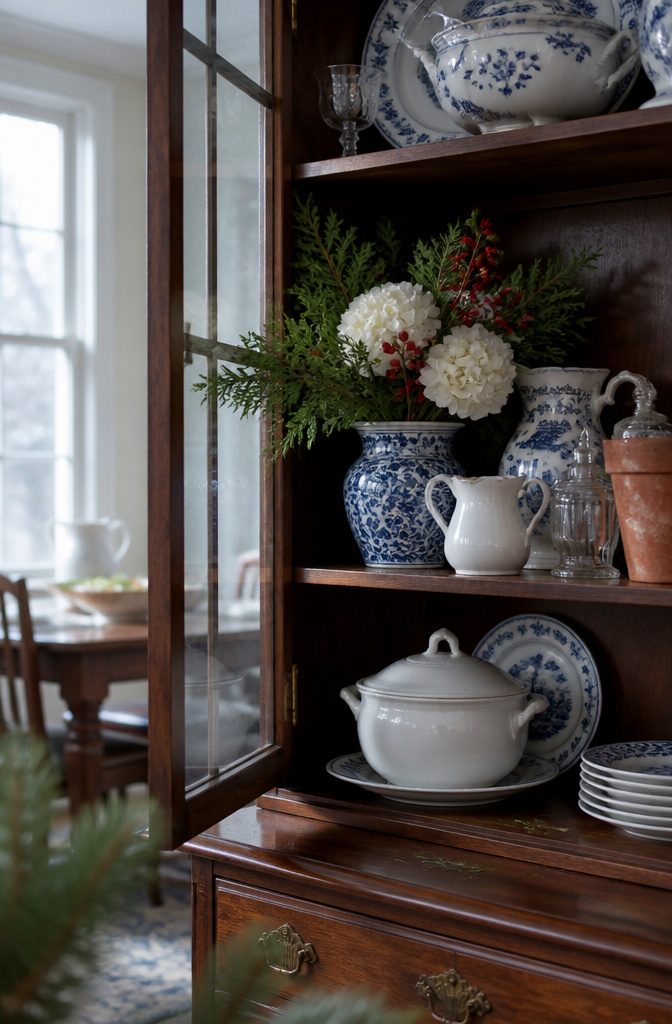
Winter calls for greenery, red berries, and white hydrangeas. An antique vase in blue picks up the blue touches in the china and ties the shelf together.
Spring and summer work well with terracotta pots holding faux kalanchoe or artificial fern stems—fake flowers avoid any risk of water damage on finished wood.
Autumn suits a small bowl of acorns or pinecones, and you can tuck foraged branches or budding stems into a vintage pitcher or ironstone creamer.
Even without traditional dishware, seasonal décor turns a hutch into a focal point.
The container matters as much as what it holds: a rustic terracotta pot, a classic ironstone pitcher, or a simple glass jar each tells a different story.
Matching the Display to Your Cabinet and Room
The cabinet’s style should follow the room it lives in and the pieces it holds. If you have a set with SouthWestern colors and patterns, a Queen Anne cabinet muddles the story.
Match the cabinet to both the room and the collection. Farmhouse cabinets work with warm neutrals and simple lines, often showing natural wood grain or even live-edge details.
Mission and Shaker styles lean minimal, with straight lines and medium-to-dark stains that suit both traditional and contemporary rooms. Modern cabinets pull from Mid-Century and industrial farmhouse looks, favoring bold color and mixed materials like metal and wood.
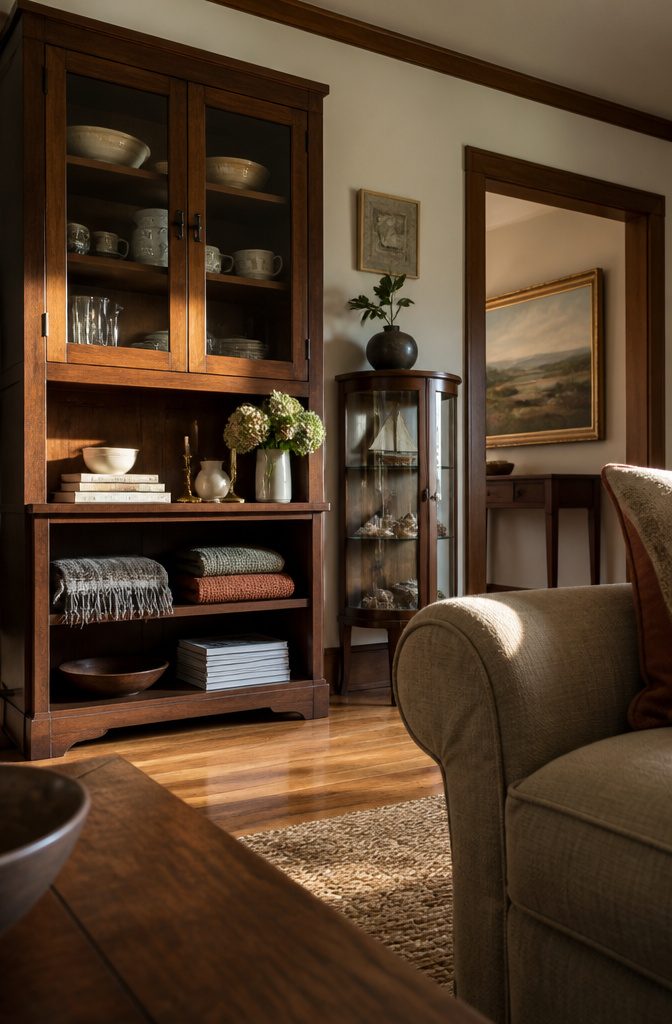
China cabinets do not have to hold only china. I see them work just as well in living rooms and entryways, storing books, magazines, and blankets where built-in storage does not exist.
A vintage curved-glass case can hold ship models and personal mementos instead of plates, giving it a collected, personal feel. The eclectic approach mixes tableware with candle holders, vases, and flowers rather than lining everything up in uniform rows.
Even a traditional oak hutch feels fresh when you rotate what it holds seasonally or fill it with unorthodox items that matter to you.