I learned bamboo flooring isn’t waterproof out of the box, so I’ve got five battle-tested steps. First, I acclimate planks for 3–5 days on a subfloor level enough for pool conditions, because waviness cracks your work later.
Then I roll out underlayment with built-in moisture barriers, similar to a submarine hull design. I seal every edge and seam with manufacturer-approved sealant without shortcuts.
Next comes armor-grade polyurethane or aluminum oxide applied in multiple thin coats for that protective shell.
Finally, I maintain daily habits consistently: microfiber swipes, quick spill grabs, and humidity locked at 35–55%. Standing water is the primary risk factor.
These steps saved my kitchen after one disastrous flood. Following this process prevents the headaches I endured and protects your investment.
Acclimate Your Bamboo Flooring on a Dry, Level Subfloor
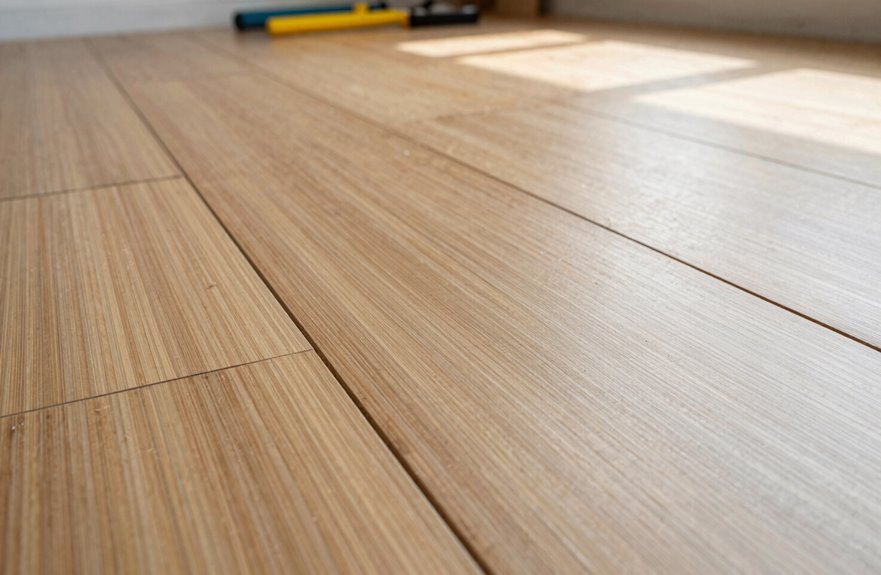
Before you install your bamboo flooring, prepare your subfloor properly. Your subfloor must be clean, dry, and level as a pool table. Grab a long level and check every inch. Any waviness will cause problems during and after installation. Filling low spots prevents future creaking and movement issues.
Allow your bamboo flooring to acclimate for 3–5 days in the space where it will be installed. Keep humidity between 35–55% during this period. Do not store bamboo in basements or garages. Test for moisture content, as manufacturers have strict tolerances. Failing to meet these requirements will void your warranty and may cause buckling and warping of the flooring.
Install a Moisture Barrier Beneath Your Bamboo Planks
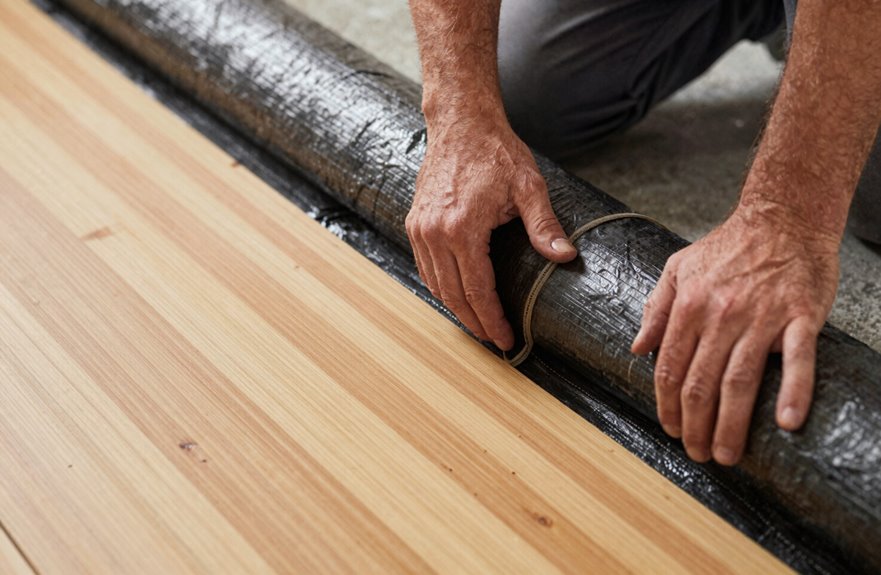
Once your subfloor’s prepped and your bamboo’s settled in like a picky houseguest, I’m ready to tackle the real MVP of waterproofing: the moisture barrier. Skipping this step is like wearing socks in a rainstorm, pointless and soggy.
For concrete environments, I always grab underlayment with a built-in moisture/vapor barrier. It’s your shield against sneaky ground moisture that warps beautiful bamboo flooring. Whether you’re doing floating installation or another method, proper substrate preparation saves headaches later. I roll out my barrier only after confirming a level and dry subfloor, with no shortcuts.
Here’s my quick guide:
| Step | What I Actually Do |
|---|---|
| 1. Inspect | Check for cracks, damp spots, weird smells |
| 2. Clean | Sweep, vacuum, obsess over debris |
| 3. Level | Grind high spots, fill low ones |
| 4. Dry | Moisture meter readings, patience |
| 5. Install | Unroll barrier, overlap seams, tape tight |
This combination with good finish keeps your floors in excellent condition for years.
Seal Edges and Seams During Bamboo Plank Installation
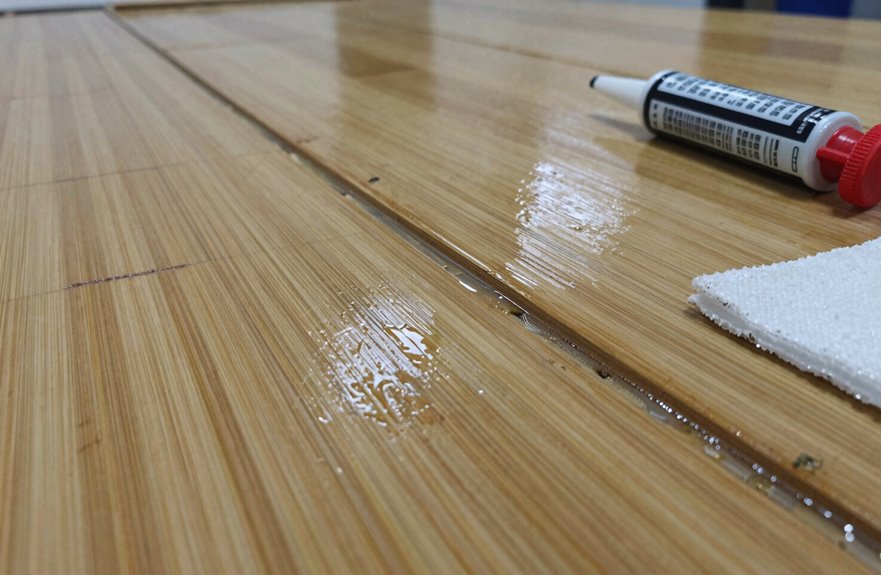
Where do I even start with edges and seams? Begin by understanding that during installation, plank joints and expansion gaps allow water infiltration. Use manufacturer-approved sealants and caulks to maintain warranty coverage, and seal every edge before final staging. After acclimation, run compatible sealants along plank edges to create a continuous moisture barrier around walls and fixtures. This process is similar to caulking a bathtub but significantly more critical for floor longevity. Touch up high-traffic areas periodically since seams require ongoing maintenance. Proper sealing prevents water damage, wood swelling, and structural deterioration of your bamboo flooring.
Finish Your Bamboo Flooring With a Humidity-Resistant Top Coat
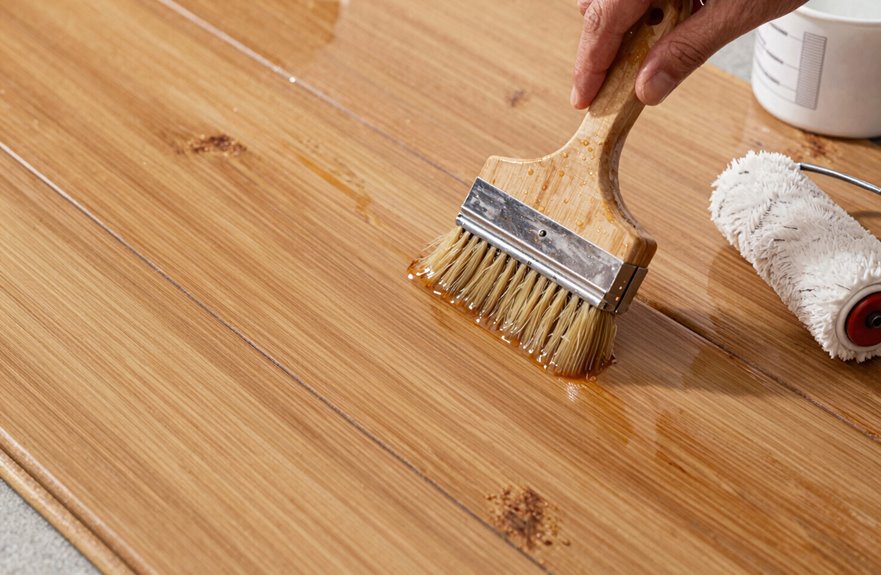
I’m about to show you the real game-changer, the step that’ll make your bamboo floors practically laugh at humidity. We’re talking humidity-resistant top coat, and it’s worth the effort.
I always reach for polyurethane or aluminum oxide finishes because they bond beautifully to bamboo flooring, forming that crucial moisture barrier against the wear layer. Without this sealant, your planks drink up humidity like a sponge, swelling at the seams.
Polyurethane or aluminum oxide finishes bond beautifully to bamboo, forming that crucial moisture barrier your planks need to stop drinking up humidity like a sponge.
Apply multiple thin coats, letting each one fully cure, and you’ve built serious armor against water absorption. High-traffic zones need touch-ups sooner, but that’s life.
Even with this protection, wipe spills fast. No standing water. Your bamboo deserves better than a soggy core.
Protect Your Bamboo Flooring With Daily Water-Blocking Habits
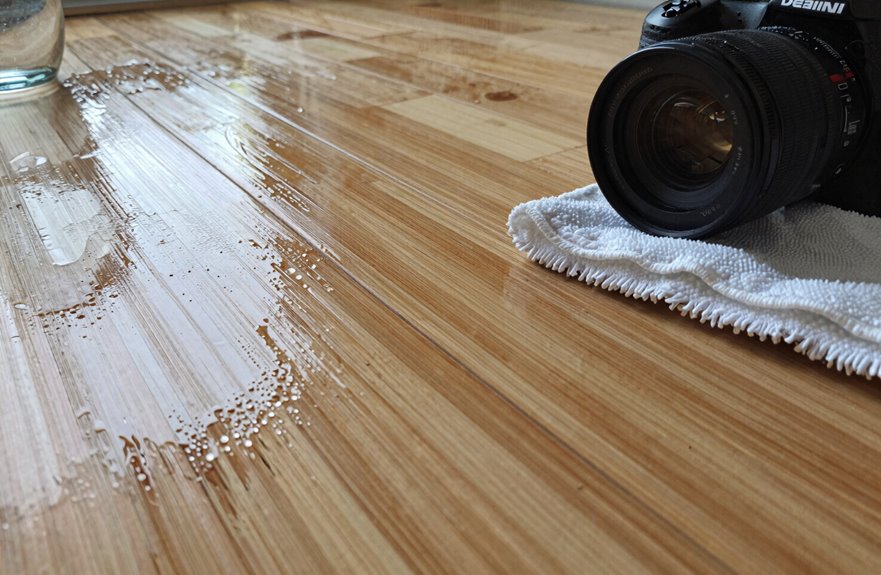
Why let all that sealing work go to waste? Waterproofing bamboo requires consistent daily maintenance, not a one-time application. My moisture protection routine keeps my floors in excellent condition.
| Habit | Tool/Technique |
|---|---|
| Spill management | Microfiber cloth, immediate action |
| Daily sweep | Soft bristle broom, no beater bar vac |
| Spot cleaning | Bamboo cleaner, straight strokes |
| Damp-mop routine | Non-abrasive cleaner, quick drying |
| Humidity control | 35–55%, watch for standing water |
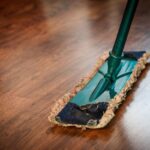
Water absorption remains the primary threat to bamboo flooring. I damp-mop with Rock Doctor’s and never soak the floor. I maintain humidity levels between 35 and 55 percent to prevent warping and cupping. This maintenance routine prevents structural damage and preserves the flooring’s appearance.