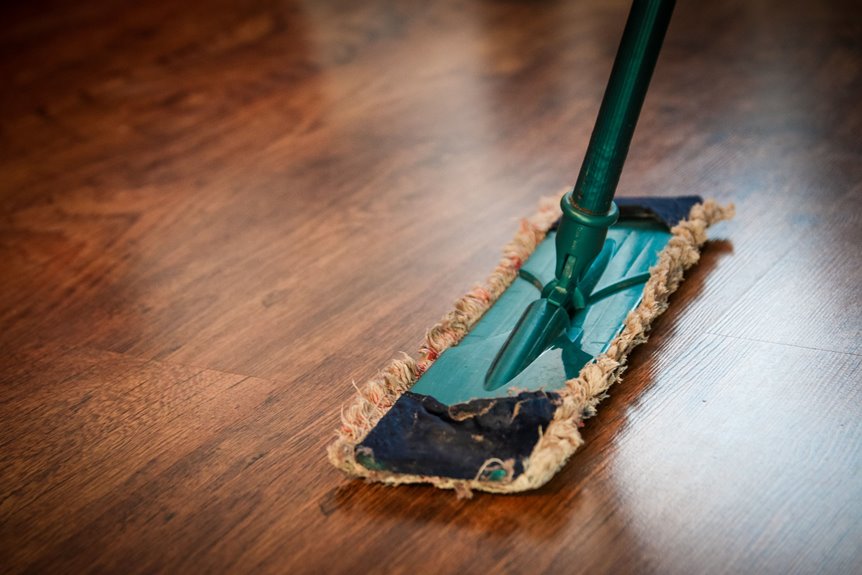
I’ve learned through years of trial, error, and one tragic cupping incident in my dining room that Pine-Sol can safely clean wood floors, but only when you treat dilution like a science experiment and moisture like a trespasser you need to evict immediately. Mix just 1/8 cup per gallon of warm water, keep that mop barely damp (wring until it stops dripping), and never let puddles sit. I always mop in small sections toward the door, then chase every wet spot with a dry cloth until the floor feels dry under bare feet. Skip this routine, and you’ll be staring at cloudy, streaky patches or worse: warped boards that mock you every morning. Once you nail these steps, you’ll have a properly maintained wood floor without the damage that careless application causes.
When to Avoid Pine-Sol on Wood Floors Entirely

Where do I even start with Pine-Sol and wood floors? I’ve learned the hard way that some floors just aren’t meant for this stuff, and I want to save you from my disasters.
Some floors just aren’t meant for Pine-Sol, and I’ve learned that the hard way.
If your floor’s unfinished, meaning raw wood without any sealant protecting it, put that bottle down. Pine-Sol will soak right in, staining and warping the grain quickly. I’ve seen it happen, and that “rustic” look wasn’t intentional.
Even dilution won’t save you here. Without a proper polyurethane or similar sealant barrier, you’re basically pouring cleaner into a sponge. Old oil finishes? Nope. Worn spots where the sealant’s compromised? Absolutely not.
I get it. We all want that fresh pine scent. But using Pine-Sol on unprotected wood is like wearing silk to a mud fight. Know your floor’s finish first.
Safer Alternatives to Pine-Sol for Wood Floors
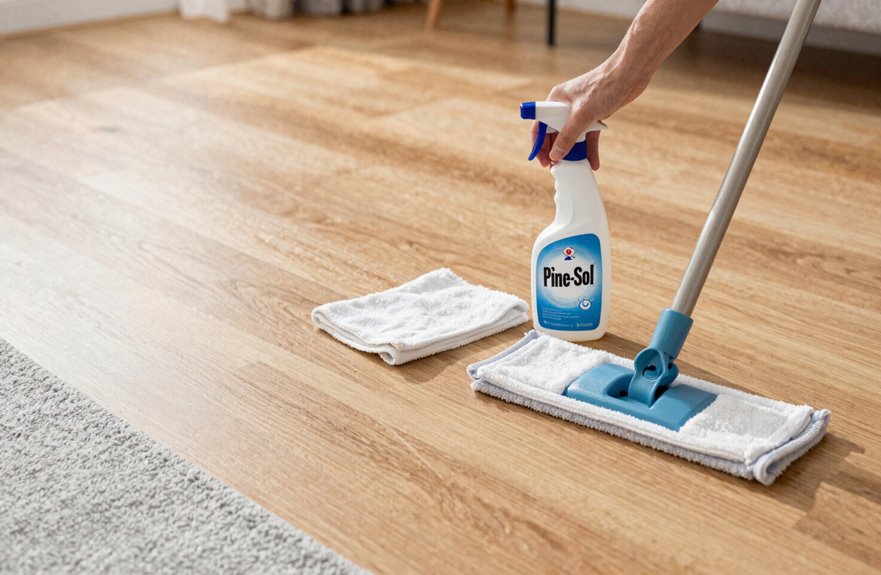
So what do you reach for when Pine-Sol’s off the table? I’ve been staring at my grandmother’s oak floors, concerned about safety and dilution ratios. Here are alternatives that actually work.
- Castile soap and warm water – just a few drops. No measuring cups needed, no anxiety. Gentle bubbles and that satisfying squeak under bare feet.
- White vinegar diluted heavily – the smell is intense, but mix one cup per gallon and you get no residue, no film, just clean surfaces.
- Commercial pH-neutral wood cleaners – Bona, Murphy’s, and similar options are reliable and keep your floors in good condition.
These alternatives maintain your wood without complicated steps.
Is Pine-Sol Actually Safe for Sealed Wood Floors?
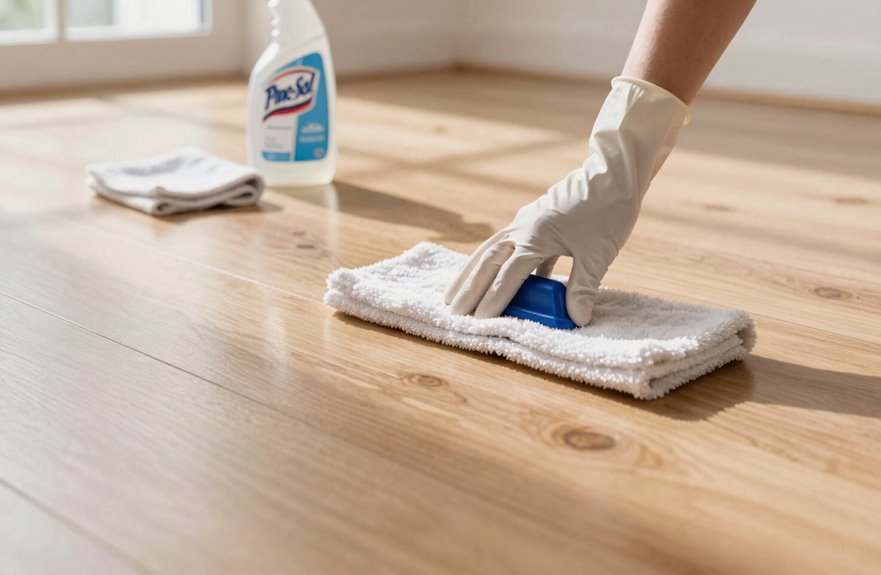
Why does everyone panic about Pine-Sol on wood floors? I’ve been there, clutching my bottle like it’s liquid kryptonite for my grandmother’s oak. Pine-Sol works well with sealed wood floors when you respect the chemistry. Proper dilution matters. Use capfuls, not large amounts. Follow the label instructions carefully, mixing your solution correctly. Moisture control is critical. Wring that mop until it’s merely damp, never dripping, because water that sneaks past the sealant causes warping and floor damage. For stubborn scuffs, spot-clean with full-strength solution on a toothbrush, rinse immediately, and the planks will gleam. Protecting your beautiful floors requires attention to these details.
Supplies for Safe Pine-Sol Mopping

The right supplies turn a nerve-wracking chore into a victory lap for your floors. Mopping wood with Pine-Sol isn’t about fancy gadgets; it’s about smart prep that keeps your sealed finish in top condition.
Here’s what I always grab:
- Original Pine-Sol (not the fancy scents!), a measuring cup, and a bucket. Your holy trinity for mixing that perfect ⅛ cup per gallon ratio.
- A damp mop (wrung tight, no drips.) plus a rinse bucket, because soggy wood damages the seal.
- A toothbrush for spot attacks with full-strength cleaner on stubborn scuffs. Rinse after, always.
I skip steel wool entirely; it scratches like my cat on furniture. These supplies protect that beautiful sealed wood from damage and premature wear.
Pre-Clean Floors Before Applying Pine-Sol

I’ve got my bucket ready, my Pine-Sol measured. I’m not mopping anything yet. Skipping pre-cleaning is like painting over dust, and it just doesn’t work.
First, I’m grabbing my soft-bristle broom or vacuum. Debris removal is essential. Those tiny grit particles are scratch monsters waiting to ruin my finish. I’m sweeping every corner, under the couch, behind the door, places that are easy to overlook.
Sweep away the scratch monsters hiding in every forgotten corner before they ruin your finish.
This step protects wood floor safety by cutting down how much liquid I’ll need later. Less moisture means less risk. A debris-free surface lets Pine-Sol do its job without requiring excessive scrubbing.
Pre-cleaning isn’t glamorous, but it’s necessary.
The Safe Dilution Ratio for Wood Floors
How much is too much when you’re staring at that bottle of Pine-Sol? I’ve learned the hard way that more isn’t better, it’s just wetter. The magic dilution ratio for wood floors is 1/8 cup Pine-Sol per gallon of warm water.
Here’s what this looks like in real life:
- A measuring cup with that tiny splash of amber liquid, like adding vanilla to cookie dough
- Your bucket filling with warm, slightly cloudy water that smells like clean possibilities
- That satisfying swirl as you dip your mop, knowing you’ve got the balance just right
I save full-strength Pine-Sol only for stubborn spots, such as mystery scuffs or dried juice spills. Apply it with a sponge, then rinse fast. Your beautiful wood floors deserve this careful attention.
Use a Damp Mop, Not a Wet One
Getting that dilution right means nothing if you’re flooding your floors with it. I learned this the hard way when my kitchen planks buckled like ocean waves. Now I wring my damp mop until it’s barely there, just enough to whisper across the grain without leaving puddles behind. Excess moisture is wood’s sneaky enemy, swelling those fibers when you’re not looking.
Here’s my quick comparison guide:
| Mop Type | Result | My Verdict |
|---|---|---|
| Sopping wet | Warped boards, regret | Never again. |
| Barely damp | Clean shine, happy floors | Perfection |
| Dry as dust | Smears everywhere | Frustrating |
| Rinsed, re-wrung | Residue prevention achieved | Excellent results. |
For stubborn spots, spot-clean with full-strength Pine-Sol on a toothbrush, then rinse fast without soaking. Your floors will maintain their appearance and durability for decades.
How to Mop Safely With Pine-Sol
The right technique turns mopping from a chore into a floor-saving ritual. Proper dilution of just 1/8 cup Pine-Sol per gallon of warm water protects your hardwood floors from damage while still delivering that fresh, clean scent.
Here’s my foolproof method:
- Mix your solution in a bucket, then dunk your mop and wring until it’s damp, not dripping. The mop should have barely-there moisture, like a morning dew.
- Glide across the floor in smooth, overlapping strokes, working with the wood grain so you’re distributing cleaner evenly without pooling.
- Follow up with fresh water, rinsing away residue so your floors stay film-free and gorgeous.
Once you’ve mastered this rhythm, you’ll actually look forward to mopping.
Spot-Clean Stains With Full-Strength Pine-Sol
Sometimes life throws you a curveball, like when I tracked espresso across my kitchen floor last Tuesday morning, and that gentle mopping routine just won’t cut it. That’s when I reach for full-strength Pine-Sol to spot-clean those stubborn marks on my wood floors.
Here’s my secret: I never pour it directly on the planks. Instead, I dampen a sponge or old toothbrush with that concentrated cleaner, then gently work the stain in small circles. No steel wool, no scrubbing pads, just patience and elbow grease. The wood lifts that spot without getting waterlogged, which I’ve learned through experience.
I rinse immediately with a plain water cloth, then let it air dry completely before anyone walks through. Your floors will remain protected and undamaged with this method.
Rinse Pine-Sol Residue From Your Floors
Why stop at clean when you can get sparkling. I focus on this final rinse step because it transforms floors from dull to visibly gleaming. Here’s exactly how to remove every bit of Pine-Sol residue:
- Wring your mop until it’s just dampness, not drippy. Think barely-there moisture, like a morning dew situation.
- Glide across planks with plain water, watching that hazy film disappear. No sticky traps for future dirt.
- Swap to a fresh, clean cloth when needed because you shouldn’t redeposit gunk you just removed.
That controlled dampness prevents the dreaded water-pool disaster. Rinse thoroughly now, or the finish will look dull later.
Dry Floors Immediately After Cleaning
How quickly can disaster strike? Water seeps into wood grain, causing permanent damage. After rinsing Pine-Sol from your floors, grab a towel and get to work.
Here’s my battle-tested routine:
| Step | What I Do |
|---|---|
| Wring | I twist that mop until it’s barely damp, no drips. |
| Mop | I work in small sections, back toward the door |
| Dry | I buff with a clean cloth, chasing every wet spot |
Never let puddles sit, not even for a minute. If you spot pooling, use a towel for spot-drying. The structural integrity of your floors depends on it. Wait until every inch feels dry under your bare feet before walking away. Your beautiful wood deserves this care.
How Often Can You Use Pine-Sol on Wood?
I’ve learned that there’s no magic number for how often you should clean with Pine-Sol, though I personally deep clean every two to four weeks when my floors start looking like a breadcrumb convention. You’ll want to watch for signs you’re overdoing it. If your wood starts looking dull or feeling tacky, that’s your floor showing wear from excessive cleaning. My best advice is to stick to weekly damp mopping for maintenance, save the heavy-duty stuff for when you’ve got actual grime to fight, and always remember that less moisture beats more cleaner every single time.
Recommended Cleaning Frequency
The sweet spot for Pine-Sol on my hardwood is once weekly, maximum. Using it more frequently strips the protective seal, leaving floors dull and lackluster.
Here’s my real-life rhythm:
- Daily: I sweep with a soft-bristle broom, chasing crumbs like I’m hunting treasure
- Weekly: I mix that 1/8 cup dilution into warm water, damp-mopping (never soaking.) for finish protection
- Monthly: I deep-clean baseboards with a toothbrush, feeling weirdly accomplished
Mopping more often strips the protective seal, and nobody wants dull, sad wood. I got overzealous once; my floors looked thirsty for weeks. Stick to this cadence to maintain gorgeous floors and protect your wood investment.
Signs of Overuse
Knowing when to pump the brakes matters just as much as sticking to a schedule. Your floors will reveal if you’re overdoing it.
Overuse shows up fast. Look for cloudy, streaky patches where your finish looks dull, almost foggy, like someone breathed on a mirror. That’s residue buildup. I’ve spotted it near my kitchen sink, where I’d gotten lazy with dilution, pouring too much Pine-Sol and barely wringing my mop.
Your boards might cup or warp if moisture hangs around too long, especially along edges where water sneaks in. White, filmy spots indicate excessive moisture exposure. If the grain looks stripped, thirsty, or weirdly tacky, you’ve crossed into overuse territory. Reduce the concentration of your cleaning solution, wring out your mop thoroughly, and allow the wood to dry completely between cleanings.
Maintenance Best Practices
You want floors that gleam without guilt. Getting the pine-sol dilution correct at 1/8 cup per gallon keeps sealed hardwood in good condition without that sticky film. Wood floor sealing is essential; unsealed wood and Pine-Sol will cause damage.
Here’s the maintenance schedule:
- Weekly light clean: Damp mop only, never sopping wet. Moisture control requires wringing that mop thoroughly.
- Monthly deeper refresh: Same dilution, but move the furniture and get those corners.
- Spot attacks: Full-strength on a sponge for scuffs, then immediate rinse with no delay.
Follow this process for optimal floor maintenance.
How to Remove Pine-Sol Residue Buildup
Why does my beautiful oak floor look like it got slathered in cheap candle wax? I’ve been there, staring at that cloudy film wondering where I went wrong. Pine-Sol residue happens when we skip the rinsing step or go too heavy on the concentrate.
Here’s my fix: I grab a fresh bucket and wring my mop until it’s just damp, not swamp creature wet, and I go over those planks again. The dilution ratio matters; I’m talking 1/8 cup per gallon, max. Anything stronger leaves that sticky buildup that grabs every dust bunny in a three-block radius.
For stubborn spots, I kneel down with a clean cloth and plain water, wiping until my elbow complains. Your floor’s natural grain will look better without being buried under yesterday’s cleaning mistake.
Weekly Maintenance to Reduce Pine-Sol Use
Once I’ve tackled that waxy buildup, I’m committed to preventing it from returning. Weekly maintenance is my approach to keeping wood floors in good condition.
Once I’ve tackled that waxy buildup, I’m committed to preventing it from returning through weekly maintenance.
Here’s my three-step routine:
- I sweep or vacuum first—every crumb, every dust bunny—because dragging grit across wood is like sandpaper in disguise.
- I mix my Pine-Sol dilution (⅛ cup per gallon, no eyeballing) and grab my damp mop, wrung so tight it barely whispers moisture.
- I hit stubborn spots with full-strength cleaner on a sponge, then rinse fast; no lingering, no drama.
Every 2–4 weeks, I deep clean if life gets messy. This routine preserves your finish and reduces the need for intensive cleaning.
How to Spot Pine-Sol Damage on Wood Floors
Even though I’ve been careful with my dilutions, I’ve learned the hard way that wood floors reveal problems quickly. I watch for cloudy, white patches, which indicate sealant failure, or boards that cup and warp from water pooling I missed. Sticky spots mean I miscalculated my dilution ratio, leaving residue that attracts dirt. If my wood floors feel rough instead of smooth, I’ve stripped the finish. I check corners where excess water collects. Discoloration means full-strength Pine-Sol attacked unsealed spots I didn’t notice. I run my hand across planks weekly to detect changes. Catching damage early protects your floors and prevents costly repairs.