
I’ve wrestled with that swampy stench more times than I care to count. Burst pipes, spilled aquariums, and similar water damage are common culprits. First, I blot thoroughly, then crank fans and a dehumidifier until the air feels crisp. I always peek under the carpet corners to check padding for sneaky moisture. Baking soda overnight works effectively, vinegar spray tackles the musty odors, and my HEPA vacuum finishes the job. Sometimes though, that smell persists despite these efforts, which indicates the carpet padding or subfloor has absorbed moisture and may require professional water damage restoration or carpet replacement.
Blot and Extract Excess Water From Your Wet Carpet
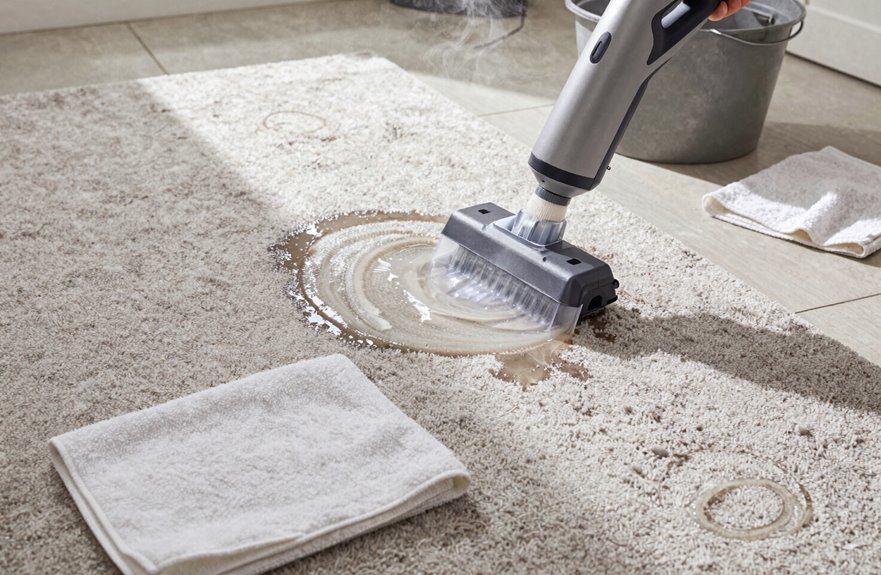
Someone’s got to tackle this soggy mess, and guess what—that someone is us, right now. I’ve been here, staring at that wet carpet after the washing machine went rogue, and speed is critical.
First, blot hard. Grab every towel you’ve got (yes, even the good ones) and press that excess water out like you’re squeezing a giant sponge. Don’t rub, just blot, blot, blot. Heavy spots need attention first.
Then comes extraction. A wet-dry vacuum pulls deep moisture from the carpet and that sneaky padding underneath. This extraction step is essential for proper drying and real odor reduction. Skip it, and you’re just masking smells that will return. The moisture remaining in the carpet and padding creates conditions for mold and mildew growth, making extraction a critical step in the restoration process.

❤【LARGER CAPACITY】Stanley SL18116P Wet / Dry Vacuum has a larger capacity over 22 L, makes small clean-up jobs a breeze for you as you don’t have to empty the bucket frequently any more.Runtime: 300.0 hours

🍏FITS ALL EXISTING SHOP VACS – Our patented design adapters 1-1/4"& 1-7/8"& 2-1/2" are adaptable to all brands' shop vacuum cleaners from 1 to 20 gal. 1-1/4" and 1-7/8" adapters are for mini and middle size shop vac from 1-9 gal. 2-1/2" adapter is for large wet/dry vac from 10 to 20 gal. Together, these three adapters ensure full compatibility with all shop vacuum brands, including RIDGID, Vacmaster, DeWalt, Stanley, Armor All, Hart, and Kärcher. Ideal for both household use and professional car detailing

🍏FITS ALL EXISTING SHOP VACS – Our patented design adapters 1-1/4"& 1-7/8"& 2-1/2" are adaptable to a variety of shop vacuum cleaners from 1 to 20 gallon. 1-1/4" and 1-7/8" adapters are mainly for mini and middle size shop vac from 1-9 gal, but also for some large size vac like as Stanley SL18701P-10A 10 gal and Craftsman CMXEVBE17656 20 gal. 2-1/2" adapter is for large wet/dry vac from 10 to 20 gallon. The three adapters make this tool compatible with all brands' shop vacuums eg. RIDGID, Vacmaster, Dewalt, Armor All, Hart, Kärcher
Dry Your Carpet Fast With Fans and Dehumidifiers
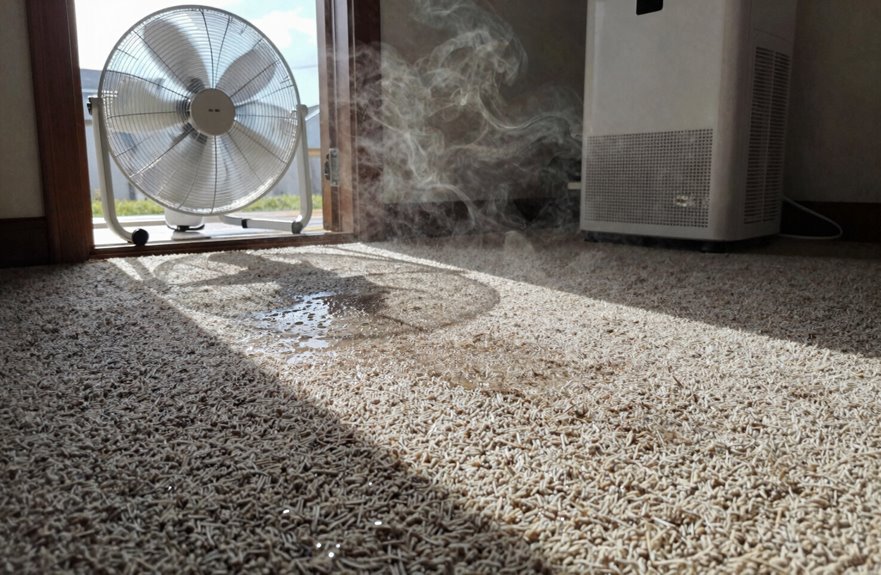
Once you’ve blotted out what you can, you need to move fast because that padding underneath is a sponge that will turn your living room into a musty science experiment. Crack every window you can find, point box fans at that soggy carpet to dry it, and run a dehumidifier until the air feels crisp. Skipping this step results in mold growth and persistent odors that can linger for weeks. Speed prevents mold and eliminates moisture damage.

Pre-Started Hardened, High-Carbon Nails, 60 Deg. Angled Pins

Carpet seaming tape for permanent carpet splicing

𝐍𝐨𝐧 𝐒𝐢𝐥𝐩 𝐂𝐚𝐫𝐩𝐞𝐭 𝐓𝐢𝐥𝐞𝐬: Charcoal black carpet tiles with padding attached, seamless appearance. Non slip, washable, damaged or worn carpet tiles can be replaced separately.
Speed Up Drying
How quickly can we turn this soggy disaster around? Speed matters when your carpet’s soaked.
First, grab towels and blot thoroughly, soaking up every drop you can. For serious puddles, run a wet-dry vacuum, which pulls water from deep in the fibers. Then open every window, crank up fans, and create strong air circulation throughout the space.
The most effective approach combines two tools: a dehumidifier and fans working together. Position the dehumidifier in the center of the room and let it pull moisture from the air while fans keep air moving. This combination reduces drying time from days to hours. Thorough drying now prevents mold and odor problems later.
Prevent Mold Growth
Mold is the uninvited guest that will crash your carpet party faster than you can say “musty basement smell,” and preventing it requires immediate action. Drying your carpet fast isn’t just about speed; it’s about strategy.
Grab every fan you own and point them at that soggy mess like you’re directing airflow, and fire up your dehumidifier with full intensity. Ventilation is your key advantage. Open windows wide, even when it’s humid outside, because stale air creates conditions where mold thrives.
Check carpet corners and lift them to inspect for padding moisture, that hidden problem underneath. If it’s contaminated, replace it without exception. For extra mold prevention, sprinkle baking soda after everything is completely dry. Thorough drying now prevents mold growth later.
Check Carpet Padding for Hidden Moisture and Mold
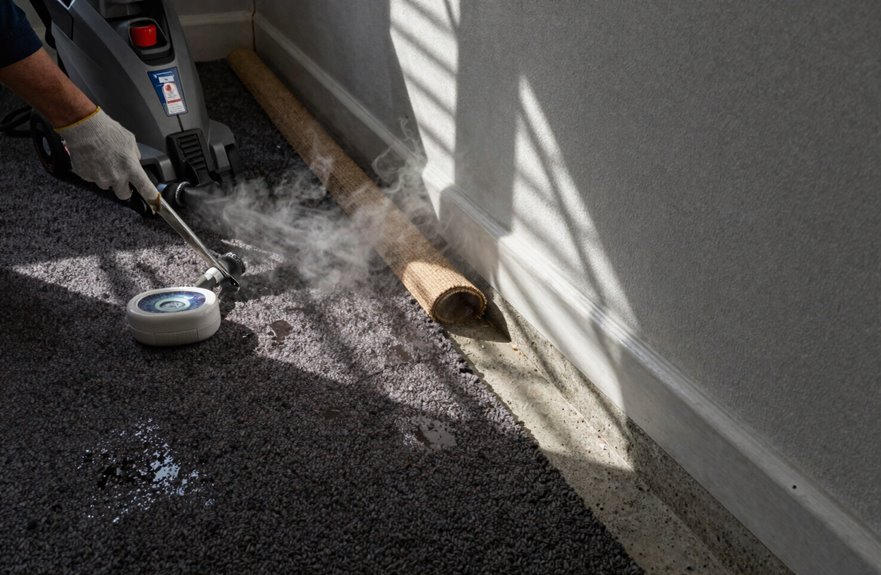
I’ve learned the hard way that dry carpet on top can fool you while the padding underneath turns into a swampy science project. That’s why I always pull back a corner, run my hand across the fuzzy underside, and sniff for that telltale musty, gym-sock funk or spot dark splotches that look like spilled coffee but definitely aren’t. If you see greenish fuzz or feel dampness that makes your fingers wrinkle, that padding must be replaced. No amount of baking soda will fix moldy padding hidden beneath your feet.

COLOR-CHANGING MOISTURE INDICATOR – When the cylinder’s particles are orange, it’s dry and ready to use in closets or small spaces. When they turn dark green, moisture is absorbed, just recharge your dehumidifiers for home in drying base in 2-3 hours

Powerful Dehumidification for Optimal Comfort - This dehumidifier max dehumidification of 80 pints of moisture per day(under 95°F, 90% RH conditions) and covers spaces up to 5,500 sq. ft. Studies indicate that the ideal humidity for health is 40-60% RH. Kesnos dehumidifier allows you to adjust humidity levels from 30-80% RH, ensuring optimal comfort. This lower setting surpasses that of most household dehumidifiers, catering to your specific needs

WHISPER-QUIET OPERATION FOR COMFORT - Enjoy peaceful dehumidifying with this small dehumidifier, operating at 50dB. Perfect for use in bedrooms, offices, or nurseries where quiet matters. This portable dehumidifier maintains a dry, healthy space
Padding Inspection Steps
Because I learned this the hard way after a “minor” kitchen flood turned my living room into a swamp, I’m going to walk you through checking your padding, the squishy stuff under your carpet that you never think about until it’s plotting against you.
First, grab a corner and pull. If it resists, use pliers, but don’t be shy. Peek underneath and look for dark spots. Dark spots indicate moisture accumulation, and mildew will colonize the area. Press your palm down; if it feels damp, cold, or smells like a forgotten gym bag, you’ve got trouble. This inspection is mandatory. Odor hides in padding and waits for the right conditions to spread. Replacement of contaminated padding stops the odor cycle. Swapping out old padding for new eliminates the source of the problem.
Mold Detection Signs
Why does that musty smell keep haunting your nostrils even after you’ve scrubbed every visible inch? The culprit is usually lurking beneath: hidden padding moisture feeding mold.
For proper mold detection, check these telltale signs:
- Dark spots or discoloration on the padding’s underside, indicating mold growth
- Spongy, squishy texture when you press down, signaling trapped damp environment issues
- That earthy, basement-y aroma that indicates moisture problems
Ignoring padding moisture sabotages your entire odor management plan. Even perfect carpet drying fails if the foundation stays soggy. Replace contaminated padding, or that musty smell becomes a permanent problem. Mold-infested padding cannot be restored through drying alone and must be removed to eliminate the odor source.
Neutralize Wet Carpet Odor With Baking Soda Overnight
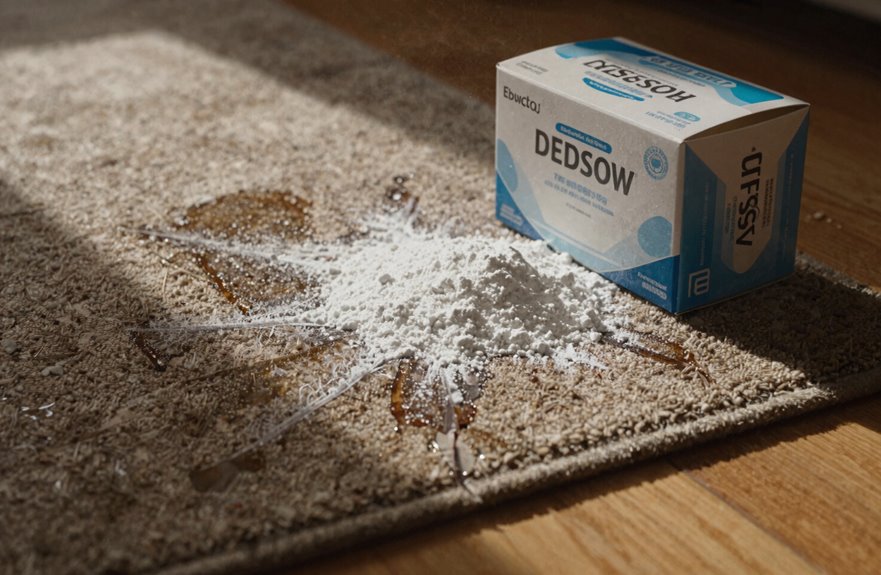
Three simple words changed my life: baking soda magic. I’ve rescued countless damp carpet disasters with this trusty drying aid, and I’m sharing my overnight ritual with you.
Here’s my foolproof system that actually works:
| Step | What I Do |
|---|---|
| Sprinkle | I generously dust baking soda across the affected zones, like powdered sugar on a cake |
| Wait | I let odor absorption happen overnight, 12-24 hours. Patience pays. |
| Vacuum | I thoroughly suck up every grain, watching trapped smells disappear |
| Repeat | I reapply if needed, because persistent stinks need persistence |
The overnight wait feels long, but waking to fresh carpet delivers results. I’ve learned this method complements fans and open windows effectively. We’ve all dealt with soggy floors, and this technique eliminates odors through a simple, proven process.

Eliminates Odors & Releases Pet Hair and Dirt

Powder eliminates odors & helps removing dirt; Lasting fragrance stays behind

Effective Odor Elimination: Absorbs and destroys big odors in small spaces, keeping your home smelling fresh and clean.
Spray Vinegar to Eliminate Lingering Musty Smells
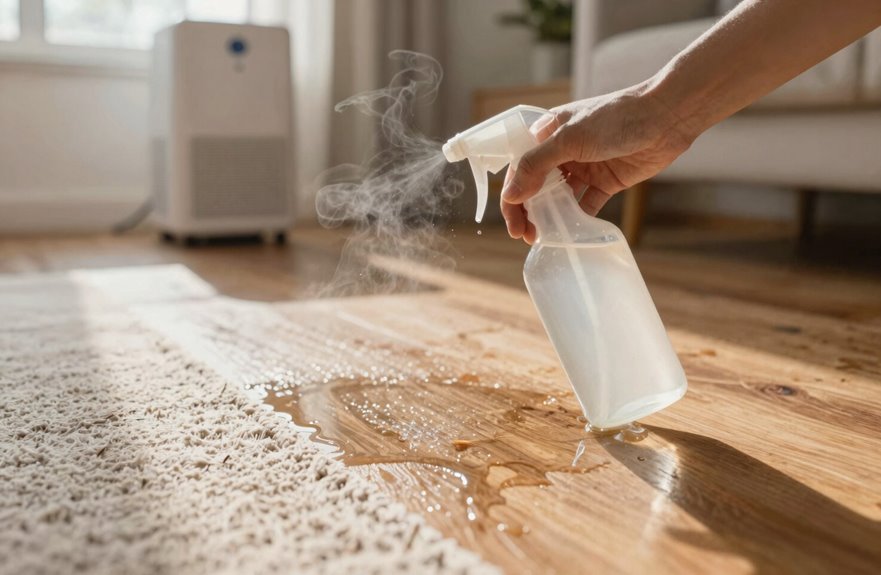
How quickly can one household staple flip from salad dressing to smell-slaying hero? I’m talking about white vinegar, and it’s about to become your carpet’s best friend.
White vinegar: from salad dressing to smell-slaying hero for your carpet.
When that musty odor won’t quit, even after baking soda’s overnight shift, grab a spray bottle and mix equal parts white vinegar and water. Here’s the process:
- Lightly mist the affected carpet area. Don’t soak it, or you’ll make pickles instead.
- Let it sit 10–15 minutes so fibers absorb the acetic acid.
- Blot with a clean cloth, then ventilate the space thoroughly.
The vinegar smell vanishes as things dry. That natural disinfectant breaks down odor-causing molecules while you wait. Stubborn smells respond well to this method.

DESTROYS STUBBORN STAINS THE FIRST TIME: Penetrates deep to lift and remove tough pet stains like feces, vomit, dirt and their odors

NEW ALLERGEN NEUTRALIZER SPRAY: Clorox PURE Allergen Neutralizer Fabric and Carpet Spray neutralizes pet dander, dust mite matter and pollen

Product of Carpet Fresh
Vacuum With HEPA Filter to Remove Residue and Lift Fibers
Where does all that gunk actually go once you’ve scrubbed and sprayed? It’s hiding in your carpet fibers, waiting to return odors to your space. That’s why the HEPA vacuum step is essential in any cleaning routine.
| Step | What It Does |
|---|---|
| Target affected zones first | Stops odor residues from spreading |
| Extend to surrounding areas | Catches sneaky particles |
| Wait for full drying | Wet carpet clogs your filter |
| Post-deodorizing pass | Sucks up baking soda and loosened grime |
| Regular maintenance | Keeps airborne nasties down |
After drying and deodorizing, a HEPA vacuum lifts everything those treatments loosened. This prevents re-depositing mold spores. This rhythm eliminates repeated odor problems, and your carpet gets the thorough care it needs.

Universal Compatibility: The clear vacuum attachments are suitable for most store vacuum cleaners and can be used with any existing wet or dry vacuum cleaner to create powerful extraction power, meet deep cleaning needs, and save you the expensive cost of purchasing a professional vacuum heads

🍏FITS ALL EXISTING SHOP VACS – Our patented design adapters 1-1/4"& 1-7/8"& 2-1/2" are adaptable to a variety of shop vacuum cleaners from 1 to 20 gallon. 1-1/4" and 1-7/8" adapters are mainly for mini and middle size shop vac from 1-9 gal, but also for some large size vac like as Stanley SL18701P-10A 10 gal and Craftsman CMXEVBE17656 20 gal. 2-1/2" adapter is for large wet/dry vac from 10 to 20 gallon. The three adapters make this tool compatible with all brands' shop vacuums eg.RIDGID, Vacaster, Dewalt, Armor All, Hart, Kärcher

Compatibility: Designed to fit 1.25", 1.5", and 2" hose connections, this carpet cleaning extractor attachment works with a wide range of compatible wet/dry vacuums and carpet extractors, making it a practical tool for deep cleaning carpets, rugs, upholstery, and more,Warm Tip: Adequate suction ensures better results
When to Call a Professional for Persistent Carpet Odors?
Sometimes carpet odors persist after multiple home treatments like baking soda and vinegar. When that funk won’t quit, it’s time to call in the pros.
Here’s when to contact a professional:
- Mold suspicion – that blackish, spreading shadow under the pad requires professional moisture removal beyond what a box fan can accomplish.
- Deep padding contamination – professional cleaning with hot water extraction reaches areas that spray bottles cannot treat effectively.
- Recurring odors – when odor source control fails at home, experts can diagnose hidden damp spots that cause the problem to return.
Professional intervention becomes necessary when home solutions no longer resolve the issue.
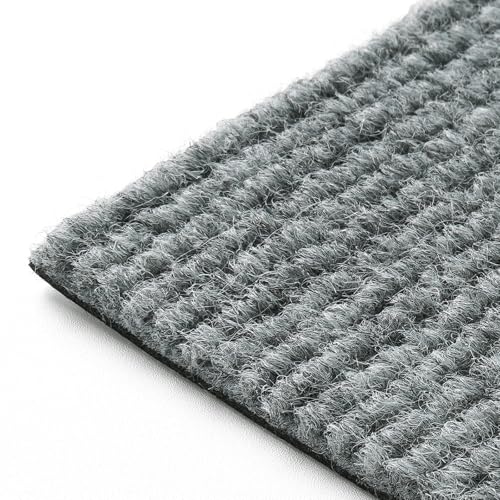
𝐒𝐞𝐥𝐟 𝐀𝐝𝐡𝐞𝐬𝐢𝐯𝐞 𝐂𝐚𝐫𝐩𝐞𝐭 𝐅𝐥𝐨𝐨𝐫 𝐓𝐢𝐥𝐞𝐬: Grey peel and stick carpet squares with padding attached, seamless appearance. Non slip, washable, removable, damaged or worn carpet tiles can be replaced separately.
𝐂𝐚𝐫𝐩𝐞𝐭 𝐒𝐪𝐮𝐚𝐫𝐞𝐬 𝐏𝐞𝐞𝐥 𝐚𝐧𝐝 𝐒𝐭𝐢𝐜𝐤 𝐂𝐚𝐫𝐩𝐞𝐭 𝐓𝐢𝐥𝐞𝐬: Grey peel and stick carpet tiles with padding attached, seamless appearance. Non slip, washable, removable, damaged or worn carpet tiles can be replaced separately.

PREMIUM DAMAGE-FREE MATERIAL: Constructed from heavy-duty yet lightweight plastic that provides superior bearing capacity. It effectively tucks carpet into tight spaces without marking, scratching, or damaging your baseboards and freshly painted walls.