
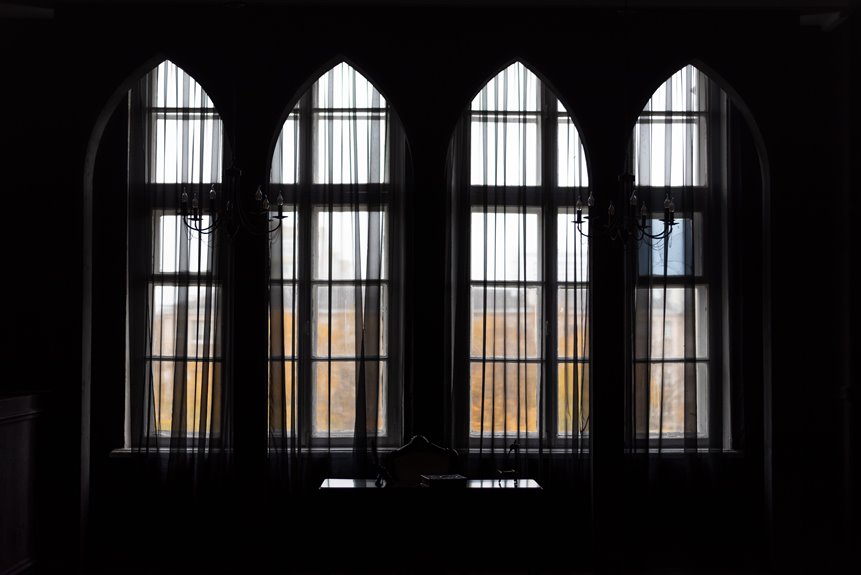
I’ve wrestled with arched windows for years, and that gorgeous curve is either your best design feature or your biggest headache. First, decide if you’re going above the arch for drama and full coverage, or below to let that curve breathe as art. Both approaches have merit, depending on your morning light and privacy needs. Then lock in your rod placement and measure twice. Pick a pleat style that actually works with your hardware; ripple fold glides smoothly on tracks, while pinch pleat feels classic below the arch. Choose rods or tracks that match your ceiling height. Cheap rods on soaring ceilings look sad, not intentional. Finally, hang at 2-3x fullness so your panels don’t look like flat sheets. Get these five steps right, and you’ll transform that tricky arc into the room’s crown jewel. The details that follow will help your windows achieve a polished, professional appearance.
Choose Above-Arch or Below-Arch Placement for Your Window
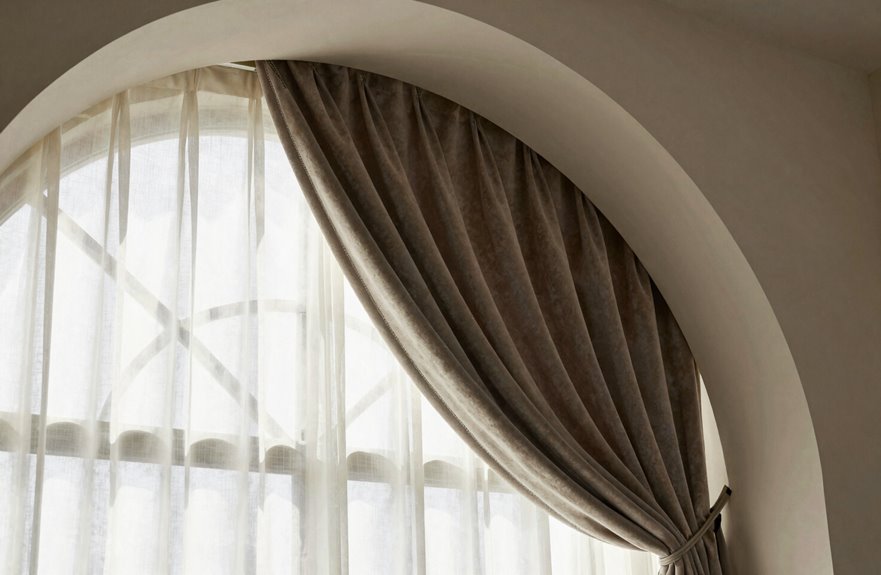
Where do we even begin with these gorgeous, tricky curves? I’ve stared at my own arched window for hours, coffee growing cold, debating rod placement like it’s a life choice.
Above the arch, you’re buying drama and height. Your ceiling soars, you get full privacy coverage, and that morning sun becomes completely manageable. I tried this in my bedroom and suddenly felt like I lived somewhere fancy.
Below the arch, though, you’re flaunting that architecture. The curve becomes art, you’re still covered where it counts, and tall windows stop feeling like a cathedral you never asked for.
Both work, both thrill, both frustrate. I’ve done both, regretted neither. What matters is your morning light, your privacy needs, and your taste. Consider these factors carefully.
Measure for Curtains Above or Below Your Arch
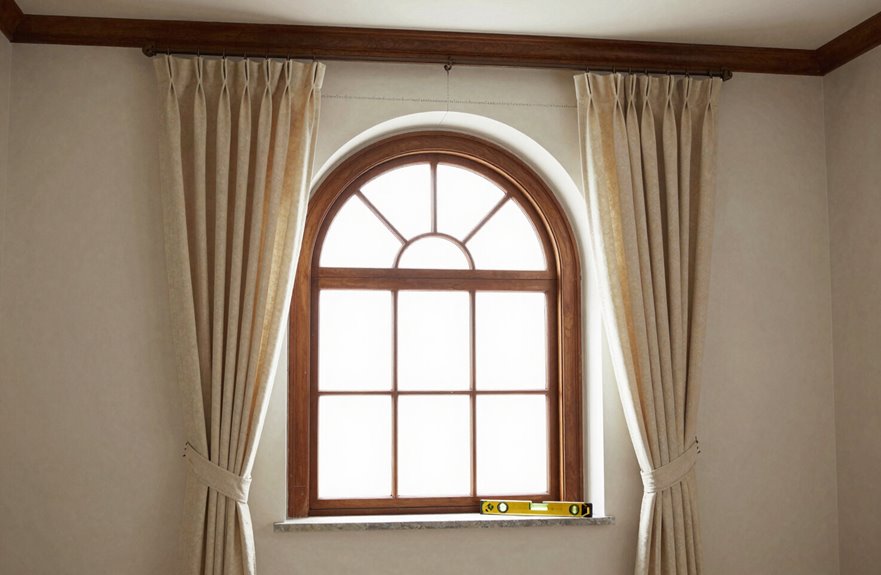
Once you’ve picked your spot, grab that tape measure. Guessing leads to curtains that hover awkwardly.
Your curtain rod placement determines everything, so lock that in first. Going above? Add 4–6 inches past the arch for that soaring effect. Staying below? Hug that rectangular section tight and let the arch breathe. For arch window measurements, measure the width across your planned rod span, then the curtain length from rod to floor or to your desired puddle length. Measure twice to avoid costly mistakes.
| Placement | Height Strategy | Length Target |
|---|---|---|
| Above arch | +4–6 inches above top | Floor or puddle |
| Below arch | Just above rectangle | Bottom of frame |
| Wide span | Add 6–12 inches each side | Full coverage |
| Narrow look | Exact window width | Minimal stack |
Pick a Pleat Style That Fits Your Arch Window Hardware
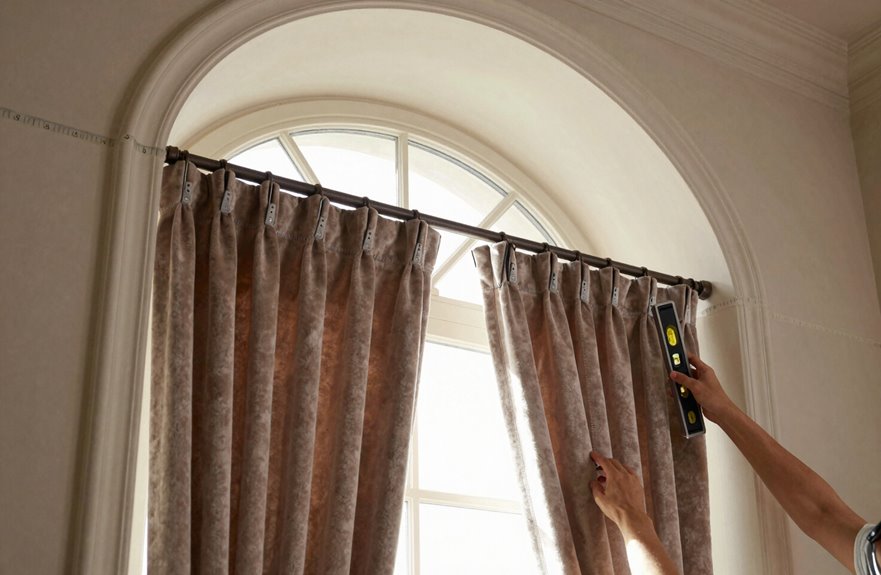
Because your hardware choice locks in everything else, I’ve learned this lesson the hard way through standing in my living room holding fabric swatches, wondering why my “simple” curtain project suddenly felt like advanced calculus.
Your arched window hardware and pleat styles need to work together, or you’ll hate your drapery hanging every single morning. Here’s what actually works:
- Ripple Fold creates those dreamy S-curves that stretch your ceiling upward. Pair it with tracks for smooth gliding above the arch.
- Tailored Pleat keeps things crisp and modern on rods, rings, or tracks, emphasizing every inch of height you’ve got.
- Pinch Pleat brings that classic, weighted elegance when hung below the arch, drawing a clean line between curve and rectangle.
- Goblet Pleat offers luxury for stationary panels that frame your arch like jewelry.
- Inverted Pleat delivers formal, stately structure when you’re going for that polished, intentional look.
Pick what feels like you, not your mother-in-law’s taste.
Select Track or Rod Hardware for Your Arch Window Height
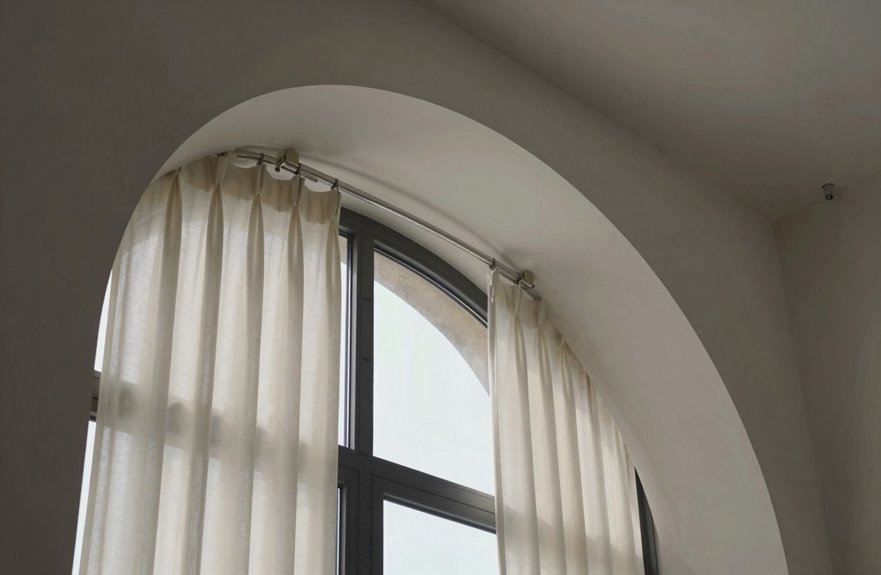
You’ve nailed your pleat style, and hardware selection is where the magic actually happens. This is the part that transforms your arch from an awkward architectural quirk into an intentional, magazine-worthy moment. I learned this the hard way after installing a gorgeous rod and stepping back to realize I’d placed it so low my curtains looked like they were cowering from the ceiling.
For arched windows, your hardware selection significantly impacts the final result. Track systems glide effortlessly, perfect for towering arches where you’re not climbing ladders daily. Rods feel classic but present installation challenges at height. Here’s my breakdown:
| Hardware Type | Best For |
|---|---|
| Track systems | Tall arches, easy gliding |
| Rod and rings | Traditional look, reachable heights |
| Outside-frame arched rods | Above-arch drama, full coverage |
| Motorized tracks | Smart homes, soaring ceilings |
| Standard rods | Budget-friendly, lower installs |
Measure 4–6 inches above the arch opening for the elongated, intentional elegance this placement provides.
Hang Your Arched Window Curtains at 2-3x Fullness
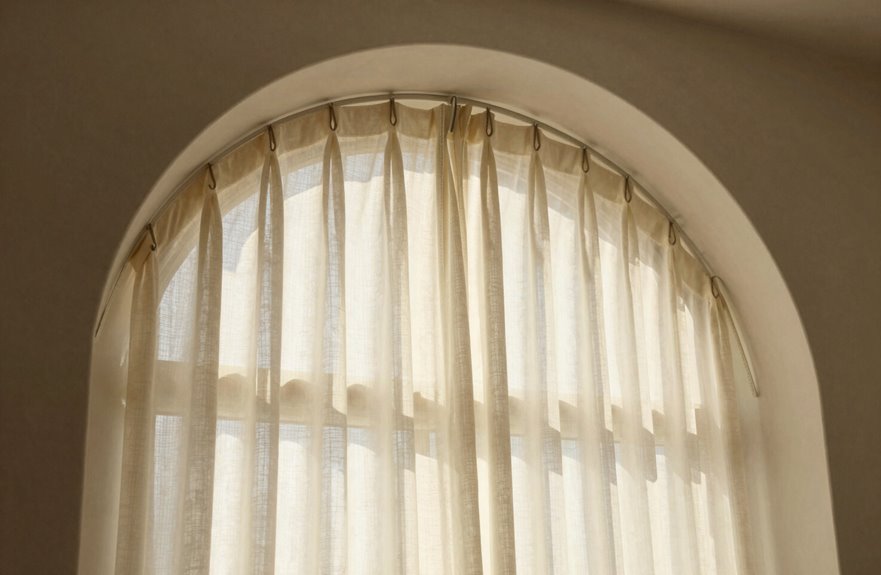
- Measure your width, then add 6-12 inches each side for stack space. Insufficient stack space creates a visually thin appearance.
- Aim for 2-3 times fullness so fabric pools in soft folds when open and cascades gracefully when closed.
- Choose Ripple Fold or Tailored Pleat styles; they stack tight without bulk at that tricky arch.
- Mounting above the arch? Add extra fullness so panels fully cover it when closed and gather beautifully when open.
- Hanging below to show the arch? Keep that 2-3x ratio on the rectangular portion for balance.
Proper fullness and stack space create the polished appearance found in professional interior design.