
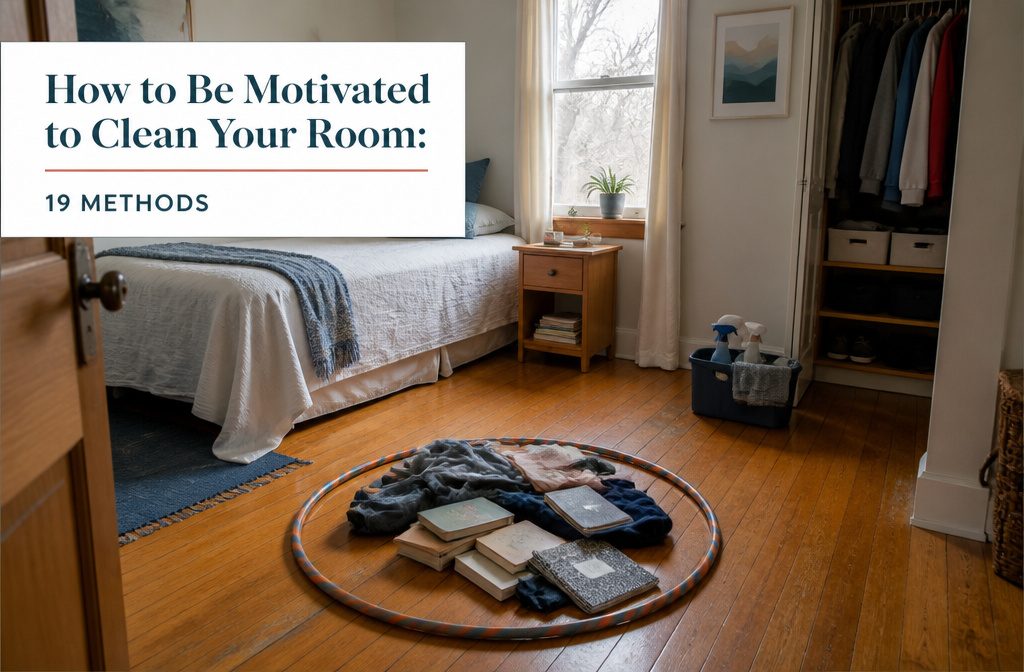
A clean room takes 15 minutes to 2 hours depending on how you break it down, and most people stall because they treat it as one job instead of several small ones.
The friction sits in starting: no supplies within reach, no timer set, no clear first move.
A hula hoop on the floor marking off one patch of clutter, or a caddy stocked with spray and cloths kept under the sink, removes the decision that keeps you standing in the doorway.
1. Break the Job Into Small Tasks or Areas
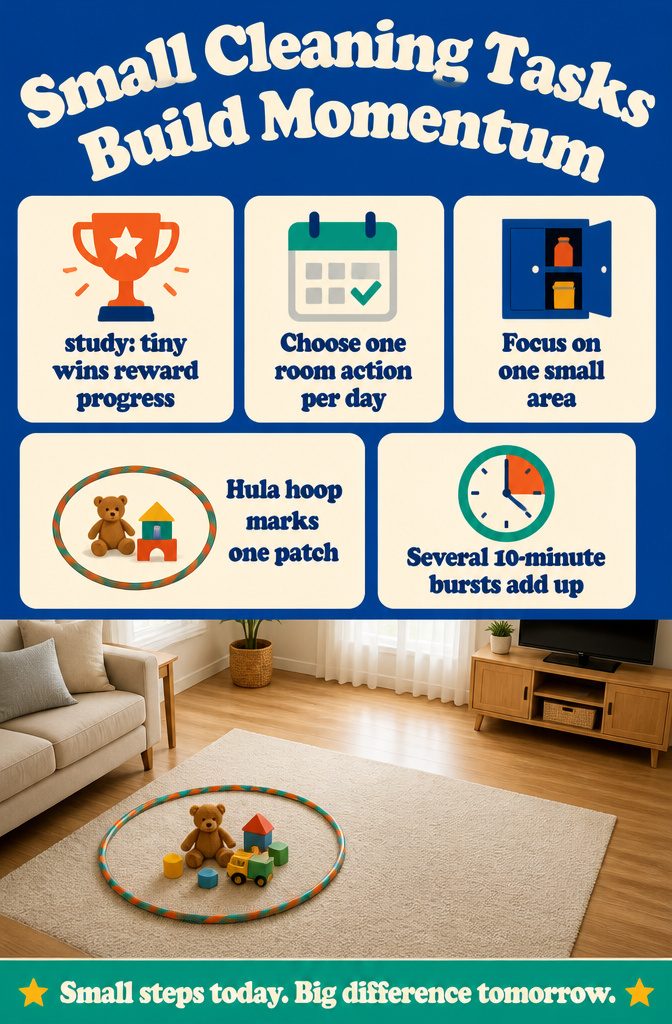
Dividing the job into smaller pieces is backed by a 2015 study showing that completing even a tiny task triggers a psychological reward that helps you beat procrastination.
Instead of facing one overwhelming room, break it down by action or by space. Buy cleaning supplies one day, sweep the living room the next, wipe down kitchen counters the third.
Or choose a single spot: paper clutter on the kitchen table, one bedside drawer, old makeup in the bathroom cabinet, expired plastic containers in one cupboard.
When the mess feels paralyzing, narrowing your focus to a small area makes the first move easier.
One method uses a hula hoop placed on the floor to mark off just the toys or clutter inside that circle, then moves it to the next patch once the first is clear.
Getting one small area done gives you momentum, and a few 10-minute bursts spread across the day add up faster than you expect without the stress of blocking out a whole Saturday afternoon.
2. Set a Timer for a Short Work Period
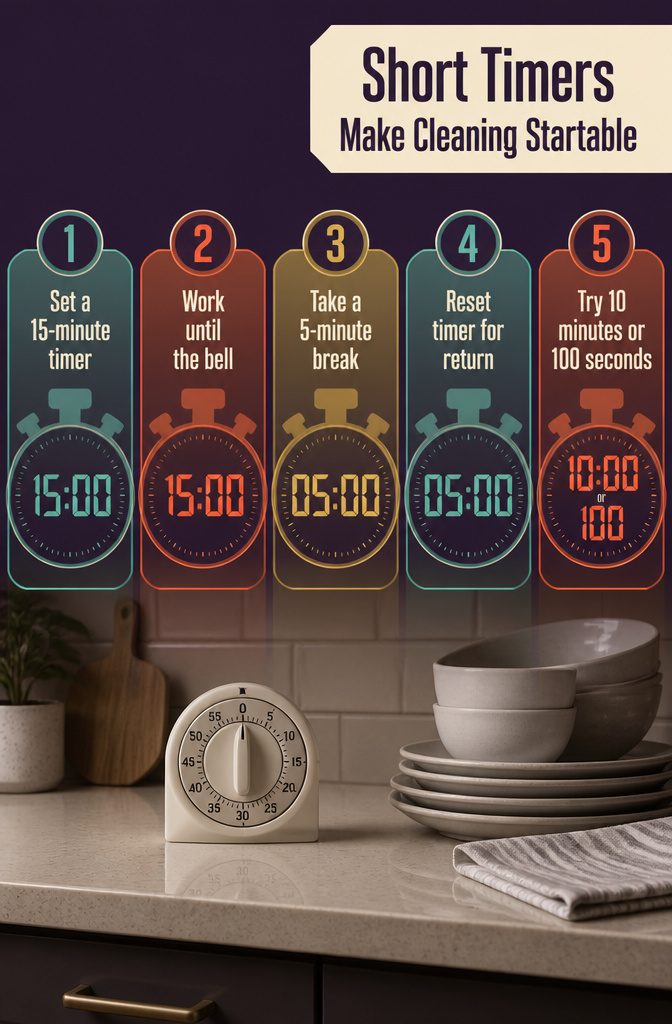
A timed limit with built-in permission to quit works because fifteen minutes sounds survivable even when the room looks awful. Set the timer, work until it rings, and if you stop then you still did something.
I start with fifteen minutes when a task feels too big to face.
The Pomodoro method extends that to twenty-five minutes of work followed by a five-minute break, which handles deeper cleaning if the first timer got you moving. Set a second timer for the break or you will forget to return.
Shorter timers work when fifteen minutes sounds like too much. A ten-minute alarm gets you through one surface or one pile, and the progress often pulls you forward past the bell.
If ten still feels impossible, try one hundred seconds. That clears the counter, empties the sink, or stacks the dishes, and sometimes that dent is enough to keep going.
Five-minute intervals work well for multi-room pickups. Move to a different room when the timer sounds instead of staying stuck in one spot for an hour you do not have.
3. Work With Another Person or Share Your Progress
Working beside someone cuts the job in half, and the math is simple: four people each cleaning for ten minutes delivers forty minutes of progress.
If you live with others, assigning sections rather than hoping for volunteers means everyone contributes and nobody carries the full load alone.
Live accountability sharpens focus in a way that posting photos afterward does not.
Focusmate pairs you with a stranger over video for timed work sessions—free for three sessions a week—and I have used it for writing while my screen partner swept a kitchen.
Reporting back to a real person at the end of the block keeps you moving through the task instead of drifting toward your phone.
If working side by side is not an option, inviting someone over creates a deadline that forces the decision. The appointment itself becomes the push, and a clean room by the time they arrive is the reward.
4. Keep Supplies Ready and Nearby
Keep Supplies Ready and Nearby
The friction you feel before cleaning often comes from needing to hunt down what you need.
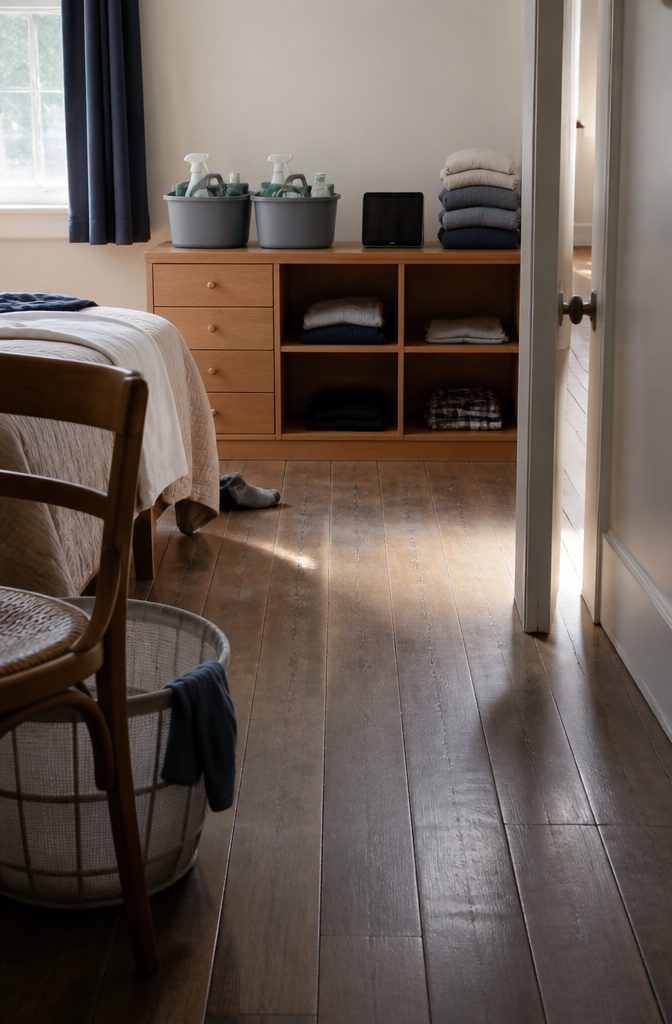
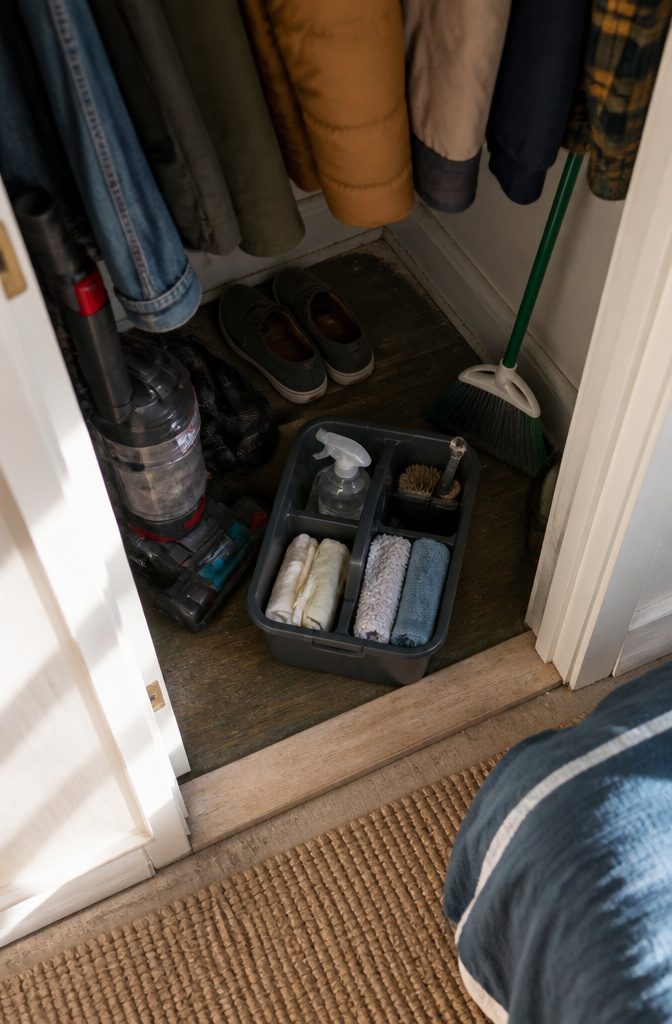
Keep a caddy stocked with cloths, spray, and the tools that room needs, and put it where the mess happens—bathroom cabinet, bedroom closet, under the kitchen sink.
When I moved the vacuum closer to the room I actually vacuum, the job stopped feeling like a project.
If a task needs something odd, store that tool right there.
One writer kept a wrench in the bathroom caddy after realizing that walking to the garage to fetch it every time was enough reason to put off cleaning the bidet.
Once the wrench stayed put, the task stopped feeling like a chore worth avoiding.
Psychologist BJ Fogg recommended using high-motivation days to set up for the low ones: buy supplies, unpack them, fill the bottles, and position the broom next to your bed.
When you get home tired, grabbing what sits in front of you is easier than deciding to start from scratch.
5. Build a Routine or Schedule for Cleaning
Assigning cleaning a specific time slot makes it far more likely to happen.
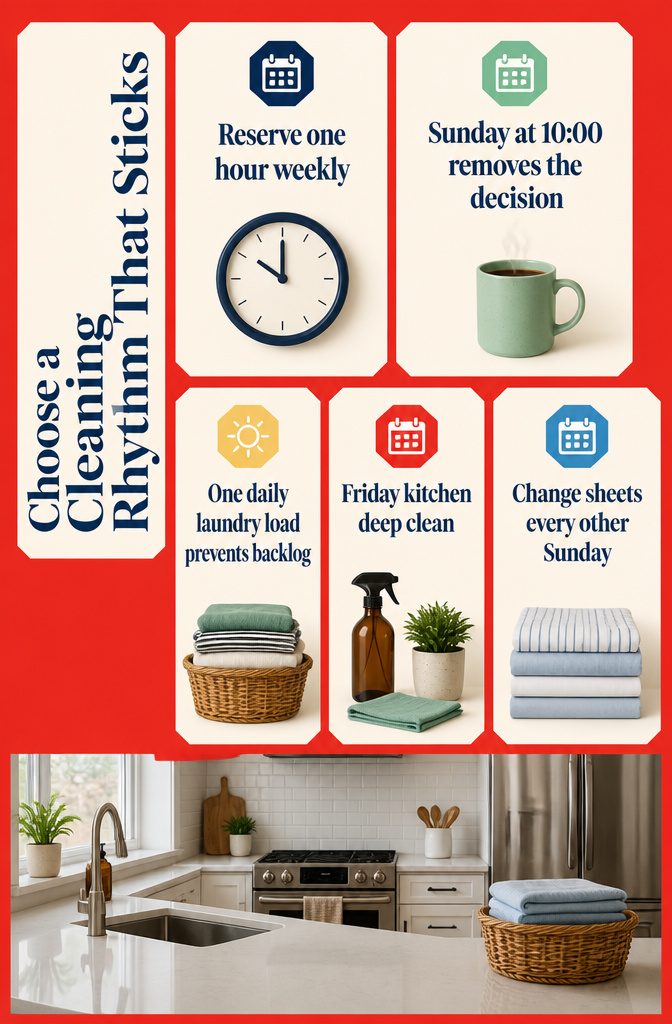
Scheduling one hour a week, say Sunday morning at 10:00, removes the question of when you will get around to it. Once that hour is up, you can keep going if the momentum is there, but the commitment is already met.
Cleaning a little each day keeps household tasks from piling up into weekend-draining projects.
If dishes and laundry tend to accumulate, running one load of each daily prevents the backlog. Making the bed takes a minute and changes how the whole bedroom reads.
Not everyone finds rigid schedules helpful. If plans shift often, missing a designated cleaning slot can demotivate more than it organizes.
One approach that sidesteps this is cleaning when you notice it is needed, with a few exceptions: a weekly Friday kitchen deep cleaning and bi-weekly Sunday sheet changes still hold their place because those tasks matter for hygiene and you know you will be home to handle laundry.
6. Play Music, Podcasts, or Cleaning Videos
Play Music, Podcasts, or Cleaning Videos
Audio makes cleaning less tedious. I put on music I love, turn it up, and the work moves faster because I forget I’m doing it at all.
Upbeat tracks lift the mood, and if you’re someone who cleans to a rhythm, that becomes the pace of the whole session.
A playlist that runs 20 to 30 minutes works as a built-in timer.
Once the music stops, you’re done. No need to watch the clock or second-guess whether you’ve put in enough time.
Podcasts, audiobooks, and comedy stations work the same way. You want to be distracted just enough to forget you’re cleaning, but not so much that you stop moving.
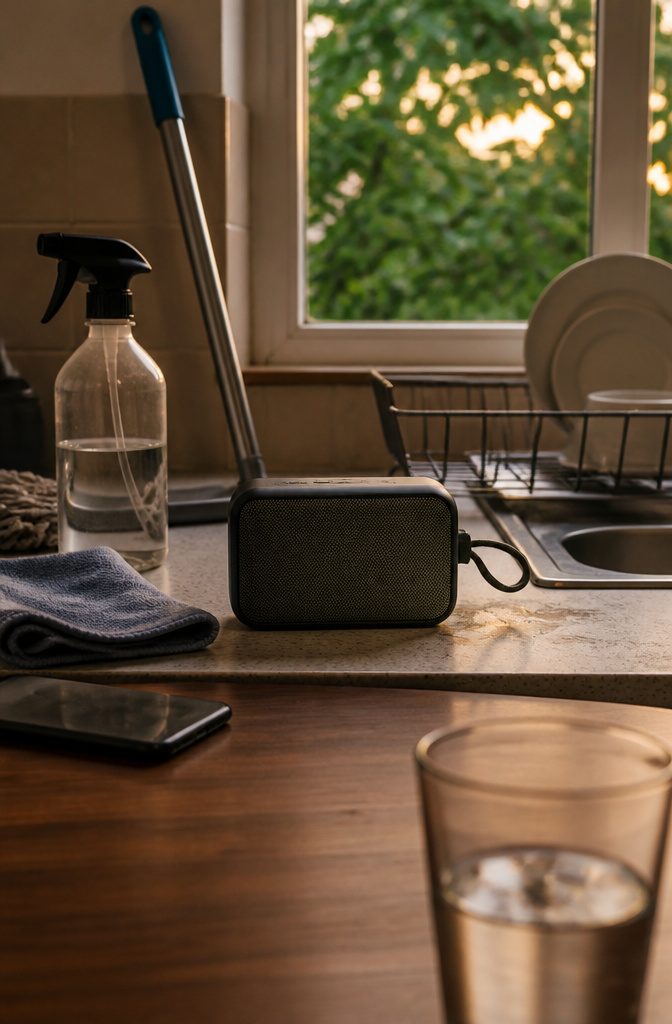
I keep a small portable speaker with me so I’m not tethered to my phone, and body-doubling videos on YouTube help when I need company.
Cozy K is one I come back to for full home resets and cozy cleaning energy.
Video can pull focus, though.
Anything new or that needs real attention will stall you. Save those for after.
7. Promise Yourself a Reward After
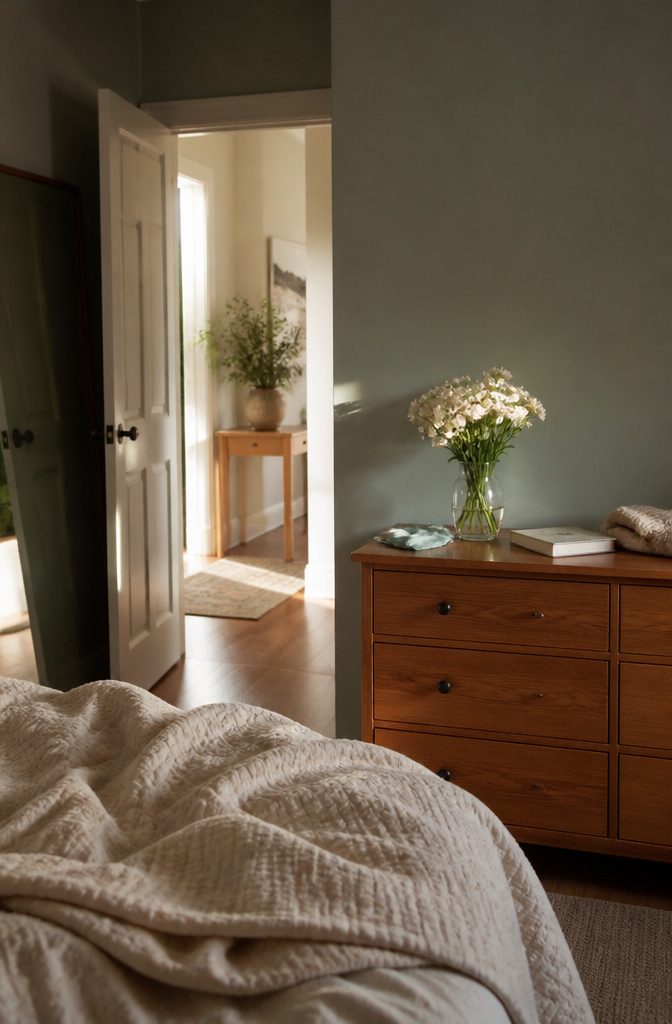
I set a reward before I start and hold it just out of reach until the work is done.
That can be an episode of a show I’ve been following, a coffee run, or twenty minutes with a book—whatever feels worth the effort that day.
The reward doesn’t need to cost anything or take long, but it needs to be something I genuinely want and will actually deny myself until the room is clean.
The timing matters.
If I tell myself I can watch that show anytime, the pull disappears. But if I decide the show happens only after the dresser is clear and the floor is visible, I move faster.
The same logic works for a small treat: fresh flowers for the table once it’s clean, or a glass of wine in the newly tidied living room.
The reward becomes the reason to finish, and finishing without guilt makes the reward better than it would have been if I’d taken it first.
8. Choose Pleasant Products and Better Tools
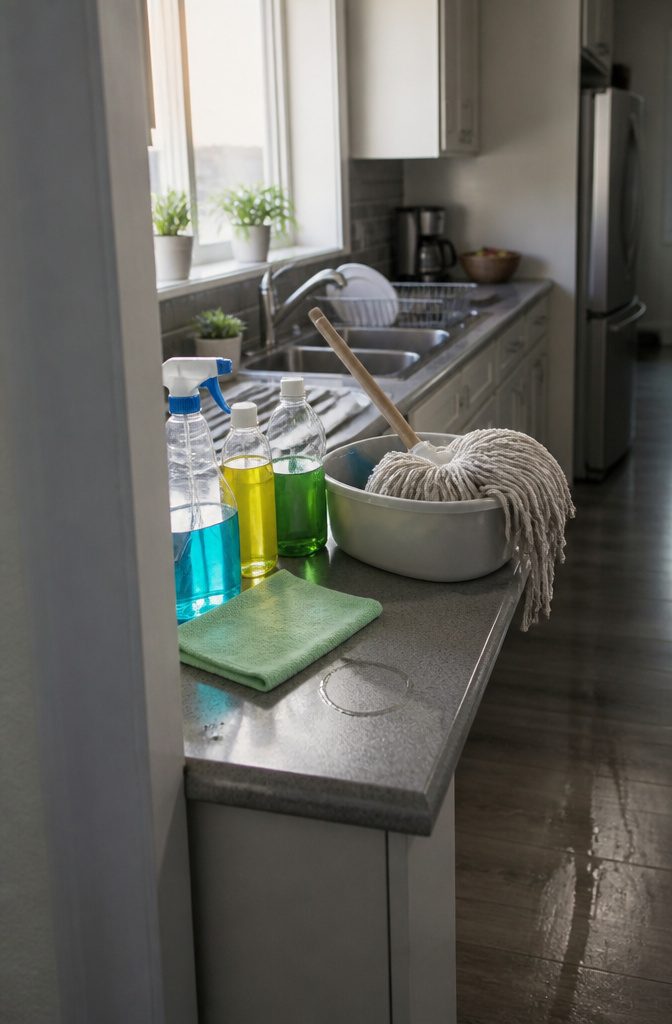
A scent you actually like or a tool that works better than what you have can turn a dreaded chore into something closer to neutral.
I keep Mrs. Meyers dish soap on hand because the scent throws through the whole kitchen and lingers after the work is done.
If you hate doing dishes, that kind of detail matters. Palmolive in blueberry almond runs lighter but still makes the sink a little less grim.
Method cleaning products hit the same note: the bottles are clear, the liquids come in colours, and the scents—Pink Grapefruit, Wild Rhubarb, Eucalyptus Mint, Lemongrass—are strong enough to register while you scrub floors or wipe cabinets.
Spending a few extra dollars on a product that smells good or a mop head that actually picks up dirt instead of pushing it around removes one reason to put the task off.
Better tools finish faster; pleasant products make the middle stretch easier to sit through.
9. Picture the Clean Room or Remember Why It Matters

Picture the clean room before you start. Close your eyes and walk through it in your mind: the bed made, the floor clear, sunlight hitting surfaces instead of clutter.
That mental image of the finished space pulls you forward when the mess in front of you feels like too much. The reward becomes real before you touch a single thing.
Taking a picture of the mess helps too. It always looks worse in a photo, and that jolt can be exactly what you need to get moving.
Once you’ve cleaned, take another shot. Seeing the before and after side by side makes the progress undeniable, and you can refer back to that clean room next time you’re stuck.
The value of a tidy home sits in the details you notice once it’s done: you can find what you need, the space feels larger, and you’re not walking past the same pile for the third day in a row.
Remembering what you’re avoiding by putting it off works just as well as imagining what you’ll gain.
10. Start With the Worst Task or the Easiest One
Start With the Worst Task or the Easiest One
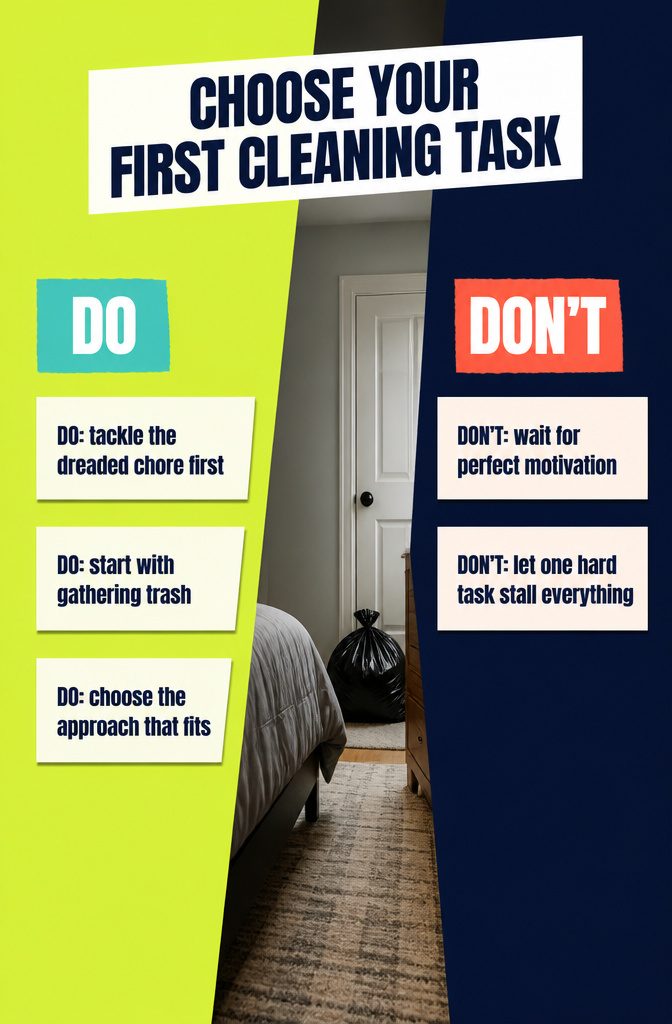
Two ways to begin when cleaning feels impossible. The first is to tackle the most dreaded job right away, before you’ve even had coffee or checked your phone.
Mark Twain said that if you eat a live frog first thing in the morning, nothing worse will happen to you the rest of the day.
Brian Tracy built his book Eat That Frog! around that idea: get the least pleasant task out of the way, and the rest of your day can only get easier.
This works best when you have energy but are avoiding a specific chore, like a dark basement room or a bathroom you’ve been putting off for weeks.
The opposite approach is to start with something simple, like gathering trash into a bag.
Empty bottles and wrappers make clutter feel worse than it is, and clearing them takes almost no thought. Once the garbage is gone, the room already looks better, and you’ve built momentum without using much willpower.
11. Accept Good Enough Rather Than Perfect
Accept Good Enough Rather Than Perfect
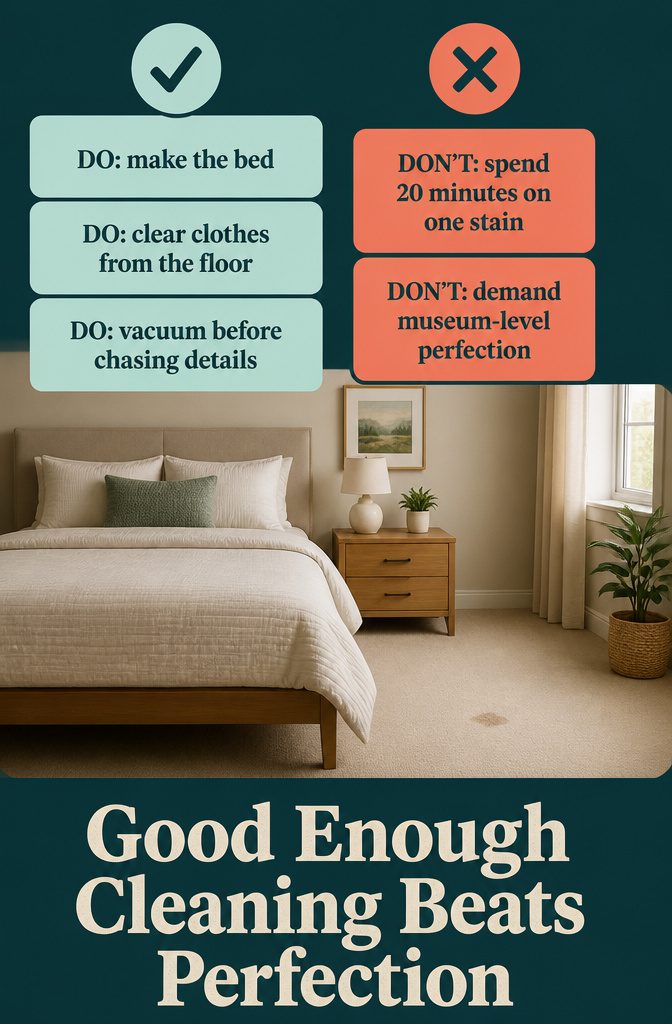
Perfectionism stalls progress faster than anything else. Done is better than perfect, as Sheryl Sandberg put it, and that holds for a messy bedroom just as well as it does for a product launch.
You’re aiming for a clean room you can use, not a museum-quality space that took three hours you didn’t have.
The trap shows up when you get stuck on one stubborn detail. Spending 20 minutes treating a single carpet stain while the bed stays unmade and clothes sit in piles trades real forward motion for the satisfaction of fixing one spot.
You lose interest in the whole job because you gave your best energy to the least visible return.
Vacuum, make the bed, clear the clutter from the floor. Those wins stack, and the stain can wait for a different day when you have the right cleaner and the patience to let it work.
12. Track Progress With Photos or Checklists
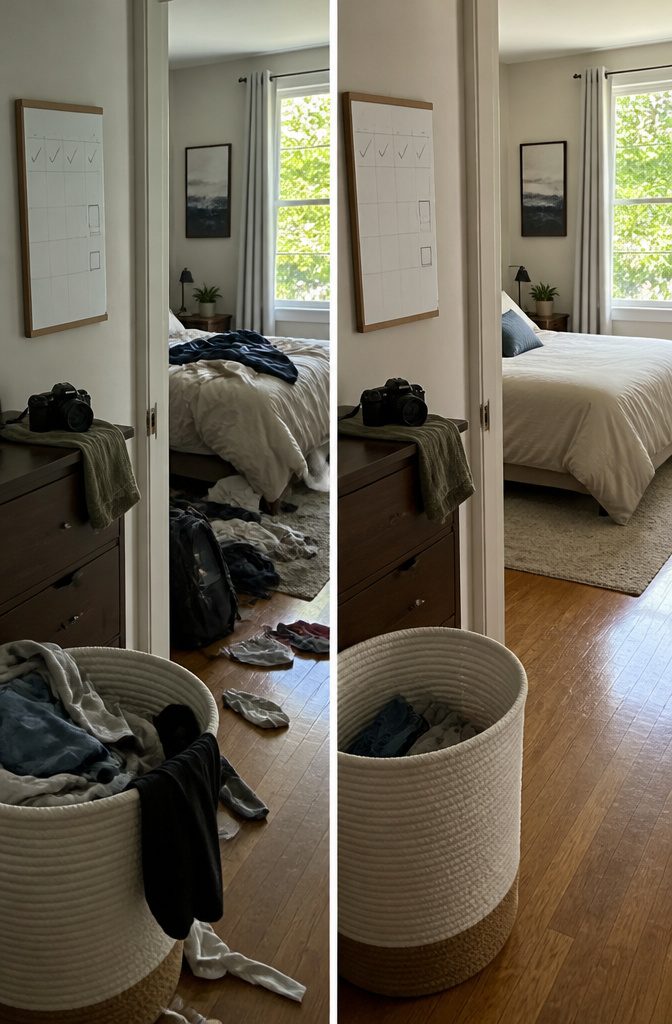
Taking a photo of the mess before you start gives you a record that actually pushes you forward.
The mess looks even worse through the camera, which becomes its own odd kind of fuel. After you finish, take a second shot.
Comparing the two makes the progress impossible to miss, and you can post the pair or send them to someone who will be proud—the kind of small recognition that nudges you to start again next time.
Checklists work the same way when they stay small enough to finish. A micro checklist drops five or six tasks on paper, each one short enough that fifteen minutes gets you through the whole thing.
You can put away the food, check it off, then circle back later to put away condiments and knock off another.
Each mark shows forward motion without needing a full room overhaul, and the tiny wins add up faster than one long slog ever does.
The Worxsail Dry Erase Calendar keeps the list visible and erasable, which matters more than it sounds.
Seeing what you finished yesterday reminds you that finishing again today is possible, and wiping it clean when the week turns over keeps the board from becoming one more cluttered surface.
13. Put Away Devices That Pull Your Attention
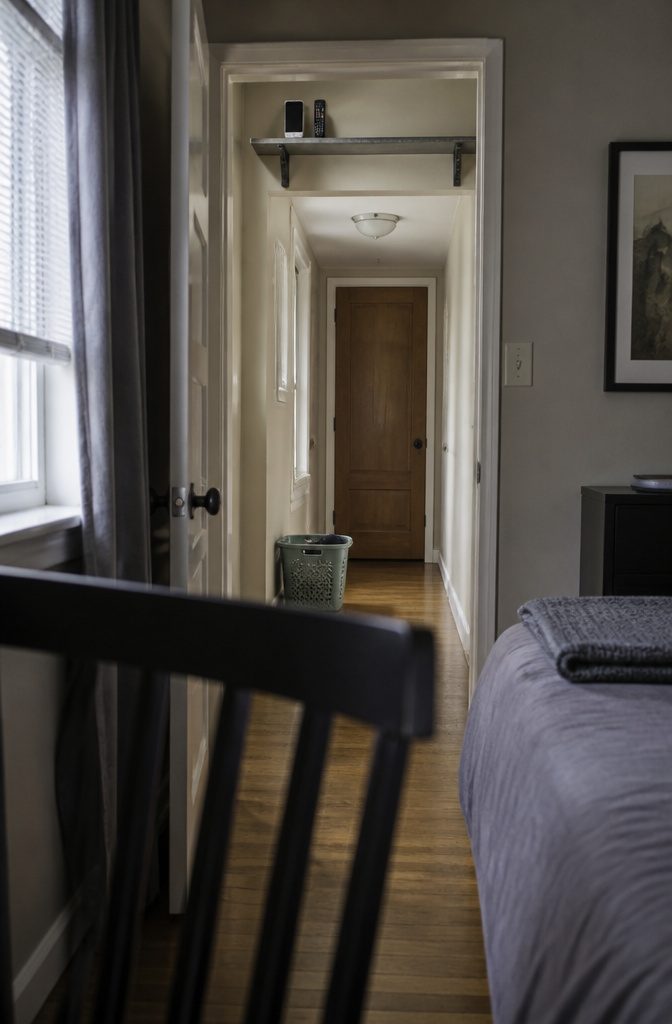
Turn off your phone and put the TV remote out of reach before you start cleaning.
Every time a notification pulls your attention away, you lose your place and have to rebuild momentum from the beginning. That ten-second glance at a text becomes a restart penalty that stacks up fast.
I keep devices in another room when I clean. The break from screens turns out to be less painful than I expected, and the work moves faster when nothing interrupts the rhythm.
If you need the TV on for background noise, choose something you have already seen or tune it to a station that will not stop you in place when a story hooks you mid-scene.
Instagram and Netflix will still be there when you finish. Knowing that makes it easier to step away for the hour it takes to clear the room.
14. Use the Make-and-Pile Method for a Bedroom
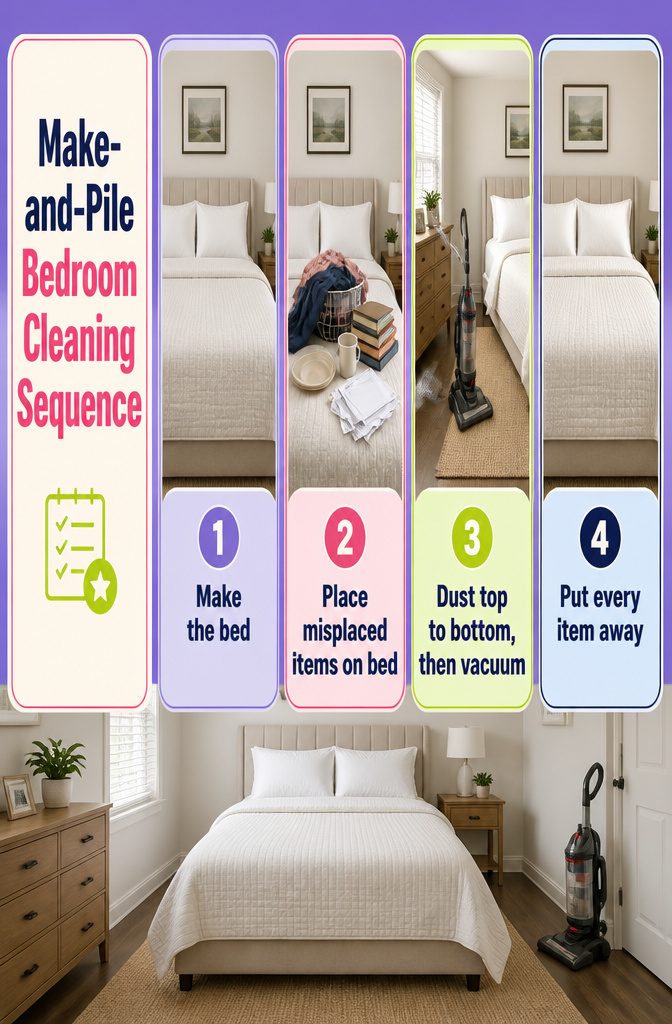
- Make the bed first. Pull the covers tight and smooth the pillows so the surface is clear and ready to hold things.
- Walk through the room and place every misplaced item on the bed. Books, clothes that aren’t in the hamper, dishes, mail, anything that doesn’t belong where it sits right now goes onto that made bed in one pile.
- Dust from the top of furniture down to the baseboards, then vacuum the floor. With everything off surfaces and out of the way, you can clean the room fast and see how close to finished it already looks.
- Put every single thing on the bed away where it belongs. You can sort the pile into categories if that helps, or pick items up one by one. The bed needs to be empty again before you sleep tonight, and that visible pile with a mostly clean room around it makes the end feel near enough to push through.
15. Pay Yourself an Hourly Rate
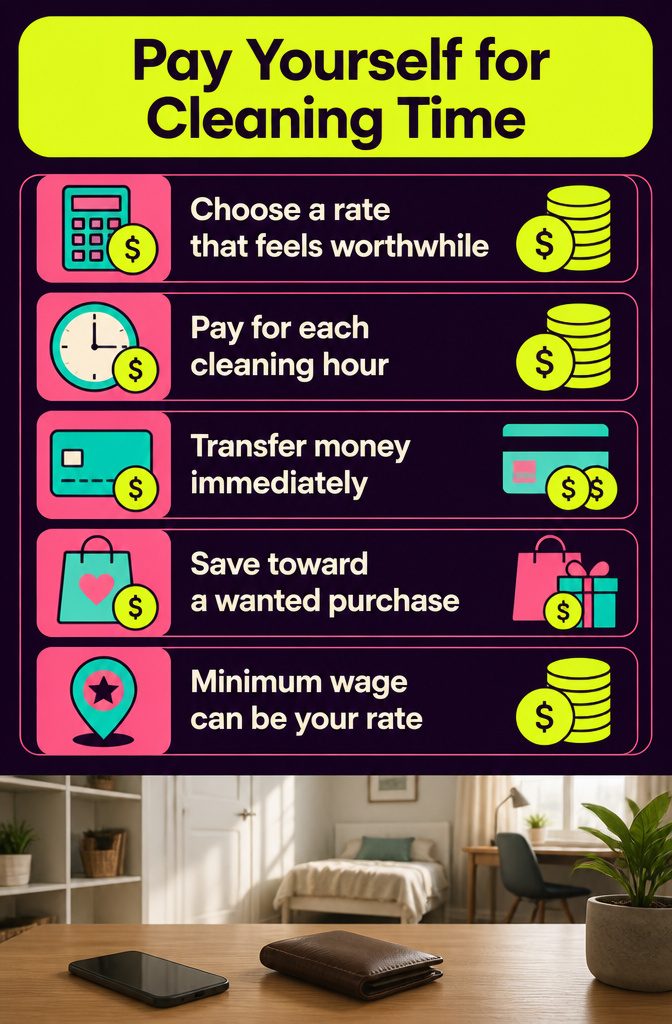
I set myself an hourly rate and pay myself for the time I spend cleaning, moving the money from my main account into a separate spending account.
The rate can be anything that feels worth it — minimum wage for your area works, or whatever number makes you willing to start.
If it takes two hours to clean your room, you pay yourself for two hours at that rate.
The money goes straight into an account I use for purchases I want but usually talk myself out of, which means cleaning becomes a way to save up for something specific rather than just another Saturday obligation.
This works well when the mess has piled up and you need a concrete reason to move.
The method works best when you actually transfer the money immediately after finishing, not days later when the momentum is gone.
16. Give Items Homes Near Where You Use Them
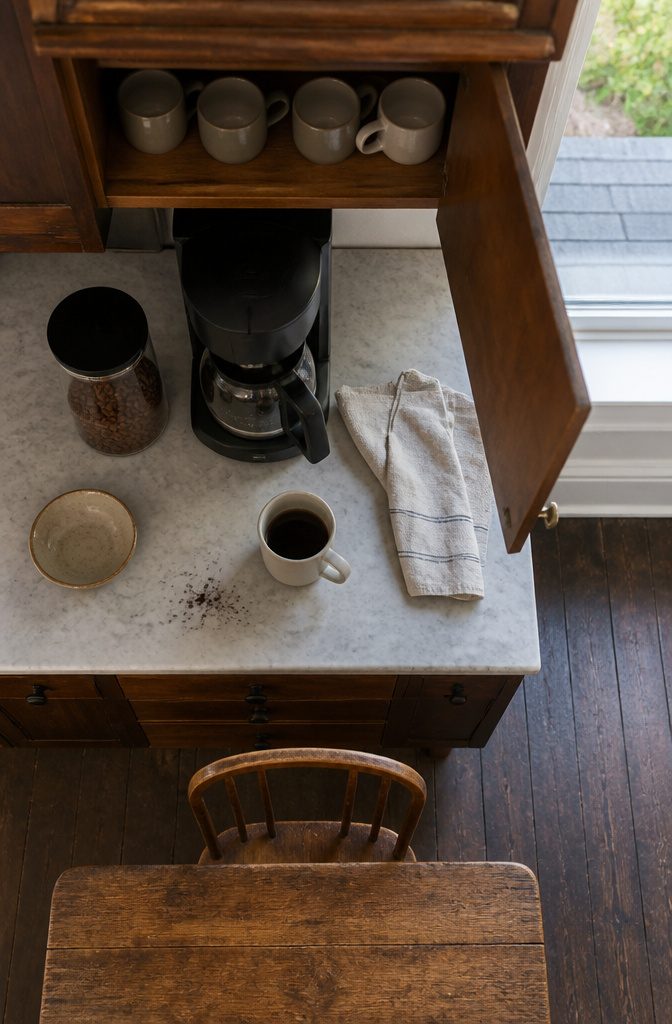
I assign every item a spot close to where I actually use it, and cleaning stops being a debate about where things belong.
My coffee mugs live in the cabinet above the maker, my phone charger sits on the nightstand where I plug in at night, and my keys hang by the door I leave through.
Putting something away means reaching a foot instead of walking to another room, and that difference decides whether I do it now or leave it out.
The system works because it removes the friction. When my painting supplies live under the craft table where I paint, I can grab them without standing and return them the same way.
No trip to a closet, no mental load deciding whether this counts as tidying or just moving the mess. The item goes back because going back is easier than thinking about it later.
Organizing for efficiency rather than matching a Pinterest board makes the difference between a space that stays tidy and one that collapses by Thursday.
17. Reduce Mess When Energy Is Low
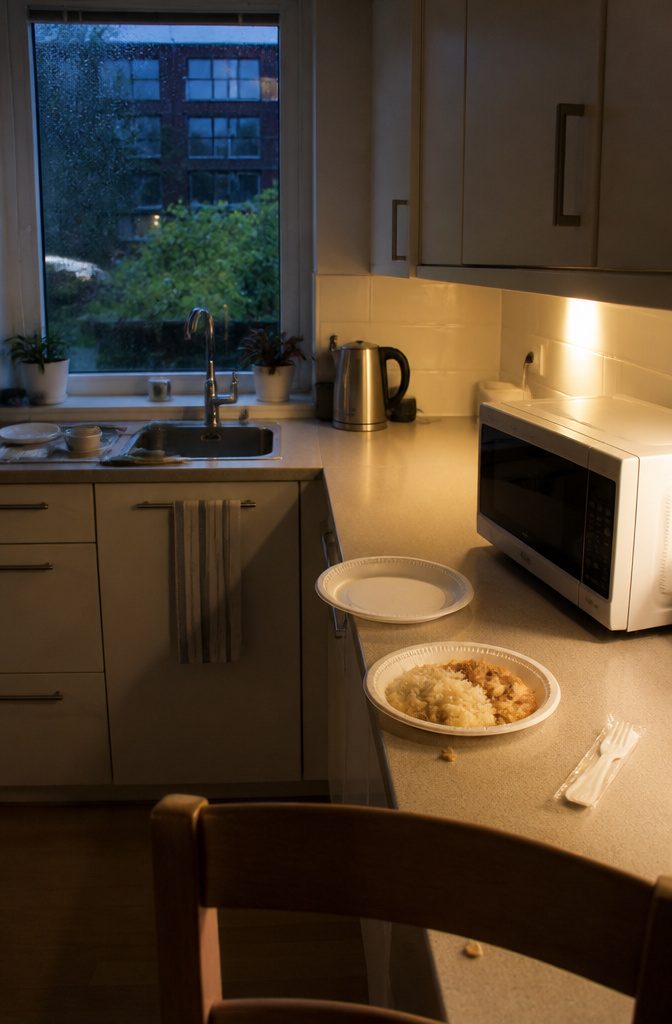
When energy is too low to keep up with dishes, switching to microwave meals and disposable plates for a few days makes sense. You’re generating waste and spending more per meal than you would cooking and washing as usual.
But if the alternative is dishes piling up until cleaning feels even harder to start, disposable forks and paper plates hold the mess at that level instead of letting it grow.
I see this as a short-term move rather than a permanent system. Once the room is clean or energy comes back, regular dishes are cheaper and kinder to the trash bin.
But during a rough week, reducing the number of things that need attention can be the difference between managing at all and letting everything slide further.
18. Be Kind to Yourself and Pause if Needed
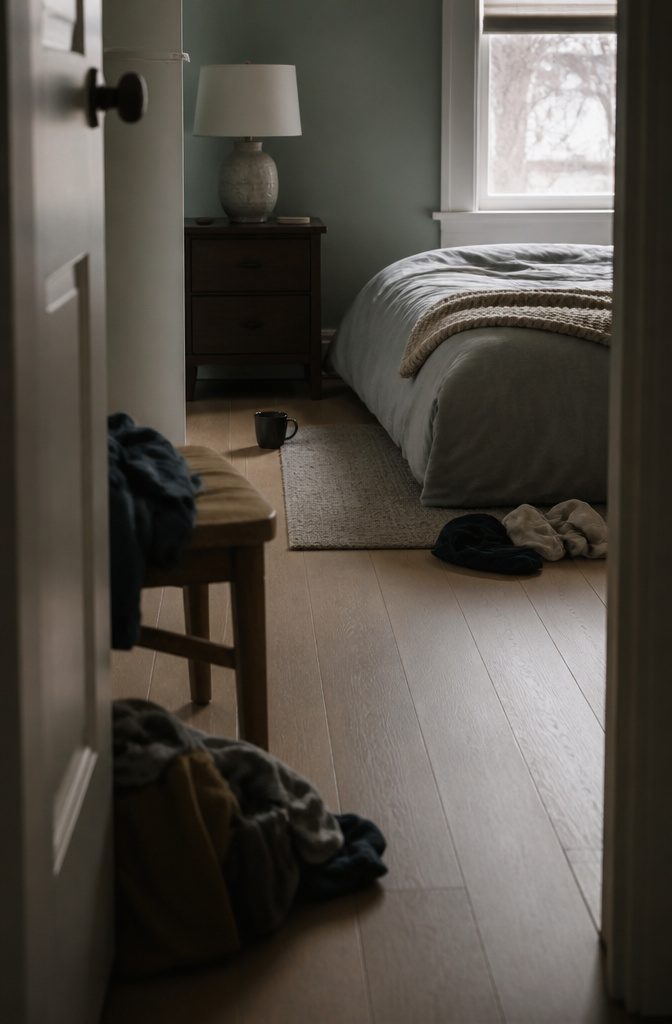
When the clutter feels like too much and the idea of cleaning shuts you down, the answer is to stop rather than force yourself through.
Pushing when a task sits beyond reach that day tends to make the next attempt harder, not easier.
Depression especially turns a single cup into an obstacle that ends with you on the floor, and shame over not finishing makes the whole cycle worse.
You are not the depression. Remind yourself of that line when you try one of these methods and still can’t get through the chore.
The time when it feels possible will come back, and waiting for it is not failure. Cleaning can wait until you feel more capable of the work, and being kind to yourself while you wait is part of getting there.
19. Try a Cleaning Service When Doing It Yourself Is Unlikely
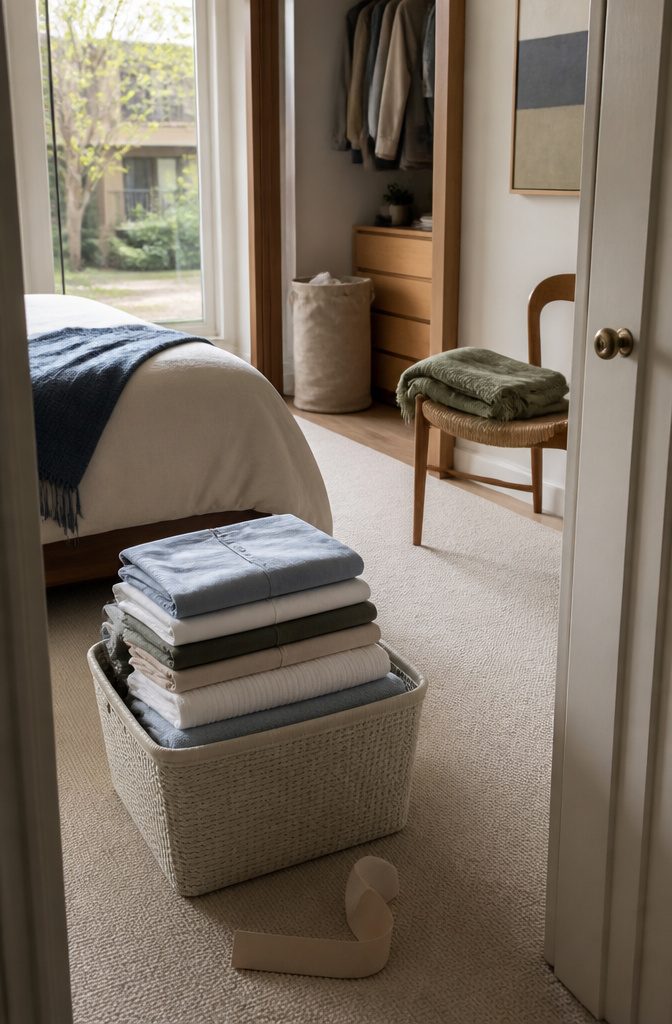
Sometimes the most practical way to handle cleaning is to admit you are never going to choose it over work or social time and hand it off.
The cost is lower than most people expect, and the time it buys back is real.
Meanwhile, former Business Insider editor Jenna Goudreau said she pays $80 a month for a housekeeper — and it may have been the best money she’d ever spent.
A wash-and-fold laundry service runs about the same as doing it yourself once you add in machine time and detergent, and saves hours every week.
Services like Castle Fresh offer recurring cleans on a schedule that keeps the mess from building past the point where you want to deal with it.
Outsourcing one task can free up enough mental space to handle the rest on your own, or it can take the whole job off your plate. Either way, trying it once tells you whether the trade is worth making.
When Cleaning Feels Impossible Because of Depression
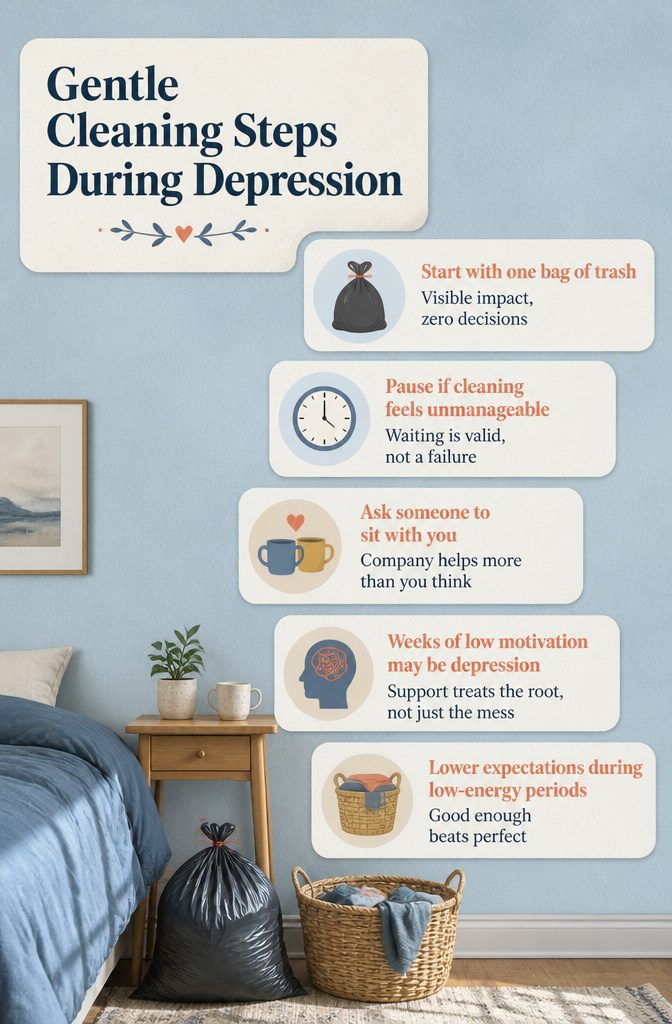
Depression drains motivation in a way that makes basic tasks feel physically heavy.
When I can’t summon the energy to shower, the pile of dishes barely registers as something I’m capable of fixing. The mess itself becomes proof of how stuck I am, which only deepens the spiral.
Start with trash if you can start at all. A single bag makes a visible difference without requiring decisions about where things belong.
If that feels like too much, wait. Cleaning when you’re in crisis mode can feel like one more failure you can’t handle right now.
Ask someone to sit with you or tackle one surface while you handle another.
The company matters more than the help itself. And if lack of motivation has been sitting on you for weeks, not days, that may be depression talking, not laziness.
Mental health support addresses the root; a clean room treats a symptom. Both matter, but only one changes what makes getting off the couch feel impossible in the first place.
Reduce what accumulates when energy is low: paper plates during a rough month, a basket for clothes that won’t make it to the hamper, lowered expectations. Good enough beats perfect when perfect means nothing gets done.
Whether a Schedule Helps or Hurts
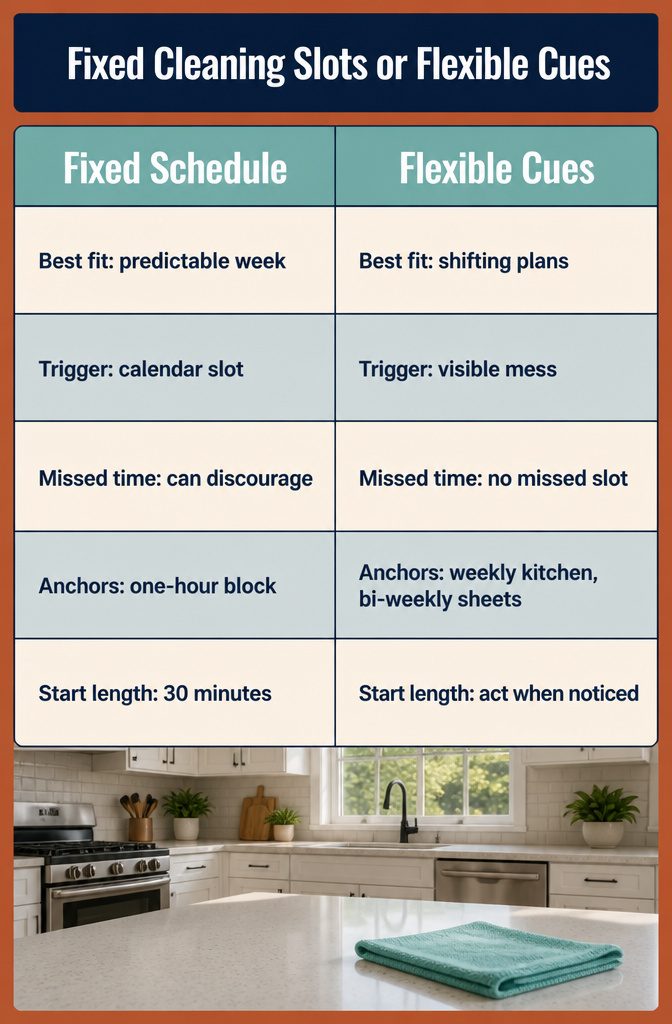
Some people clean better when they know Sunday at ten is the hour. Others find that if they miss Sunday, the schedule itself becomes one more reason to put it off.
A fixed slot works when your week follows a predictable shape. Block an hour, show up, and the decision is already made.
If an hour feels long, start with thirty minutes. The momentum often carries past the timer, but even if it stops there, the room is cleaner than it was.
The opposite approach treats cleaning as a response rather than an appointment. You wipe the nightstand when dust shows, vacuum when debris stands out against the rug, tackle the kitchen when it needs it rather than because Friday arrived.
No schedule means no missed slot and no guilt spiral when life rearranges the week.
Two exceptions hold even without a broader schedule: a weekly kitchen deep clean and bi-weekly sheet changes. Those anchor the routine without locking down every surface.
For everything else, a visible problem becomes the cue. Keeping a microfiber cloth in each room makes it easier to act on that cue the moment it registers, which is half the battle when motivation runs thin.
Frequently Asked Questions
How do I get motivated to clean?
Start with a method that lowers the barrier to beginning: set a timer for 15 minutes, break the room into small tasks, work alongside someone else, or promise yourself a reward after you finish.
Audio like music or podcasts makes the work less tedious, and keeping supplies already stocked where you need them removes one more reason to delay.
Why am I not motivated to clean my room?
Lack of motivation often comes from the task feeling too big or unclear, which triggers procrastination.
Depression drains the energy needed for basic tasks and turns cleaning into something that feels physically impossible. Friction like needing to hunt down supplies or lacking a clear starting point also stalls you before you begin.
What is the 5-5-5 rule for cleaning?
It does recommend using short timed intervals like 5 or 10 minutes to get started, and switching rooms every 5 minutes when doing multi-room pickups.
What is the 80/20 rule house cleaning?
It does recommend focusing effort on high-impact tasks like making the bed, clearing clutter from the floor, and vacuuming rather than spending 20 minutes treating a single carpet stain while the rest of the room stays messy.
Why do I struggle to keep my room clean?
Rooms stay messy when items lack assigned homes near where you use them, which turns putting things away into a decision instead of a reflex.
Perfectionism stalls progress by making you feel that cleaning needs to be done all at once or not at all. Low energy, lack of routine, and accumulated friction like missing supplies or unclear starting points all contribute.