

A bedroom that stays clean takes five minutes each morning and twenty minutes on the weekend, but most people skip the step that makes both possible: giving every item a fixed home and actually returning it there.
Without that, clutter reappears no matter how often you dust or vacuum. The pattern holds across categories, from clothes that need a three-bin system to sheets washed weekly and blankets stretched to monthly.
1. Declutter and Remove What Does Not Belong
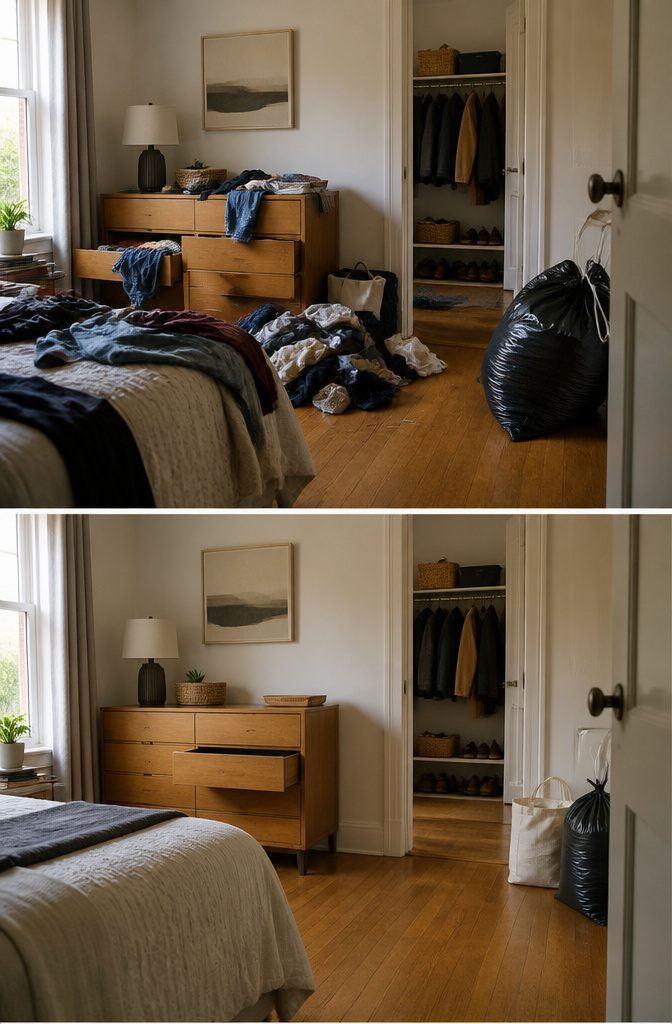
The first move is getting rid of what does not belong.
A bedroom used as overflow storage for boxes, extra furniture, and things you could not find a home for elsewhere will never stay clean no matter how much you dust or vacuum.
If your room has become the default landing zone for items that belong in the garage, kitchen, or hall closet, clear them out and find a permanent spot for them or get them out of the house entirely.
The one-year rule makes this easier. If you have not used or worn something in over a year, donate it.
Keeping things you do not use just fills the room and gives you more to work around every time you clean. A trash bag for broken items and a separate bag for donations will speed the process.
Storage spaces should be 30 percent empty. That buffer gives you room to bring new things in without losing control of the system.
When every drawer and shelf is packed full, new items have nowhere to go and end up on the floor or the dresser, which puts you right back where you started.
2. Give Everything a Home and Put It Back
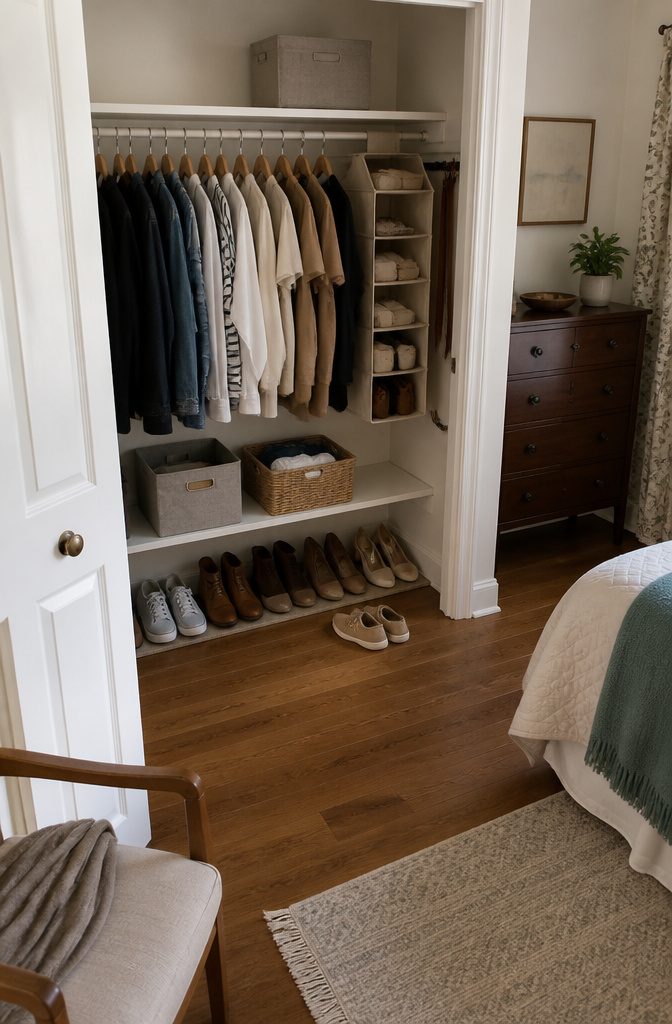
Assigning each item a fixed spot and actually returning it there keeps clutter from piling up between cleanups.
The choice of where depends on how often you reach for it. Daily-use items go in easy-access places where retrieval and return both take seconds.
Things you need less often can live in bins or drawers, but the storage still needs to be simple enough that you will actually put them back when you are done.
Closet organizers make use of vertical space without turning the closet into a scavenger hunt.
Hanging organizers and stackable bins work for shoes, accessories, and miscellaneous items that otherwise end up on the floor. If you have a dresser instead of a closet, bins on top of it serve the same purpose.
Under-bed storage handles clothing you want to keep but do not wear daily, freeing up drawer space for what you actually need within arm’s reach.
The pattern holds for every category: if putting something away feels awkward or takes too many steps, it stays out.
Group similar items together in drawers, arrange hanging clothes by type or color, and make sure every belonging has one designated home.
When the home is obvious and easy to reach, your room stays clear because returning things becomes automatic rather than a task you put off.
3. Make the Bed Each Morning
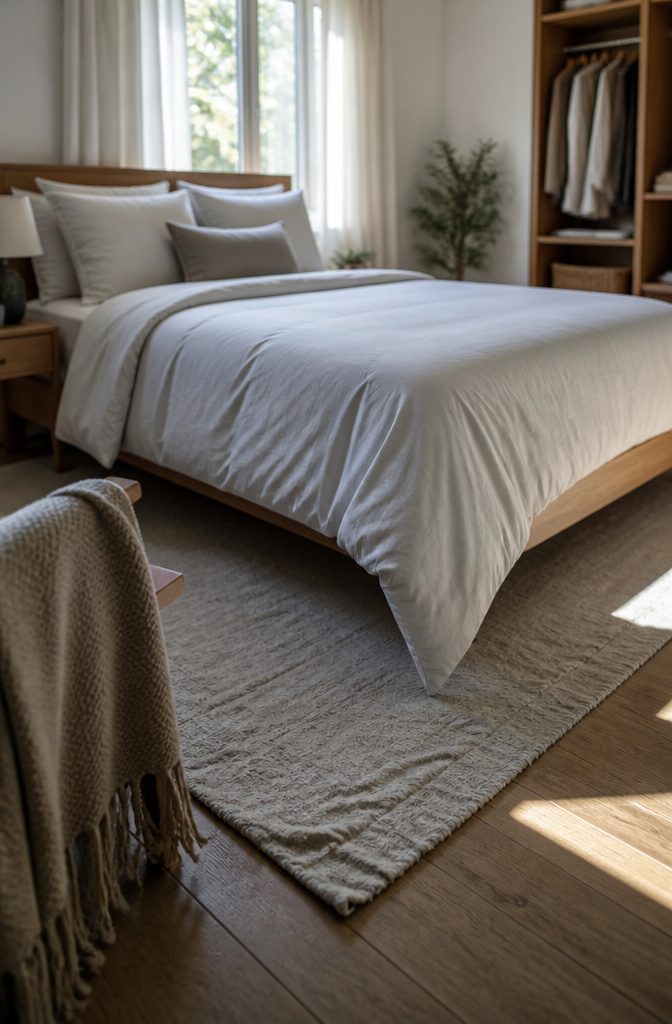
Making the bed right after you get up resets the room faster than any other two-minute move.
The covers pulled smooth, the pillows lined up, and suddenly the space looks intentional instead of abandoned. A made bed makes it easier to keep the rest of the room in order.
The timing matters less than the consistency. If you prefer to air out the mattress, make the bed after your shower instead of before it—same result, just delayed half an hour.
Either way, the task takes under five minutes, and most of that is smoothing wrinkles and adjusting the comforter.
Mess begets mess and cleanliness begets cleanliness. With a nicely made bed, you’re far less likely to toss clothes on the floor.
That momentum is real.
A made bed raises the standard for the rest of the room, and it becomes noticeably harder to justify leaving yesterday’s jeans on the duvet or using the mattress as a landing zone for chargers and hair clips.
Keep the surface clear while you’re at it—no laptop, no water bottles, nothing that turns the bed into a desk. The bed stays a bed, and the room stays easier to manage.
4. Sort Clothing Into Three Categories

- Dirty clothes go straight into the hamper. Put a hamper in your bedroom or bathroom, wherever you get undressed. It takes the same amount of time to toss clothes in the hamper as it does to throw them on the floor, and the room looks better instantly.
- Clean laundry gets folded and put away. Whether it’s sitting on your bed or in a basket, fold it and put it in the dresser or closet. Piles of clean clothes on furniture make a room look messy even when everything else is tidy.
- Worn-but-not-dirty clothes get a designated spot. A clothes rack beside the bed works well for this. Hang the house clothes you’re currently wearing, your nightwear, gym clothes, and anything you wore briefly that isn’t ready for the wash. This stops the chair pile before it starts and keeps only the clothes you’re actually wearing out where you can see them.
5. Clear Surfaces After Each Use
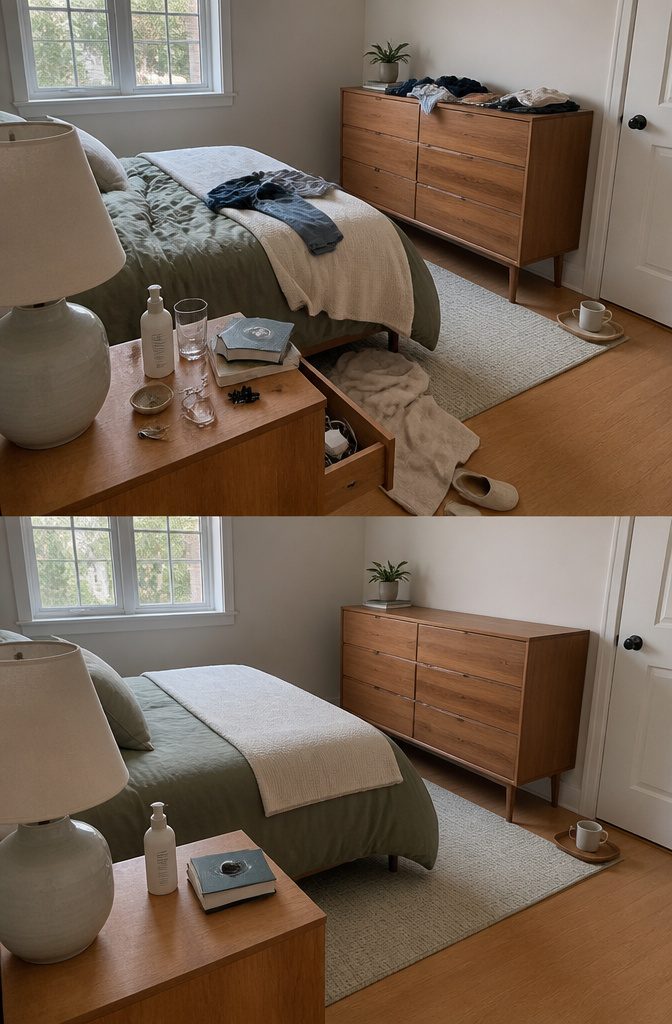
Desks, nightstands, and dressers turn into dumping grounds the moment you stop resetting them. Clear them after you finish using them, not at the end of the week when the pile has already taken over.
I put books back on the shelf as soon as I close them, take the tea mug to the kitchen before I leave the room, and return scissors or chargers to their drawer instead of letting them sit.
This takes under a minute and saves the mental load of looking at a cluttered surface all day.
The bed follows the same rule. No iron left out, no phone charger snaking across the comforter, no stack of clothes that should be in the closet or the hamper.
If I change before heading out, the clothes go straight to the rack if I plan to wear them again or into the laundry if they are done.
Clearing the bed every morning makes the room feel finished, and keeping nightstands to a lamp, lotion, and one or two books means dusting takes seconds instead of requiring you to move a dozen things first.
6. Handle Trash and Dishes the Same Day
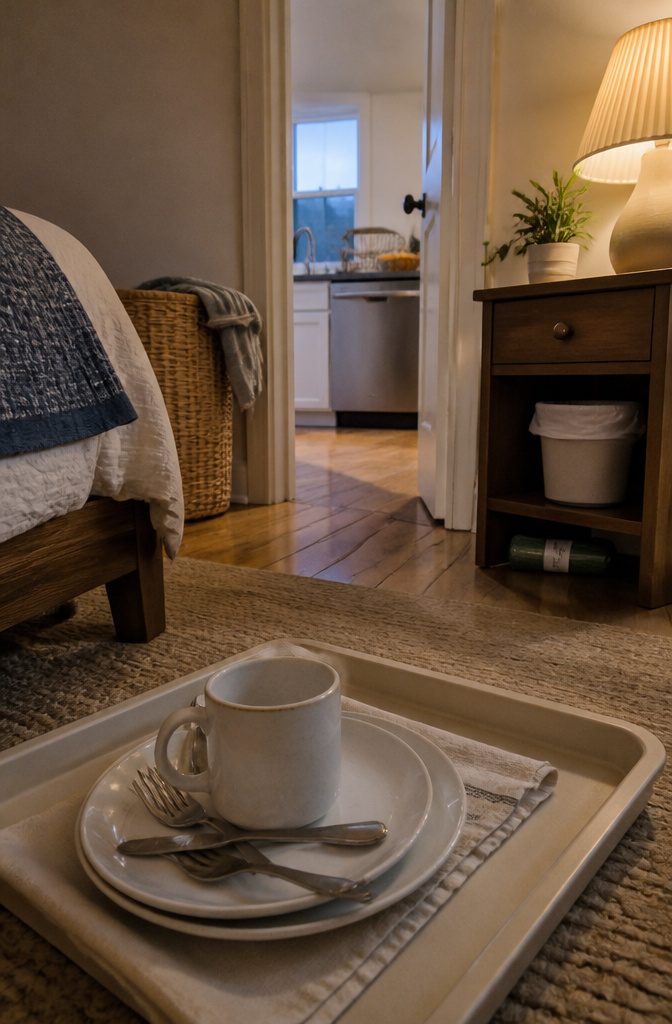
A trashcan in the bedroom keeps the cycle short. Empty it when full, and keep a bag nearby while you clean so wrappers, tags, and clothing labels have somewhere to go the moment you spot them.
Dishes are what tend to pile up.
If you eat in the bedroom, return plates, cups, and utensils to the kitchen the same day—food waste and lingering dishes attract pests, and once ants or roaches find a reliable meal, they keep coming back.
Some people skip eating in the bedroom entirely for that reason.
The 24-hour rule works if daily dish runs feel like too much. Give yourself a full day to clear any cups or bowls, and you avoid both the growing pile and the three-times-a-day dishwashing commitment.
Missing the window once or twice is manageable. Miss it for a week and the job becomes large enough that you stop wanting to start.
7. Run a 5-Minute Reset Before Bed
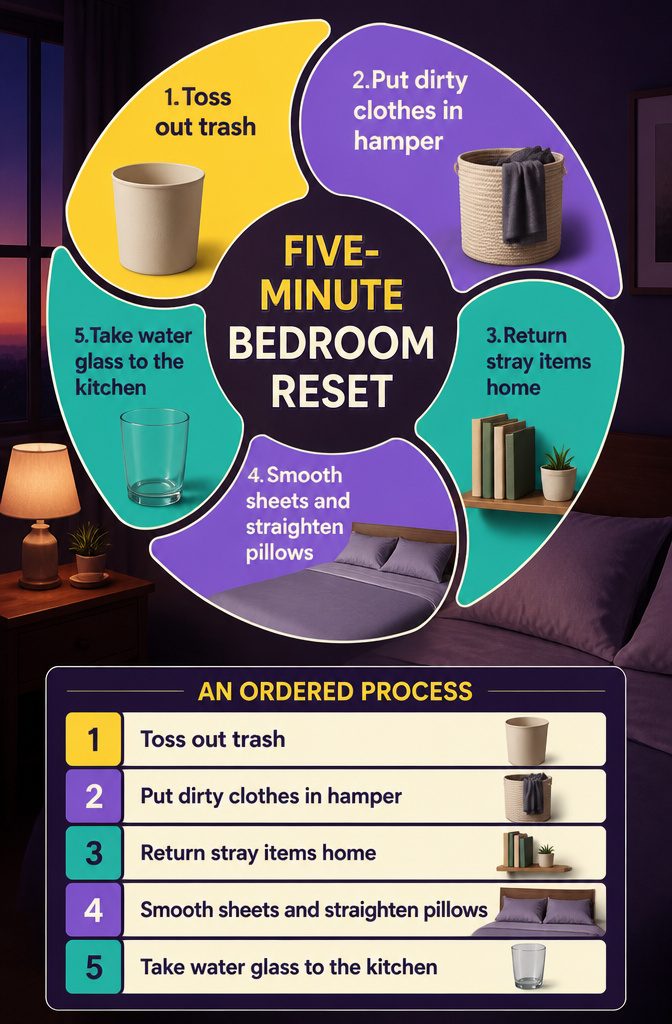
I reset my bedroom every night before bed in about five minutes, and it makes waking up feel completely different. The room stays orderly without weekend marathons because nothing piles up in the first place.
I toss any trash, drop dirty clothes in the hamper, and return stray items to their actual homes.
Books go back on the shelf, the water glass goes to the kitchen, and anything I pulled out during the day gets put away.
If the bed is unmade from the morning rush, I smooth the sheets and straighten the pillows.
The whole circuit takes less time than scrolling through my phone before bed, and I sleep better knowing I am not waking up to yesterday’s mess.
Some people prefer a morning reset or a timed 10–15 minute session instead, but I find the evening version works because it clears visual clutter right when my brain needs to wind down. The consistency matters more than the exact timing.
8. Dust Before You Vacuum
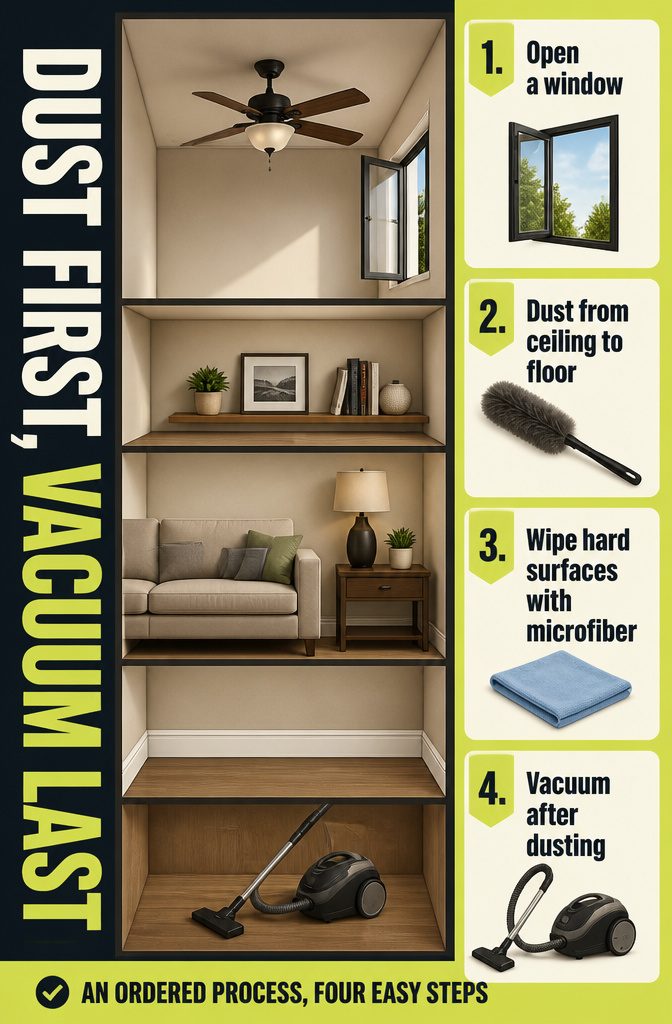
- Dust from ceiling to floor before you vacuum. Start with ceiling fan blades and light fixtures, work down to shelves and furniture, then finish with baseboards. Any dust you knock loose lands on surfaces below, so the order matters.
- Open a window before you start. Fresh air helps clear allergens while you work, and it moves dust out instead of circulating it back into the room.
- Use a microfiber cloth on hard surfaces. It grabs dust instead of pushing it around. Pay attention to lamp bases, picture frames, and electronics—those collect more than you think.
- Vacuum after dusting, not before. If you reverse the order, the dust you stirred up while moving things around just settles back onto a floor you already cleaned.
- Dust and vacuum once a week. Floors might need attention twice a week if you wear shoes indoors or have pets. The routine keeps allergens down and makes the room feel cleaner between deep cleans.
9. Use Under-Bed and Closet Storage
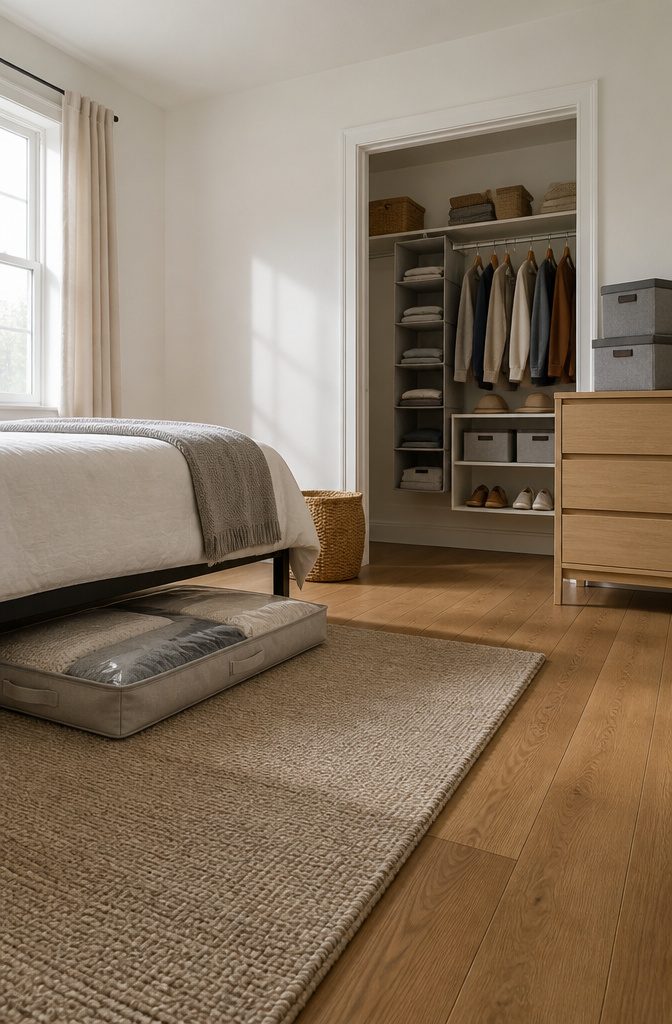
Under-Bed and Closet Storage
Small spaces need every inch working.
Under-bed storage handles off-season clothing or items you want to keep but don’t reach for every day. Flexible Zippered Under the Bed Storage keeps things contained and protected from dust while sitting flat where nothing else goes.
If you have a closet, organizers turn vertical space into usable storage:
- Bins and hanging organizers for shoes, hats, accessories, and miscellaneous items
- Added shelves to fill gaps you’d otherwise waste
- ClosetMaid or Smart Carousel Organizer to rotate items into reach
The 70% rule applies here in reverse: surfaces should stay 70% empty, but storage spaces should be 30% empty. That buffer gives you room for new items without shoving them wherever they fit and losing the organization you built.
If you only have a dresser, bins stacked on top work the same way a closet does.
10. Wash Sheets Weekly, Blankets Monthly

Sheets belong on a weekly or every-other-week rotation. That keeps oils, dead skin and dust from building up to the point where they start breaking down the fabric or triggering allergies.
Blankets and bedspreads can stretch to monthly, since they sit farther from your skin and pick up less direct contact. If you sleep hot or have pets on the bed, lean toward the weekly end for sheets.
Washing bed linens at least every one to two weeks works for most households.
The two-week mark is the outer edge before things start to feel noticeably less fresh. I wash pillowcases on the same schedule as sheets, since they touch your face every night and collect oil faster than people expect.
Daily, Weekly, and Monthly Schedules
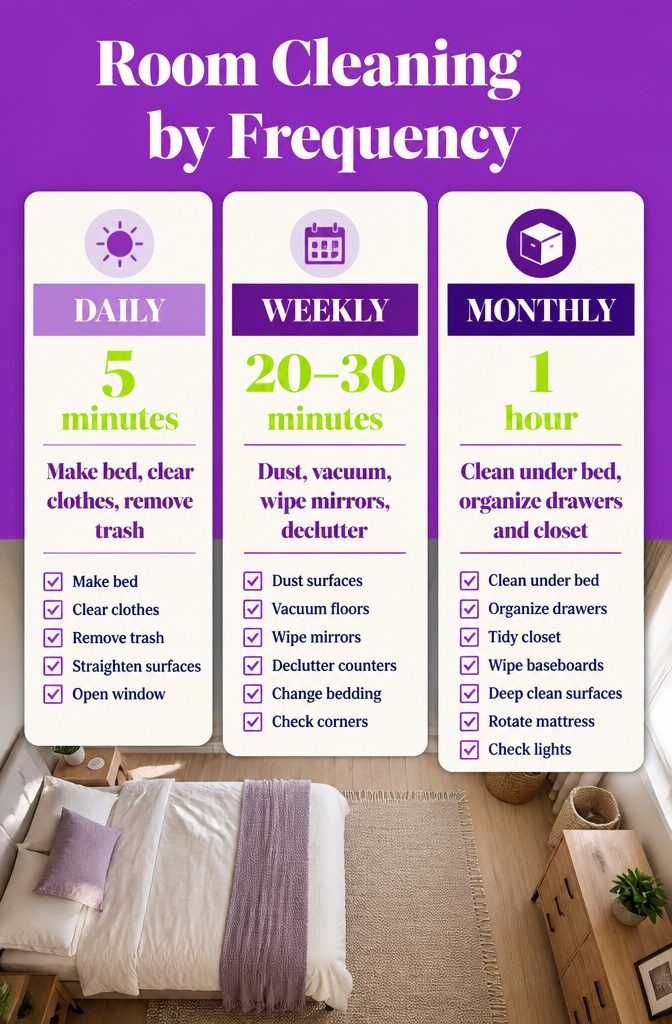
Cleaning happens on three scales, and knowing which tasks sit where keeps the work light.
Five minutes each morning handles the visible chaos: bed made, clothes off the floor, trash out. Those five minutes prevent the landslide that turns a manageable room into a two-hour excavation.
Weekly cleaning takes 20–30 minutes and catches what daily upkeep misses.
Dust surfaces, vacuum thoroughly, wipe mirrors, declutter counters. This pass keeps dust from building and gives you a room that feels polished without deep work.
Monthly cleaning runs about an hour and digs into the spots that hide.
Get under the bed, organize drawers, tidy the closet. This cadence keeps the big tasks from piling into a weekend-long project.
| Frequency | Time Required | Tasks |
|---|---|---|
| Daily | 5 minutes | Make bed, dispose of trash, put away clothes |
| Weekly | 20–30 minutes | Dust, vacuum, wipe mirrors, declutter |
| Monthly | 1 hour | Clean under bed, organize drawers and closet |
When the Room Is Really Messy
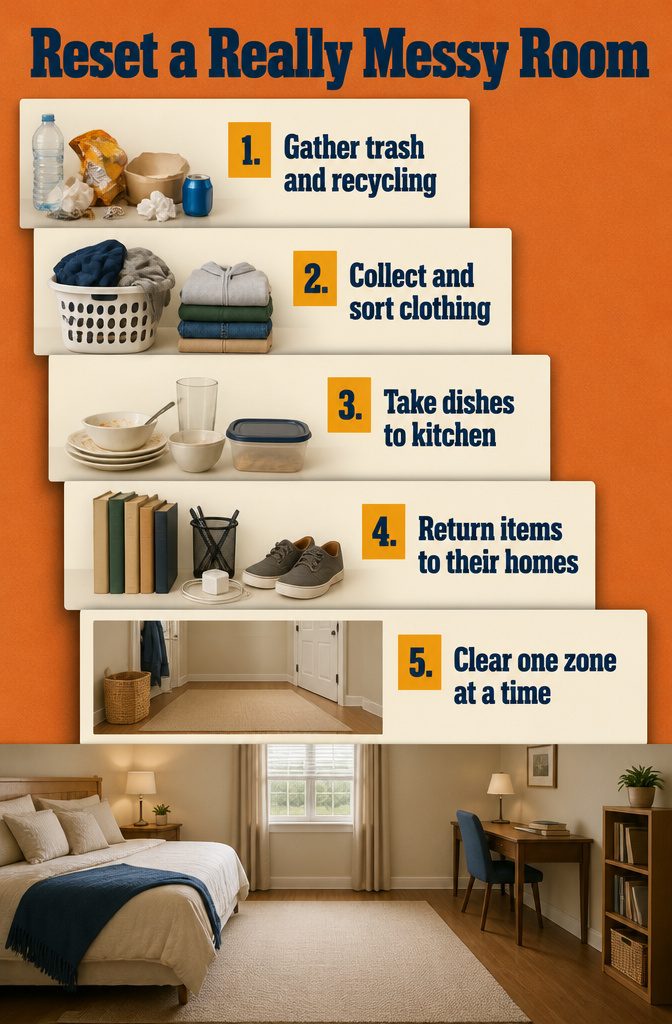
- Start with trash and recycling. Pick up wrappers, bottles, tissues — anything disposable that has piled up. That alone can clear a third of the visible mess in under five minutes.
- Collect all clothing in one pass. Dirty items go straight into the hamper or laundry basket; clean clothes go back to drawers or hangers. Keep the two categories separate so you’re not resorting them later.
- Grab dishes, cups and food containers next. Take them directly to the kitchen rather than stacking them anywhere in the room.
- Put items back where they belong, one category at a time. Books to the shelf, chargers to the desk, shoes to the closet. Working by type keeps you from walking back and forth.
- Tackle one zone before moving to the next — the desk, then the bed, then the floor by the door. A moderately cluttered room takes 20 to 30 minutes this way; heavier clutter can push toward an hour, but breaking it into zones keeps it from feeling endless.
Frequently Asked Questions
How often should you clean your room?
Clean your room daily for 5 minutes (make the bed, toss trash, put away clothes), weekly for 20–30 minutes (dust, vacuum, wipe mirrors), and monthly for an hour (clean under the bed, organize drawers and closets).
This routine prevents buildup and keeps the work manageable.
How can I clean my bedroom when it’s really messy?
Start with trash and recycling, then collect all clothing in one pass. Next, grab dishes and take them to the kitchen.
Put items back where they belong one category at a time, and tackle one zone before moving to the next. A moderately cluttered room takes 20–30 minutes this way.
How long should it take to tidy a bedroom?
A moderately messy room takes 20–30 minutes when you work zone by zone.
Heavier clutter can push toward an hour. Daily 5-minute resets keep the job from ever getting that big.
How can I clean my room in 5 minutes?
Collect laundry and toss it in the hamper, grab a trash bag and pick up any wrappers or disposables, and return food items to the kitchen. This quick pass clears visible mess and makes the room look instantly better.
Why is making the bed important?
A made bed resets the room faster than any other 2-minute task and raises the standard for the rest of the space.
It creates momentum that makes it harder to justify leaving clothes on the floor or using the bed as a dumping ground.
How can I keep my bedroom smelling fresh?
Remove trash, food, dishes, and dirty laundry from the room. Wipe down surfaces with a microfiber cloth, then vacuum and mop the floors.