
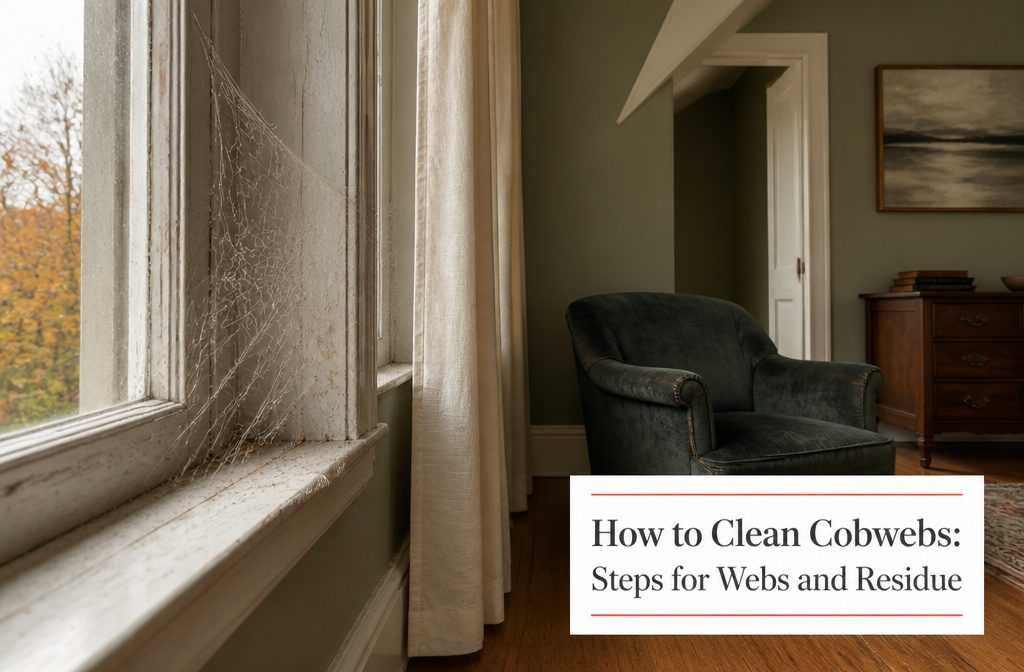
Cobwebs come off in minutes with a vacuum extension or long-handled duster, though the residue left behind needs a second wipe with vinegar or a damp cloth.
Most people skip the fabric—curtains and upholstery trap sticky threads the first pass misses, and a lint roller finishes what the vacuum leaves.
For outdoor webs on siding or eaves, a pressure washer works fast but strips paint and gouges wood if the setting runs too high.
1. Find the webs and likely hiding places

Start at the ceiling corners and work down. Cobwebs gather where air moves least: the angles where walls meet ceilings, around light fixtures, along window frames, and at the tops of doorways.
Behind furniture that rarely moves, you’ll find webs that have been collecting dust for weeks. Attics, basements, closets, and storage rooms are favorites because they stay dark and undisturbed.
Check whether the web looks dusty and tattered or clean and strongly built.
An abandoned web collects dust, pet hair, and allergens and turns gray or brown. A fresh web with tight, even threads and no debris means a spider is still using it.
The dusty ones come off easily. The new ones need a little more attention because the spider may still be nearby.
Vents and cabinets are easy to miss but collect webs quickly.
Move couches and beds occasionally to reach the corners behind them. If you skip those spots, you’re only cleaning half the problem.
2. Prepare for safe, reachable cleaning

Before you reach for a web, put on gloves, long sleeves, closed-toe shoes and a mask.
The gear creates a barrier between you and any spider you disturb, and disturbed spiders bite. If you have known allergies to venom, keep anti-venom nearby.
Bring a flashlight. It spots webs you would otherwise walk into and shows you whether a spider is still home before you commit to sweeping through it.
For reach, use a vacuum with an extension wand or a long-handled duster—anything that keeps distance between you and the corner.
The vacuum’s crevice tool works well for tight spots along molding and under furniture, and a pole-mounted microfiber duster reaches high corners without a ladder.
Working in daylight makes the whole job less tense. You see what you are doing, and natural repellents sprayed ahead of time—vinegar or essential oils—give spiders reason to leave before you start.
3. Remove webs with the right tool
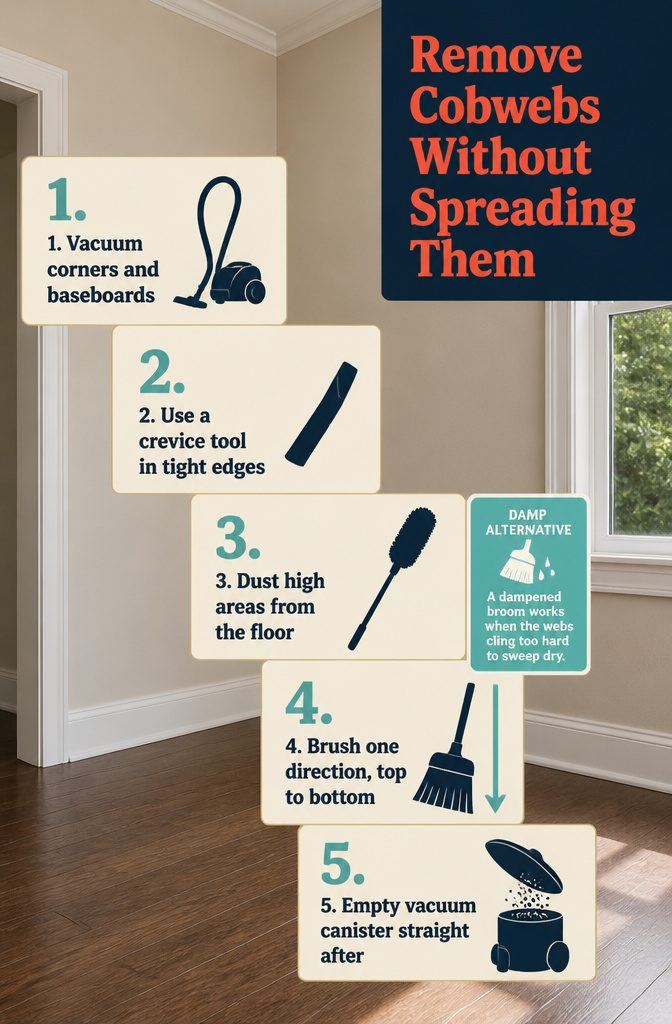
I reach for the vacuum when cobwebs sit in corners or along baseboards where the hose extension and crevice tool fit naturally.
The narrow attachment pulls webs out of cabinet edges and window tracks without smearing residue across the surface, and emptying the canister straight after keeps dried spider matter from sitting inside the machine.
For ceilings and the upper edges of doorways, a long-handled duster or a broom does the job from the floor rather than dragging out a ladder.
A microfiber duster traps the webbing instead of scattering it, though a dampened broom works when the webs cling too hard to sweep dry.
I brush in one direction rather than scrubbing back and forth, which tears the web into smaller pieces that drift onto furniture below.
Working top to bottom means fallen webs land on surfaces I have not cleaned yet, so I can vacuum or wipe them up in one pass at the end.
4. Clean residue and nearby surfaces

Once the webs are down, fabric needs a second pass. Vacuum curtains, upholstery, or any other textiles where webs landed, then follow up with a lint roller to grab the sticky strands the vacuum missed.
If the fabric can go in the washer, I always do that step. You don’t want leftover spider silk or dead insect fragments sitting on something you touch regularly.
Window screens and hard surfaces around where the webs were should get wiped down after removal. A damp microfiber cloth handles most residue, and a little vinegar on the cloth cuts through anything sticky without leaving streaks.
For tight spots around trim or hardware, a towel gives you more control than a spray bottle, and that control matters near entryways.
Use as little water as possible when detailing around doors and windows to avoid water intrusion through small cracks you might not see. A dry or barely damp towel keeps the visual result sharp without the risk.
5. Treat stubborn residue or outdoor webs

When residue clings after the web is gone, white vinegar diluted one-to-one with water cuts through the stickiness without leaving a film. I dampen a microfiber cloth with the mix and wipe in circles until the spot feels smooth.
Baking soda works as a gentle scrub for textured walls: sprinkle a little on a damp cloth, rub lightly, then wipe clean with plain water.
Lemon juice does the same job and leaves the room smelling better than vinegar does, though it takes a second pass on really stubborn spots.
A few drops of peppermint or eucalyptus oil in the cleaning water can help deter spiders from rebuilding, but the effect fades fast and the webs usually come back unless entry points are sealed.
Outdoor webs on siding or deck rails rinse off easily with a garden hose, but a pressure washer makes quick work of eaves and fences where webs collect season after season.
The catch: pressure washers damage plants, strip paint, and gouge siding if the setting is too high or the spray angle is wrong.
I keep the unit on its lowest setting, spray downward to avoid forcing water behind siding, and stand far enough back that the stream spreads before it hits.
Medium pressure works for concrete and brick, but wood and vinyl need the gentler approach.
6. Reduce the chances of webs returning

Keeping webs from coming back means addressing what brings spiders in the first place. Seal gaps around windows, doors, and any openings where plumbing enters the house using caulk or weather stripping, and cover vents with fine mesh screens.
That said, sealing probably won’t reduce the house spiders already living indoors, since they don’t typically come from outside. What it does cut is the insect population they feed on, which makes your home less appealing over time.
The best way to get rid of spider webs is to prevent the spiders from ever coming in. Seal cracks in windows and door frames and cover your vents with insect screens.
— MaidPro
Once entry points are covered, the real prevention lives in routine.
I dust ceiling corners and window frames weekly, and I check rarely used spaces like closets and the garage every few weeks since spiders settle where foot traffic doesn’t reach.
Scent deterrents help too: peppermint, eucalyptus, or citrus oil mixed with water in a spray bottle and applied to baseboards and corners keeps spiders from setting up.
White vinegar works the same way. Make the space less inviting before the first strand goes up.
Telling cobwebs from occupied spider webs
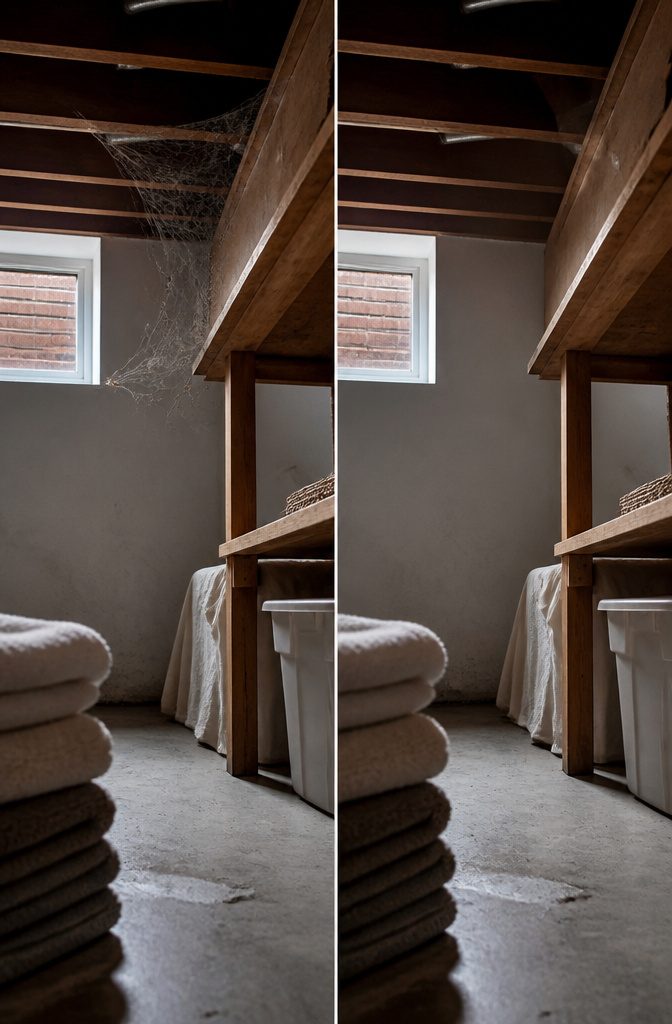
Cobwebs are abandoned spider webs that have collected dust, which is what gives them their gray, matted appearance.
An active web looks transparent or faintly white, with silk strands that catch the light and hold their shape taut between anchor points.
I check whether the web has a spider nearby or shows signs of recent use—fresh wrapping around a captured insect, or silk that looks clean rather than filmy.
If the same dead insects stay stuck in the web for two or three days without being eaten or removed, the spider has moved on and what remains is a cobweb.
The difference matters because an occupied web will be rebuilt quickly if you only sweep it away, while a cobweb will not return on its own.
Knowing which you are dealing with tells you whether the problem is dust accumulation or an active spider that needs to be relocated or deterred.
Cleaning fabric and delicate items

Curtains and upholstered furniture trap cobwebs in the weave, and a vacuum with an upholstery attachment pulls them out without pressing the residue deeper.
Run the nozzle down each panel from the rod to the hem, then flip to a lint roller for any fine threads the vacuum left behind. If the fabric is washable, that step comes last and finishes the job.
Lampshades, framed art, and anything with a delicate finish need a lighter touch.
I reach for an ostrich-feather duster here — the natural fibers grab dust and webs without scratching, and they work on carved wood, woven baskets, and anything else a cloth would snag.
Work from the center out so loose debris falls away from the piece instead of settling back on it.
Frequently Asked Questions
What is the difference between a cobweb and a spider web?
A cobweb is an abandoned spider web that has collected dust and turned gray or matted.
An active spider web looks transparent or faintly white with taut silk strands, often with a spider nearby or signs of recent use like freshly wrapped insects.
What can dissolve cobwebs?
White vinegar diluted one-to-one with water cuts through cobweb residue without leaving a film.
Spray or dampen a cloth with the mix and wipe in circles until the spot feels smooth. Baking soda or lemon juice also work as gentle scrubs for textured surfaces.
How do I get rid of spider webs outside my house?
Use a garden hose to rinse webs off siding and deck rails, or a pressure washer on its lowest setting for eaves and fences.
Keep the spray angled downward and stand far enough back that the stream spreads before it hits to avoid damaging paint or siding.
Can I make a DIY cobweb duster?
A microfiber cloth wrapped around a long handle traps webbing without scattering it, and a dampened broom works when webs cling too hard to sweep dry. For delicate surfaces, an ostrich-feather duster grabs dust and webs without scratching.
How to keep cobwebs out of the garage?
Seal gaps around doors and windows with caulk or weather stripping, then spray baseboards and corners with peppermint, eucalyptus, or citrus oil mixed with water every 2 weeks.
Check and dust rarely used corners every few weeks since spiders settle where foot traffic is low.
How can I get rid of excessive spider webs in my house?
Vacuum ceiling corners, baseboards, and window frames weekly using a crevice tool for tight spots, then check closets and storage rooms every few weeks.
Seal entry points around windows and doors to cut the insect population spiders feed on, making your home less appealing over time.