
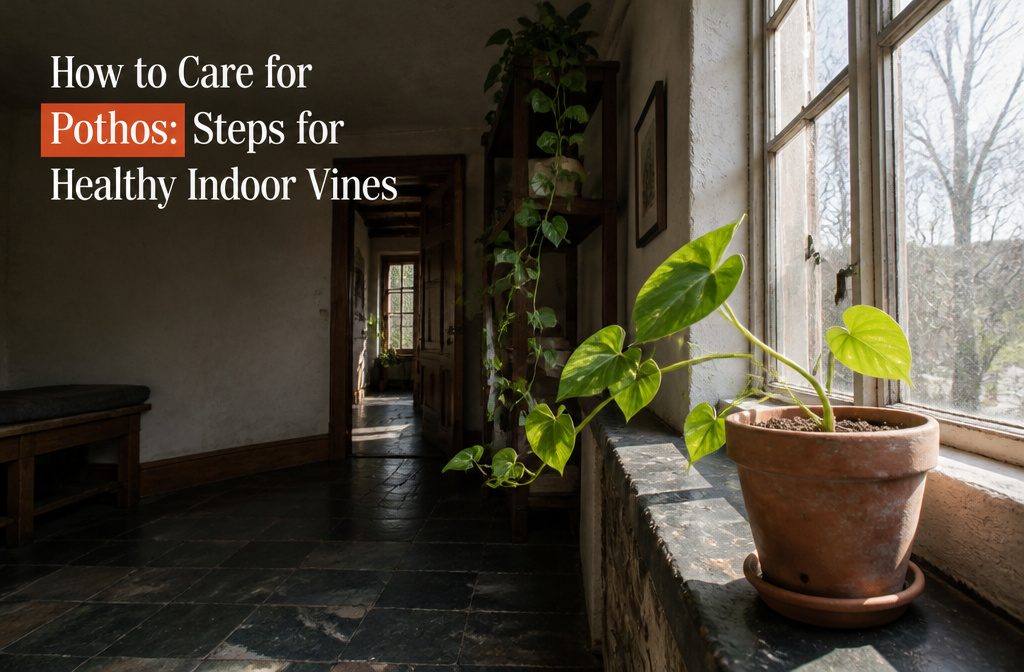
Pothos survives on bright, indirect light and watering every week or two when the top inch of soil dries out. The mistake is overwatering: wet soil cuts oxygen to the roots and causes rot faster than underwatering ever will.
A pot with drainage holes and regular potting soil handle moisture correctly, and most households already sit in the 65–85°F range the plant prefers.
1. Bright, Indirect Light Where Possible
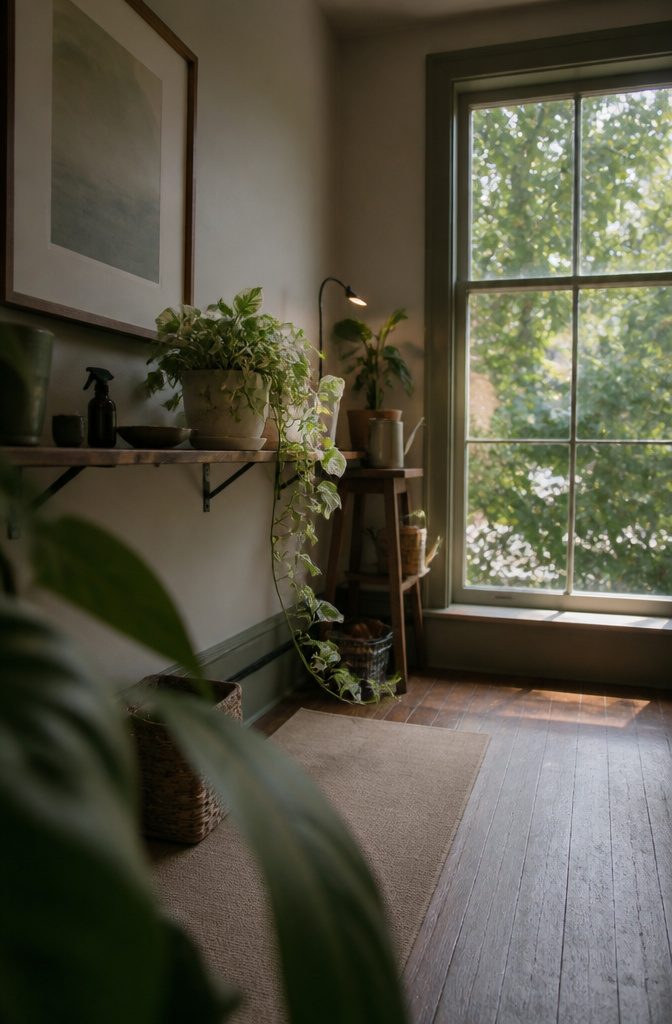
Pothos plants do best with bright, indirect light for at least six hours a day. That means a spot near an east or west-facing window where sunlight filters in without hitting the leaves directly.
North-facing windows work too if the room stays bright overall. I’ve found that variegated varieties, like the Marble Queen with its white-and-green marbling, need a bit more light to keep those pale markings crisp.
Direct sunlight, especially the harsh afternoon rays, scorches leaves and turns them yellow or pale.
If you suddenly move a pothos into full sun, the leaves can blanch to an off-white color. Shift it back to filtered light and it will recover.
Low light won’t kill a pothos, but growth slows and variegation fades.
The white mottling dulls, and vines stretch out more slowly. If natural light runs short, a grow light keeps things moving through winter or in a dim corner.
2. Check Soil Dryness Before Watering
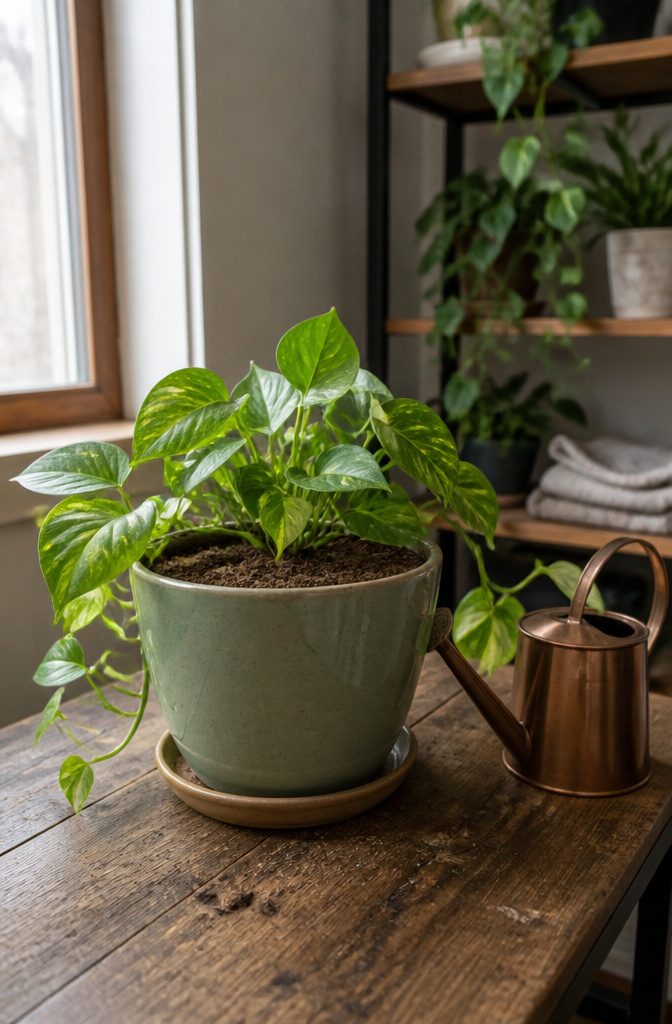
I check the top inch or two of soil before watering a pothos. If it feels dry when I stick a finger in, the plant is ready.
If it still holds moisture, I leave it another day or two and check again. That interval usually works out to about once a week, sometimes stretching to two weeks depending on light and temperature.
Overwatering does more harm than underwatering with these plants.
Wet soil cuts off oxygen to the roots, and that leads to root rot. Yellow leaves and black spots are both signs you watered too often or let the pot sit in standing water.
When I do water, I soak the soil thoroughly until water runs out the drainage holes, then let the pot drain completely.
You want the soil to cycle between watering and drying, not stay constantly moist. Pothos tolerate a little neglect better than they handle soggy conditions.
3. Use a Well-Draining Mix and a Pot With Drainage Holes
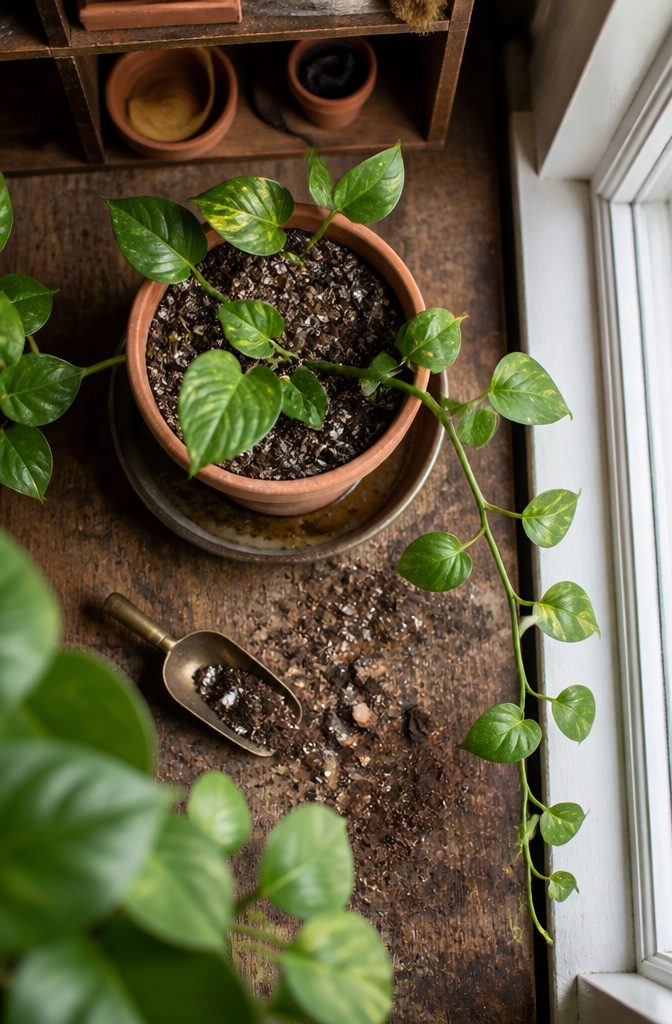
Use a Well-Draining Mix and a Pot With Drainage Holes
Regular potting soil is all your pothos needs.
The kind you grab at any garden center works perfectly fine, and while you can add perlite or pumice to speed drainage, most mixes handle moisture and airflow well enough on their own.
Peat moss or coco coir holds just enough water between waterings, and materials like pine bark fines keep the roots from sitting in soggy conditions.
The most important feature of your pot is to select a pot with drainage. Drainage holes allow excess water to escape the soil and prevent root rot, which can kill your plant.
Without drainage holes, water pools around the roots and rot follows fast. Terracotta breathes better than plastic or glazed ceramic, but all three work as long as they drain.
I stick with terracotta for plants I tend to overwater, since the porous clay pulls moisture out faster and gives me a wider margin for error.
4. Keep Temperature Between 65 and 80°F
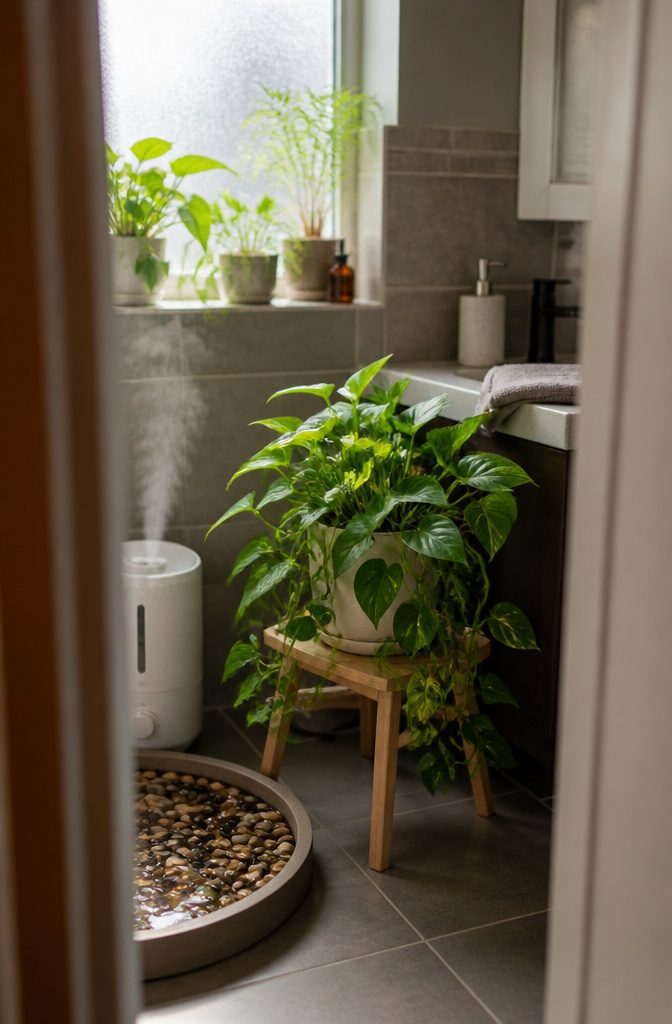
Normal household temperatures suit pothos well. The plant prefers 65–85°F, and most sources place sensitivity around 50–60°F. I haven’t found pothos to need anything special here; if you’re comfortable, the plant is.
Humidity follows the same pattern. Pothos comes from tropical regions and does best when humidity sits between 40–60%, but household levels usually meet that without extra effort.
In drier homes or during winter when forced air drops the percentage, a humidifier near the plant makes a noticeable difference.
Placing pothos in the bathroom also works, since shower steam creates natural humidity spikes throughout the day. A pebble tray filled with water beneath the pot adds moisture around the leaves without soaking the roots.
I keep mine in rooms that hold steady temperatures year-round and avoid spots near cold drafts or heating vents. Pothos tolerates some variation, but rapid swings between warm and cold stress the plant more than a consistent mid-range temperature.
5. Feed During Active Growth, Stop in Fall and Winter
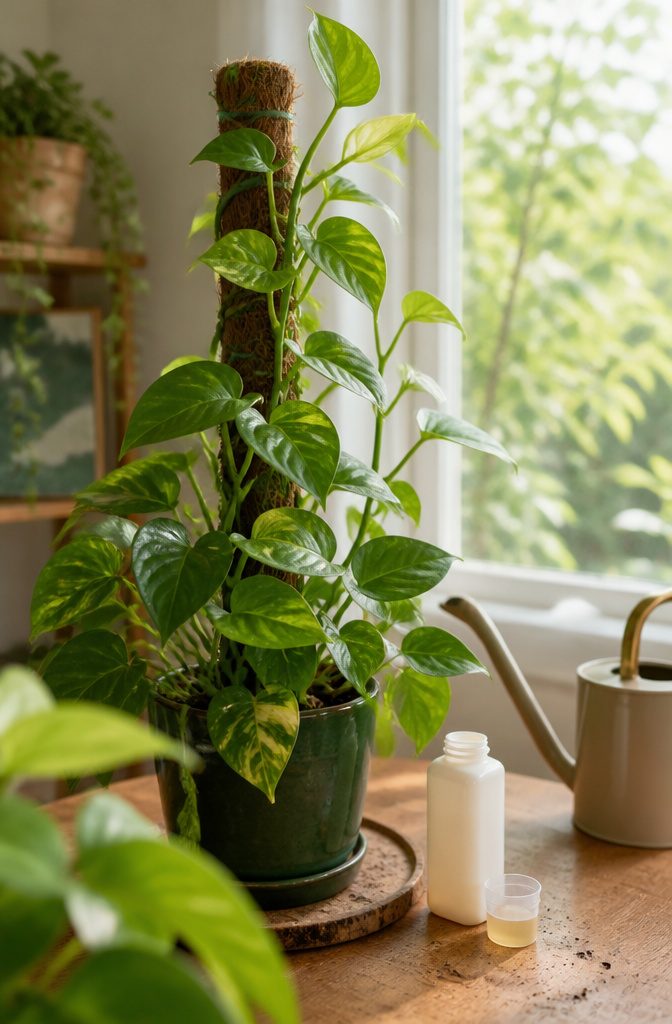
I feed my pothos once a month during spring and summer with a balanced liquid fertilizer diluted to half strength.
The NPK ratio matters less than keeping it mild: formulas labeled 1-1-1, 2-2-2, or 3-1-2 all work, and diluting to half the package strength prevents root burn.
Some sources suggest feeding every two weeks, but monthly keeps growth steady without the risk of over-fertilizing a plant that isn’t demanding much to begin with.
When fall arrives, I stop feeding entirely. Pothos growth slows in cooler months, and continuing to fertilize pushes nutrients the plant can’t use.
If you’re growing under artificial light year-round and the plant keeps putting out new leaves, you can continue the monthly schedule, but natural light in winter means the plant is resting and feeding does more harm than good.
6. Trim Damaged or Overlong Vines
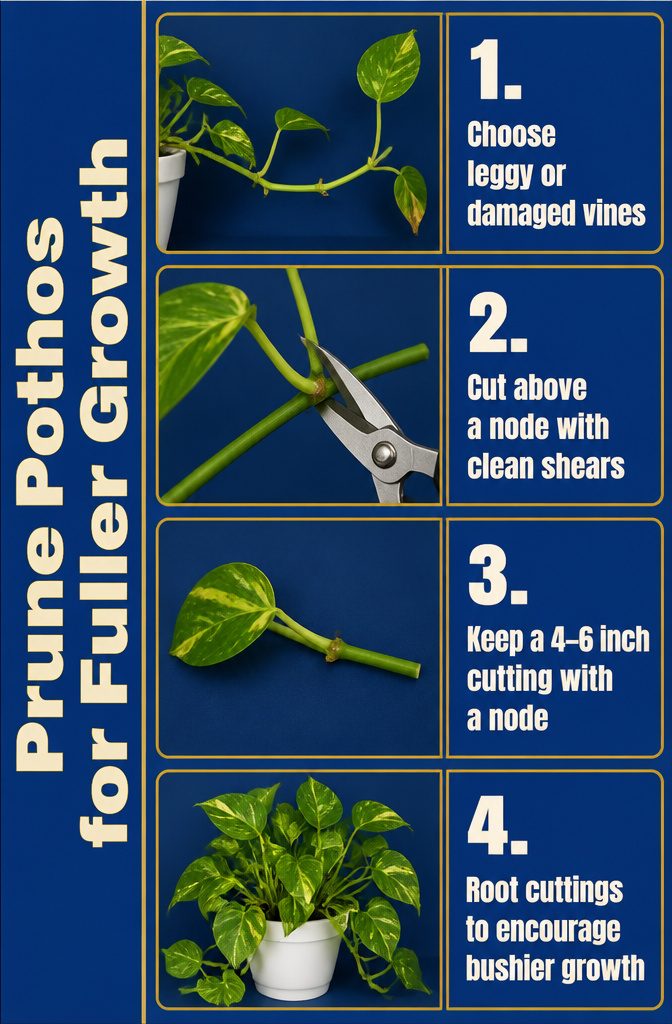
Pothos vines can grow several feet in a season, and at some point you will want to trim them back.
I cut any vines that have started to look leggy or damaged, and I also take shears to anything that has grown longer than the space can handle.
Use clean, sharp pruning shears and cut just above a node if you want the plant to branch from that spot.
Pruning during spring or summer tends to give the best results, since the plant is actively growing and will push out new shoots faster.
Those cuttings do not need to go in the trash. A piece about 4–6 inches long with at least one node will root in water or moist soil.
I stick mine in a jar of water, change it every few days, and watch roots appear after a week or two. Once the roots reach about one to two inches long, the cutting is ready to transfer into soil.
Soil propagation skips the water step entirely and sometimes produces stronger roots, though it takes a bit longer to see new growth. Either way, taking multiple cuttings from one vine makes the original plant grow bushier.
7. Link Visible Symptoms to Possible Causes
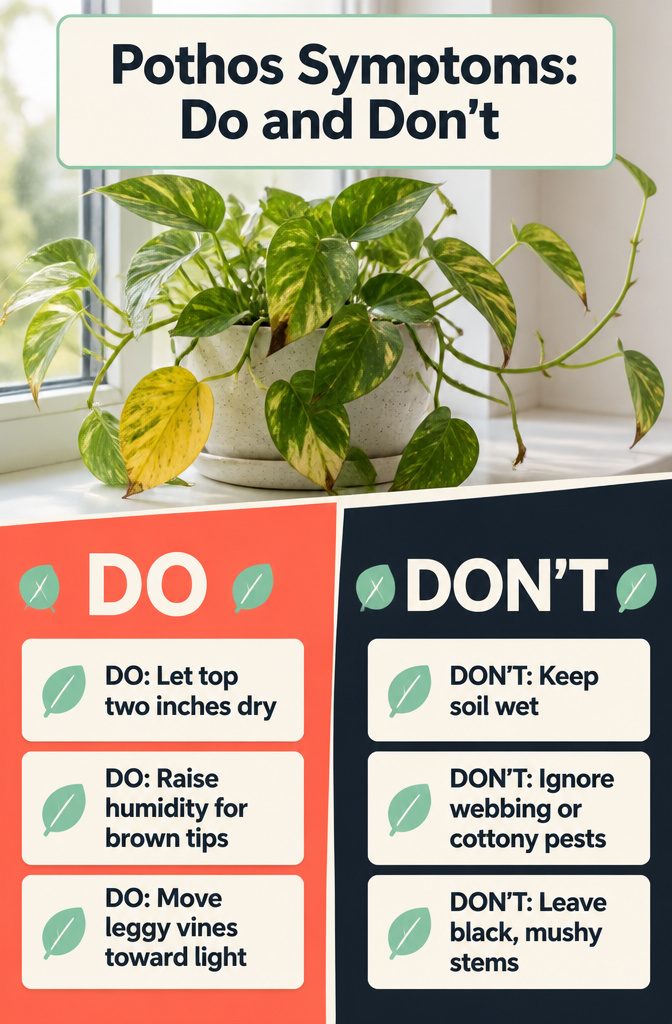
I treat yellow leaves as the overwatering alarm: the soil stayed wet too long, the pot has no drainage, or both. Pull off anything fully yellow and let the top two inches of soil dry before you water again.
Brown tips point to dry air or fluoride in tap water—mist more often, group plants to raise humidity, or let tap water sit overnight before using it.
Leggy, sparse vines mean low light. Move the pot closer to a window or add a small grow light; trimming the long stems back also makes the plant fill in rather than stretch.
For pests, watch for:
- Spider mites: fine webbing and stippled leaves. Wipe down with a damp cloth, spray with neem oil if needed, and raise humidity to keep them from coming back.
- Mealybugs: white cottony clusters at leaf joints. Dab with 70% rubbing alcohol on a cotton swab—they disappear on contact.
- Thrips and aphids: wipe off with a soapy rag for light cases, or spray with insecticidal soap or neem oil if the infestation is larger.
Black or mushy stems at the soil line mean root rot. Cut any healthy growth above the rot and start over in fresh, well-draining mix.
Repot Every One to Two Years or When Roots Outgrow the Container
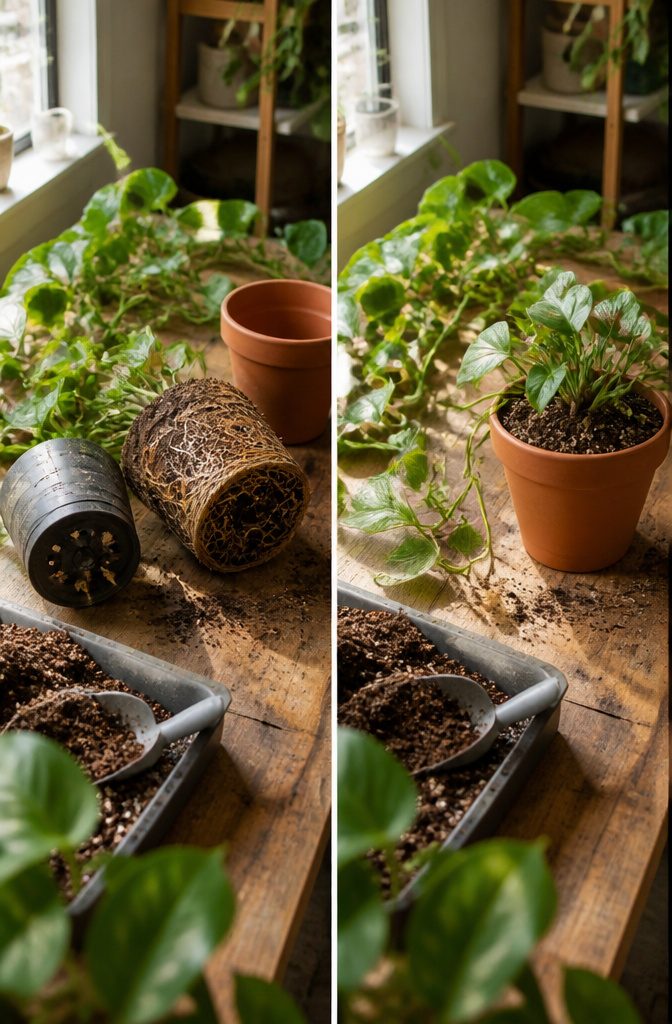
Pothos roots eventually circle the inside of their pot, and when they do, the plant dries out faster than it did a month earlier or roots start poking through the drainage holes at the bottom.
Repot every one to two years, or sooner if you see either of those signs. The timing depends on how quickly your plant grows, which varies with light and feeding.
Spring or summer is the right season for it. The plant is actively growing then, so it recovers faster and takes to the new soil without sitting idle in it.
Choose a pot one to two inches wider in diameter than the current one.
A jump larger than that gives the roots more soil than they can work through before it stays wet too long, and wet soil without roots in it invites rot.
If the plant is severely root-bound—roots so tightly packed they form a solid mass—you can go up two inches. Otherwise, one inch is enough.
Named Varieties and Their Leaf Patterns
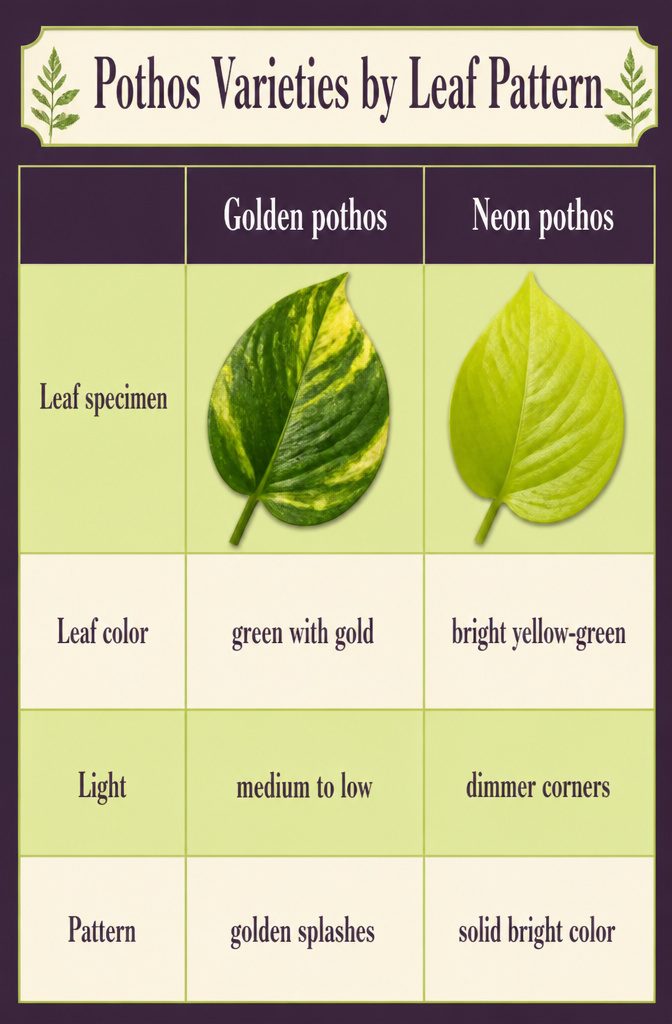
Pothos comes in several named varieties, all grown the same way but marked by different leaf patterns. The differences sit in the color and how variegation spreads across the leaf.
- Golden pothos has bright green leaves splashed with golden-yellow variegation and tolerates medium to low light.
- Neon pothos carries bright yellow-green leaves and needs less light than most, making it a good pick for dimmer corners.
- Marble Queen pothos displays white-and-green marbled foliage and requires more light than other varieties to keep its pattern sharp.
- Pearls and Jade features green, white, and gray variegation along the outer edges rather than through the center of the leaf.
- Manjula pothos grows larger leaves marked with streaks or splashes of cream and white.
- Silver Satin pothos (technically not a true pothos) has velvety dark green leaves speckled with silver and survives better than most without water.
- Jade pothos offers solid deep green leaves with no variegation and handles low light better than many others.
Frequently Asked Questions
How often should I water my pothos?
Water when the top 1–2 inches of soil feel dry, which usually works out to about once a week or every 2 weeks depending on light and temperature.
Pothos tolerate underwatering better than overwatering, so let the soil dry between waterings instead of keeping it constantly moist.
Can pothos plants live in low light?
Yes, pothos survive in low light, though growth slows and variegation fades. Bright, indirect light for at least 6 hours a day keeps the plant growing steadily and preserves leaf patterns, but low light won’t kill it.
Is a pothos a good plant for someone just starting?
Yes, pothos are forgiving and easy to grow, making them a solid choice for beginners. They tolerate missed waterings, adapt to a range of light conditions, and recover quickly from minor neglect.
Why are the leaves on my pothos turning yellow?
Yellow leaves usually signal overwatering or poor drainage. Let the top 2 inches of soil dry before watering again, and make sure your pot has drainage holes so excess water can escape.
Can I grow a pothos in water?
Yes, pothos can grow in water for an extended period. Many people root cuttings in water and keep them there as decoration rather than transferring to soil.
Does pothos need a lot of light?
No, pothos do not need a lot of light. Bright, indirect light is best, but they tolerate lower light levels and should be kept out of direct sun, which scorches the leaves.
Are pothos toxic to cats and dogs?
Yes, pothos contain calcium oxalates that cause oral irritation, drooling, vomiting, and difficulty swallowing if ingested. Keep the plant out of reach of pets.
Can pothos live outside?
Yes, pothos can live outside in USDA hardiness zones 10–12, where conditions stay warm and humid. Bring the plant indoors if temperatures drop or frost threatens, since pothos are sensitive to cold.
How big does a pothos get?
Indoors, pothos vines typically reach 6–10 feet or longer, though you can trim them back at any time. Outdoors in warm climates, they can grow 30–40 feet.