
Guest bedrooms work across a wide range: some need only fresh sheets and a cleared drawer, others call for blackout shades, a luggage rack, and a mini fridge stocked with cold water.
What decides which setup fits your space is how long guests stay and whether the room does other work when it sits empty.
A room that doubles as an office needs a Murphy bed or daybed so the floor stays clear most of the year.
Guests who arrive jet-lagged need blackout curtains they can pull at six in the morning, not sheers that let the sun wake them two hours early.
The Nalqet Gold Velvet Blackout Curtains at $49.99 block light completely while adding texture that ties into your duvet or throw pillows.
1. Make the Bed Comfortable with Layers and Extra Bedding
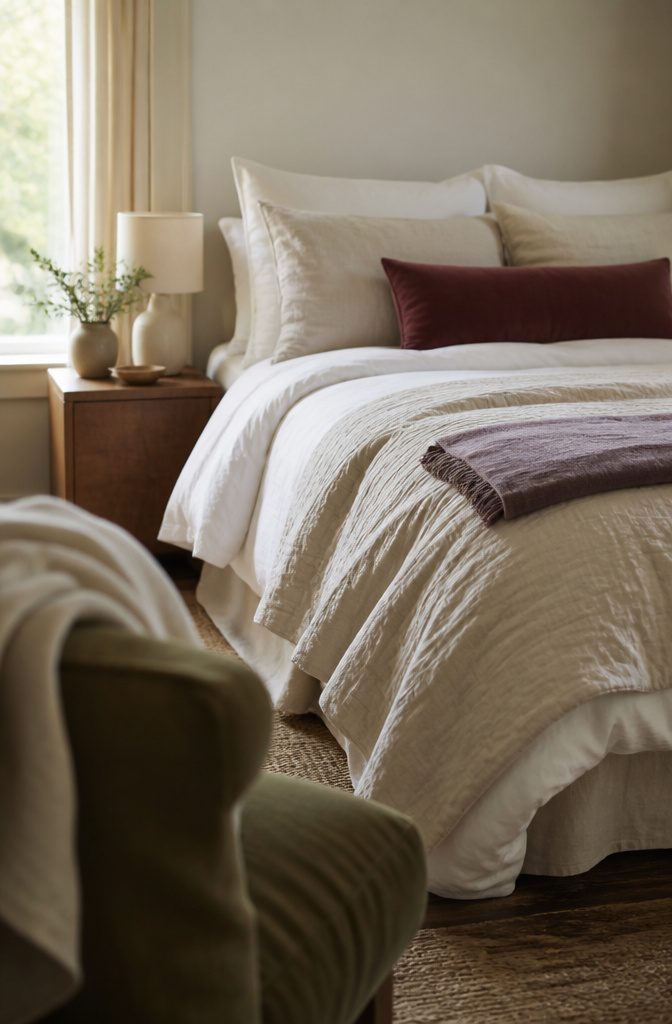
A comfortable bed starts with layers guests can adjust themselves. I keep a duvet paired with a quilt or throw at the foot of the bed, plus a few extra blankets stored in the closet or folded in plain view.
Everyone runs at a different temperature, and layering lets someone kick off what they don’t need or pull up more warmth without hunting through drawers at midnight.
Plenty of pillows matters just as much. I aim for at least four on the bed—two firm, two soft—so guests can build the stack that works for them.
Fresh sheets, a fluffy duvet, and a mix of textures from linen to velvet make the bed look inviting before anyone even lies down.
Aim for hotel comfort without the stiffness: a bed that reads as thoughtfully made but flexible enough for real sleep.
2. Choose a Color Scheme That Feels Intentional

Color either makes a guest room feel like a thought-through space or like a leftover nobody decided on. Soft, calming tones work best because they help people sleep somewhere unfamiliar.
Blues, tans, beige and gray all do that without overwhelming the space. Benjamin Moore’s Cushing Green HC-125, Smoke 2122-40, Inner Balance 1522 and Shabby Chic 1018 come up again and again for guest rooms, and all lean toward relaxation rather than drama.
Farrow & Ball’s Orangery sits on the warmer end if the room needs a little more personality.
Pattern can make the room more interesting without making it loud.
I prefer keeping patterns in a fairly subdued palette so the space still reads as restful, and monochrome schemes work especially well if you want prints without the visual noise.
For artwork, serene landscapes or botanicals bring a peaceful feeling that complements most color schemes without being too bold or personal.
Use Regal Select Interior for the walls if the room gets a lot of use; it’s washable and mildew-resistant, which matters when luggage hits the walls and closet doors open constantly.
3. Keep the Room Uncluttered and Free of Personal Belongings

A guest room packed with your own storage, collections, or furniture you didn’t want elsewhere reads crowded, not restful.
Guests need space that feels like theirs for a few days, and a room holding your off-season wardrobe or shot glass collection puts them in your overflow zone instead of a place made for them.
Small guest bedrooms especially suffer from this. When square footage is tight, every piece of furniture and every shelf matters.
Fill the room with things you’re storing and the guest gets what’s left over—usually not much. Clean out personal belongings before anyone arrives, and keep décor neutral and minimal so the room stays open rather than cluttered.
That doesn’t mean stripping the space bare. Fresh linens, extra pillows, a water carafe on the nightstand—small, intentional touches make guests feel welcome without crowding the room.
One or two is plenty. The line sits between thoughtful and overwhelming, and crossing it turns a retreat into a storage closet with a bed.
4. Add Bedside Lighting for Reading and Moving at Night
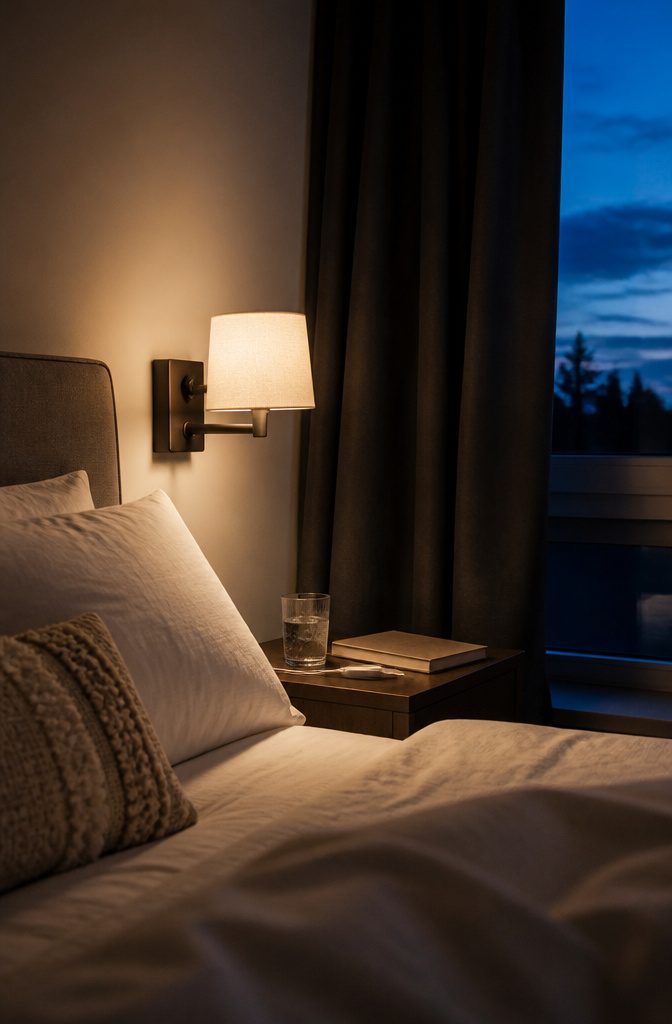
Guests who arrive after dark or wake up at night need a light they can turn on without fumbling across the room.
A bedside lamp or wall-mounted sconce they can reach from the mattress solves that, and doubles as reading light for anyone who likes an hour with a book before sleep.
Blackout drapes block daylight to aid in sleeping, while sufficient bedside lighting allows guests to read at night.
That pairing matters more than it sounds: blackout shades keep the room dark for jet-lagged visitors, but only if there is a lamp to read by once the drapes are closed.
Wall-mounted sconces save nightstand space in a tight room. Table lamps work when you have the surface.
The Sphere & Stem from West Elm runs $199 and stays compact on a small nightstand. A rechargeable option like Walmart’s Portable Candle Style Desk Lamp at $15.60 gives guests a light they can carry to the bathroom or set on a dresser.
Lamps with USB ports in the base let guests charge a phone without hunting for an outlet behind the bed.
5. Provide Space for Belongings with Drawers, Closet Hangers or Baskets

Guests feel at home when they can unpack and settle in, and that means giving them somewhere to put their things.
Cleared drawers, hanging space in a closet, or even a basket or two make the room feel less like a hotel and more like a place they can actually stay.
A slender standing dresser fits into most guest rooms without crowding the floor, and if you have closet space, leaving empty hangers is a detail guests notice. I like slim velvet hangers because they maximize space without adding bulk.
If drawers are tight, baskets do the job. A couple of open baskets hold folded clothes, shoes, or travel gear during the stay, and a larger lidded basket works for worn clothing if guests are staying longer than a weekend.
For a personal touch, wood hangers from IKEA personalized with rub-on letters and thin black velvet ribbon turn a functional detail into something thoughtful.
Round water hyacinth baskets run about $59.99 for a set of three and look clean next to the bed or tucked into a corner.
6. Give Guests a Surface for Luggage

A guest who lives out of their suitcase for the weekend needs somewhere to set it besides the floor or the bed.
A folding luggage rack or a bench at the foot of the bed gives them that spot without taking up permanent space.
The Household Essentials Folding Bamboo Luggage Rack runs $40.97 and folds flat when you need the room back, with a shelf below for shoes. If storage matters as much as surface area, a bench with a lift-top lid handles both.
I keep a luggage rack visible rather than tucked in the closet. Guests who see it will actually use it, and a suitcase open at waist height beats crouching to the floor every time they need a clean shirt.
Decorative stools or a long upholstered bench work just as well if the room already has them, and they look more finished than a rack when no one is visiting.
7. Use Mirrors for Getting Ready and Reflecting Light
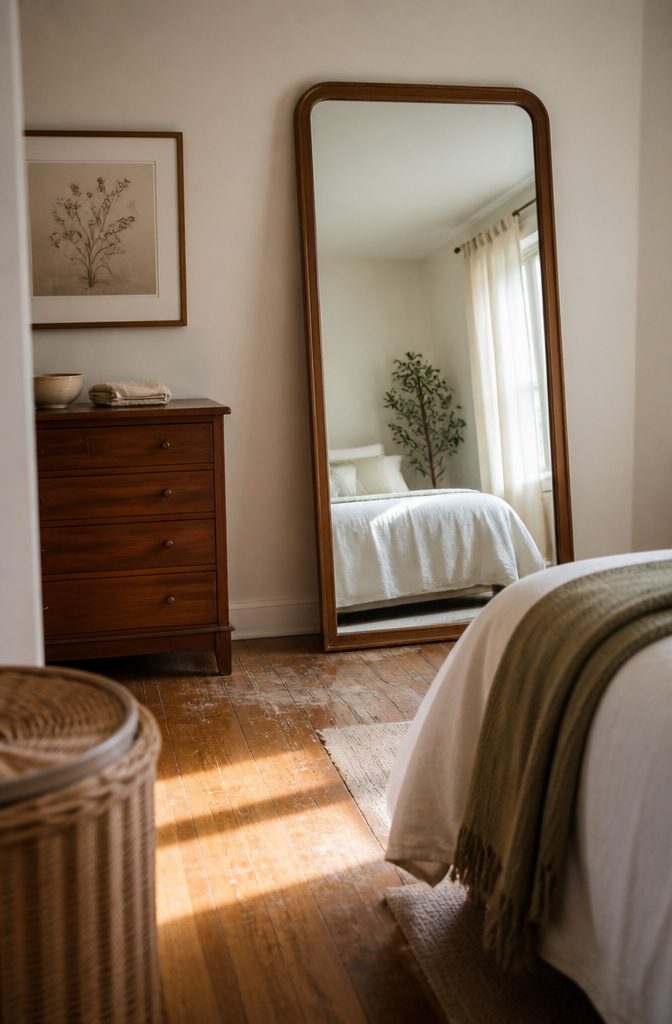
A full-length mirror gives guests a place to check their outfit head to toe before they head out, and it does something else worth keeping: it bounces light around the room and makes a small space feel larger.
The Winston Porter Abbate Full Length Wood Mirror runs $157.99 at Wayfair, curved solid wood that works leaned against a wall or hung to save floor space.
For guests who travel with jewelry, the SZKLO Glass Mirror Jewelry Organizer at $110.00 from West Elm combines a mirror with rings along the top for necklaces and bracelets, so nothing gets tangled overnight.
Hang it above a dresser and the mirror does double duty while they get ready. Set a mirror across from a window if the room has one; that amplifies the natural light instead of just reflecting the wall opposite.
8. Add a Chair or Reading Spot Away from the Bed

A chair or small sofa pulled away from the bed gives guests somewhere to sit that isn’t where they sleep, and that matters more when you’re hosting two people in the same room.
Reading in the morning with coffee, sorting out a suitcase, or just having a surface that isn’t the bed makes the room feel less like a crash pad and more like actual space to settle into.
The Bennett Upholstered Swivel Barrel Chair from West Elm, on sale for $519 from $699, works in tighter rooms because the swivel base lets you turn toward a window or a side table without dragging the frame around.
Pair it with a small side table and a throw blanket, and you’ve built a reading corner without claiming much floor space.
If the room is larger, two chairs facing each other or angled toward a window create a sitting area that feels separate from the sleeping zone, which guests appreciate when they need a few minutes alone in the morning or at night.
9. Make the Room Work Double Duty with a Daybed or Murphy Bed

A daybed or Murphy bed lets the room stay useful every day of the year, then flip to guest mode when someone actually shows up.
Daybeds work as a sofa until bedtime, which matters if the space also holds a desk, bookshelves, or your overflow storage.
Murphy beds fold flat against the wall and disappear completely, leaving the floor open for whatever else you need the room to do.
Sleeper sofas follow the same logic but sit heavier and read more like furniture than a bed frame.
I’d pick a daybed first if the room skews toward office or hobby space, since the proportions stay lighter and you can tuck storage baskets underneath.
Murphy beds win in tighter square footage where even a daybed footprint feels like too much furniture.
The style can shift depending on how long guests typically stay. A daybed dressed with throw pillows during the week looks intentional, and the switchover to guest bed takes two minutes.
10. Bring in Plants or Faux Greenery for Color

Plants give a guest bedroom color and a sense of life without filling surfaces with clutter.
Real blooms work if you rotate guests and want to refresh stems between visits, but faux plants and arrangements let you skip the upkeep entirely while still bringing in green or seasonal tones.
A single stem or two in a small vase keeps a nightstand from looking crowded.
I like the ModernizedPottery Textured Vase at $23.09 from Etsy for this—it comes in several colors and the minimalist shape blends with most bedroom styles without drawing attention away from the arrangement itself.
For bedside tables, a marble bud vase works the same way: small footprint, room for one or two stems, and enough visual weight to feel considered rather than tacked on.
If you want something taller or bushier, faux stems in a floor planter add presence near a chair or in a corner.
High-quality artificial plants read as real from a few feet away, and they give you control over exactly how much green the room needs.
Succulents and snake plants are low-maintenance if you prefer living options, and both handle low light without protest.
11. Add Small Hospitality Touches Guests Will Use

A carafe of water and two glasses on the nightstand keeps guests from wandering your kitchen at midnight.
The MagdaMadeCo Glass Carafe and Tumbler Set runs $85.00 if you want something that doubles as decor, but any clean carafe does the job. Some hosts go further and add a mini fridge to the dresser top.
The compact retro style holds six soda-sized cans or four taller bottles with the shelf removed, and it sits low enough that even a narrow nightstand can hold it.
Stock it with cold water and maybe a few snacks, or use it for refrigerated medication if someone in your house travels with eye drops or insulin.
Toiletries matter more than you think. Extra toothbrushes, toothpaste, makeup remover cloths, shampoo and conditioner in a glass jar or basket mean nobody has to interrupt your morning to ask.
Leave fresh bars of soap or a new bottle of liquid soap in the shower. A scented candle helps too.
The P.F. Candle Co. Woody Amber & Moss Glass Candle sits at $24.00 and brings notes of moss, lavender, sage and amber without reading too sweet.
Pair it with matches on a small tray. A framed welcome note or the WiFi password printed and set on the nightstand takes thirty seconds and reads as thoughtful.
12. Install Window Coverings for Privacy and Light Control

Blackout curtains or shades let guests control when they wake up instead of being dragged out of bed by six-thirty sun.
Blackout panels block daylight to help with jet lag and different sleep schedules, which matters more in a guest room than anywhere else in the house.
I like floor-to-ceiling curtains that stay dark until your visitors choose to get up, and pairing them with sheers gives guests flexibility: pull the blackouts at night, open to sheers during the day for privacy without making the room feel closed off.
The Nalqet Gold Velvet Blackout Curtains run $49.99 for a set of two at Walmart and add texture while they block light. Coordinate the color with your duvet or throw pillows so the window treatment feels intentional instead of tacked on.
If your guests don’t need total darkness, semi-see-through woven shades or sheers alone still give privacy while letting natural light filter through.
Where to Place the Bed and How to Keep Walking Space Clear

Bed placement affects how private and at ease guests feel the moment they walk in. The ideal setup has the bed perpendicular to the doorway rather than facing it head-on.
That way, someone lying down isn’t staring straight at whoever opens the door, and the person entering doesn’t see the bed as the first thing in their sight line.
When perpendicular placement won’t work, offset the bed as far from the door as the layout allows.
Even a foot or two of shift gives guests a measure of privacy and keeps the room from feeling like a stage set the second the door swings open.
Walking space matters as much as the bed’s orientation.
I avoid placing the bed in front of the only window whenever possible. Blocking it cuts off fresh air, dims the room, and prevents floor-to-ceiling curtains from opening fully.
Light and ventilation make a guest room feel open rather than cramped. Very small layouts sometimes force a window placement, and a built-in daybed can make that work, but most rooms have a better option if you measure first.
What Guests Need for Charging and Staying Connected

The Wi-Fi password shouldn’t require a treasure hunt.
I keep the network name and password visible on the nightstand, either in a small frame or printed on a card propped against the lamp. A guest unpacking at nine in the evening shouldn’t have to text for it.
An extra charging cable makes a practical backup, especially for anyone who forgot theirs or whose phone uses a port your household doesn’t.
A 3-in-1 charger handles most phone types without asking what brand they brought. If your nightstand lamps have USB ports in the base, guests can plug in without crawling behind furniture hunting for outlets.
Standard lamps without USB still work if an outlet sits within cord reach of the bed, but the built-in port removes one small friction point.
A charging station on the dresser or desk gives space for more than one device without cables snaking across surfaces, and it keeps the nightstand clear for water or a book.
Frequently Asked Questions
What should you always have in a guest room?
A comfortable bed with layers of blankets, bedside lighting guests can reach from the mattress, cleared drawers or closet space to unpack, a carafe of water with glasses, extra toiletries, and a visible spot for the WiFi password.
These basics let guests settle in without hunting through your house for what they need. Adding a luggage rack or bench and a few charging cables rounds out the essentials.
What colors are best for guest rooms?
Soft blues, tans, beige and gray work best because they help people sleep in an unfamiliar space. Benjamin Moore’s Cushing Green HC-125, Smoke 2122-40, Inner Balance 1522 and Shabby Chic 1018 all lean toward relaxation rather than drama.
Keep patterns in a subdued palette so the room stays restful, and use Regal Select Interior if the walls see a lot of contact from luggage and closet doors.
Should you put a dresser in a guest bedroom?
Yes, if the room has space for it. A slender standing dresser gives guests somewhere to put their things without crowding the floor, and cleared drawers help them settle in rather than living out of a suitcase.
If drawers are tight, a couple of open baskets hold folded clothes and shoes just as well.
What kind of bed is ideal for a guest bedroom?
That depends on whether the room serves other uses when no one is visiting. A daybed works as a sofa until bedtime, which matters if the space also holds a desk or bookshelves.
Murphy beds fold flat against the wall and leave the floor open for whatever else you need the room to do. Standard bed frames with storage underneath handle tight square footage while staying functional year-round.
What guest bedroom ideas work best for small spaces?
Multifunctional furniture like daybeds, Murphy beds and storage benches keep the room useful when guests aren’t staying.
Light colors, minimal decor and cleared surfaces make a small room feel larger. Wall-mounted sconces save nightstand space, and folding luggage racks disappear when you need the room back.
How can you make a guest room feel more like a hotel?
Plush bedding with layers guests can adjust, a bedside lamp they can reach from the mattress, and small hospitality touches like a carafe of water, extra toiletries and the WiFi password on the nightstand.
A luggage rack or bench, a chair away from the bed, and a scented candle with matches bring in the hotel feel without reading too stiff.
What are common guest bedroom mistakes?
Filling the room with your own storage, collections or furniture you didn’t want elsewhere instead of leaving space for guests to unpack.
Poor lighting, no place to set a suitcase, and skipping basics like extra blankets or a water carafe also make the room feel like an afterthought. A guest room packed with your overflow reads crowded, not restful.
What kind of art is good for a guest room?
Serene landscapes or botanicals bring a peaceful feeling that complements most color schemes without being too bold or personal. Keep the artwork restful rather than dramatic, since you want guests to sleep well somewhere unfamiliar.
Can you put a bed in front of a window?
Avoid it if the layout gives you another option. Blocking the window cuts off fresh air, dims the room, and prevents floor-to-ceiling curtains from opening fully.
Very small layouts sometimes force a window placement, and a built-in daybed can make that work, but most rooms have a better spot if you measure first.
How do you layout a small guest bedroom?
Place the bed perpendicular to the doorway rather than facing it head-on, so someone lying down isn’t staring straight at whoever opens the door.
Keep the bed away from the only window if possible, since blocking it cuts off light and ventilation. Leave enough walking space around the bed and between furniture so guests can move without feeling cramped.