
I’ve crammed bath mats and tiny 2×3 cotton rugs into my front-loader without issues, but wool Persian rugs or anything with a crinkly rubber backing can cause serious damage. That latex can melt right off.
Small, flatwoven pieces in cotton or polypropylene are your safest options, though you should always check the care label first since manufacturer claims don’t always reflect real-world results. Check the tag, test for dye bleed on a hidden corner with a damp white cloth, and if you’re uncertain, refer to the detailed guidance that follows for proper carpet care and machine protection.
Can You Machine-Wash Carpet? Here’s the Short Answer
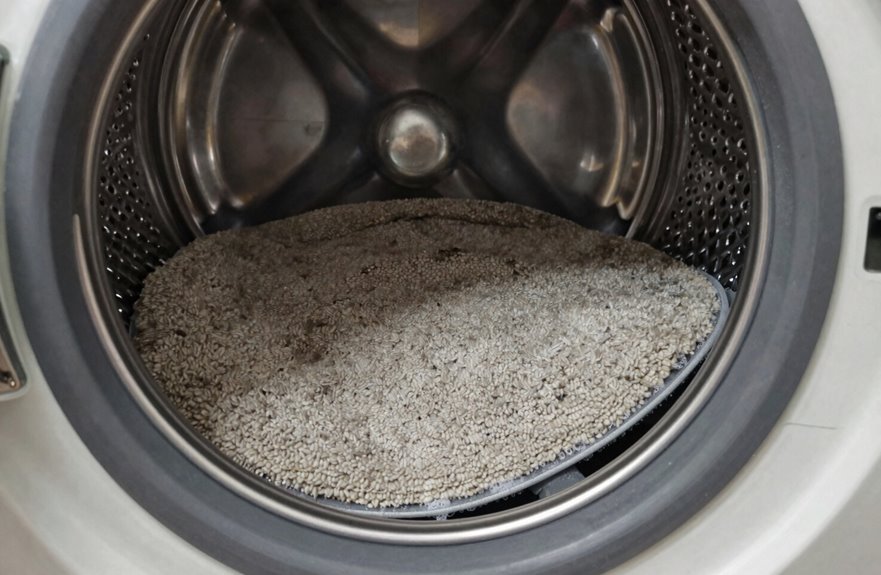
Three words I never thought I’d Google at 2 AM: “rug in washer.” Yet here we are, because I once shoved my entire 4×6 kitchen runner into my front-loader on a whim, and it actually worked. Mostly.
Sometimes you can machine-wash a carpet, but only when you have the right combination of size and material.
Check every care label carefully. Small, flatwoven rugs, think 2×3 to 4×6 in polypropylene or cotton, are your best candidates for machine washing. Wool, silk, and jute should not go in the washer. The rug backing matters significantly; latex crumbles while safe materials survive the cycle. Always check that tag before washing.
Warning Signs Your Carpet Can’t Handle Machine Washing
I’ve learned the hard way that some carpets require professional cleaning before you even plug in the washer, and you likely have one sitting in your hallway right now. If you’re examining wool fibers that feel like your grandmother’s heirloom sweater, or flipping over a rug to find that crackly rubber backing that smells like a tire shop, stop proceeding. Those are your material and construction red flags. If you’ve ever tried stuffing a thick 5×7 shag into a standard drum and heard that horrible thumping, you already know size matters. Oversized carpets can cause equipment damage or result in expensive repairs.
Material Composition Clues
How do you know if your carpet’s secretly plotting against your washing machine? I’ve learned the hard way that rug fibers tell you everything.
Check that care label first. Don’t skip this step like I did with my grandmother’s “maybe washable” Persian. Spoiler: it wasn’t machine washable. The material composition screams warnings: wool felts into a dense, sad pancake, silk loses its lustrous drape, and hand-knotted treasures unravel.
I once tossed a small wool blend in, thinking size equals safety. It emerged three sizes smaller, thicker than a winter coat, completely unwalkable. Natural fibers shrink, synthetic dyes bleed rivers of pink across your laundry room. That “quick wash” costs more than professional cleaning ever would.
Backing and Construction
Even if the fibers themselves seem sturdy, what’s hiding underneath can wreck everything. I’ve learned to flip every rug before it gets anywhere near my laundry room. Rubber backing causes problems. I watched one turn into crumbly confetti, clogging my drain with sad little flakes. Latex backing fares no better; it melts, it cracks, it becomes a nightmare you peel off in strips. Tufted backs, those charming looped constructions, weren’t built for bath time. Water sneaks in, glue dissolves, and suddenly your rug sheds like a nervous cat. Heavily glued backings create epoxy nightmares that separate, bubble, and weep. Check the underside of any rug before washing it, because backing failure will damage the rug irreparably.
Size and Weight Limits
When I finally dragged my soggy 5×7 shag out of the tub, my back screamed, my arms shook, and I understood too late why washing machines have weight limits. That beast weighed maybe fifteen pounds dry, but wet? Easily thirty, and my poor washer drum never stood a chance.
Rug size matters. Most home washers top out at 4.5 cubic feet of load capacity, and anything bigger than a bath mat turns into a lopsided nightmare. Your spin cycle becomes a violent wobble-fest, threatening the motor, the bearings, everything.
True machine-washable rugs are small, flatwoven, synthetic pieces like 2×3 accent rugs, not living room statement pieces. Anything 7×10 requires laundromat industrial machines. Larger rugs will damage standard home washers.
Check the Care Label First (Don’t Skip This Step)
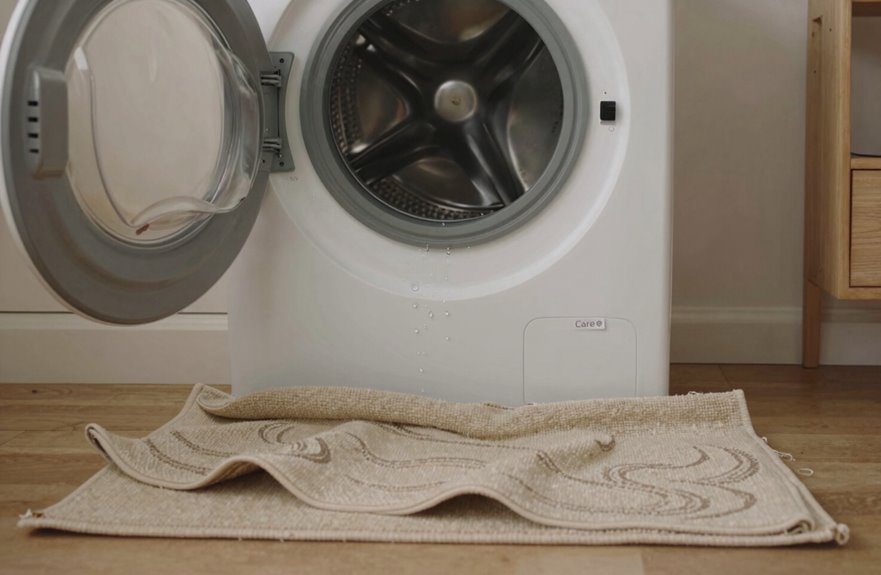
I always flip that rug over and hunt for the care label first. It tells me if I’m about to ruin my favorite floor piece or give it proper care. You’ll spot washing machine icons, material codes, maybe a cryptic “P” symbol that looks like alphabet soup, but don’t panic, I’ll help you decode it. If that label’s missing or faded into oblivion, don’t play guessing games with your grandma’s wool heirloom. I’ve learned that lesson through costly mistakes involving water damage and shrinkage.
Read Care Label
Why on earth would I toss a gorgeous vintage Persian runner into my washer without peeking at that tiny tag first? I’ve learned the hard way that the care label is basically my rug’s birth certificate, and ignoring it means inviting disaster into my laundry room.
That little tag tells me if my find is actually machine washable, or if I’m about to commit textile homicide. It spells out cycle settings: cold water, gentle spin, no heat. It also flashes backing warnings about latex that’ll turn to goo, or dyes that’ll bleed like a horror movie. If the label’s missing or cryptic, I don’t play detective; I call a pro. Your future self will appreciate this thirty-second investigation.
- A crumpled, faded tag hiding in the corner fringe like a secret
- Bold red symbols screaming “hand wash only” across white fabric
- Rubber backing crumbling into sticky black pebbles mid-cycle
- Vibrant indigo streams swirling down the drain, ruining everything
Identify Material Type
That tag holds important information once you flip it over and read what it’s made of. Knowing whether you’re dealing with cotton or synthetic materials changes everything. Always check the care label first, no exceptions. Your material type determines the appropriate washing method.
Cotton, polyester, acrylic, nylon, polypropylene, and chenille are machine washable options. Wool, silk, jute, and shag require different care methods.
Rug backing requires attention. The rubber grip preventing slipping can crack, melt, or turn into flakes in water. Some backings tolerate machines; others do not. When a care label is missing or unclear, hand wash or contact a professional rather than guessing.
Follow Instructions Exactly
How often have I stood there, staring at a rug tag like it’s written in ancient hieroglyphics, convinced I can crack the code through sheer willpower? I’ve learned the hard way that the care label is your lifeline, not a suggestion. Before anything else, I confirm it’s actually machine-washable because wool, silk, and latex-backed beauties will destroy themselves and your washer if you’re stubborn enough to try.
Here’s what I’m picturing when I check that tag:
- Tiny symbols swimming before my exhausted eyes at 11 PM
- Cold water temperature warnings in bold print
- Load balance instructions I definitely ignored once (never again)
- That “machine washable” phrase that makes me actually cheer out loud
If the care label’s cryptic, I don’t guess. I hand wash or call a pro. Your rug will last longer with proper care, and you’ll avoid costly damage to your washing machine.
Which Materials Can You Actually Machine-Wash?
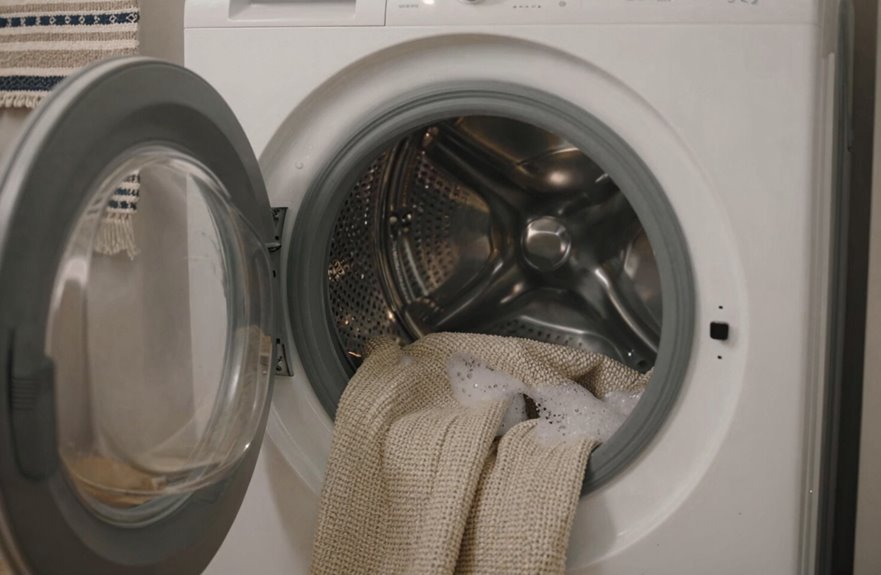
So when it comes to machine-washing rugs, not all carpets are created equal. I learned the hard way that machine-washable rugs are almost always synthetic fibers: think cotton, polyester, acrylic, nylon, polypropylene, or chenille. Wool, silk, and jute will be damaged in the spin cycle.
Always check that care label first. Some backings crack or melt, regardless of what the top looks like. When you spot “machine washable,” you can proceed. Then treat it right: gentle cycle, cold water, mild detergent. No bleach, no softener. Just standard care.
| Go For It! | Hands Off! |
|---|---|
| Cotton, polyester, acrylic | Wool, silk (they shrink, they weep!) |
| Nylon, polypropylene, chenille | Jute, shag (tangled disaster!) |
Will Your Carpet Even Fit in the Machine?
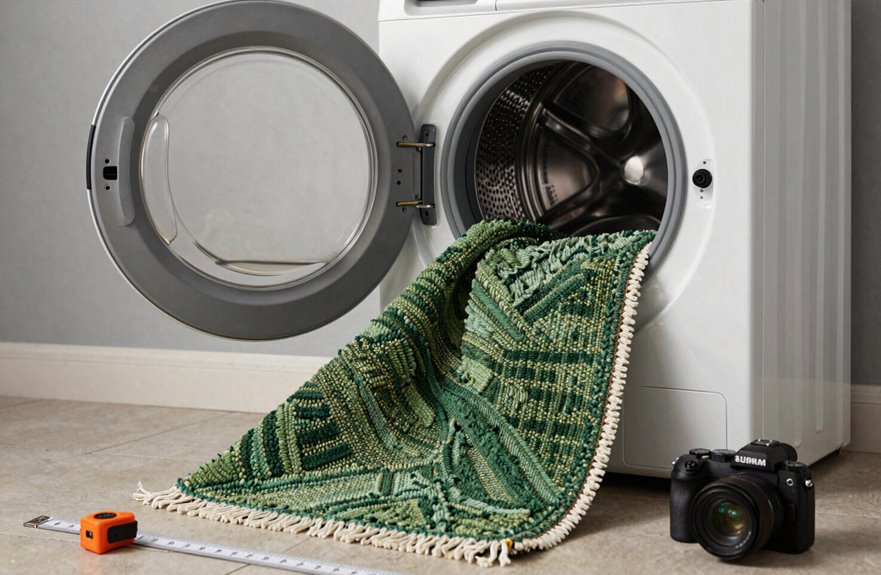
Even if your rug’s made of the right stuff, there’s a practical problem: my first “machine-washable” rug didn’t even make it past the laundry room door. I’d eyeballed the rug size, ignored the care label, and learned that washer capacity matters more than wishful thinking.
What you’re really dealing with:
- A 2′ x 3′ rug tumbling freely in a 3.5 cu. ft. drum, spinning like a happy cinnamon roll
- My 4′ x 6′ monster folded into submission, bulging against the glass like a confused burrito
- A 5′ x 7′ rug fighting for space, demanding 5.0 cu. ft. and perfect load balance or it’ll thump-thump-thump at 3 AM
- Your neighbor’s 7′ x 10′ disaster, wedged halfway, dripping defeat
Check your specs. Oversized rugs won’t fit in standard machines, and your machine specifications won’t change for wishful thinking.
How to Wash a Small Carpet: Step by Step
Where do we actually start once we’ve cleared the size hurdle? I always grab that care label first, as it tells us if our small carpet can handle the washing machine at all. Ignoring it can result in a damaged rug.
Next, I vacuum or shake out every crumb, because nobody wants wet cereal bits swirling around. I spot-treat stains with cold water and mild detergent, letting it sit while I prep the machine.
Here’s my weapon of choice: I toss the small carpet into a front-loader with a couple of towels for balance, then select the delicate cycle with cold water. It mimics hand-washing, gentle but effective. If I see wool or latex backing, though, I back off immediately. Some materials require different washing methods to prevent damage.
Pick the Right Cycle, Temperature, and Detergent
I’ll walk you through cycle selection basics, temperature guidelines, and detergent recommendations. The regular cycle can damage delicate rugs, so choose accordingly. Cold water keeps dyes locked in tight while the fibers stay fluffy and intact. Skip the heavy-duty detergent and grab a gentle formula instead. Avoid bleach and softener, as these products can damage rug fibers. Let’s get this wash started right.
Cycle Selection Basics
How do I keep from turning my favorite rug into a mangled disaster? I learned the hard way that cycle selection isn’t just a suggestion. It’s survival. I always reach for the delicate cycle on my front-loading washer, because those gentle tumbling motions cradle fibers instead of assaulting them. Cold water is essential; I’ve watched hot water bleed colors into tragic, tie-dye nightmares nobody asked for. I pair everything with mild detergent. Nothing harsh, nothing fancy, just gentle cleaning power that respects the weave.
- A cascade of sudsy water swirling through plush fibers like a lazy river
- Towels hugging the rug’s edges, keeping the spin from going wild
- The washer’s steady hum, not the violent thumping of an unbalanced load
- Colors staying true, bright, unbetrayed by heat’s cruel fade
When I’m uncertain, I stop. Hand-washing saves beloved pieces from my overconfidence.
Temperature Guidelines
Why does temperature matter so much? Hot water turns vibrant rugs into sad, shrunken memories. When I wash my kitchen runner, I always reach for cold water. It protects those fibers, keeping colors bright and backing intact.
| Water Temp | What Happens |
|---|---|
| Cold water | Colors stay true, fibers relax |
| Warm water | Risky for glue-backed rugs |
| Hot water | Shrinkage disaster! |
| Check care label | Manufacturer knows best |
| Gentle detergent | Cleans without stripping |
I avoid hot water like I’d avoid wearing white to a wine tasting. It’s simply not worth the risk. Your care label is a detailed guide from the manufacturer who designed the rug. Follow it, use gentle detergent, and your rug will last for years.
Detergent Recommendations
What detergent won’t turn my favorite rug into a fuzzy disaster. I’ve learned this through experience.
I stick to mild liquid detergent, nothing fancy, just the gentle stuff. Bleach? Absolutely not, unless you’re into tie-dye accidents. And fabric softeners might sound cozy, but they’ll wreck your rug’s backing faster than you can say “oops.”
Here’s what I picture when I’m prepping my wash:
- A waterfall of clear, cool water swirling around jewel-toned fibers
- Tiny soap bubbles cradling each thread like protective clouds
- My rug spinning slowly, hugging fluffy towels for balance
- Colors staying crisp and true, no bleeding rivers in the drum
I always check the care label first. It’s saved me more than once. Cold water, gentle cycle, and the job is done properly.
Dry Your Carpet Without Ruining the Backing
The trickiest part of washing a rug isn’t the suds; it’s the dry-down. I once hung a heavy cotton rug over my shower rod, and by morning the backing had stretched into a sad, lopsided pancake.
Air-drying is the gentlest method to protect your rug’s backing, edges, and color. After washing, press out excess water with clean towels without wringing, then lay the rug flat in a shaded spot with good airflow. Direct sunlight and radiators will warp polyester backing and fade patterns.
For large or rubber-backed pieces, check the care label first. Some permit no-heat dryer settings, but air-drying remains the safest option.
Mistakes That Ruin Both Your Carpet and Washer
How many times have I stood in front of my washer, arms full of grimy rug, convinced I could ignore the manufacturer’s recommendations? Too many.
I’ve learned the hard way that ignoring the care label turns my washing machine into a destruction zone. That tiny tag isn’t decoration; it’s survival instructions I should have read.
Here’s what my disasters looked like:
- Rubber backing cracking like dry desert earth, with little crumbs everywhere
- Bleach turning my favorite blue pattern into splotchy nightmares
- The drum banging so hard I thought it would walk through the wall
- A drain clogged with dog hair and sand, creating a blockage that required professional cleaning
Harsh chemicals strip fibers bare. Poor load balance shakes the whole house. Washing your carpet at home requires following the manufacturer’s specifications to avoid damage to both the rug and your appliance.
Hand-Wash Oversized or Delicate Carpets Instead
So your gorgeous Moroccan runner or that vintage wool beauty won’t fit in your machine? I’ve been there, staring at my bathtub like it’s a salvation. For oversized carpets and delicate carpets, hand-washing is the solution, and you can do it too.
Fill your tub with cool water, add a splash of mild detergent, and gently swish without aggressive scrubbing. Soak for just 15-30 minutes, rinse until the water runs clear, and lay it flat to dry away from harsh sunlight. This prevents warping and color fading.
Heavy latex-backed pieces require a different approach. Skip the soak entirely and spot clean instead, or consider professional cleaning before risking backing damage. Your unique floor covering deserves proper care.
When to Hire a Pro Instead
Sometimes I’m standing there, rug in hand, and I just know this baby’s too precious, too massive, too “what if I ruin it?” for my little laundry adventure. We’ve all hit those machine washing limits, and there’s no shame in recognizing when professional help is needed.
I phone the professionals for:
- That gorgeous 8×10 wool beast that could swallow my entire bathroom floor
- Grandma’s silk prayer rug with colors so vivid they practically hum
- Anything latex-backed that feels like it might disintegrate into sad, rubbery confetti
- My “washable rugs” that turned out to be not so washable after all
Professional rug cleaning isn’t surrender. It’s the practical choice. When oversized or delicate rugs need care beyond what a home washer can provide, professionals have the equipment and expertise to handle the job properly. They prevent damage, protect your investment, and ensure your rug stays in good condition. Some jobs are better left to those with specialized tools and experience.
Test for Colorfastness Before You Wash
I’ve learned the hard way that skipping this step turns your “quick wash” into a tie-dye disaster you didn’t ask for. That pink-tinged bathroom rug is a permanent reminder.
Here’s my foolproof test: dampen a hidden corner with cold water and a dab of mild detergent, then blot with a white cloth. Any color on that cloth means you should not machine wash.
| Test Step | What You’re Checking | If It Fails |
|---|---|---|
| Dampen hidden area | Colorfastness | Don’t machine wash! |
| Add detergent, blot | Dye transfer risk | Spot clean only |
| Inspect white cloth | Bleeding signs | Call the pros |
No dye transfer. Wash separately on gentle, cold cycle. Some sneaky dyes only bleed under hot water or heavy agitation, so stay vigilant. We’ve all got that one “oops” story. Keep yours unwritten by testing first.