I’ve watched carpet go from plush paradise to flattened disaster in every timeline imaginable.
Most carpets last 5 to 15 years, though I’ve seen wool hit 25 in quiet bedrooms and cheap polypropylene fail at 3 in busy hallways.
Nylon’s your workhorse at 10-15 years, polyester looks gorgeous but taps out around 5-10, and wool is luxurious but demanding.
Your vacuum habits, pet claws, and whether you actually use that entryway runner matter more than the price tag.
The subfloor and padding underneath determine longevity most significantly, and most people don’t account for this when planning carpet replacement.
Carpet Lifespan: From 3 Years to 25 (What Determines Where Yours Falls)
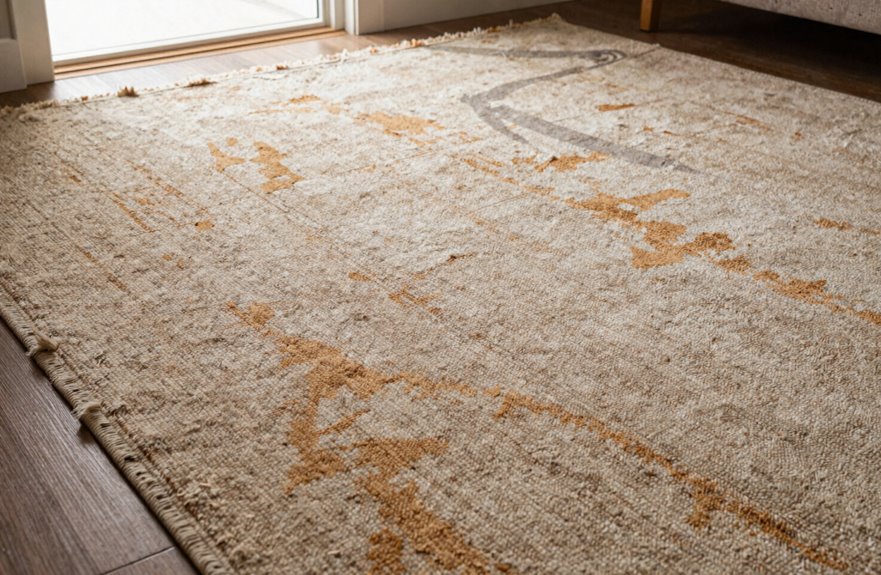
How long does carpet actually last? I’ve seen friends frustrated with 3-year-old polyester hallway carpets, and I’ve walked on wool that still bounces back after two decades. Your carpet lifespan varies considerably based on several factors.
High-traffic areas cause the most damage to your floors. My entryway looks worn at 7 years. My guest bedroom remains in good condition. Carpet material durability ranges from 5 to 25 years depending on what you chose.
Cleaning maintenance significantly impacts lifespan. Vacuum twice weekly and schedule professional cleaning every 12 to 18 months to extend your carpet’s life toward the upper range. Without proper maintenance, you may need to replace floors within a decade.
Polyester vs. Wool vs. Nylon: Which Material Actually Lasts?

I’ve lived with all three fibers. My polyester hallway looked like a sad pancake within four years, while my mother’s wool Persian remained plush and gorgeous after twenty years. Nylon sits in that sweet middle, tough enough for my kid’s soccer cleats but not quite the heirloom my mom’s got. Let’s break down what actually separates these fibers, because choosing carpet shouldn’t feel like gambling your savings on a mystery box.
Fiber Durability Comparison
When I’m standing in the carpet showroom, running my hand across swatches that all promise forever, I can’t help but wonder which fiber’s actually telling the truth.
I’ve learned through experience. Nylon gives you 10 to 15 years of solid performance, bouncing back from my kids’ chaos like a champ. Wool offers 8 to 20 years if you’re gentle, staying soft through movie nights and morning coffee spills. Polyester lasts 5 to 10 years, perfect for that cozy guest room nobody uses.
Lifespan isn’t just numbers on a tag; it’s how we actually live. Wool wins the marathon, Nylon’s your reliable everyday option, and Polyester works when you prioritize aesthetics over longevity.
Material Lifespan Factors
Standing in that showroom, you might think you’re just picking a color, but you’re really choosing how many years you’ll spend vacuuming the same fibers.
Let’s talk material factors, because they make or break your carpet’s lifespan. Nylon is the workhorse option, lasting 10 to 15 years through kids, dogs, and spills. It bounces back quickly. Wool stays gorgeous for 25 years with careful maintenance, though it requires more attention than most homeowners provide. Polyester looks plush initially, but typically needs replacement in 5 to 10 years, making it suitable for low-traffic areas like guest rooms.
Sunlight streaming through windows and high-traffic hallways age even tough nylon and wool faster than normal wear patterns. Choose the material that matches your actual household activity level, not an idealized version of your home.
Nylon’s 10-15 Year Lifespan: Why It Outlasts Other Synthetics
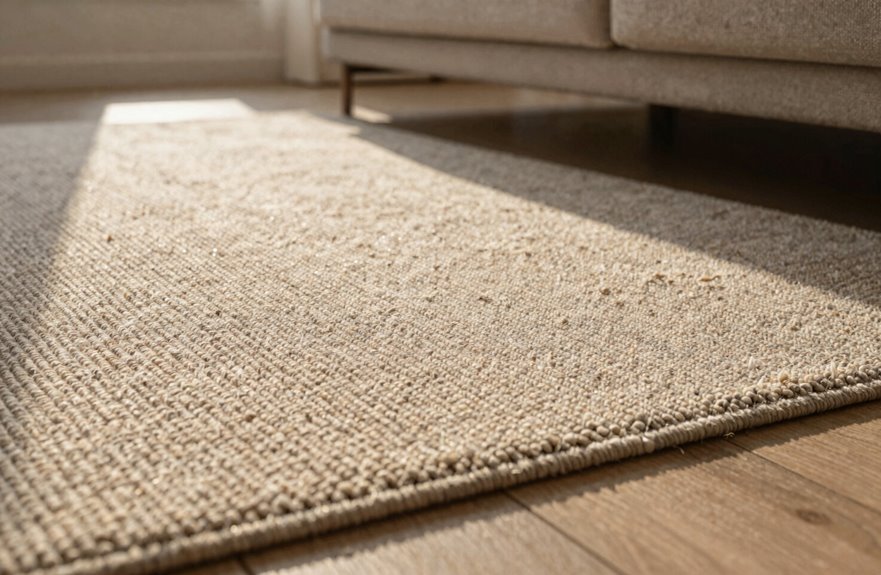
Nylon carpet handles heavy foot traffic that would flatten lesser synthetics in half the time, with springy fibers that bounce back consistently. When comparing its 10-15 year lifespan against polyester’s five-to-ten years or polypropylene’s three-to-five year fade-out, nylon performs like a marathon runner while competitors quit early. This breakdown covers fiber resilience, traffic endurance, and maintenance habits that can extend your carpet toward the fifteen-year mark instead of premature failure.
Fiber Resilience Explained
Why is nylon the synthetic fiber that keeps bouncing back decade after decade? I’ve walked on carpets that looked tired after three years, and I’ve seen nylon thrive for fifteen. The secret lies in the molecular structure: those tight, springy chains flex underfoot then snap back, resisting the crushing that flattens lesser fibers.
| What Nylon Faces | How It Fights Back |
|---|---|
| Heavy foot traffic | Bounces back, no matting |
| Dirt and grime | Cleaning restores the pile completely |
| Years of use | Maintains that plush, “just installed” look |
I learned this the hard way with my first apartment’s bargain polyester. After five years it looked like a flattened pancake. Nylon’s durability means fewer replacements. A typical nylon carpet lasts 10-15 years, making it a practical long-term investment compared to lower-quality alternatives.
Traffic Endurance Factors
Where does all that foot traffic actually go when I’m pounding across my living room day after day? Straight into crushing my poor carpet fibers.
Nylon’s incredible resilience comes from seriously strong fiber construction that bounces back, even when my kids sprint through with muddy sneakers. While polyester taps out at 5-10 years and polypropylene crumbles in 3-5, my Nylon keeps working for a full decade or longer. The right padding underneath absorbs that daily pounding, and professional cleaning twice yearly keeps everything looking fresh. High-traffic hallways show Nylon’s durability; it survives what destroys cheaper synthetics in half the time. The investment pays for itself through extended carpet life.
Maintenance Longevity Impact
How exactly do I squeeze fifteen years out of a carpet that sees my chaos every single day? Nylon durability is the covert weapon I’ve stumbled into.
I vacuum regularly, tackle spills before they become permanent stains, and schedule professional cleaning every year. That hot water extraction preserves my carpet lifespan.
Padding quality matters. I cheaped out once and learned my lesson, watching my fibers flatten like sad pancakes. Never again. Quality cushion keeps those nylon loops bouncy and resilient, ready for my dog’s zoomies and my daughter’s glitter explosions.
Compared to my neighbor’s polyester carpet, matted in three years, my nylon lasts significantly longer. Ten to fifteen years of durability, comfort, and casual living space. The investment pays for itself through the extended lifespan.
How Foot Traffic Destroys Carpet Faster Than You Think
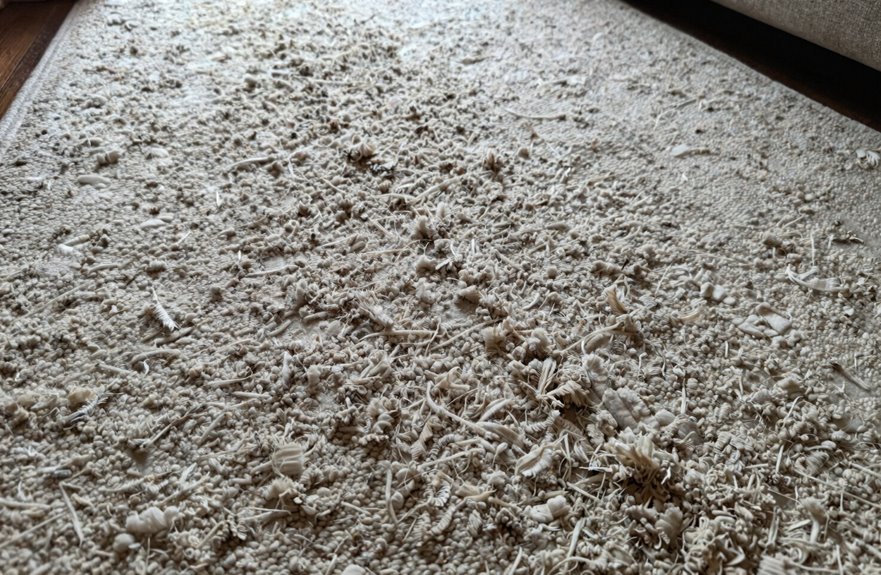
Ever wonder why your hallway looks like a tired racetrack while that corner by the window still feels plush underfoot. The answer involves foot traffic crushing your carpet lifespan right under your nose.
Foot traffic is crushing your carpet lifespan right under your nose.
High-traffic zones like entryways, stairs, and well-traveled paths accelerate padding compression and etch permanent wear patterns into fibers. Nylon carpets meant for 10-15 years can deteriorate in 5-8 years because of relentless daily pounding. Even with regular vacuuming, those flattened trails reveal the damage.
Here’s what works:
- Rotate furniture every few months to shift those traffic lanes
- Throw down area rugs in high-wear spots to protect underlying carpet
- Deep clean more often than feels necessary
- Choose denser padding for busy areas
- Accept that some paths will show accelerated wear, and plan your carpet selection accordingly
Do Pets Really Cut Carpet Lifespan in Half?
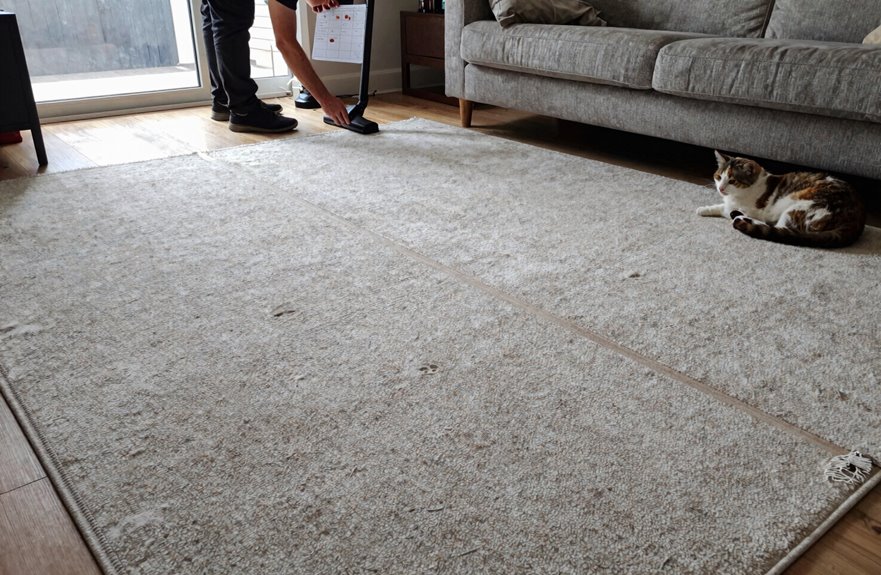
I’ve watched my own living room carpet go from plush to frayed in five flat years thanks to two rambunctious retrievers who think “scratching post” means “any horizontal surface I feel like.” That “half the lifespan” stat reflects reality for many pet owners. Those claws act like tiny sandpaper belts on the fibers, especially where they charge in from the backyard with muddy paws and excited nails digging for traction. You can trim, you can treat, you can baby that pile all you want, but strategic runners and a strict “paws at the door” policy are your most effective defenses. These measures can realistically extend carpet life to year seven or beyond.
Pet Damage Impact
Why does my living room carpet look like it aged ten years in two? I stare at the matted trail from couch to kitchen where my dog does her victory laps after every meal. Pet damage isn’t subtle; it announces itself.
What I’ve learned about how our furry roommates slash carpet lifespan:
- Claws act like tiny sandpaper blocks, grinding fibers into fuzzy oblivion
- That flattened “path” near the door is accelerated wear you can’t fluff back
- Padding underneath absorbs every accident, holding odors hostage forever
- High-traffic pet zones thin faster, creating embarrassing bald patches
- Without quick action, what starts as surface trouble becomes foundation rot
I’ve watched my own carpet drop from a 15-year promise to maybe seven. The wear patterns map exactly where my pets live their best lives, right on top of my investment.
Prevention Strategies
So can you actually stop pets from turning your carpet into a fuzzy crime scene? Yes. Prevention strategies aren’t about perfection; they’re about smart habits that stretch your carpet lifespan without sacrificing snuggle time.
| Prevention Move | What It Actually Does | Where It Helps Most |
|---|---|---|
| Nail trims every 2-3 weeks | Stops snags, preserves fiber texture | High-traffic areas like hallways |
| Spot cleaning with enzyme cleaners | Zaps odors before they set permanently | Pet beds, feeding zones |
| Durable nylon rugs + area rugs | Absorbs claw damage, extends wear | Entryways, stairs (the danger zones.) |
Pet wear can slash carpet life from 15 years to 5, but these strategies buy back decades of usable carpet. Consistent nail maintenance, enzyme cleaning, and strategic rug placement work together to protect your flooring while keeping your pets comfortable.
Protecting Carpet From Pets: Maintenance That Actually Works
How do we keep our carpets alive when we’ve basically invited tiny, clawed demolition crews into our homes? I’ve watched my own living room transform from plush paradise to frayed battlefield, and I’m guessing you’ve been there too.
Pet damage slashes carpet lifespan dramatically. What should last 15 years often crumbles in 5 to 7 years. Effective maintenance strategies include:
- Trim those daggers. Regular nail grooming stops snags, especially in high-traffic zones where microfiber loops catch and tear
- Layer up. Throw runners over the paths your pets pace obsessively
- Spot clean immediately. Enzyme treatments are your best friend for stains and smells
- Vacuum obsessively, daily if you must, because fur grinds into fibers
- Adjust cleaning intervals, deep cleaning twice as often as the pet-free crowd
These steps extend carpet durability and reduce odor retention significantly.
The Cleaning Mistakes That Shorten Your Carpet’s Life
I’ve spent years pampering my carpets against pet chaos, only to realize I was the real threat all along. My cleaning mistakes, scrubbing too hard with stiff brushes, drenching the fibers, and grabbing whatever cleaner smelled strongest, were shaving years off my carpet lifespan.
I learned that harsh chemicals and wrong tools don’t just clean; they destroy. Loop-pile carpets especially hate aggressive DIY attempts. I’ve watched fibers fray and matte into sad, flat patches. Pushing dirt deeper instead of lifting it accelerates padding wear before you even notice.
Now I recommend professional cleaning every 12 to 18 months, more frequently with my shedding golden retriever. Skipping it is like skipping oil changes for your car. Your carpet will deteriorate faster without regular professional maintenance.
When Even Professional Cleaning Can’t Save Your Carpet
Sometimes you scrub, you steam, you beg—and still, your carpet looks like it lost a fight with a mud-wrestling champion. I’ve been there, staring at the same stubborn stain, wondering where I went wrong. Some battles aren’t worth fighting.
- Odors after cleaning that linger like bad roommates. Your nose knows it’s pad-deep.
- Carpet padding contamination that turns every step into a squishy reminder.
- Wear and tear so severe the fibers look like tired, flattened spaghetti.
- Wrinkles and uneven spots that trip you, literally, no matter how many times you stretch it.
- Multiple failed repairs draining your wallet faster than a Vegas weekend.
These replacement signals indicate it’s time to replace your carpet. Your feet and your finances will improve.
7 Warning Signs Your Carpet Is Beyond Saving
Why do we hang onto carpets that have evidently given up on life? I’ve done it too, pretending those wrinkles and lumps are just “character” when really, they’re screaming that the carpet lifespan has expired. I’ve learned to spot the real signs of wear: bare spots in hallways where fibers have flattened into permanent surrender, stains that laugh at my best cleaning attempts. Then there’s padding breakdown, that squishy, uneven feeling underfoot like walking on lumpy mashed potatoes. And please, let’s talk odors indicating replacement. When you’ve deep cleaned twice and that musty funk persists, it’s usually pad contamination or worse. These aren’t flaws you fix; they’re your floor’s resignation letter. I’ve sniffed enough mystery smells to know when it’s time to let go.
Clean or Replace: Extending Lifespan vs. Starting Over
When exactly do you throw in the towel, or rather, the cleaning rag, and admit defeat? I’ve stared at my own living room carpet, coffee in hand, wondering if that mysterious gray patch is “vintage character” or just gross.
Carpet lifespan isn’t just about years; it’s about battles fought. Sometimes you’re throwing good money after bad, and sometimes a deep clean buys you five more years.
- Deep-set stains that laugh at professional cleaning
- Padding deterioration that makes every step feel like concrete
- High-traffic wear creating actual “paths” through your rooms
- Persistent odors that return like bad exes
- Wrinkles that reappear no matter how many times you stretch
Know when to fight and when to fold.
Replacing Carpet in Hallways and Stairs: How Often Is Realistic?
I’ve learned the hard way that hallways and stairs are carpet killers, no matter how much I vacuum or ask guests to wipe their feet. In my own home, the stair treads went bald and frayed at year five while the living room still looked presentable. Stairs wear out faster than flat hallways because of constant pounding, pivoting, and occasional trips while carrying laundry baskets. If you’re seeing gaps between fibers, crushing that won’t fluff back, or those telltale dark paths where the pile has given up entirely, it’s probably time to rip it out and start fresh. Waiting too long means more stubbed toes and awkward apologies to visitors.
High-Traffic Wear Reality
Where exactly do we wear out our carpets the most? In the high-traffic zones we can’t avoid: hallways and stairs. I’ve watched my own hallway carpet go from plush to worn flat in just a few years. The wear happens quickly because of constant foot traffic.
What matters for managing this reality:
- Runners are lifesavers; they buy you years
- Nylon fibers resist wear better than cheap polyester
- Padding matters significantly; don’t skip it
- That matted, flat look signals replacement time
- Bedrooms maintain 15 years while hallways last 5-8
The lifespan shrinks where feet pound constantly. Compression and fiber flattening accelerate the process. Choosing quality materials like nylon and adequate padding directly extends carpet life in high-traffic areas and reduces replacement frequency.
Stair Replacement Timeline
Because stairs take such a beating from every single trip upstairs, morning coffee in hand, late-night laundry hauls, kids thundering down to breakfast, they’re actually the first carpet casualties in most homes. High-traffic wear hits stairs hardest, usually demanding replacement every five years in busy households. I’ve stretched mine to seven with aggressive maintenance, but I’m watching those frayed tread corners closely. Padding quality matters enormously here; cheap cushion collapses fast under pounding feet, turning your staircase into a flat, worn surface. Professional cleaning twice yearly extends stair carpet life, especially with protective runners at landings. Low-traffic homes might hit ten years, but if you’ve got pets, kids, or clumsy adults, plan for that five-to-seven window. This timeline prevents visible backing and maintains your staircase appearance.
Failed Padding: Why Cleaning Can’t Fix This Replacement Trigger
How often have you stepped onto what looks like a perfectly decent carpet, only to feel like you’re walking across a lumpy mattress someone forgot to throw out? No amount of steam cleaning fixes what’s underneath.
When your padding fails, you’re dealing with hidden wear symptoms that require replacement, not refresh. Consider these indicators:
- Wrinkles and bubbles that reappear days after “fixing”
- That spongy, crinkly sensation underfoot (like walking on stale popcorn)
- Moisture damage turning your cushion into a science experiment
- Surface fibers looking fine while the foundation crumbles
- Quick re-wear when you only replace the top layer
Compromised padding degrades your floors faster than surface-level issues. Addressing the padding itself extends your carpet’s lifespan significantly.
Can Allergies Force You to Replace Carpet Early?
I’ve spent years convincing myself that my weekly vacuuming routine was enough, that the sneezing fits and itchy eyes were just seasonal quirks I could manage with antihistamines and denial. Allergens burrow deep into carpet fibers, and once they’ve settled into the padding below, no amount of scrubbing can remove them. Moisture damage creates mold, and mold requires replacement. My old living room carpet, the one my dog loved and the sun bleached daily, became a pollen trap I couldn’t escape. If you’re still suffering despite your best efforts, you’re not failing at cleaning. Sometimes the healthiest choice is starting fresh with new carpet.
Your Next Carpet: Choosing Materials That Won’t Need Early Replacement
Where do you even begin when every showroom feels like a maze of swatches and sales pitches? Clutching coffee-stained samples while navigating fluorescent-lit displays can be overwhelming. Here’s what actually works to avoid early carpet replacement.
- Nylon durability gives you 10-15 years of resilience, bouncing back from muddy paws and spilled wine
- Wool lifespan stretches to 25 years, allowing your carpet to last through your children’s childhood
- Triexta longevity hits 5-10 years with built-in stain resistance for common household accidents
- Polyester offers budget-friendly 5-10 year performance for quieter corners
- Polypropylene? Skip it for busy spots. 3-5 years of durability doesn’t justify the initial savings
Consider your household’s activity level and traffic patterns when making your final decision.