
A carpet cleaned at home takes four to eight hours to dry and costs $30 to $50 in rental fees, but most people skip the step that decides whether the work holds: the vacuum pass before moisture touches the pile.
Between 74% and 79% of carpet soil is dry debris that turns to mud the moment water hits it, and that mud drives deeper instead of lifting out.
1. Check the Carpet and Prepare the Room

Start by checking the carpet manufacturer’s care instructions before you apply anything, because fiber type decides what you can safely use.
Nylon handles most cleaners without issue, polyester resists stains but clings to oily soil, and olefin shrugs off moisture while attracting grease.
Wool and other natural fibers need gentler treatment since excessive moisture, heat, or harsh chemicals can cause discoloration or permanent damage.
Next, test any cleaner on a hidden spot before you commit to the whole room.
Dampen a white cloth with your diluted solution, blot an inconspicuous corner, let it dry completely, and check both the cloth and the carpet for dye transfer or color change.
Move furniture out of the room if you can manage it.
Cleaning around table legs and sofa bases leaves dirty outlines that show up once everything dries, and those halos are harder to fix than the effort of clearing the space in the first place.
For pieces too heavy to shift entirely, move them to one side, clean the open area, wait for it to dry, then swap sides.
2. Vacuum Thoroughly Before Adding Moisture
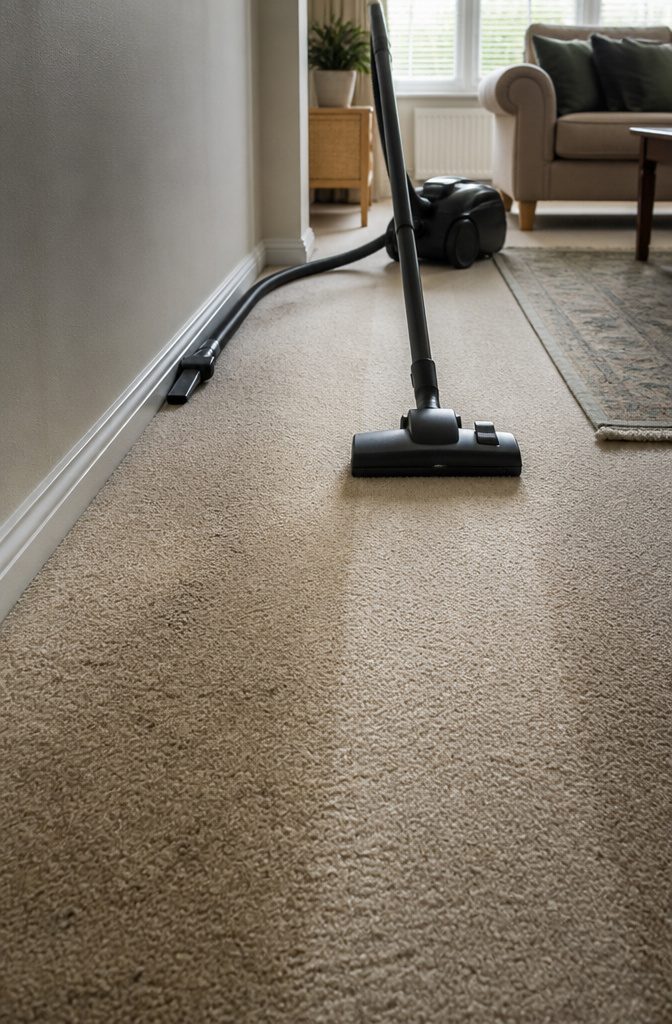
Removing loose dirt with the vacuum comes first, and the reason matters more than you might expect. Between 74% and 79% of carpet soil is dry particulate matter that should come out before any moisture touches the pile.
Skip this step and you turn that dry debris into mud the moment the cleaning machine rolls over it. The dirt gets driven deeper instead of lifting out.
Work slowly.
Make two slow passes over each strip, at about the pace you walk when you are thinking through something, not trying to finish fast. High-traffic areas get extra attention from different angles because those spots hold more embedded soil.
Use attachments along baseboards, stairs, and corners where the main head does not reach well, then go back over the open areas with the full width of the vacuum head.
The machine cleaning that comes after this works only as well as the prep allows. Professionals vacuum before they start, and the difference between a thorough vacuum job and a quick once-over shows up visibly once the carpet dries.
3. Treat Spots Before Deep Cleaning

Before you go after the whole carpet, deal with what spilled.
Agar Cleaning Systems puts the number plainly: roughly 90% of carpet spills can be removed if treated immediately. Once a spill reacts chemically with the dye, the discoloration may lock in for good.
Start by lifting off any solid material carefully, then blot the liquid with a clean white cloth or paper towel. Blot from the outside edge toward the center so the stain does not spread.
Do not scrub. Scrubbing drives the spill deeper into the fibers, pushes it across a wider area, and can mat down the pile.
Apply a tested carpet cleaner sparingly to the cloth, not directly to the carpet, and work it in gently.
More cleaner does not mean better cleaning. You may need to blot several times to lift the spot.
Once it is gone, blot the area with clear water to remove any remaining product. Test any cleaner on a scrap or hidden corner first, even if it carries a laboratory seal.
4. Choose and Apply a Deep-Cleaning Method

For carpet that covers more than a few square feet or looks visibly soiled, a carpet cleaning machine is the faster choice.
Rent or buy one, fill it with hot tap water and a low-suds carpet solution at the dilution printed on the bottle, and work in sections about 3 feet wide.
The pattern that matters is one slow wet pass while you spray solution, moving at about half your normal walking speed so the machine has time to loosen dirt, then two or three suction-only passes over the same section with the trigger released.
Those dry passes pull out moisture and suspended soil; skipping them leaves water sitting in the backing where it breeds odor and pulls old stains back to the surface within a day.
For small areas and light soil, hand cleaning with a spray bottle and a cloth gives you enough control to avoid soaking the pad.
Either way, resist the reflex to add more cleaner when a stain resists. Too much product leaves residue that attracts new dirt, and too much water reaches the backing where drying slows and problems start.
5. Remove Remaining Cleaner and Moisture

Once you’ve cleaned the carpet, make dry passes without dispensing more solution to pull out as much moisture as possible.
If you’re using a carpet cleaner, run it slowly over the same area a second time with the spray trigger released. The machine keeps extracting water and suspended dirt without adding more liquid back in.
For spot cleaning, blot the area with a clean cloth lightly dampened with plain water to lift away cleaner residue, then blot dry with a fresh towel. Replace towels as they get damp.
Skipping the rinse or extraction leaves behind a sticky film that attracts dirt faster than bare carpet would.
A cleaned area that wasn’t rinsed properly can look dirtier within days, and cleaner trapped in the backing holds moisture long enough to risk odor or mold.
I’ve seen carpets that felt tacky underfoot a week after cleaning because the shampoo never came out. A clean-water rinse and thorough blotting prevent that.
6. Dry Completely, Then Vacuum and Reset the Room
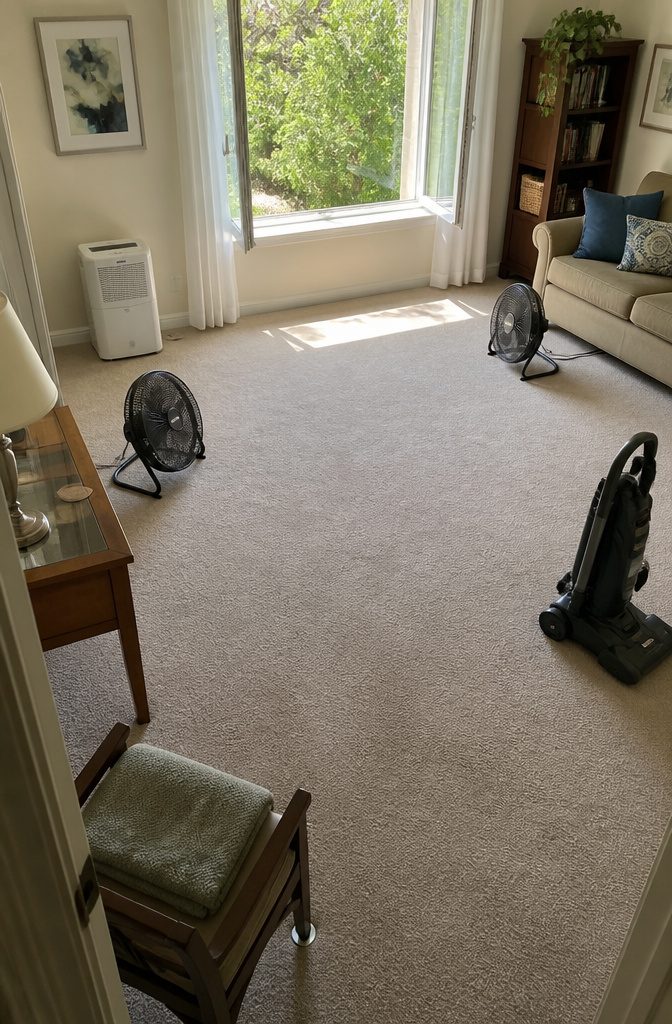
Open windows if the weather is dry, point fans across the floor, and run the air conditioning or a dehumidifier if humidity is high.
The EPA says wet materials should dry within 24 to 48 hours to prevent mold, and properly extracted carpet with good airflow meets that window without trouble.
Keep everyone off the carpet until it feels dry to a firm hand press, usually 4 to 8 hours.
Wait until the carpet is fully dry before moving furniture back into the room.
Wood legs and metal casters can transfer stain and rust into damp fibers, so if furniture must stay in place, slide foil squares or plastic blocks under each leg.
Once dry, vacuum one more time to lift the pile and pull up any soil that wicked to the surface during drying.
7. Maintain the Carpet Between Deep Cleans
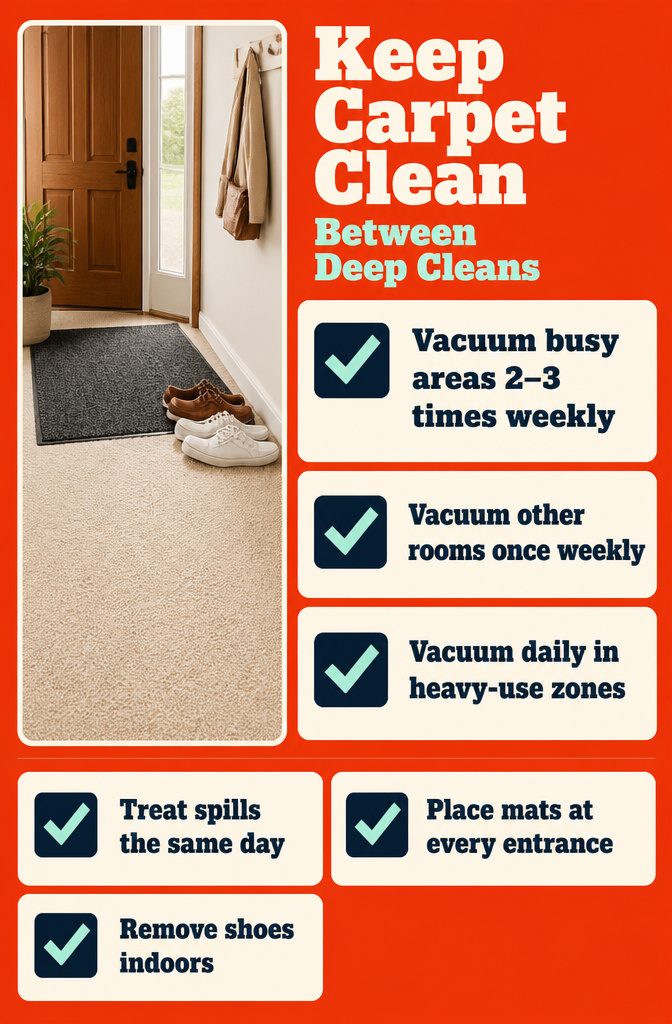
The real work happens between deep cleans. Vacuum high-traffic areas two to three times a week to lift dirt before it works into the fibers, and vacuum the rest of your carpeted rooms once a week.
Homes with pets or children need more frequent passes — daily in the heaviest-traffic zones if shedding or tracked-in mess is constant.
The timing matters because dirt you can’t see yet is already there, settling between fibers where it dulls the pile and wears down backing over time.
Carpets can hide microscopic dust and dirt between their fibers, which can impact your wellbeing. So, it’s important not to wait until your carpet looks visibly dirty before vacuuming.
— Dyson
That invisible load is exactly why a schedule wins over waiting until the carpet looks bad. Treat spills the same day they happen — the longer a stain sits, the deeper it sets and the harder removal becomes.
Walk-off mats at every entrance cut the volume of outdoor dirt that reaches the carpet in the first place, and removing shoes indoors takes that reduction further.
Those three habits together stretch the time between deep cleans without leaving the carpet looking worn or feeling gritty underfoot.
Stain Removal by Type
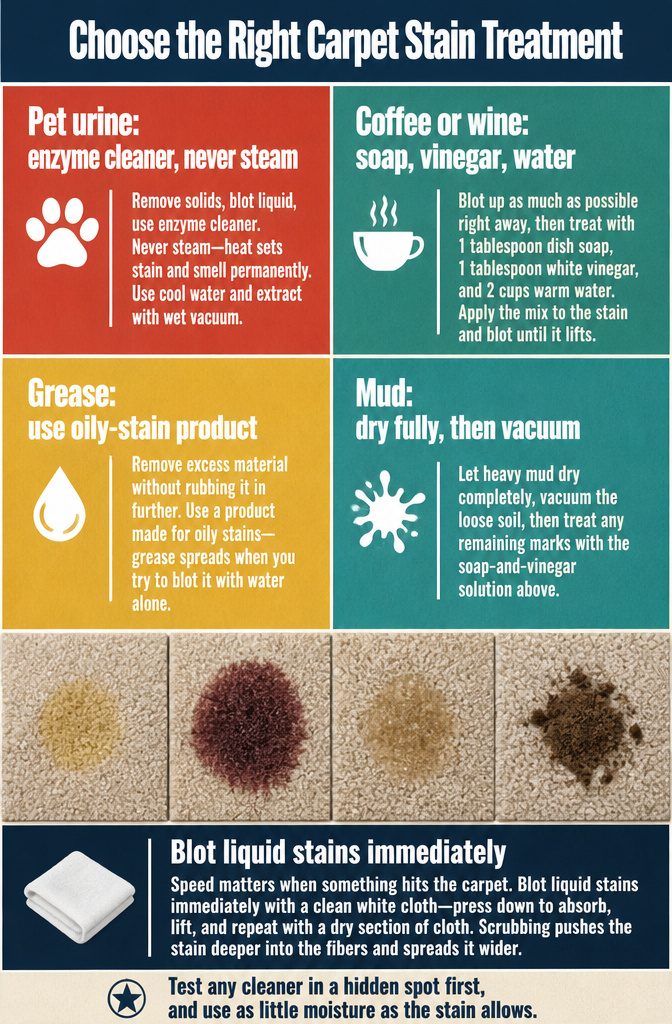
Speed matters when something hits the carpet.
Blot liquid stains immediately with a clean white cloth—press down to absorb, lift, and repeat with a dry section of cloth. Scrubbing pushes the stain deeper into the fibers and spreads it wider.
The cleaning approach depends on what spilled:
- Pet accidents: Remove solids first, blot liquid, then apply a pet-specific enzyme cleaner. Never steam clean urine spots—heat sets both the stain and the smell permanently. Use cool water and extract with a wet vacuum instead.
- Coffee and red wine: Blot up as much as possible right away, then treat with 1 tablespoon dish soap, 1 tablespoon white vinegar, and 2 cups warm water. Apply the mix to the stain and blot until it lifts.
- Grease: Remove excess material without rubbing it in further. Use a product made for oily stains—grease spreads when you try to blot it with water alone.
- Mud: Let heavy mud dry completely, vacuum the loose soil, then treat any remaining marks with the soap-and-vinegar solution above.
Test any cleaner in a hidden spot first, and use as little moisture as the stain allows.
How Carpet Fiber Affects Your Cleaning Choice

Fiber type decides which cleaning methods your carpet can tolerate. Nylon handles routine cleaning well and stands up to most DIY approaches, while polyester resists stains but clings to oily soil.
Olefin, also called polypropylene, sheds moisture easily but attracts grease. Wool and other natural fibers need particular care because excessive moisture, high heat, or the wrong chemical can cause discoloration, shrinkage, or permanent damage.
I always check the carpet manufacturer’s care instructions before choosing a cleaning method.
The label usually identifies the fiber and lists what to avoid. If you skip this step, you risk setting a stain or dulling the pile with a product that was never meant for that material.
Test any cleaning solution in a hidden spot first.
Apply a small amount to a white cloth, blot an inconspicuous area, and wait for it to dry. Check both the cloth and the carpet for dye transfer or color changes before treating the visible surface.
Machine Cleaning Against Hand Cleaning

Machine Cleaning Against Hand Cleaning
A machine makes sense for whole rooms or heavy soil, while hand cleaning handles spots and small areas without the extraction power or the risk of over-wetting.
Owned machines cost $100 to $300 and pay for themselves after a few uses if you have kids or pets that demand cleaning several times a year.
Rentals run $30 to $50 a day plus solution, and rental units are often stronger than budget consumer machines, making them the better pick for once-a-year cleaning.
Professional systems run water between 150 and 210 degrees, which dissolves soil that cooler DIY equipment cannot touch.
Hand methods cost almost nothing and let you control moisture levels safely, but they cannot extract water the way a machine does, so whole-room hand cleaning takes serious labor and drying discipline.
Machines work faster on larger carpeted areas but require good airflow and thorough extraction to avoid leaving the carpet overly wet.
Homemade Cleaning Solutions That Work
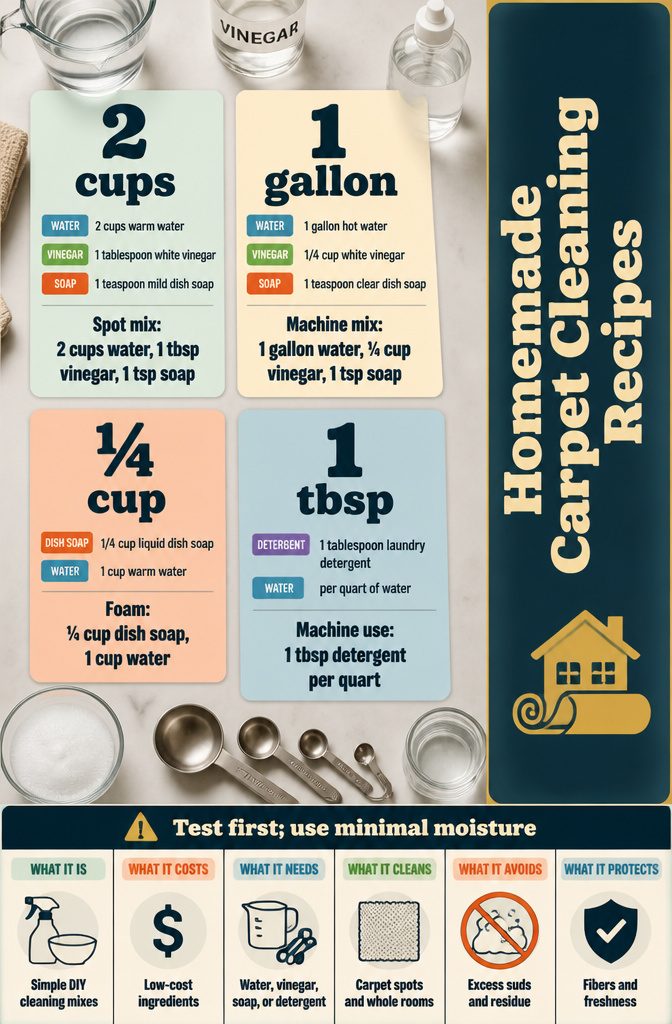
I mix my own cleaners for most carpet work, and these hold up across spot jobs and machine runs:
- 2 cups warm water, 1 tablespoon white vinegar, 1 teaspoon mild dish soap — spot cleaning on light soil. Blot rather than scrub, follow with a clean damp cloth to lift residue, then blot dry.
- 1 gallon hot water, 1/4 cup white vinegar, 1 teaspoon clear dish soap — machine cleaning. Keep soap minimal; excess suds clog machines and leave film that attracts dirt back fast.
- 1/4 cup liquid dish soap, 1 cup warm water, whipped to foam — another spot option, good for working stains before they set.
- 1 tablespoon laundry detergent per quart of water — machine use. Detergent cleans wool, cotton and synthetic fibers the same way it cleans fabric, so it pulls soil without special chemistry.
Test any homemade solution in a corner first.
Apply just enough to clean, not soak. Cleaner left behind in carpet attracts new dirt faster than an untreated spot would.
What Pre-Treatment Does and Why It Matters
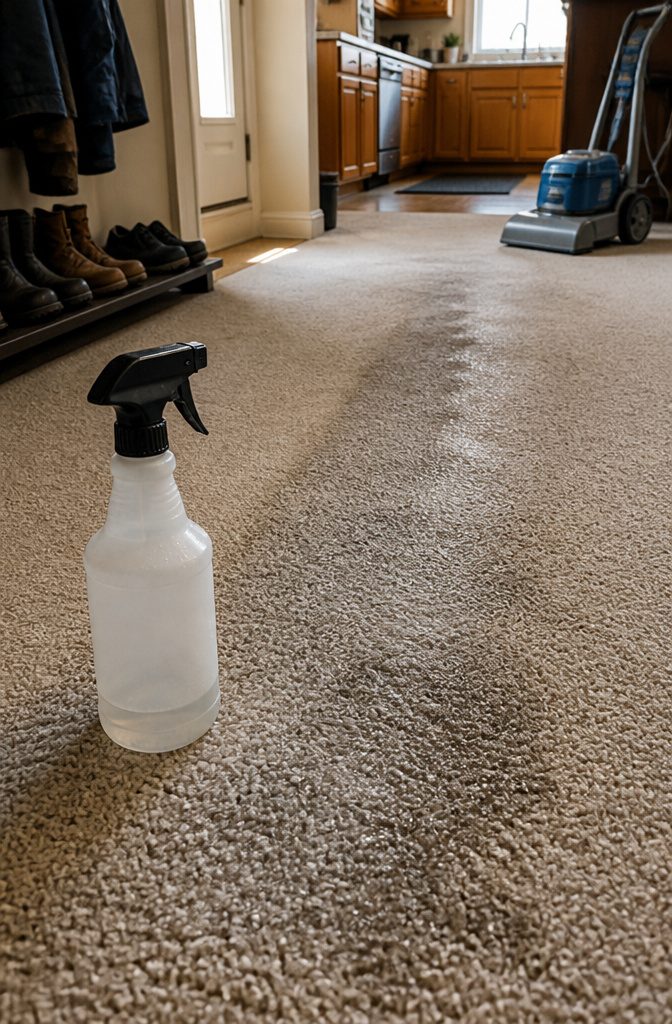
Pre-treatment is a solution sprayed on high-traffic lanes and stained spots before you run the machine.
It breaks down oily soil that plain water and detergent cannot lift on their own, and the chemistry needs 10 to 15 minutes of dwell time to do its work.
Skipping this step cuts your results roughly in half, which means you run the machine twice as long for a carpet that still looks dingy along the hallways and in front of the couch.
I spray it anywhere feet track dirt or skin oils build up: the path from the door to the kitchen, the area in front of the sink, the strip beside the bed.
The pre-treatment does not need to cover every square inch, just the zones that carry the load.
Once it sits for the full dwell, the machine lifts what the chemistry loosened, and the difference shows immediately in how much darker the waste water runs.
When to Call a Professional

Routine home cleaning handles most everyday dirt, but some problems sit beyond what a rental machine or hand method can reach. If the carpet pad stays wet after a full day, extraction was incomplete and mold risk climbs quickly.
A persistent musty odor even after drying tells the same story. Recurring stains that reappear hours or days after treatment mean contamination has soaked through the backing or into the pad, and surface work will not fix it.
Pet accidents that penetrated the pad, flooding, or any contact with contaminated water require professional extraction and often pad replacement.
Delicate or natural-fiber carpets can shrink or stain if treated incorrectly at home, and widespread embedded soil across large areas takes equipment most renters do not own.
The Institute of Inspection, Cleaning and Restoration Certification recommends professional deep cleaning every 12 to 18 months for typical homes, even when spot work keeps the surface looking clean between visits.
Frequently Asked Questions
How often should you vacuum your carpet?
Vacuum high-traffic areas 2 to 3 times a week and the rest of your carpeted rooms once a week.
Homes with pets or children need daily passes in the heaviest-traffic zones if shedding or tracked-in mess is constant. Dirt you can’t see yet is already settling between fibers where it dulls the pile and wears down backing over time.
Should you vacuum after deep cleaning your carpet?
Yes, once the carpet is fully dry. This lifts the pile and pulls up any soil that wicked to the surface during drying.
How long does carpet take to dry after a deep clean at home?
Properly extracted carpet with good airflow dries in 4 to 8 hours. The EPA says wet materials should dry within 24 to 48 hours to prevent mold, and most home cleaning meets that window without trouble.
What is the best homemade cleaner for a carpet machine?
Mix 1 gallon hot water, 1/4 cup white vinegar, and 1 teaspoon clear dish soap. Keep soap minimal because excess suds clog machines and leave film that attracts dirt back fast.
What is carpet pre-treatment, and do you really need it?
Pre-treatment is a solution sprayed on high-traffic lanes and stained spots before you run the machine.
It breaks down oily soil that plain water and detergent cannot lift on their own, and the chemistry needs 10 to 15 minutes of dwell time to do its work. Skipping this step cuts your results roughly in half.
Do professional carpet cleaners vacuum before they start?
Yes.
Between 74% and 79% of carpet soil is dry particulate matter that should come out before any moisture touches the pile. Skip this step and you turn that dry debris into mud the moment the cleaning machine rolls over it.
Can a vacuum alone deep clean carpet?
No.
Vacuuming removes dry soil but not oily grime bonded to fibers. Deep cleaning with hot water and extraction flushes embedded dirt from the full pile depth.
How often should you clean your carpet?
The Institute of Inspection, Cleaning and Restoration Certification recommends professional deep cleaning every 12 to 18 months for typical homes, even when spot work keeps the surface looking clean between visits. Check your carpet manufacturer’s guidance for their specific recommendation.
Does baking soda really clean carpet?
Baking soda can absorb some odors and freshen carpet, but it is not a substitute for deep cleaning or stain treatment.
For visible soil and stains, use a cleaning method appropriate for your carpet fiber and the substance you are trying to remove.
Can I use Dawn dish soap to clean my carpet?
Yes, but use it sparingly.
Mix 1 tablespoon dish soap, 1 tablespoon white vinegar, and 2 cups warm water for spot cleaning. Too much product leaves residue that attracts new dirt, so apply the mix to the stain and blot until it lifts rather than soaking the area.