
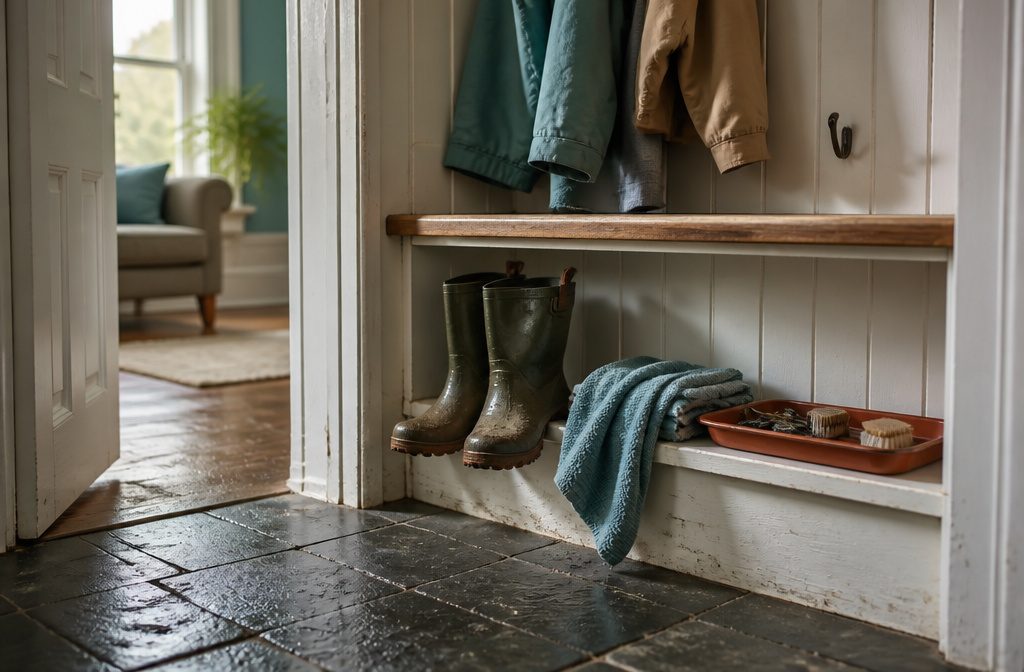
A clean house that stays that way costs 10 to 20 minutes a day, spread across small actions that keep mess from building in the first place.
Most people skip the one part that makes the rest possible: putting items back where they belong instead of setting them down wherever they land.
That single habit stops clutter from reforming faster than you can clear it, and when combined with cleaning as you go—wiping counters while pasta water boils, rinsing the sink after brushing teeth—the daily maintenance never turns into the kind of catch-up session that eats a weekend.
1. Clear Clutter and Give Belongings a Home

Fewer belongings mean less to dust, wipe around, and shuffle when you clean. Surfaces clear faster when there are fewer items sitting on them, and you spend minutes vacuuming instead of hours moving things out of the way.
The storage you have goes further, too, which means less ends up left out in living spaces where it collects dust and looks messy.
Put items back where they belong rather than setting them down. A stapler goes back to the workstation, measuring cups to the kitchen cabinet, shoes to the closet.
That habit alone stops clutter from reforming as fast as you clear it. Leaving out everything you use in a day turns even an organized home into a disaster quickly, and hunting for misplaced items wastes time and money.
Start with one area at a time. Clear the clutter there, give what stays a designated spot, and watch how much less often that space needs attention.
The mess stops regenerating so fast when everything has a place to return to, and you avoid the need for large catch-up cleaning sessions later.
2. Clean as You Go
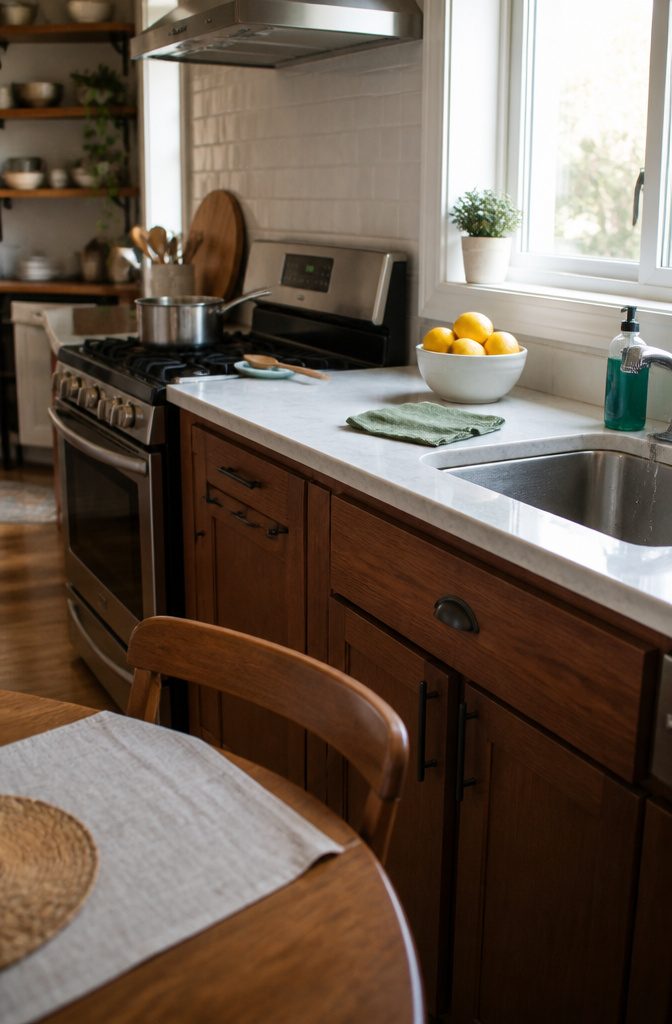
The counter you wipe while the pasta water boils stays wiped. The sink you rinse after brushing teeth in the morning does not need scrubbing on Saturday.
Addressing the visible spot when you see it keeps small messes from turning into the kind of job that needs a block of time and a reason to procrastinate.
I clean surfaces right after use, before anything dries or sets.
Wipe the mirror when toothpaste spray lands on it. Wipe the stove buttons and the dish soap bottle when splatter makes a clean counter look dirty anyway.
If a task takes less than a minute, the thinking takes longer than the doing, so I skip the thinking and just do it.
The method prevents the buildup that makes cleaning feel like catching up instead of maintaining, and a home that gets a little attention all day never needs the kind of deep intervention that eats a weekend.
3. Reset Rooms and Tidy Regularly
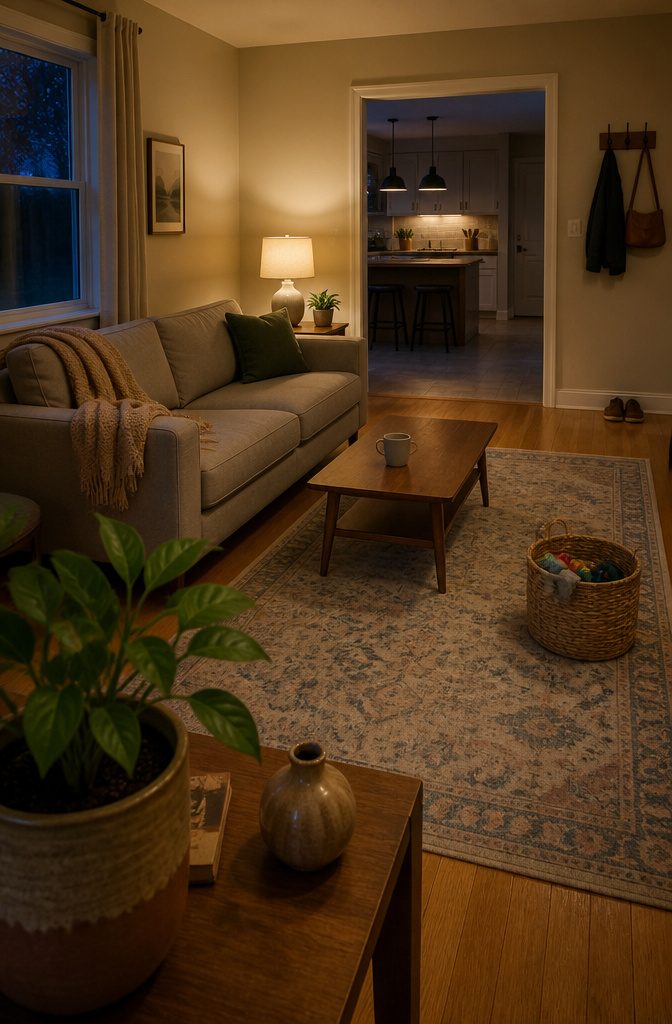
A quick reset before bed keeps mess from building overnight.
I try to spend about 15 minutes each evening walking through the main living spaces and putting things back where they belong: toys in bins, blankets folded or draped, shoes by the door. It’s not a deep clean.
It’s just enough that the kitchen counters are clear and the couch isn’t buried under the day’s layers. The timer keeps it from turning into an hour-long project.
The same idea works in smaller bursts during the day. When I stand up from the coffee table, I carry the mug back to the kitchen instead of leaving it for later.
When I leave a room, I scan for anything that belongs somewhere else and take it with me. A few items at a time beats moving piles around once they’ve grown into furniture.
A 5-minute tidy-up before bed makes mornings feel lighter, and I’ve found that resetting a space right after I’m done using it stops clutter from settling in the first place.
4. Keep Dishes and Kitchen Surfaces Under Control
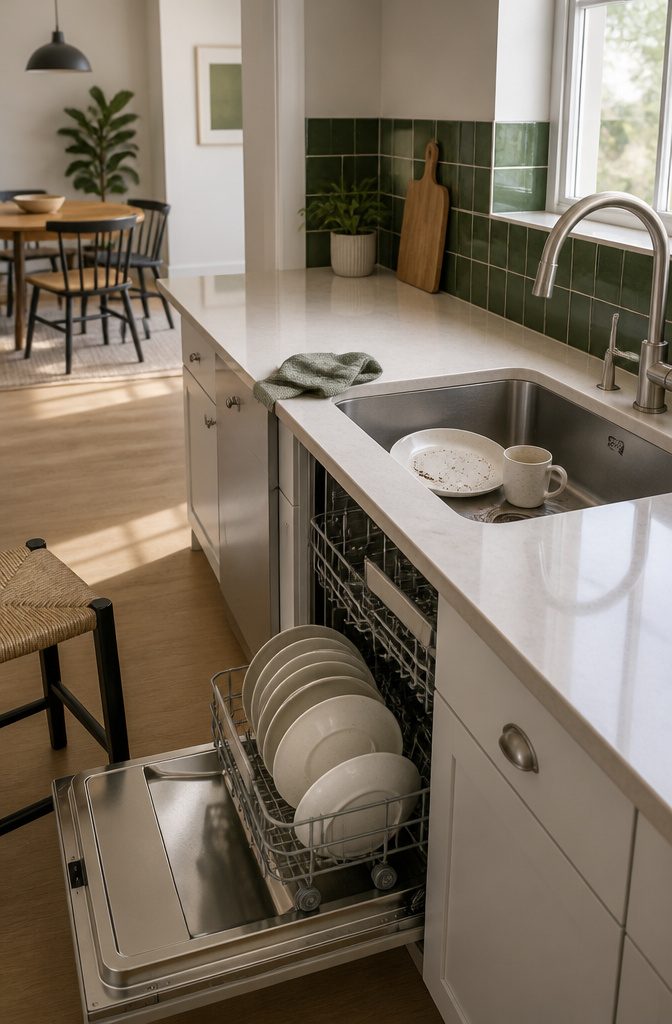
Dishes pile fast in a kitchen that gets daily use, and the cycle breaks the moment clean ones sit in the dishwasher while dirty ones land in the sink.
I load or wash right after a meal rather than letting them stack on the counter, and if the dishwasher is full of clean dishes when I walk in, I unload it first.
The dishwasher uses 3.5 times less water than hand washing, so I use it.
I wipe the counters and the sink after I clear the table.
Bacteria collect on every surface in a kitchen, including stove buttons and appliance handles, so a quick pass with a damp cloth or disinfectant keeps the space from looking or feeling grimy.
The sink gets a rinse to clear crumbs and coffee grounds before they sit overnight. These three actions together take under ten minutes and prevent the kitchen from turning into the room I avoid at the end of the day.
5. Make the Bed
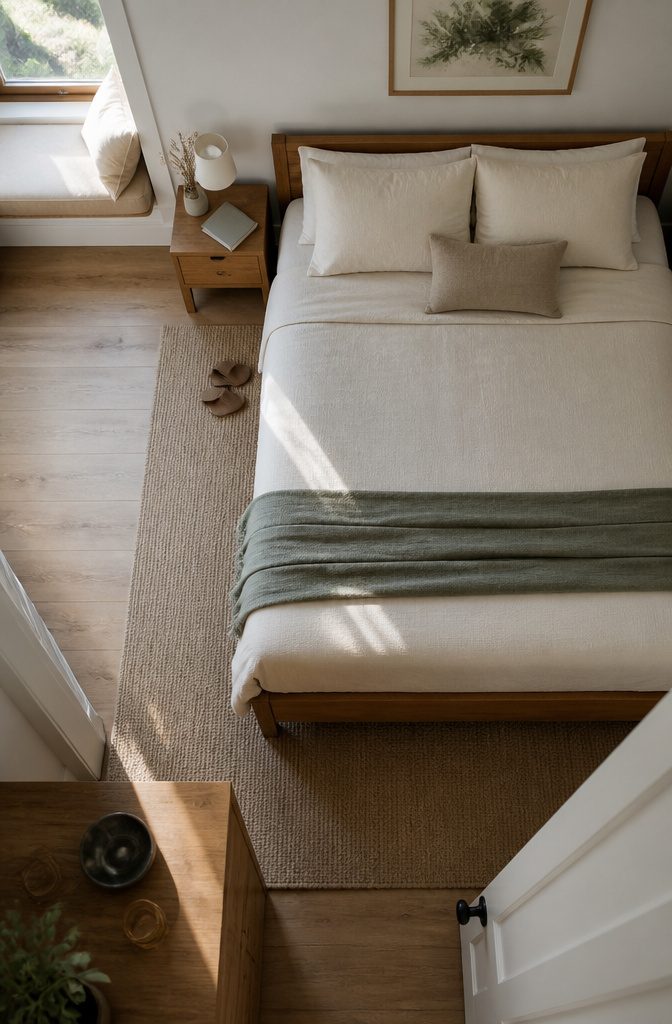
Making your bed takes two minutes and changes how the whole bedroom reads.
The flat surface, the tucked edges — the room looks tidier the second the bed is made, even if nothing else has been touched. That visual order can set the tone before you leave for work.
The numbers back the habit.
In a survey of 68,000 people, 59 percent don’t make their beds and 27 percent do. Among those who make the bed, 71 percent consider themselves happy, compared to 62 percent of non-bed-makers.
Bed makers are also more likely to own a home, like their jobs and feel well rested, while non-bed-makers tend to rent, dislike their jobs and wake up tired.
Correlation isn’t causation, but the pattern holds across enough people to be worth noticing.
An organized space can affect your mental state, and the bed is the largest object in the room. Smoothing the covers costs almost nothing in time and delivers a quick visual reset that carries through the rest of the day.
6. Put Away Clothes and Shoes; Handle Laundry Routinely
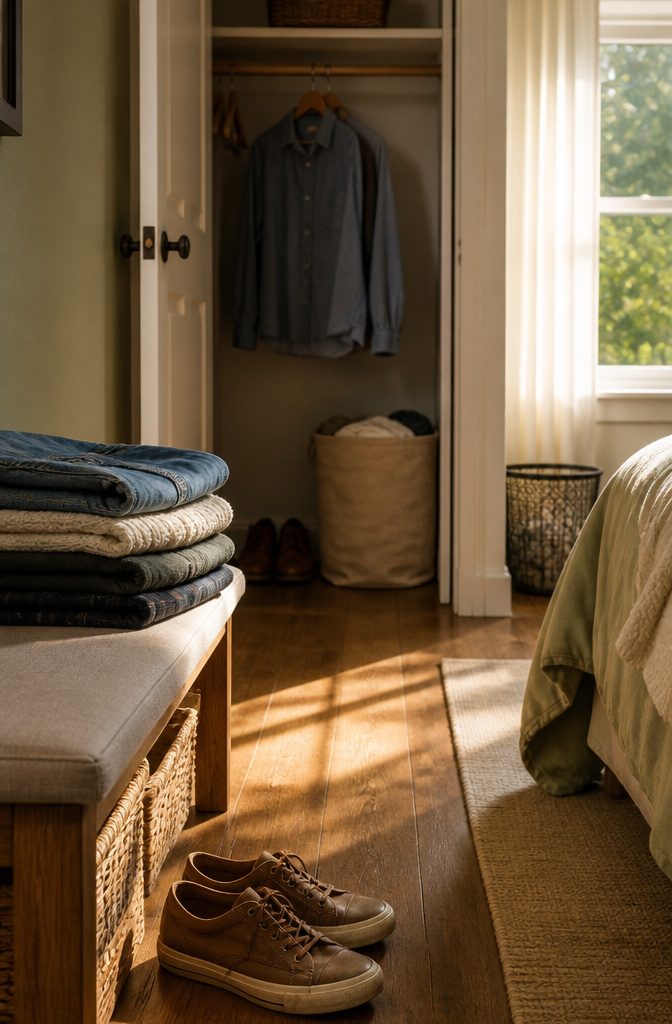
Hanging clothes back up or dropping them straight into the laundry keeps them off chairs and floors, and those are the two surfaces that make a room look messy fastest.
I put clothes away as close to the closet or hamper as possible — taking off a shirt by the bed and carrying it ten feet to hang it up adds friction I won’t maintain past Tuesday.
Laundry schedules vary. Some families run a load every morning to keep baskets from sitting around; others, including mine, do it all in one dedicated day each week and skip thinking about it the other six.
The daily approach works when loads are small and you can fold immediately.
The once-a-week method keeps laundry contained but requires finishing everything — washed, dried, folded, and put away — before the day ends, or you trade daily loads for daily piles of clean clothes that never make it to drawers.
Families doing seven or more loads a week usually lean toward the daily rhythm; smaller households can batch it without the volume becoming unmanageable.
7. Use a Schedule, Plan, or Prioritized Checklist

A schedule lets you distribute the work across the week instead of trying to clean everything at once.
One approach assigns one room to each day and sets a timer for an hour: kitchen on Monday, bedroom and closet on Tuesday, kids’ rooms and playroom on Wednesday, laundry on Thursday, bathrooms on Friday, floors and home office on Saturday.
The order matters. Doing the kitchen early in the week aligns with meal planning, and saving bathrooms and floors for just before the weekend means the house looks its best when guests might visit.
Another way to structure it is by frequency rather than room: daily tasks that take ten to twenty minutes, weekly blocks of thirty to sixty minutes, and monthly sessions of one to two hours.
Grouping this way keeps small maintenance visible and stops it from building into bigger jobs.
Before you start any session, write down what actually needs doing and cross tasks off as you go.
If other people are helping, the list makes it easier to assign tasks. Choosing realistic priorities up front prevents you from stalling halfway through because you tried to do too much at once.
8. Clean in a Systematic Order
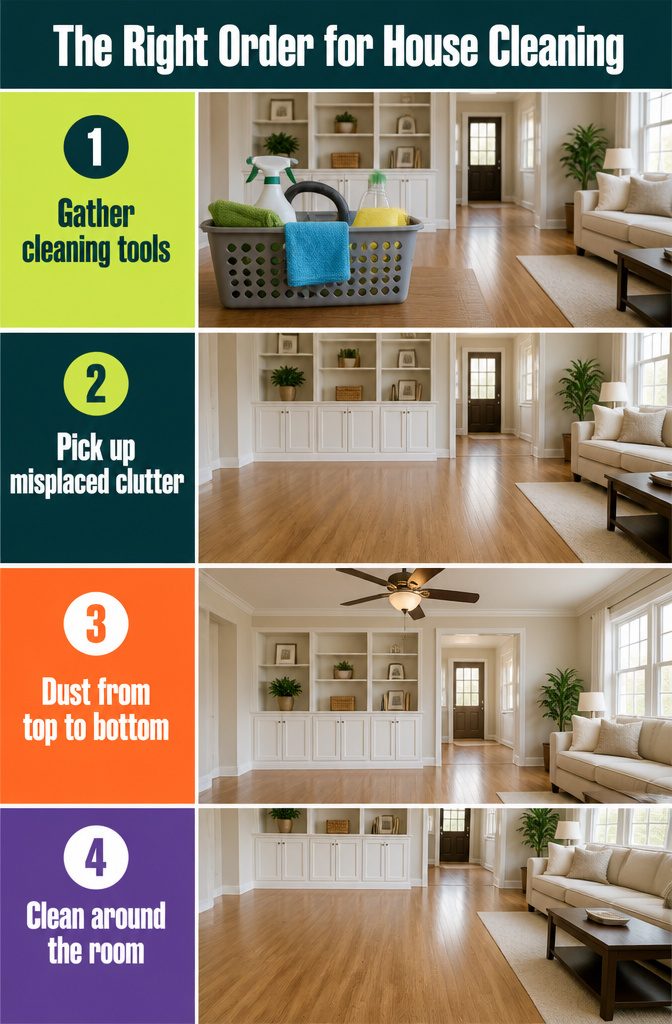
Clean in a Systematic Order
- Gather your tools before you start. Grab whatever you need for the rooms you’re cleaning: all-purpose cleaner, microfiber cloths, vacuum, mop, trash bag, and a basket or bin for collecting misplaced items. Having everything in hand keeps you from losing time running back and forth.
- Pick up clutter first. Walk around the room once and collect everything that doesn’t belong: toys, mail, clothes, dishes. Stage items in groups near the door to put away later. This step makes the room look better immediately and clears the way for actual cleaning.
- Work from top to bottom in each room. Dust ceiling fans, shelves, and countertops before you touch the floor. Go from the ceiling down to the floor so dirt falls where you haven’t cleaned yet, not where you already finished.
- Move around the room in one direction. Start in a corner and work your way clockwise or counterclockwise. Wipe surfaces, then vacuum or sweep, then mop if needed. For floors, begin in the farthest corner and back yourself out toward the door.
9. Focus on High-Traffic Areas and Hygiene-Sensitive Surfaces

Not every surface gets the same attention, and that distinction matters more than most cleaning advice admits.
Entryways and frequently touched surfaces carry the dirt and germs that move through the rest of the house, so cleaning those areas daily or every other day keeps the whole space from getting ahead of you.
Door handles, light switches, countertops, and the bathroom sink all qualify.
A quick wipe with an all-purpose cleaner handles routine maintenance, but knowing when to sanitize or disinfect makes the difference during flu season or after someone in the house has been sick.
Sanitizing kills bacteria to the levels used for public health codes and regulations (it does not kill viruses). You can sanitize surface areas in your home using a diluted bleach solution (1/3 cup of bleach per gallon of room temperature water) or an over-the-counter (OTC) sanitizing product.
Standard cleaning with warm water and soap removes most germs and dirt.
Sanitizing steps it up for kitchen counters and bathroom surfaces where bacteria collect. Mix 1/3 cup bleach per gallon of room-temperature water for sanitizing, or use 1/3 cup bleach per 3/4 gallon of water when you need to disinfect and kill viruses.
For a spray bottle, 4 cups of water with 4 teaspoons of bleach in a 32-ounce bottle works for everyday surfaces. Never mix bleach with vinegar or other cleaners; the vapors are dangerous to breathe.
Entryways benefit from a small area rug or mat to trap dirt before it spreads.
A five-minute sweep or vacuum of these high-traffic zones each day keeps grit from traveling into carpets and corners where it takes real effort to remove.
10. Involve Household Members, Including Children
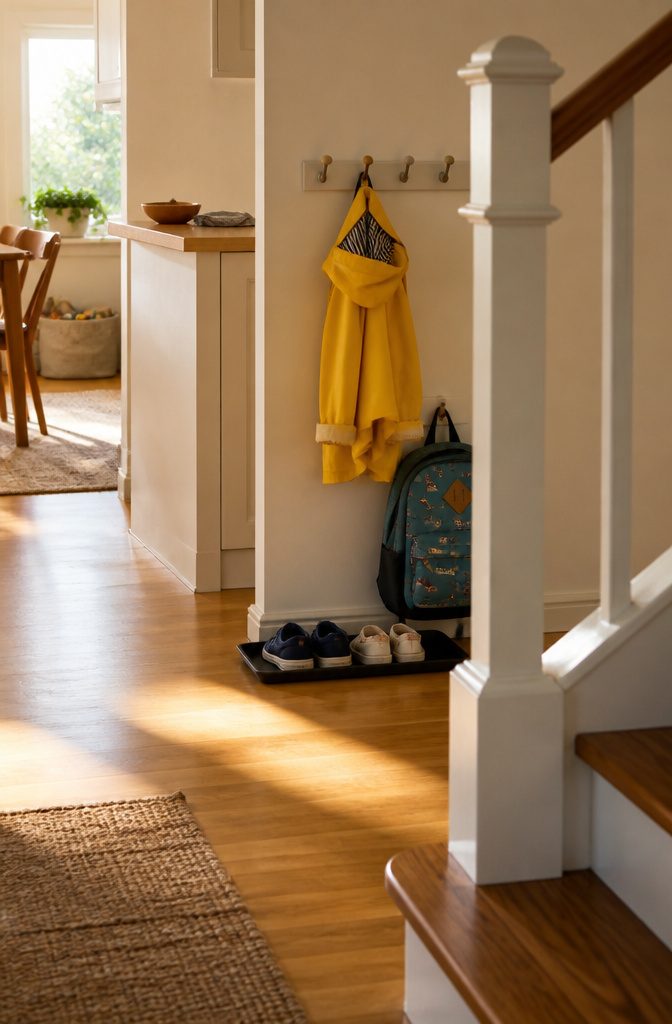
Children who learn to put their belongings away as soon as they arrive home—coat on the hook, shoes by the door, backpack in its spot—eliminate most of the clutter that makes a house look messy an hour after it was tidy.
Teaching age-appropriate chores early means the habit forms before resistance does, and over the first few weeks the reminders taper off as the routine sets in.
A five-year-old can make a bed and clear dishes to the counter; older children handle bathroom wipes, laundry sorting, and room resets without much direction once the system is clear.
A timed family cleanup at the end of the day spreads the load so one person is not shouldering all of it.
Fifteen minutes with everyone working at once—kids in their rooms, an adult finishing the kitchen or folding laundry—covers the top priorities without the resentment that comes from doing it alone.
The timer keeps it bounded, and knowing everyone else is working makes it feel less like a chore.
11. Handle Mail, Paper, and Trash Before They Pile Up

Mail needs a decision the day it arrives. Scan it once, then throw out junk on the spot or file bills where you actually pay them so nothing gets lost.
The same rule applies to newspapers and magazines: decide whether they stay or go before they turn into a stack.
Paper clutter builds faster than almost anything else in a house, and piles on counters or the fridge door make a space look messier than it is.
I clear any incoming paper daily rather than let it accumulate into something that takes twenty minutes to sort later.
A single counter or inbox for papers works if you empty it every day, but letting it sit for three or four days turns one pile into five.
Trash follows the same pattern. Taking it out regularly before the bin overflows or bags collect near the door keeps the house from looking neglected, even when everything else is clean enough.
12. Accept Clean Enough and Prioritize
Perfection is not the standard here. I aim for clean enough: I can find what I need when I reach for it, the space is safe and hygienic, and walking in feels calm rather than chaotic.
If those boxes check, the house is doing its job, and I call that a win.
Not every surface needs attention at the same time. I write down my top 2 or 3 realistic cleaning goals for the time I actually have, then stick with those before anything else.
The 80/20 rule holds: most of the visible order comes from a few high-impact habits, and the rest can wait for a deeper session later.
Baseboards and ceiling corners matter far less than counters and floors when I am moving through the day, so I let those slide until I carve out time for detail work.
Chasing spotless in every room at once is how I end up doing none of it well.
13. Keep Useful Supplies and Tools Close at Hand

I keep a basic cleaning kit in each room where I actually use it: bathroom cabinet, kitchen drawer, bedroom closet. That way I’m not hauling supplies across the house every time something needs a quick wipe.
A simple kit covers most surfaces:
- Microfiber cloths — reusable, no waste, and they grab dust better than paper towels
- Multipurpose spray — vinegar and water with a couple drops of essential oil works for counters, mirrors, and most hard surfaces
- Melamine sponges — optional, but I keep a few around (skip the name-brand Magic Erasers; they’re the same thing at three times the price)
- Baking soda — for anything that needs scrubbing
- Dish soap — handles grease and grime
- Toilet brush — one per bathroom
No closet full of specialty products, no guessing which bottle does what. Following the directions on the product label prevents waste and keeps you from using too much or too little to actually work.
Why Small Routines Prevent Catch-Up Cleans
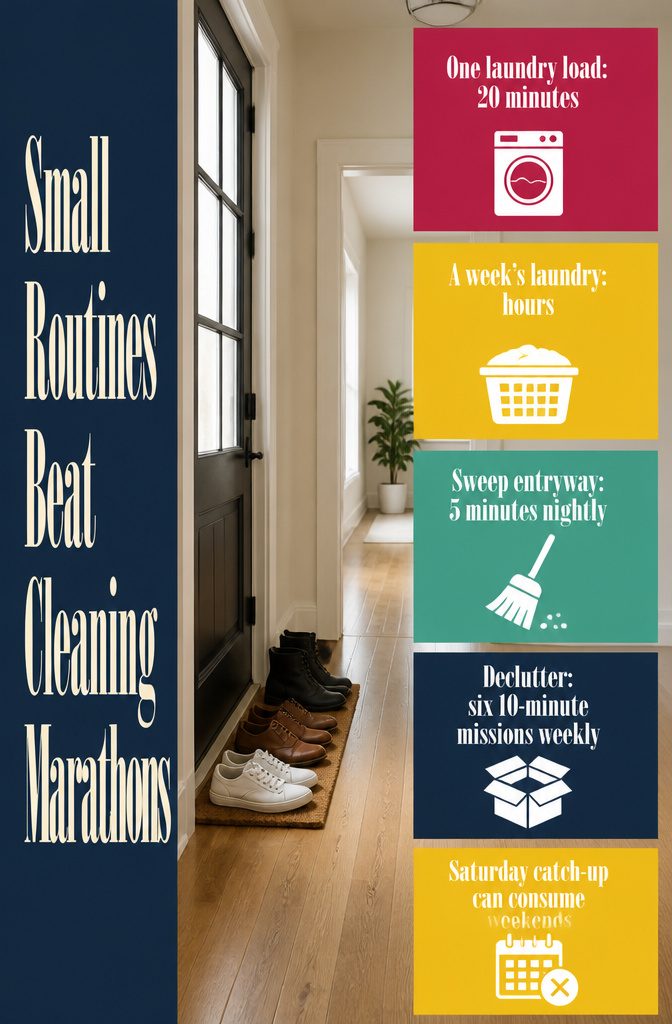
Every source on this list recommends the same strategy: break cleaning into small, regular tasks instead of waiting for a catch-up session. The logic is simple.
A single load of laundry takes twenty minutes; a week’s worth takes hours. Five minutes sweeping the entryway each evening stops dirt from spreading through the rest of the house.
When you ignore the work until Saturday, you’ve just committed your entire weekend to tasks that could have disappeared into the margins of a weekday.
I’ve seen this play out with decluttering, too. Six short decluttering missions per week—ten minutes each—clear a home faster than one marathon session, because the smaller tasks actually happen.
You finish them, and the momentum carries you to the next one. A four-hour block on the calendar gets postponed, then skipped, then the mess regenerates and you’re back where you started.
The principle holds across every room: clean as you go, and the mess never gets big enough to need catching up on.
Appearance Problems That Cleaning Alone Will Not Fix

Some things that make a house look dirty have nothing to do with how often you clean.
Old outlet and switch covers tell the room’s age no matter how much you dust, and nail holes catch the light every time you walk past.
Dirty light covers dim the whole space, and discolored grout reads as grime even when it isn’t.
What actually fixes these:
- Outlet and switch covers: Replace them. Almond-colored or paint-spattered covers from decades past won’t respond to cleaning.
- Nail holes: Fill with spackling compound, smooth with a small putty knife, let dry, then touch up with a small paint brush and paint that matches the wall.
- Light covers: Once a year, take down all the glass covers and globes and wash them in soapy water. They come back sparkling and the house looks brighter.
- Grout: If it’s discolored rather than dirty, cleaning won’t change the color. Grout Refresh works as both a colorant and a sealer to cover the staining.
Frequently Asked Questions
How do I keep my house clean at all times?
Clean as you go instead of waiting for mess to build.
Wipe counters and mirrors right after use, put items back where they belong instead of setting them down, and do a quick 15-minute reset each evening to clear surfaces and return belongings to their spots.
These small habits prevent the buildup that turns into hours of catch-up work later.
What are 10 rules to keep my house clean?
Clear clutter and give everything a home. Clean as you go by wiping surfaces right after use.
Reset rooms nightly with a 15-minute tidy. Keep dishes and kitchen surfaces under control by loading or washing right after meals.
Make the bed every morning. Put away clothes and handle laundry on a set schedule.
Use a cleaning schedule or checklist to distribute work across the week. Clean in systematic order from top to bottom.
Focus daily attention on high-traffic areas and frequently touched surfaces. Involve all household members in age-appropriate tasks.
What is the 5 5 5 rule for decluttering?
Six 10-minute decluttering missions per week clear a home faster than one long session because the smaller tasks actually get done and the momentum carries you forward.
A 4-hour block on the calendar gets postponed and skipped, then the mess regenerates.
What is the 1% rule of cleaning?
It does recommend the 80/20 principle: most of the visible order in your home comes from a few high-impact habits like clearing counters, making the bed, and handling dishes daily. The rest can wait for deeper sessions later.
Is your home clean enough?
Your home is clean enough if you can find what you need when you reach for it, the space is safe and hygienic, and walking in feels calm rather than chaotic.
Perfection is not the standard, and chasing spotless in every room at once is how you end up doing none of it well.
How often should you replace your air filters?
Basic fiberglass air filters need replacement every 30 days. Pleated filters typically last 90 days, but drop that to 60 days if you have pets, allergies, or live in a dusty area.
Check the product packaging for the recommended interval, and replace sooner if you see visible dirt buildup or notice higher energy bills.
How to clean a kitchen sponge?
Run your sponge through the dishwasher with a high temperature and drying cycle, or wet it and microwave for 1 to 2 minutes to kill germs.
After every use, rinse and squeeze the sponge, then store it where it can air dry. A sponge that stays wet harbors mold and thousands of bacteria if not cleaned or stored properly.