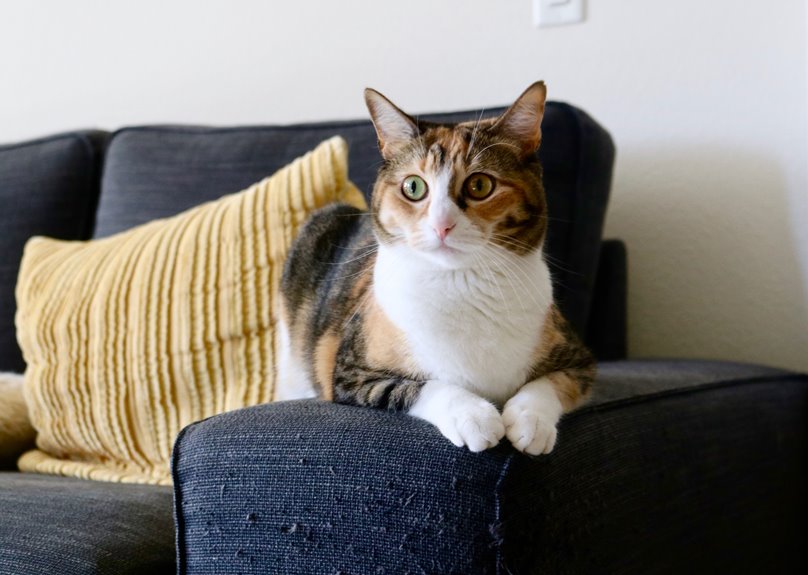
I grab paper towels fast when I spot fresh cat pee. Blot, don’t rub, or you’ll push that ammonia deeper into the foam. Thick, cushiony towels soak up everything possible, then I mist equal parts white vinegar and warm water before hitting it with enzymatic cleaner to destroy odors at the molecular level. Heat sets the stink permanently, so skip the hairdryer. Use fans and allow 24 to 48 hours of air-drying. Check care labels first because the “W” or “S” code determines whether your sofa can be saved.
Blot Fresh Cat Urine Before It Sets in the Couch

Why panic when you catch Fluffy mid-crime? I’ve been there, coffee in hand, watching that telltale squat happen in real-time. Act fast. Grab paper towels, thick and cushiony ones, and start blotting immediately. Press down, don’t rub, because rubbing pushes that ammonia-smelling liquid deeper into the fibers where it becomes a permanent fixture.
After you’ve soaked up everything possible, lightly mist the spot with equal parts white vinegar and warm water. This pre-treatment starts odor neutralization before the real cleaning happens. Then comes the enzymatic cleaner. Pet-specific enzymatic cleaners contain biological enzymes that literally eat the uric acid crystals, destroying smells at the molecular level. Follow the dwell time exactly. Patience prevents incomplete breakdown of odor-causing compounds. Skip the hairdryer; heat sets stains and odors permanently. Air-dry only, always.
Check Your Care Label: Can You Wash the Covers?

I always flip my cushions hunting for that tiny fabric tag, which is often hidden under zippers or tucked in seams. Once I spot it, I’m squinting at those cryptic letters: W means I’m safe with water, S sends me running from my spray bottle, and X means the fabric requires professional cleaning. Before I go wild with any cleaner, though, I’m dabbing a hidden corner. Nothing is worse than a bleached-out patch where my cat’s favorite nap spot used to be.
Locate Fabric Care Label
Where do we even begin with this mess? I’ve been staring at that stain, wondering if I’m about to ruin everything. First things first: find your fabric care label. It’s usually hiding under the cushions, along the back seam, or tucked beneath the frame. This tiny tag holds the key to successful cleaning.
- Picture yourself lifting that squishy cushion, sunlight hitting the dust motes, fingers brushing against rough canvas edges.
- Spot the white rectangle stitched there, slightly yellowed, mysterious as a treasure map.
- Read those cryptic letters—W, S, WS, X—each one indicating your cleaning method.
- Feel that rush of relief when you realize you have specific guidance after all.
Those care instructions aren’t suggestions; they’re essential guidelines. Following them means choosing the right cleaning method, saving your sofa and your security deposit. Ignore them, and you risk permanent damage to your furniture.
Identify Cleaning Code
So now I’m squinting at this tiny tag like it’s going to reveal my future, right. This little fabric care label is everything when you’re tackling cat urine on your beloved sofa. I’m hunting for the cleaning code, that single letter that decides my whole battle plan. W means I’m golden with water-based solutions, like that vinegar mix we’re all praying works. S. Suddenly I’m solvent-only, no shortcuts. WS gives me options (blessed flexibility.), but X means I’m calling the pros, no debate. I’ve learned the hard way that ignoring these codes destroys more than dignity; it ruins velvet, warps suede, turns your statement piece into a cautionary tale. The tag prevents costly damage to delicate fabrics that cannot be replaced once compromised.
Test Before Treating
Why rush into battle without scouting the terrain first? I’ve learned this the hard way. That “oops” moment when your cleaner eats a hole in velvet is not fun. Before I touch a single drop to your precious sofa, we’re doing reconnaissance together.
- Flip that cushion, find the care label hiding like a shy cat under the bed
- Decode those cryptic letters. W means water’s welcome, X means hands off completely
- Dab a tiny patch-test behind the skirt where nobody judges
- Watch, wait, and observe whether the fabric keeps its gorgeous color
Your sofa’s telling a story, and I’m listening. That patch-test isn’t paranoia; it’s protection. Whether your cleaner’s vinegar-fresh or solvent-strong, we’re protecting your cozy sanctuary first. No regrets, just results, and a couch that still feels like yours.
Wash Removable Covers to Remove Cat Pee Smell

I’ve wrestled with pee-soaked cushion covers more times than I’d like to admit, and the prep work makes or breaks this whole operation. First, check zippers, shake out loose litter crumbs, and handle that gritty business. Then use my go-to machine washing steps with cold water, since hot water sets the smell. Finally, dry and reassemble everything carefully to avoid baking the smell into the fabric, because nobody wants a sofa that smells like a litter box masked by perfume.
Pre-Treatment Preparation
Where do I start when my cat has turned my sofa into their personal bathroom? The panic is real, but speed saves your sanity when dealing with cat urine and upholstery. I’m stripping those covers off faster than my cat knocked over my coffee this morning.
- Yank off every removable cover, pillowcase, and throw blanket before that ammonia smell becomes permanent furniture
- Check those tiny care labels (W, S, WS) carefully. X means professional help is required
- Dab, don’t rub, the soaked spots with cold water, watching the yellow fade slightly
- Hang everything outside, sun-bleaching that stubborn odor removal into submission
This approach prevents permanent damage to your furniture and eliminates lingering odors effectively.
Machine Washing Steps
Now that I’ve got those covers off and soaking up sunshine, it’s time for the washing machine. I check my sofa’s care label first because nothing stings worse than shrinking your favorite cushion cover into a dollhouse accessory. W means I’m golden, WS needs gentle handling, and S sends me straight to plan B.
I blot every trace of cat urine with old towels first, pressing, not rubbing, because I’m not trying to tattoo the smell deeper. If my label allows, I work enzymatic cleaner into the worst spots with a soft brush, letting it sit while I prep the load.
Warm water, regular detergent, plus one cup of white vinegar is my solution against stubborn odors. I run the cycle, then sniff-test before celebrating. Still funky? I wash again. Persistence removes cat urine effectively.
Drying and Reassembly
Once the spin cycle finally stops its aggressive humming, I’m practically bouncing to pull those covers out because damp fabric is basically a welcome mat for every odor I just fought so hard to banish.
- I drape these freshly washed pieces over a drying rack in bright, moving air, watching sunlight filter through their weave like victory banners.
- I mist any lingering doubts with my trusty 1:1 vinegar spray on breathable fabrics. That sharp scent evaporates into nothing as I blot enthusiastically.
- I press my palm against cushion foam until it feels desert-dry, with no cool spots hiding moisture, because moisture is the enemy we’re all fighting together.
- I only reassemble when every fiber sings dryness, clicking zippers home with complete satisfaction.
Clean Non-Removable Cushions With Vinegar or Enzyme
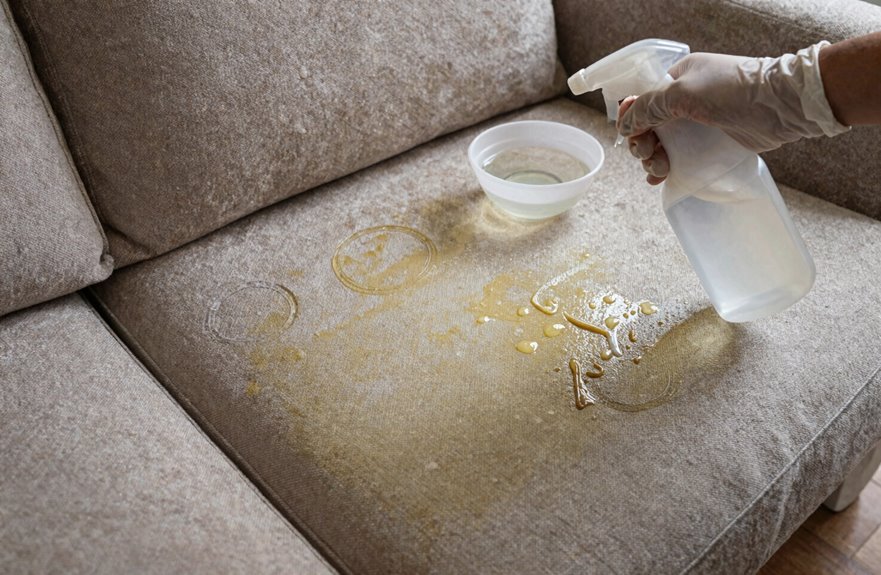
If you’ve ever lifted a non-removable cushion and felt that telltale dampness, or caught that sharp, ammonia sting that makes your eyes water, you know cat urine on non-removable cushions demands action fast.
Test hidden spots first to avoid damage to visible surfaces. Then douse the stain with white vinegar, sprinkle borax like seasoning, and wait. The borax pulls moisture and kills odor.
If the smell persists, saturate the area with enzymatic cleaner such as Nature’s Miracle or Simple Solution. Let it dwell 10-15 minutes, then blot thoroughly. Air dry completely for 24-48 hours. Wet foam reactivates odor, so complete drying is essential.
Extract Urine Smell From Couch Foam (Under Covers Too)

Non-removable cushions are one thing, but that smell wafting up from deep inside the couch. That’s where uric acid hides, stubborn little crystals waiting to bloom again.
Uric acid doesn’t stay on the surface—it burrows deep, crystallizing in foam, waiting for humidity to wake it.
I’ve stripped covers, stared into the foam abyss, and wondered if my sofa was doomed. It wasn’t.
- Saturate that foam with enzyme cleaner, really soak it, until the liquid pools dark and promising
- Wait, pace, peek at the clock. Those 10–15 minutes feel eternal
- Blot gently, like dabbing tears from a friend’s cheek
- Set fans blasting, cross every finger for foam drying
Skip the hairdryer. Heat traps odors forever. Airflow drying prevents the odor from returning, and properly dried foam eliminates the uric acid crystals that cause recurring smells.
Dry the Couch Completely to Lock Out Odor
Why does that faint ammonia ghost always return exactly when I’ve declared victory. Lingering moisture reactivates those sneaky uric acid crystals, and urine odor strikes back.
My battle plan: I lift every cushion, peel back covers, and let that foam breathe like it’s been underwater for days. I position fans blasting strong airflow for 24 to 48 hours. No heat, friends; heat sets the stink permanently. For removable covers, I wash and dry completely before reassembling, because trapped moisture is the enemy.
When upholstery won’t budge, I blot obsessively, apply enzymatic cleaner generously, and create open airflow everywhere. Sometimes I haul out a dehumidifier, too. Drying completely is the difference between a fresh couch and that embarrassing whiff when guests sit down.
Keep Your Cat From Peeing on the Couch Again
So here’s the real question I’ve been avoiding: am I just going to scrub pee forever like some kind of cleaning Sisyphus? No way. I’ve learned that real prevention means outsmarting my cat, not just out-cleaning them.
First, I hunt down every trace of old cat urine with a black light, which is gross but necessary, because one missed spot means my couch becomes a target again. Then I drench everything in enzymatic cleaner, letting it really soak in with no shortcuts. I skip ammonia completely (learned that the hard way) and never apply heat until every smell is truly gone.
For lasting prevention, I’m all in:
- Slipcovers I can actually wash, because accidents happen.
- Strategic litter boxes, placed where my cat feels safe and seen.
- Training pads tucked in favorite corners, just in case.
- Pet-repellent sprays that make the couch smell boring, not inviting.
We’re in this together, and our sofas will survive.