
I’ve installed luxury vinyl plank in three homes. You’re looking at $9 to $14 per square foot total: rigid-core planks running $6–$12, labor at $1.50–$4 (significantly more if your subfloor needs repair), plus underlayment, waste, and disposal fees that add up quickly. Skip the bargain-bin $2 stuff, as it clicks poorly and sounds hollow. My powder room cost $1,145 for 134 square feet.
Pattern choices like herringbone, regional pricing differences (such as Missouri pricing), and whether you DIY or hire professionals all affect the final cost. Budget carefully, as expenses accumulate faster than expected.
LVP Installation Cost Per Square Foot (2025 Data)
How much will this actually cost? It’s natural to wonder about your budget when reviewing samples.
How much will this actually cost? It’s natural to wonder about your budget when reviewing samples.
For luxury vinyl plank, installation costs are running $9.16 to $13.63 per square foot in 2026 estimates, with materials and labor combined. Regional pricing in Missouri showed a $9,500 labor-only quote for 1,000 square feet, which represents labor costs alone.
Material price bands stretch from basic at $2–$3.50 per square foot to rigid-core options hitting $6–$12+, with top-tier products reaching $15. Your cost per square foot varies based on floating vs glue-down installation (glue-down costs more), subfloor prep requirements, and whether you’re choosing straight lay or fancy herringbone patterns.
Add 10% for waste and overage. Get three project quotes minimum.
Material vs Labor: What Drives LVP Pricing
Why does one LVP quote hit $6 per square foot while another soars past $15? LVP pricing splits into two major cost categories: material costs and labor costs, both of which significantly impact your budget.
That gorgeous luxurious vinyl plank with a thick 20+ mil wear layer is stunning, indestructible, and costs roughly $4–$12+ per square foot before installation. Meanwhile, basic options run $2–$3.50, which works well for quieter spaces.
Installation complexity adds substantial costs. Subfloor prep, moisture barriers, and tricky patterns increase expenses. A herringbone installation, for example, can add 15% waste and overage. Labor costs range from $1.50 to $4.00 for basic rooms, reaching past $12 when conditions become more challenging.
Bulk purchase savings do exist, though quotes vary significantly by region. A Missouri project quoted $9,500 for 1,000 square feet in labor costs alone. Comparing multiple quotes from local contractors is essential before committing to any project.
Room-by-Room LVP Installation Costs
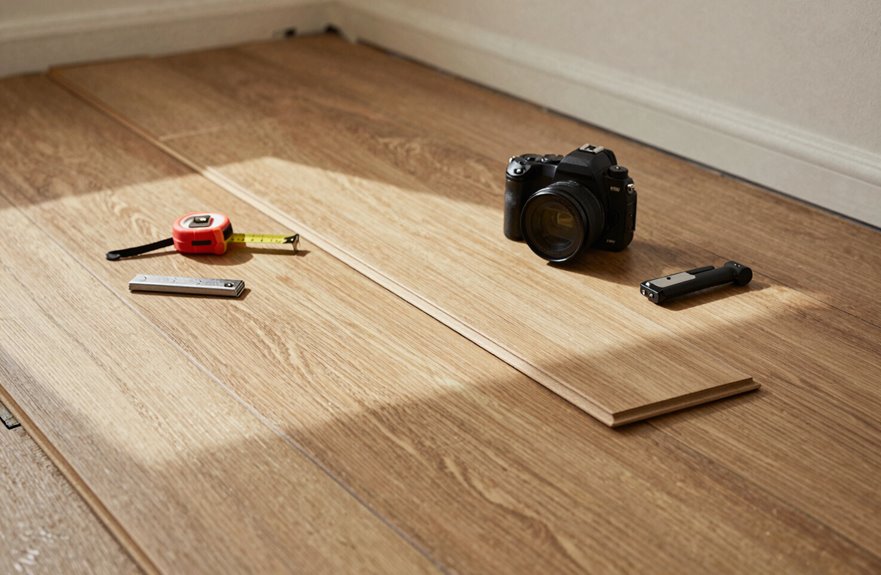
Where exactly are you dropping these gorgeous planks? That question changes everything about your LVP installation cost. Room-by-room costs aren’t just about square footage; they’re about installation complexity.
A cozy 200 sq ft bedroom might run $700–$1,500, but open-plan spaces demand more cuts, more time, and higher labor cost per sq ft. Pattern and space matter too. Herringbone patterns in kitchens look gorgeous but increase the per-square-foot rate significantly.
Higher-cost rooms often need removal and asbestos handling, adding $500–$1,500 to your budget. National averages hit $6.91–$11.81 per square foot, but your specific space will have its own pricing structure based on its unique characteristics.
DIY or Hire Out? Real LVP Labor Costs
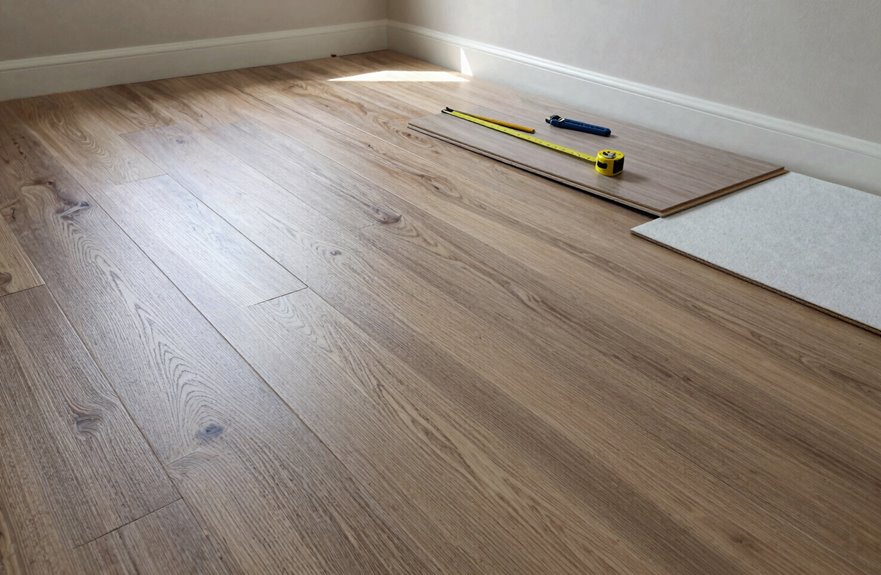
So you’re standing in that dusty, half-empty room, planks stacked in the corner, and wondering if you’ve got what it takes. I’ve been there, measuring tape in one hand, YouTube tutorial paused on my phone, convinced I can handle a click-lock system.
DIY drops your LVP installation costs to $2–$6 per square foot, but subfloor preparation isn’t glamorous. Professional labor runs $4–$9+, glue-down installation hits $5–$12+, pushing total installed cost per square foot to $3–$15+.
DIY saves money at $2–$6 per square foot, but professional labor and glue-down methods can push costs to $3–$15+ per square foot installed.
- Dust motes dancing through afternoon light as you pry up stubborn old carpet
- Relief when moisture barriers finally seal that basement smell
- Sweat dripping on underlayment while transition strips test your patience
- The moment you realize removal of existing flooring involves mystery stains
- Either pride swelling or defeat when quotes arrive
The decision between DIY and professional installation depends on your timeline, skill level, and the cost difference you can absorb if mistakes occur.
Why Your LVP Quote Might Double
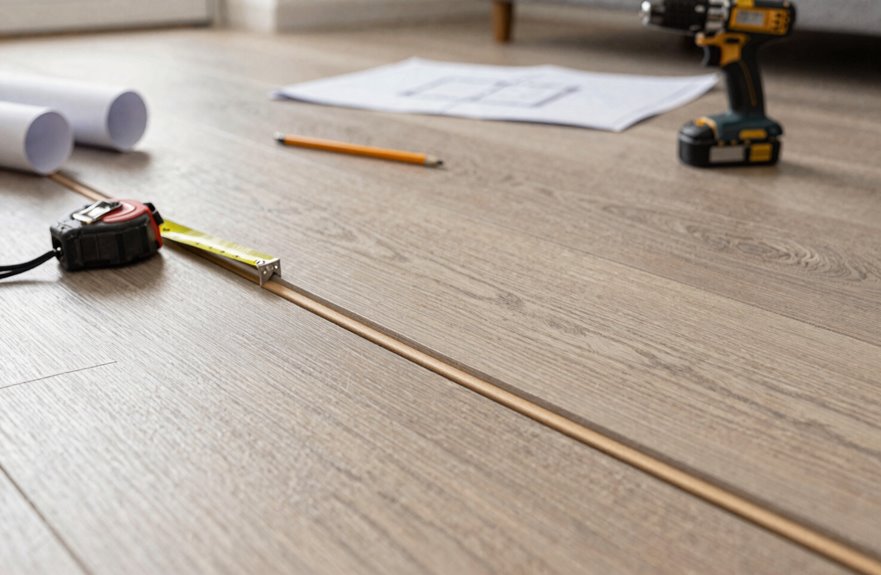
You thought you had it figured out—$4 a square foot, maybe five, totally manageable—until that contractor slides a number across the table that makes your coffee go cold. I’ve been there, staring at numbers that looked like typos, and pricing for LVP installation quotes can balloon significantly.
That herringbone layout you saw on Pinterest. Gorgeous, but it doubles waste and cutting time. Labor costs spike with regional pricing; my Missouri quote crushed my Florida friend’s estimate. Then there’s subfloor prep, moisture barriers, underlayment stacking up, and if they find asbestos. Asbestos removal and disposal costs will impact your budget considerably.
| Budget Killer | Why It Hits Hard | My Reality Check |
|---|---|---|
| Herringbone layout | 30%+ more material, endless cuts | Worth the cost, though expensive |
| Subfloor prep + underlayment | Hidden foundation work | Like buying a dress, needing shapewear |
| Asbestos removal | Specialized, legal disposal costs | My 1970s kitchen betrayed me |
| Regional pricing | Local labor markets vary wildly | Small town = small pool, big bills |
Always demand line-item breakdowns. Getting blindsided by hidden costs is avoidable with proper documentation and detailed estimates upfront.
How to Negotiate LVP Installation Quotes
I always grab at least three quotes before signing anything, and I make sure each one breaks down every single cost: materials, labor, underlayment, removal, and disposal. This prevents misunderstandings later. Many contractors fail to mention subfloor prep or transition strips until work is underway. Ask directly about these items: Is a moisture barrier included? What about baseboards? One quote may appear cheaper initially, then additional charges emerge for old carpet hauling that should have been covered in the original estimate.
Compare Multiple Quotes
Where exactly does your money go when that LVP quote lands in your hands? I learned that obtaining multiple quotes isn’t just about finding the cheapest option. It’s about understanding what you’re actually paying for.
When I compared my recent bids, I discovered wild line-item details hiding everywhere. One contractor snuck in removal costs we’d missed. Another forgot to mention underlayment included or not. Moisture barriers sometimes are extra, sometimes buried in fine print. I’ve seen transition strips priced like gold, subfloor prep that doubled the estimate, and debris disposal fees that created significant cost surprises.
Here’s what to hunt for now:
- A complete breakdown showing every penny
- Whether old flooring removal includes asbestos testing
- Hidden equipment rentals lurking in the estimates
- Cleanup and site protection costs
- Regional labor rates, especially that tricky Missouri cost variation
Your wallet will benefit from this careful review.
Clarify Scope Details
How exactly do contractors keep getting away with vague quotes that leave us guessing? I’ve learned the hard way, and I’m here to save you the headache.
When I negotiate, I nail down every LVP installation scope detail. Does your quote include underlayment and moisture barrier? What about transitions and trims, those little strips that finish the edges? I always ask about subfloor prep, because surprise leveling fees wreck budgets fast.
Specify labor type. Floating vs glue-down changes everything. Demand itemized costs: materials, removal and disposal, equipment rentals. I want waste overage spelled out (usually 5-15%), and the per-square-foot labor rate in writing.
Finally, run a total project cost comparison for your exact square footage. This eliminates ambiguity and prevents budget overruns.
LVP Cost by Project Size: Exact Ranges
Why does project size matter so much when I’m pricing out LVP. Because every square footage tweak changes everything, I’ve learned this through experience.
Let’s picture what you’re really dealing with:
- A cozy 134 sq ft powder room where vinyl plank flooring runs $869 to $1,145 total
- That tight cost per square foot range of $9.16 to $13.63, materials and installation labor bundled together
- Waste overage creeping in when I cut planks around tricky corners
- Debris disposal fees that’ll surprise you if you forget them
- Regional cost variation like that Missouri example; $9,500 for 1,000 sq ft labor alone
Your project size isn’t just numbers, it’s your real world. Smaller jobs cost more per foot, bigger ones spread the pain. That’s why I always pad my estimate example by 10%.
Vetting Installers: 7 Cost-Revealing Questions
What separates a dream install from a wallet-draining nightmare? Ask the right questions before signing anything.
First, request a detailed line-item quote with no vague bundles. You need every piece separated: LVP type, wear layer, underlayment, labor, removal, disposal, and subfloor prep. Confirm their per-square-foot rate ranges and verify whether transitions and baseboards are included or cost extra.
Waste and overage charges catch many people off guard. Standard allowances run 5-15% for straight runs and 10-15% for diagonals. Ask upfront if pattern work triggers additional fees. Verify that asbestos removal and disposal fees are pre-scoped into the quote rather than appearing as surprise add-ons later.
Compare notes on moisture barriers, radiant heat considerations, and tricky spaces like stairs. These questions keep your budget predictable and prevent unexpected costs.
Quick Comparison: LVP vs Other Vinyl Flooring
Luxury vinyl planks offer a practical middle ground in the vinyl flooring market. LVT planks feature numerous edge cuts and seams that complicate installation, while sheet vinyl is prone to tearing and difficult to handle. In comparison, rigid LVP planks provide a straightforward solution. This comparison focuses on the factors that matter most: cost and durability through everyday wear and tear, including impacts from children’s activities. The click-lock installation method makes the process more accessible than alternatives.
LVP vs LVT
The flooring aisle can feel like a maze of alphabet soup. LVP and LVT are not the same thing wearing different hats. Here’s what distinguishes them:
- Picture long wooden planks clicking together like puzzle pieces
- Imagine tiny stone squares demanding precise cuts around your toilet
- Feel that satisfying snap of a click-lock system under your palms
- Picture yourself finishing a weekend DIY installation
- Visualize grout lines and tricky edge profiles presenting challenges
Luxury vinyl plank runs about $2–$6+ per square foot, while luxury vinyl tile hits similar numbers but tacks on labor. LVP offers better moisture resistance, friendlier underlayment, and more forgiving installation for DIY projects.
LVP vs Sheet Vinyl
Sheet vinyl dominated my grandma’s kitchen for decades, that big floppy roll her contractor wrestled into submission while muttering words I wasn’t supposed to hear. I get why she chose it: seamless, cheap, done in a day. When her dog scratched a hole, she lived with it. No fixing that beast.
Luxury vinyl plank offers a different solution. LVP runs $1–$5 per square foot installed, and click-lock systems let me swap damaged planks myself. This repairability is something sheet vinyl cannot match. Glue-down LVP needs professional installation, yet even then, individual plank replacement beats tearing up a whole room. Underlayment and moisture barrier add to installation cost, but the wood-look variety delivers genuine durability. A floor that tolerates damage and allows targeted repairs rather than full replacement represents a practical advantage for households with active use and wear.
Cost and Durability
Why does LVP cost more than its vinyl cousins, and is it worth the stretch? I’ve examined this question thoroughly, comparing samples side by side.
Let’s break it down so you can picture your space:
- LVT runs $1–$3 per square foot for labor, but those intricate patterns eat up installation time significantly
- Basic LVP material cost hits $2–$6 per square foot, while rigid-core with thick wear layer jumps to $4–$8+
- Professional vs DIY? That labor cost adds $1.50–$4 per square foot. Hiring professionals can reduce installation errors and complications
- LVP durability surpasses sheet vinyl. It withstands heavy foot traffic, pet damage, and spills that would compromise standard vinyl
- ROI after install lands at 50–80%, not hardwood returns, but solid for vinyl flooring
For 1,000 square footage, you’re looking at a real investment. The increased upfront cost pays dividends through superior performance and longevity.