A deep clean takes 12 hours if you use baking soda paste, or as little as 30 minutes with commercial spray, but most people skip the one step that decides whether the job works: letting the cleaner sit long enough to break down baked-on grease before they start scrubbing.
The self-cleaning cycle runs at 800–1,000°F and locks the door for up to six hours, so you have to stay home the entire time it burns residue into ash.
1. Prepare the oven and remove loose debris

Prepare the oven and remove loose debris
- Make sure the oven is completely cold before you begin. Opening a warm oven during cleaning can trigger fumes or smoke from old spills.
- Remove all oven racks and set them aside on newspaper or old towels to protect your floor from grease transfer. Pull out any other items inside, like oven thermometers or pans.
- Wipe out loose crumbs and any large chunks of food or grease that come away easily. I use a damp dish towel or sponge for this, though a vacuum with a brush attachment works if you have one handy.
- For greasy interiors, spray the inside with white vinegar and leave it for 10–15 minutes before wiping clean. This step is optional but cuts through surface film that would otherwise interfere with your cleaning paste.
- When applying paste or cleaner in the next step, avoid heating elements entirely. Coating them leads to smoke and damage when you turn the oven back on.
2. Choose and apply an interior-cleaning method
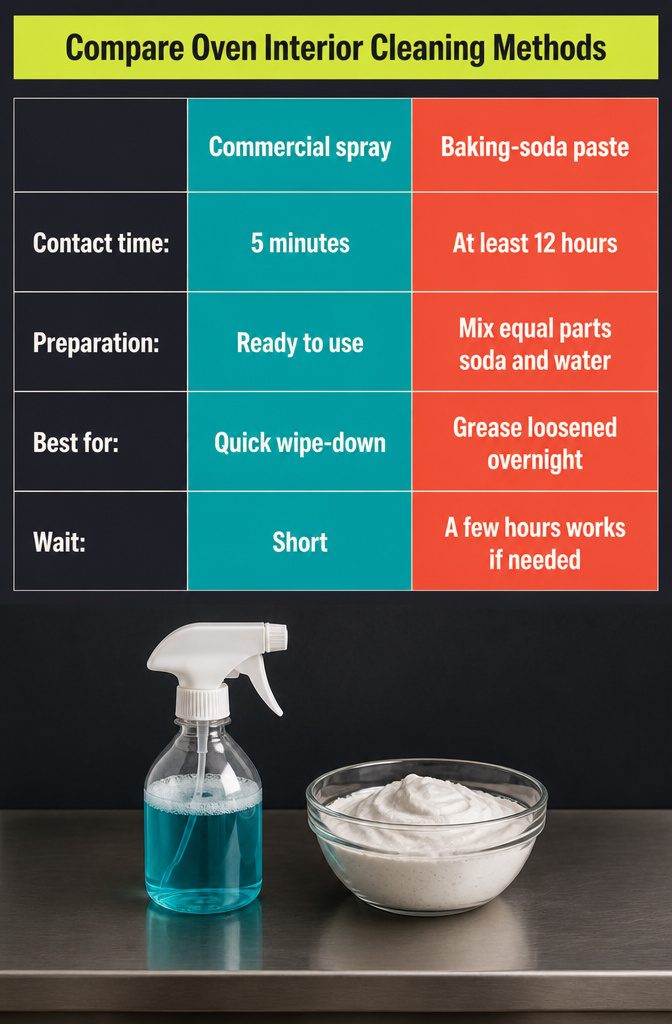
Four cleaning approaches work for oven interiors. A commercial spray like Care+Protect takes five minutes of contact time before you wipe it clean.
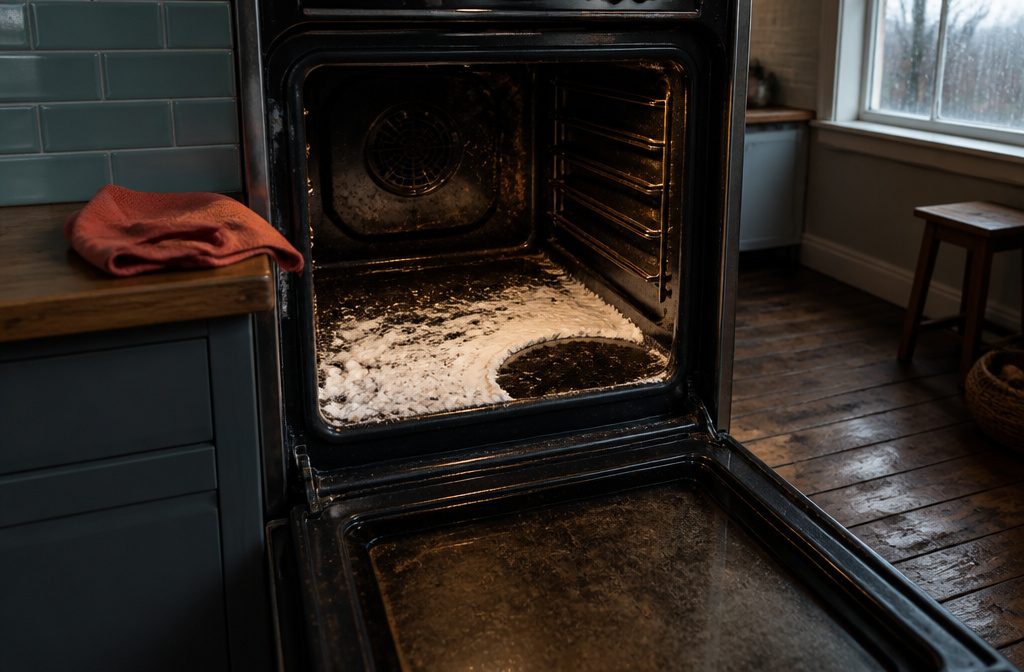
Baking-soda paste demands patience: mix equal parts baking soda and water into a spreadable consistency, coat the walls and bottom while avoiding heating elements, and let it sit at least 12 hours or overnight.
The longer it reacts with grease, the easier the wipe-down becomes.
A few hours works if overnight isn’t an option. Dish soap and hot water handle light buildup without the wait.
The self-cleaning cycle runs at extreme temperatures to burn residue into ash, but it locks the door for several hours, uses more electricity than usual, and forces you to stay home because of the smoke and fumes it can produce.
Never combine chemical cleaner with the self-cleaning cycle.
3. Clean the racks while the interior method works
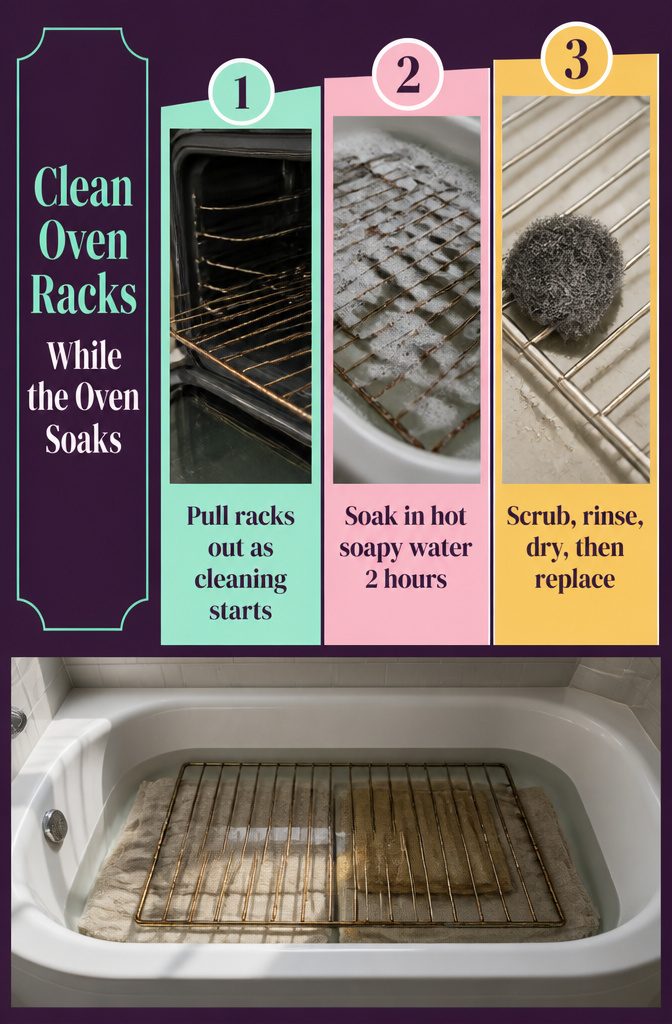
- Pull the racks out as soon as you apply your interior cleaning method. While the paste or cleaner is working inside the oven, you can soak the racks separately and finish both at the same time.
- Soak in hot water with dish soap or castile soap for at least 2 hours. If the racks are too big for your sink, use the bathtub—lay old towels on the bottom first to catch the grime. For heavily soiled racks, add 3 cups baking soda to the water and let them sit 3–4 hours, or use ¼ cup unscented Dr. Bronner’s castile soap for grimy buildup.
- Scrub with steel wool or a non-scratch pad, then rinse and dry. Steel wool works well on racks and cuts through char quickly, but keep it away from the oven glass or interior walls where it will scratch. Once the racks are clean and completely dry, slide them back in.
4. Wipe, rinse, or remove residue from the oven interior

- Wipe away softened grime with a damp cloth or sponge, working from top to bottom so residue falls to the floor of the oven rather than streaking cleaned areas. Rinse the cloth often and keep wiping until no cleaner or grease transfers to it.
- After a self-clean cycle, wait for the door to unlock at 200–500°F, then let the oven cool to room temperature. The ash coating the walls is incinerated food and grease. Wipe it out with a utility rag or recycled paper towels dampened with warm water or a 1:1 vinegar-water solution.
- For baking soda and vinegar, spray vinegar over any remaining baking soda paste. The foam lifts the last bits of dirt and buildup. Wipe the foamy residue and loosened grime with a damp cloth, rinsing the cloth as needed until all surfaces are clean.
5. Clean the glass and door

- Wipe the glass with a baking-soda paste that sits 30 minutes, then scrub with a soft sponge or non-scratch cloth. For baked-on grease the paste won’t lift, a razor blade held flat against the glass scrapes it off without scratching.
- Keep water away from the door seal while you clean. Too much moisture soaking into that seal leaves streaks trapped between the glass panes, and fixing that costs more than a new oven is worth.
- Spray exterior cleaner onto a rag first, not directly onto control knobs or panels. Liquid running into the electronics behind those surfaces is harder to reverse than any stain you’re removing.
- For stubborn buildup on the door itself, mix baking soda and water into a spreadable paste, coat the door, and let it sit 30–60 minutes before scrubbing with a non-scratch pad.
6. Dry, reassemble, and finish

- Rinse the racks under warm water, wipe off any remaining soap or grime with a clean cloth, and dry them completely before sliding them back into place.
- If you cleaned the oven interior with dish soap and water, leave the door open for twenty to thirty minutes so air can reach the surfaces and start drying them.
- Close the door and run the oven at 250–300°F for about half an hour. The heat finishes drying any moisture left on the walls, floor, and ceiling after wiping.
- Once the oven cools, spray a damp cloth with all-purpose cleaner and wipe down the glass and door, inside and out, to remove any streaks or fingerprints left during cleaning.
Self-cleaning cycle precautions
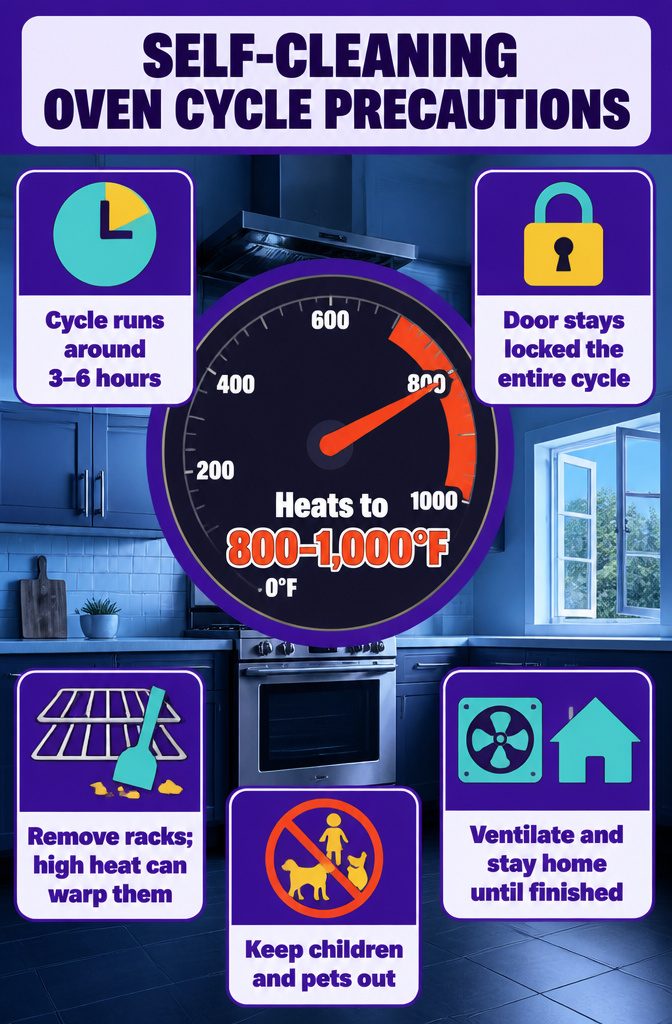
The self-cleaning function locks the door and heats the oven to 800–1,000°F for around three to six hours.
That extreme temperature incinerates grease and baked-on food, but it also creates smoke, strong odors, and fumes you don’t want lingering in the house. Before you start the cycle:
- Remove the racks. High heat warps and discolors them beyond repair.
- Clear out anything in the oven drawer.
- Scrape away large chunks of burnt-on food to cut down on smoke.
- Open windows and turn on the exhaust fan.
- Keep children and pets out of the kitchen.
- Stay home until the cycle finishes. The door stays locked the entire time and cannot be opened mid-cycle.
Anything left inside will smoke. The process takes most of an afternoon, so plan around it.
Preventing future buildup
Once you’ve deep-cleaned the oven, keeping it that way takes less effort than letting it build up again. A few habits cut the time between deep cleans from months to a year.
Do light, frequent cleans to prevent it from becoming overwhelming
That means catching problems when they are still easy to fix.
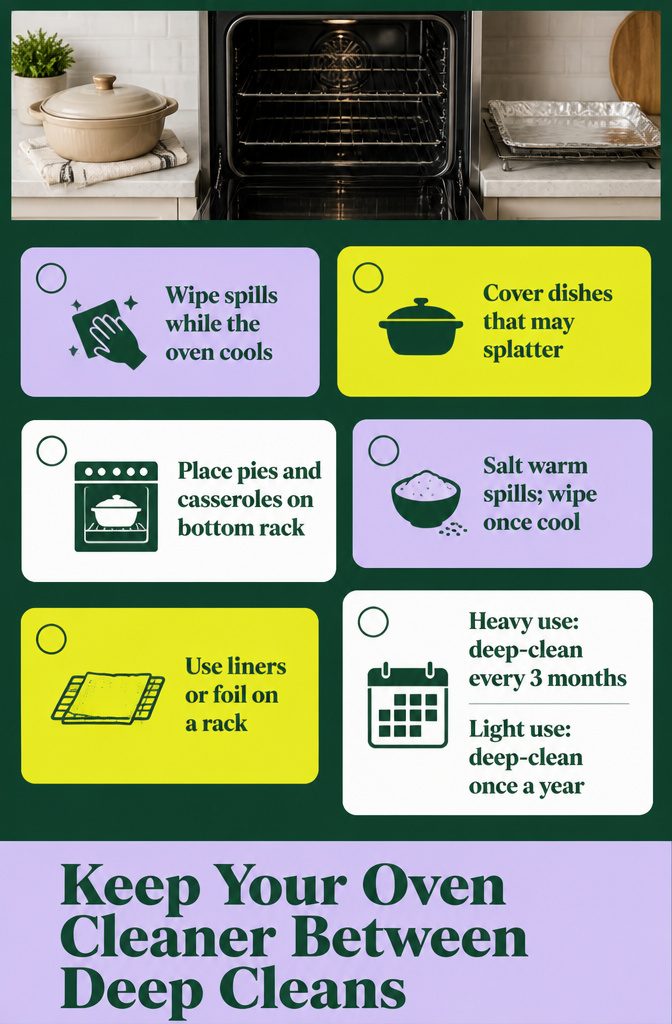
Wipe up spills while the oven cools after each use, or at least once a week with warm water and dish soap. The more often you clean, the less intense each session has to be.
A few other moves keep mess contained:
- Put lids or foil on dishes that could splatter.
- Place pies and casseroles on the bottom rack so drips do not travel far.
- Sprinkle table salt on a warm spill to absorb liquid before it bakes on, then wipe it away once cool.
- Use nonstick oven liners or a sheet of foil on an oven rack to catch drips. Do not put foil directly on the oven floor; it can damage the appliance if it gets too hot.
How often you deep clean depends on how much you use the oven. Every 3 months works for heavy use; once a year is fine for light.
Frequently Asked Questions
How long does it take to clean an oven?
A deep clean takes 12 to 14 hours if you use baking soda paste, though most of that is waiting time while the paste works.
Active scrubbing and wiping usually take 1 to 2 hours. The self-cleaning cycle runs 3 to 6 hours and locks the door the entire time.
Why is it important to clean the oven?
Buildup affects how food tastes and cooks, creates smoke and strong odors when the oven heats, and can be a fire hazard if grease ignites.
Regular cleaning also prevents small spills from baking into stains that require harsh chemicals or long soaking to remove.
Is using oven self-cleaning safe?
The self-cleaning cycle is safe when the oven is in good working order, but it produces heavy smoke and fumes you need to ventilate.
Open windows, run the exhaust fan, and stay home until the cycle finishes. Never leave racks inside, as the 800 to 1,000°F heat warps and discolors them.
How often should I clean my oven?
Deep clean every 3 months if you use the oven heavily, or once a year for light use.
Between deep cleans, wipe up spills while the oven cools after each use or at least once a week with warm water and dish soap.
How do you keep an oven clean?
Wipe spills while the oven cools after cooking, before they bake into hard stains.
Put lids or foil on dishes that splatter, place pies and casseroles on the bottom rack to limit drip distance, and use nonstick liners or a foil-lined rack to catch drips before they hit the oven floor.
What is the easiest way to clean a really dirty oven?
Spray the interior with a commercial cleaner like Care+Protect, let it sit 5 minutes, then wipe it clean with a damp cloth.
For racks, soak them 2 to 4 hours in hot water with baking soda or castile soap, scrub with steel wool, rinse, and dry.
What is the best safe way to clean an oven?
Baking soda paste is the safest method without harsh chemicals or extreme heat. Mix equal parts baking soda and water, coat the walls and bottom while avoiding heating elements, and let it sit 12 hours or overnight.
Wipe away softened grime with a damp cloth, spray vinegar over any remaining paste to foam and lift the last bits, then rinse clean.
How do I clean stubborn oven spots?
For interior stains, apply baking soda paste and let it sit overnight, then spray vinegar over it to foam and lift the grime before wiping.
For baked-on grease on the glass, hold a razor blade flat against the surface and scrape gently without scratching.
What is the best homemade oven cleaner?
Baking soda mixed with water into a spreadable paste is the most effective homemade option.
Coat the oven walls and floor, avoiding heating elements, and let it sit at least 12 hours. Spray vinegar over any remaining paste when you wipe it down; the foam lifts loosened grease and makes rinsing easier.
How much does it cost to have an oven deep cleaned?
Professional oven cleaning typically costs $75 to $200 depending on your location, the size of the oven, and how dirty it is. Services that clean in your home charge more than those that remove and clean the oven offsite.
What happens when you put a bowl of vinegar in the oven?
Heating a bowl of water and vinegar at 220°C for 20 minutes creates steam that loosens baked-on grime and makes it easier to wipe away.
Add a squirt of dish soap to the water for better grease cutting. This method works for light buildup but will not replace a deep clean for heavily soiled ovens.