
I’ve battled that swampy carpet stench myself. First, I attack moisture with towels, fans, and dehumidifiers, moving the rug outside if I can. Then I sniff out the exact stink source, marking spots with tape like a detective. Once bone-dry, I vacuum deep with HEPA power, sprinkle baking soda overnight, or scrub vinegar into stubborn spots. If the smell returns, I check the padding. That sneaky sponge can harbor odors and should be replaced if it’s gray-green or squishy. Still fighting. I bring in enzyme cleaners or call the pros. Finally, I keep air flowing so mold never gets cozy again. Your nose will thank you, and there are more rescue tricks where these came from.
Dry Wet Carpet Fast Before Mold Takes Hold

How fast can a soggy carpet turn into a moldy nightmare. Faster than you’d think, and I’ve learned this the hard way.
When water hits your carpet, I’m grabbing towels and blotting intensely because my cozy living room depends on it. I’m moving that carpet outside when I can, letting sun and breeze work their magic. Inside, I’m cranking up ventilation, throwing windows wide, and positioning fans everywhere.
My secret weapon combo is a dehumidifier humming 24/7, pulling moisture from the air while the carpet dries underneath. Mold prevention isn’t glamorous, but neither is that fuzzy green patch spreading across your floor.
Once it’s dry, I’m sprinkling baking soda generously, like snow on pine branches, and letting it sit overnight. Stubborn smells. I’ll mix a vinegar-water solution, spray lightly, then vacuum everything clean. This method prevents mold growth and eliminates odors within hours.
Identify Where the Wet Carpet Smell Is Coming From
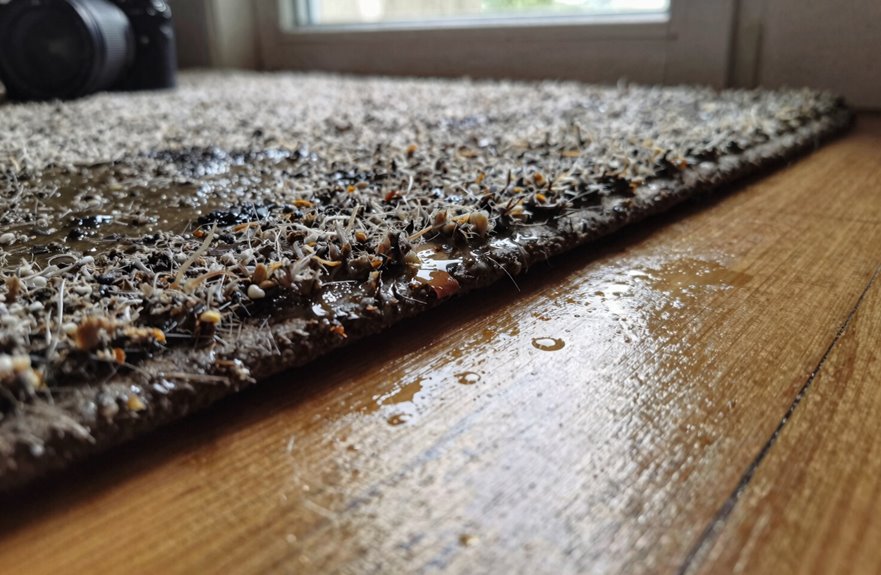
Where exactly is that stench hiding? I’ve learned the hard way that damp carpet doesn’t just smell; it’s a detective game I’m inviting you into.
First, I get down on my hands and knees and sniff like a bloodhound. Mold and mildew love dark corners, so I check under furniture and along baseboards where moisture lingers. That musty, earthy punch signals mold. Sour, sharp notes mean spilled milk or wine I forgot about. Pet accidents are sneaky, but I follow my nose to yellowed patches.
I mark every spot with masking tape because I can’t fix what I can’t find. Good ventilation helps me trace odors as they move, and knowing whether I’m battling organic rot or simple dampness determines my approach: vinegar, baking soda, or professional remediation.
Vacuum Deep to Remove Trapped Debris After Drying
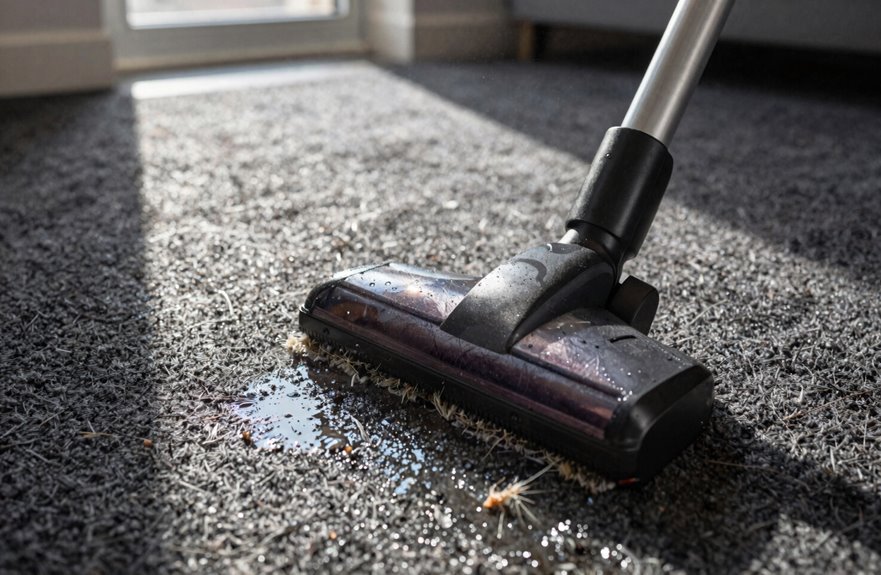
A deep vacuuming session is where the real magic happens, and I’m not talking about a lazy once-over with whatever’s in the closet. I’ve learned the hard way that moisture control means waiting until every fiber’s bone-dry, then attacking those carpet fibers with purpose. You want to vacuum deeply, starting right where the damage hit, then spiral outward. Rushing this step can accidentally spread funky smells. A HEPA-filter vacuum is non-negotiable. It snags the trapped debris your eyes miss, the microscopic stuff that sabotages odor removal.
| Vacuum Focus | Why It Matters |
|---|---|
| Previously wet zone | Ground zero for hidden gunk |
| Outward spiral pattern | Prevents odor redistribution |
| HEPA-filter vacuum | Captures residual contaminants |
| Multiple slow passes | Lifts deep-set particles effectively |
After drying, this isn’t cleanup; it’s redemption.
Remove Wet Carpet Smells With Baking Soda or Vinegar
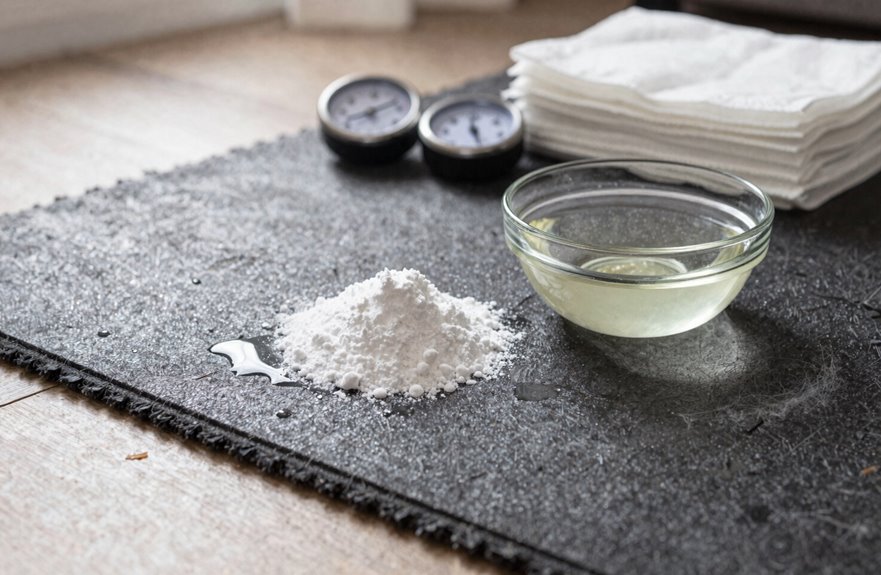
I’ve battled some truly epic carpet disasters, and I’m telling you, baking soda and vinegar aren’t just pantry staples; they’re effective odor-fighting solutions. Apply a heavy dusting of baking soda and leave it overnight. The powder absorbs moisture and odors from carpet fibers. Then there’s the vinegar spray made with equal parts water and vinegar. Mist it on the affected area, let it penetrate, then blot away the residue.
Baking Soda Method
Baking soda is a reliable pantry staple for carpet odor removal. Sprinkle it generously over wet carpet’s smelliest areas, letting the yellow powder cover coffee stains and mystery spots. The odor absorption occurs while you sleep, with eight hours allowing the chemical process to work. The next morning, vacuuming transforms your carpet from a powdery mess to a fresher state. This sit-and-vacuum method often requires repetition. The odor diminishes gradually until it becomes undetectable. For dog urine or flood damage, follow with thorough drying and use fans to increase air circulation. This routine prevents mold growth and eliminates lingering odors effectively.
Vinegar Solution Approach
White vinegar is my hidden ace when baking soda alone won’t cut it. The sharp, pantry-clear smell signals effectiveness. I mix a 50/50 vinegar solution, spray it on my damp carpet, and let it work for 10–15 minutes before blotting thoroughly. (Pro tip: I always test the first area. I learned this after a bleached patch appeared near my bookshelf.) For stubborn odor neutralization, I let it sit overnight, then sprinkle baking soda on top. This combination neutralizes odors effectively. If odor persists, I repeat the process, vacuum thoroughly, and may use a steam cleaner for additional treatment. Mystery smells require consistent application of this method to resolve them.
Replace Carpet Padding If Wet Carpet Odor Lingers
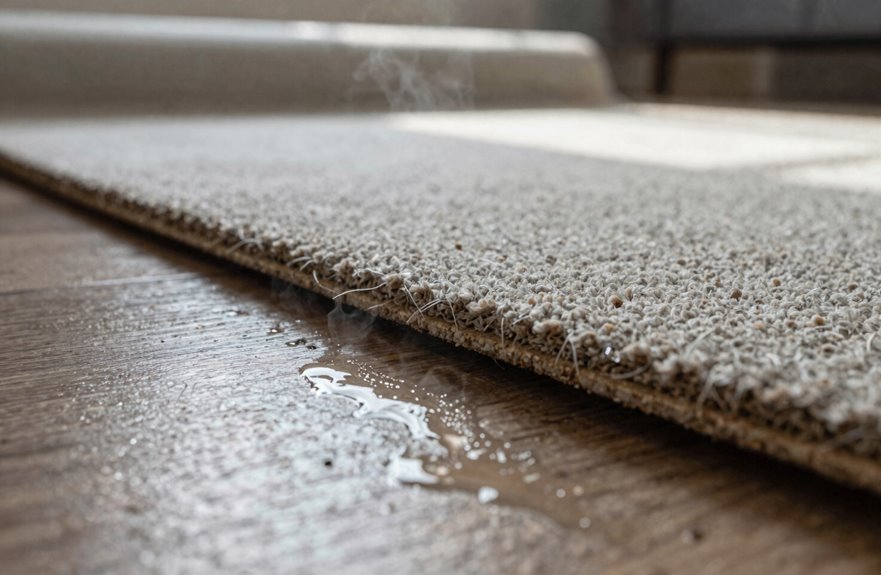
I’ve been sniffing the same spot repeatedly, convinced something was wrong. It turns out the stink was hiding underneath all along. When that musty smell persists even after scrubbing and drying the carpet surface, it’s time to pull back the carpet and inspect the padding underneath. If the underlayer feels squishy and damp, or if you spot gray-green patches, the padding has absorbed moisture and needs replacement.
Padding Assessment Steps
Why does that musty smell keep creeping back, no matter how many times I’ve scrubbed the surface? Carpet padding holds onto secrets, specifically padding moisture that surface cleaning can’t touch. When water damage strikes, that spongy layer underneath becomes a breeding ground for trouble.
I start with a thorough moisture inspection, checking for soft spots near walls and that telltale humidity spike. I’ve pressed my palm into suspicious areas, felt the dampness, and known immediately that padding replacement is my only shot at eliminating odor recurrence. Ignoring contaminated carpet padding guarantees that musty odor returns repeatedly. I’ve made that mistake, and you should avoid the same result.
Replacement Indicators
How do you know when you’re fighting a losing battle against that stubborn smell? I’ve been there. Spraying, scrubbing, hoping, and still that musty odor creeps back like an unwelcome guest.
When your padding feels squishy underfoot, or you spot dark shadows creeping along baseboards, that’s your upholstery padding in need of replacement. Mold growth blooms beneath seemingly dry carpets, creating the hidden odor source that sabotages every effort.
Even when the surface feels dry, contaminated padding hoards moisture beneath the surface. A professional moisture inspection will measure what your hands can’t feel.
You may have missed it. Padding was the real culprit in many carpet replacement situations. Swapping that soggy layer eliminates the odor problem permanently.
Deep Clean If Wet Carpet Smell Persists
When that musty, wet-dog-meets-old-sock smell clings to your carpet like a bad ex, you’ve already tried the basics, and now you’re staring at your floor like it personally betrayed you. We’ve all been there, and it stinks, literally.
Get aggressive with that damp carpet. First, haul it outside if you can. Sun and air speed up drying, and your lungs deserve a break. Once it’s dry, blanket that sucker in baking soda. Don’t be shy; pour it on. Let it work its odor absorption magic overnight, or wait 48 hours. For stubborn stench, mix baking soda with vinegar into a fizzy paste, scrub it in, let it dry, then vacuum thoroughly.
Still reeking. Grab an enzyme cleaner; those bacteria devour organic gunk regular stuff misses. Test a corner first though. I’ve learned that lesson the hard way with bleach spots. If nothing works, call professional cleaning. Hot water extraction can eliminate persistent odors, and professional services are a practical option.
Prevent Future Wet Carpet Smells With Proper Ventilation
Where do these smells keep coming from, right? I’ve been there, sniffing my carpet like a detective with a grudge. I beat this by mastering ventilation, and you can too.
I open windows wide, set up fans blasting opposite directions for real cross-ventilation, and watch that airflow work magic on drying. No fancy stuff, just smart moves. Humidity’s the enemy. I learned that the soggy way, so I run a dehumidifier now, keeping levels low enough that mold throws a tantrum and leaves.
Quick drying after spills is essential. I don’t let moisture camp out in my fibers, inviting stink to the party. Before any cleaner touches down, I ensure thorough drying, because trapped dampness breeds tomorrow’s problems. Your nose deserves this benefit.