
I grab a dry white cloth the second oil hits my carpet. Speed matters. I blot from the outside in without scrubbing, just with patience.
Then I dump baking soda on that stain, wait an hour, vacuum, and repeat until the powder stays pale.
Next, I mix dish soap with warm water, barely foam it up, and blot with a damp cloth. Gentle agitation with a spoon back for a minute or two works well.
I rinse, blot dry, check for shadows, and repeat if needed.
For really stubborn, dried-in stains, I have a glycerine trick that can help remove what other methods miss.
Blot Fresh Oil Stains Immediately: Don’t Scrub
How do you tackle a fresh oil spill before it becomes your carpet’s worst nightmare? I’ve learned from experience, and I’m here to save you from repeating the same mistakes.
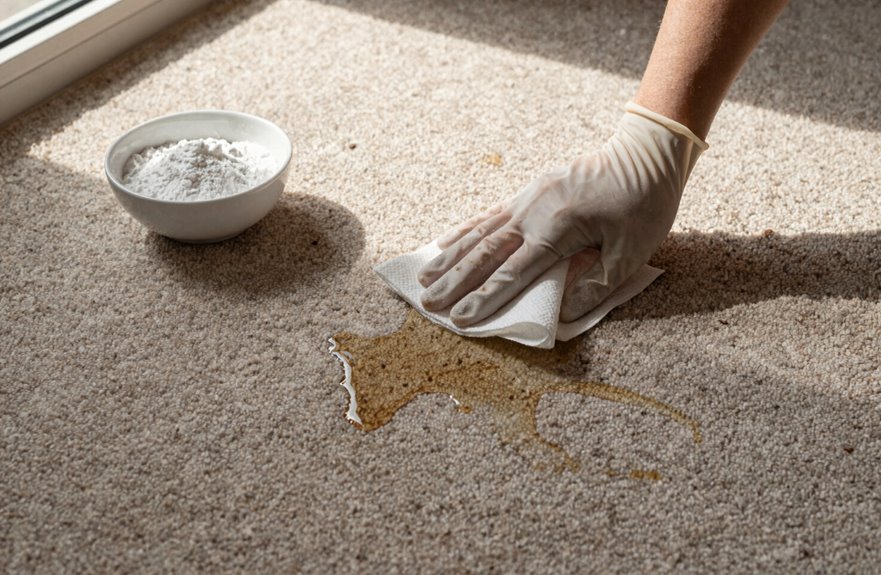
When fresh oil hits your carpet, move quickly. Grab a dry white cloth, nothing fancy, just something absorbent, and blot, blot, blot. Start from the outer edge and work toward the center, like tracing a target. This keeps the mess from spreading into a bigger disaster.
The golden rule: avoid scrubbing at all costs. Scrubbing pushes that oil deeper into the fibers, making oil stain control nearly impossible. Instead, blot repeatedly and gently, letting the cloth do the work. If there’s gunk on top, scrape it off first with a spoon.
Blotting takes patience, but it delivers results.
Gather Your Oil Stain Removal Supplies
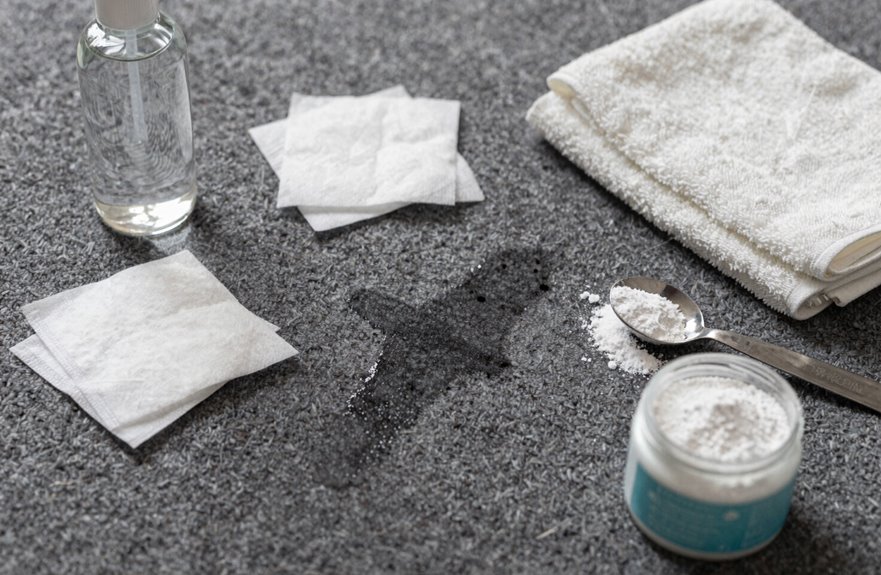
Why scramble mid-crisis when you can prep in advance? I’ve learned the hard way that nothing is worse than watching oil sink deeper into your carpet while you hunt for supplies. Let’s fix that.
| Supply | Why You Need It |
|---|---|
| White blotting towels | No dye transfer, pure absorbency power |
| Baking soda (absorbent powder) | Lifts oil from fibers like magic |
| Plastic spoon + vacuum | Scoop, agitate, suck it all up |
| Spray bottle with dish soap cleaning solution | Spot-treat that stain into oblivion |
Mix 2 cups water with ½ teaspoon dish soap in your spray bottle. You’re now equipped with the essentials. Keep these stashed in a caddy under your sink so you’re never caught off guard by an oil stain.
Cover the Stain With Baking Soda
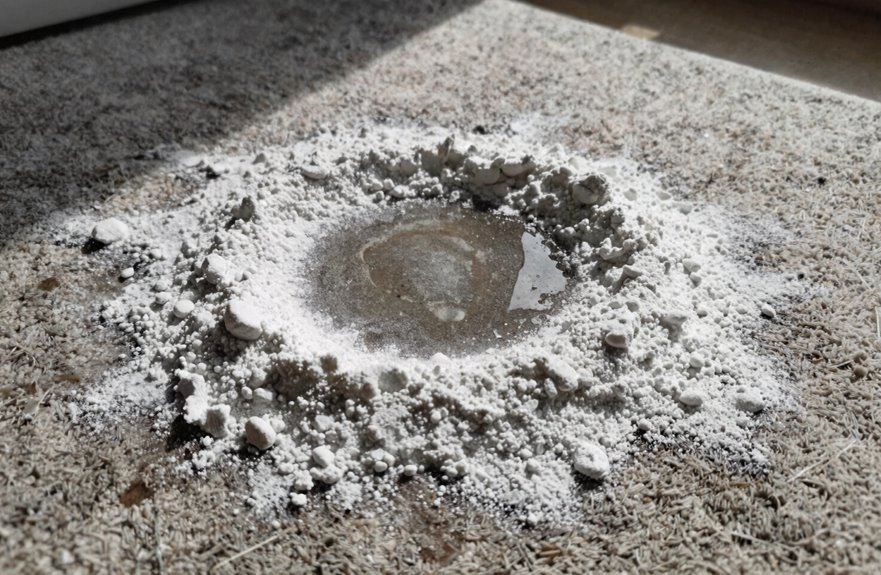
The moment of truth has arrived. Time to douse that ugly oil blotch with baking soda, your favorite kitchen-to-carpet solution. This method has saved many rugs.
Here’s the routine:
- Pile it on – Use a generous blanket of baking soda with no skimping. Watch for clumping or discoloration, which indicates the absorbent is working.
- Work it in gently – Grab a plastic spoon (metal works too) and coax that baking soda deep into the carpet fibers, drawing the oil upward for maximum stain absorption.
- Wait it out – Allow one hour minimum for the process to work.
You’ll see the powder transform as it pulls that oil stain from below. This surface cleaning step prepares the carpet for the next phase of treatment.
Vacuum and Repeat Until No More Oil Absorbs

Once that hour’s up, I’m grabbing my vacuum to see just how much oil my baking soda pulled up. Those clumps represent success. I vacuum slow, watching that powder disappear.
| What I See | What It Means |
|---|---|
| Clumpy, dark baking soda | Oil’s absorbing, keep going! |
| Smooth, pale residue | Almost there, one more round |
| Vacuum hose struggling | Don’t rush, let it work |
| Clean carpet emerging | We did it, together! |
If that stain still shows oil, I repeat. More baking soda, another hour, vacuum again. I blot with a dry towel, checking for remaining moisture. No dish soap yet, no cleaning solution. Just patience and persistence until nothing more absorbs.
Break Down the Oil With Dish Soap

I mix warm water with just a few drops of grease-cutting dish soap, such as Dawn, and this simple combination works effectively on stubborn oil spots. I dampen a clean white cloth, which allows me to see the gunk lifting out, and start blotting from the outside edge toward the center. Working from the middle outward spreads the mess into a larger circle. I gently pat the carpet, working that solution into the fibers until the oil breaks down.
Mix Soap Solution
A good dish soap is your hidden edge here, and I’m talking about the cheap stuff, nothing fancy needed. This simple mix has rescued countless carpets.
Here’s my foolproof formula:
- Grab 2 cups of warm water, not boiling, just cozy bath temperature
- Add ½ to 1 teaspoon of dish detergent, that’s it, no more
- Shake gently in a spray bottle until it barely foams
This soap solution works because the surfactants emulsify that stubborn oil, breaking it into tiny droplets your carpet can actually release. Too much detergent and you’ll be rinsing forever. I’ve learned that the hard way. The right ratio means less soak time, easier blotting, and no sticky residue left behind.
Apply to Stain
Got your solution mixed. Now we’re getting somewhere. I grab my cleaning solution, that magical blend of warm water and grease-cutting dishwashing liquid, and I’m ready to tackle this stain.
Patience is essential here. I dampen a clean cloth with my soap mixture, never soaking it, and start blotting from the outside edges toward the center. Spreading that oil stain invites disaster to your carpet, and that ruins the fibers.
I’m pressing gently, letting the dish soap break down that stubborn oil without drowning my carpet fibers. The absorbent cloth lifts everything it can grab. After each round, I switch to a fresh water-dampened cloth, continuing this blotting process until the area feels just slightly damp; like morning dew, not a flood.
If that stain resists my efforts, I repeat the process because persistence works.
Agitate Gently
Grab a spoon from your kitchen drawer (yes, the one you eat cereal with) and let’s get mechanical. Gentle agitation beats brute force every single time when tackling stubborn oil on carpet.
Here’s my foolproof method for breaking down that greasy mess:
- Mix your cleaning solution—2 cups water, ½ teaspoon dish soap—and spray it lightly
- Use the spoon’s rounded back to softly work the soap into fibers for 1–2 minutes, no scrubbing.
- Let it sit, then blot with clean cloth for proper stain removal.
Harsh agitation pushes oil deeper, spreads the stain, and ruins your carpet. This controlled water and soap combo loosens bonds without trauma. Rinse, blot again, and the oil will lift from the fibers.
Rinse, Blot Dry, and Check Your Results
Now what do we do with this soapy, hopeful mess? I grab clean water, pour it gently, and watch the suds surrender. Time to rinse away that cleaning solution, friends; no drowning the carpet, just a careful shower.
I press a dry white towel with firm pressure, no rubbing, and squeeze out every drop. Blot dry with the same technique you’d use to gently absorb moisture from a damp surface; firm, patient motions work best.
Check results under your brightest lamp, hunting for oil stains that ghosted into the fibers. If you still see a shadow, sprinkle absorbent powder such as baking soda or corn starch, let it sit, then repeat the process until the stain lifts completely.
Use Glycerine on Dried-In Oil Stains
Dried-in oil stains are the stubborn ghosts of spills past, and glycerine isn’t effective for this problem.
Dried-in oil stains are the stubborn ghosts of spills past, and glycerine isn’t effective for this problem.
I once thought glycerine was a solution for dried-in oil stains, but I was wrong. Here’s what actually happens:
- Stain reactivation chaos – That “helpful” glycerine awakens the oil, spreading it like gossip at a reunion.
- Skip the soap/solution step – You’ll mess up your whole oil removal steps.
- Complication overload – Your carpet cleaning approach becomes a nightmare instead of simple oil blotting.
My advice: avoid glycerine entirely. Stick with proper pre-treatment, follow the standard oil removal steps, and focus on stain prevention. Keeping it simple prevents unnecessary complications. Skip fancy shortcuts.