
I’ve watched chairs gasp their last at eighteen months while others tough it out for twelve years. It’s never about the price tag, it’s the daily grind.
Use it two to three hours? You’ll likely cruise past eight years. But park yourself for ten-hour marathons, and that gas lift’s surrendering in under two.
Foam flattens, mechanics groan, and suddenly that “5-10 year” sticker feels like a cruel joke. Your mileage varies wildly, and the reasons are specific and measurable.
How Long Do Office Chairs Really Last? (By Hours Per Day)
How long can you really expect an office chair to last? The lifespan depends heavily on how many hours per day you use it.
When used two to three hours daily, a chair can last past eight years with minimal issues. Someone using a chair for ten-hour workdays may experience gas lift failure within eighteen months. Extended daily use accelerates wear and tear significantly.
Foam cushions compress over time, losing their supportive qualities. Weight capacity is a critical factor; exceeding limits strains every joint and mechanism. Budget seats often collapse under pressure while quality frames remain functional.
Regular maintenance extends chair lifespan. Tighten bolts monthly, wipe spills immediately, and the chair can reach a decade of usable life. Proper care directly correlates with longevity and performance across multiple years.
Why “5-10 Year” Lifespan Claims Fail Real Users
Why do those shiny “5-10 year” lifespan stickers on office chair boxes feel like such a cruel joke once you’ve actually sat in one? I’ve learned the hard way that lifespan variability depends heavily on how you use the chair. Grinding twelve-hour days in a $150 bargain special produces different results than moderate use.
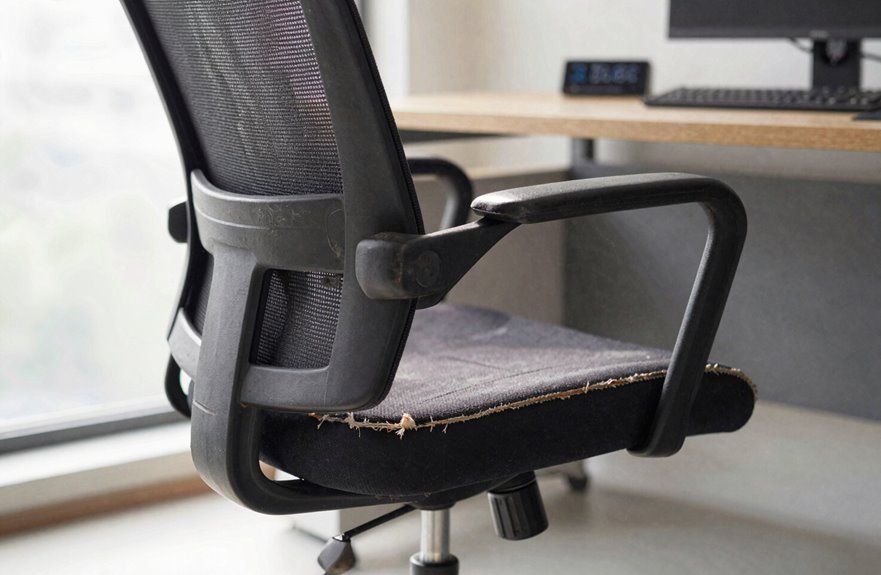
Usage intensity matters more than marketing promises. That gas lift reliability fails in eighteen months if you’re clocking serious hours. Foam deterioration sneaks up; one day you’re supported, next you’re sitting on plywood with no cushioning left. Wear indicators like wobble and sagging cushions, not scuffs, signal real trouble.
Maintenance impact is significant. I’ve stretched quality chairs past decade marks with regular care, while neglected ergonomic chairs collapsed early. Replacement guidelines suggest 7-10 years, but your body’s signals matter more. Persistent discomfort indicates the chair no longer provides adequate support and needs replacement.
Three Stages of Chair Decline: Foam, Mechanics, Then Looks
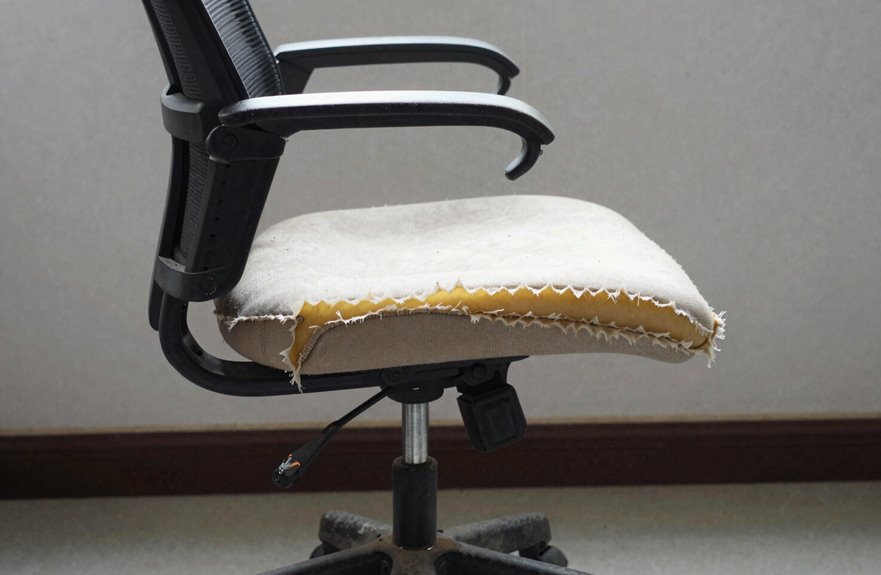
I’ve learned to spot the warning signs before my office chair completely betrays me, and it always starts with the foam, that sneaky, squishy traitor. That once-proud cushion stops bouncing back, leaving a permanent butt-groove that mocks my posture goals. That’s compression set, the degradation you can feel in your spine before you see it.
Next comes the mechanics. My gas lift starts sinking mid-meeting, the tilt mechanism groans with protest, and casters develop commitment issues about rolling straight. This accelerated wear cuts your chair’s lifespan in half if you’re grinding 8 or more hours daily.
Finally, the looks catch up. Faded fabric, cracked leather. But don’t let pretty surfaces fool you. By then, your longevity battle is already lost. Judge an office chair by its foam and mechanics, not its Instagram filter.
How 110kg and 10-Hour Days Accelerate Chair Death
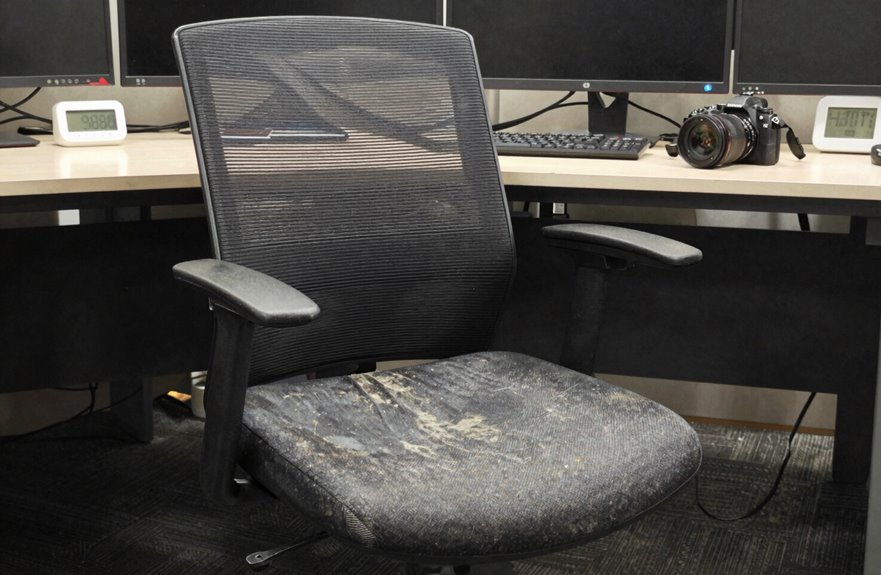
So what happens when you’re not exactly built like a desk jockey from a stock photo, and you’re parked in that seat ten hours straight? Your ergonomic chair starts aging in dog years.
That 110kg load, combined with heavy use, absolutely demolishes the lifespan you read on the box. Seat foam goes flat as a pancake in months, not years. A 20 to 40% resilience loss means your butt knows before your eyes do. The hydraulic lift is gasping, slowly sinking, especially if you’re adjusting height constantly. Casters groan, mechanisms grind, and suddenly that 7-year promise looks like fiction.
Wear and tear hides. Your chair looks fine while secretly betraying you. Replacement timing requires attention before your spine files a complaint.
Six Signs Your Chair Lifespan Is Already Over
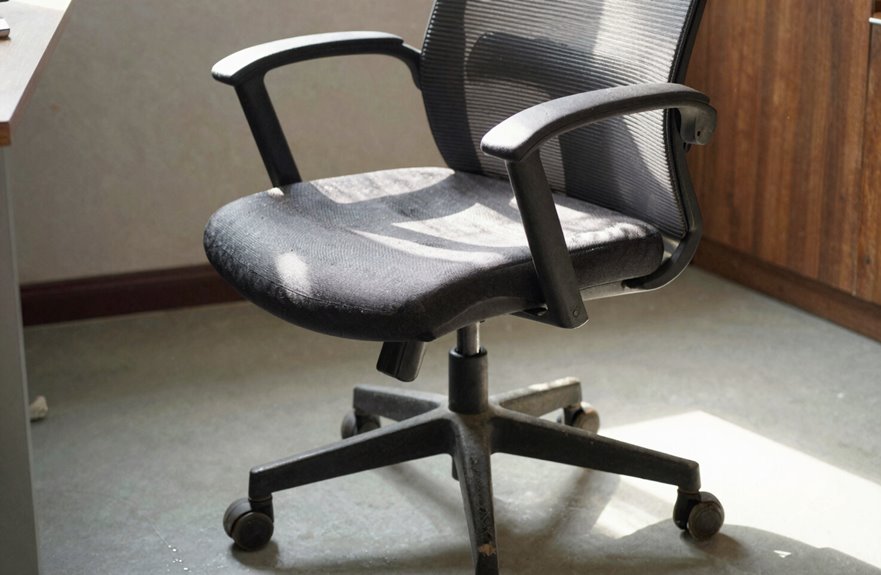
When exactly does your trusty throne cross that invisible line from “slightly worn” to “actively sabotaging your back”? Ignoring lifespan signs can result in expensive chiropractor bills.
Your chair doesn’t announce its betrayal—it slowly turns against your spine until the damage is done.
Here are the red flags to spot in your chair:
- Sagging cushions that swallow your hips like a memory foam trap, offering zero support and maximum discomfort
- A gas lift that sinks slowly during Zoom calls, leaving you awkwardly eye-level with your webcam
- A wobbling base that makes you feel like you’re sailing rough seas instead of answering emails
These signs of wear indicate that structural integrity has failed. Even with perfect maintenance, every chair hits its limit. Your body will experience the effects of a deteriorated chair before you consciously acknowledge the problem.
Repair or Replace? The 50% Rule Explained
Why does that one squeaky wheel always start screaming during the most important meeting of my week? I learned the hard way that maintenance can only stretch a lifespan so far.
When my beloved ergonomic chair hit seven years, the wear and tear became impossible to ignore. That’s when I discovered the 50% rule: if repairs cost more than half your chair’s current value, replacement wins.
I ignored the sinking gas lift for months, a classic mistake. But when major parts failure struck with a shattered tilt mechanism, my $200 repair estimate against a $350 used market value made the decision clear.
Budget chairs rarely survive this calculation. Quality ergonomic chairs reward your investment with years of loyal service. Replace equipment when repairs exceed half its current value, and you’ll avoid costly mistakes down the road.
What to Buy Next: Four Specs That Extend Lifespan
Where do I even begin after watching my last chair die a slow, squeaky death? I’ve learned that ergonomic chair lifespan isn’t luck; it’s specs. Here’s what I’m hunting for next:
- High-density foam that doesn’t pancake after six months (I’ve sat on enough pancakes)
- Gas lift durability rated for 100k+ cycles, because nobody wants that sinking feeling mid-Zoom
- Premium materials (mesh/leather) that laugh at coffee spills and afternoon sun
Build quality matters more than flashy looks. Replacement guidelines say 7-10 years, but with smart maintenance, tightening bolts, occasional lubrication, I’m pushing for 12 years. I’m done with $200 disasters. This time, I’m investing in steel bases and breathable mesh that actually lasts. A durable chair pays for itself through years of reliable use.
Fabric vs. Leather Office Chairs at 8-10 Years
How do you choose between fabric and leather when you’re staring down a decade of daily use? I’ve wrestled with this myself, friends, and this is what I’ve learned about real chair longevity in high-use spaces.
Fabric chairs typically tap out around 8 years, though newer textiles, think breathable meshes with lumbar support woven right in, are fighting harder than ever. They’re warmer, cozier, and they forgive coffee spills better than my ego does.
Leather pushes toward 10 years when you commit to maintenance; conditioning that hide like you’re pampering a vintage jacket. But skip the cheap bonded stuff. I’ve seen it crack like sunburned paint, embarrassing everyone.
Durability ultimately depends on quality, not just material. A premium fabric outlasts bargain leather every time. Choose what fits your life, your spills, your late-night deadlines. We’re all just trying to sit comfortably through this together.
The Back Pain Cost of Ignoring Chair Lifespan
When exactly did we decide that a squeaky, sagging chair was just part of the job? I sat on a cushion sag so deep it felt like a beanbag, and my back paid the price for months. Ignoring office chair lifespan isn’t just about aesthetics; it’s a back pain cost that accumulates over time.
Here’s what I’ve learned the hard way:
- Gas lift wear means you’re constantly sinking, fighting your chair instead of working
- Skipping chair maintenance turns a 10-year ergonomic chair lifespan into 3 years of torture
- That “small” replacement cost feels huge until you compare it to chiropractor bills
Budget chairs under $200 fail quickly. But even quality seats need maintenance. I’ve watched friends tolerate wobbliness for years, and we should expect better. Your spine deserves better than expired foam and deteriorating support.
BIFMA Certification: Does It Predict Real Durability?
I’ve seen BIFMA-certified chairs crack under pressure when someone’s grinding twelve-hour days, well past those controlled lab simulations. The certification provides a safety net for basic standards, but real-world variance differs significantly when a “tested” gas lift starts sinking at month eight. BIFMA testing standards have specific limitations, and the shiny label shouldn’t be your only measure for durability.
Testing Standards Limitations
Why do we trust that little BIFMA sticker so much? BIFMA testing limitations create a gap between lab promises and actual workday reality.
The certification tests safety basics, sure, but it doesn’t simulate wear under heavy daily use, like 10-hour marathons at the desk. Standard tests assume 40-hour weeks, which doesn’t account for grinding through deadlines night after night.
Chair durability suffers where BIFMA doesn’t look closely enough:
- Gas lift failure happens way sooner than expected, that sinking feeling isn’t just existential dread
- Caster performance crumbles on carpet, wheels catching like they’re personally offended
- Foam resilience gives up, seat cushions flattening into pancakes that forget your weight capacity
Real durability demands more than a sticker.
Real-World Variance
So here’s what actually happens when that certified chair hits your floor. I’ve watched my own bifma-certified chair start sinking after eighteen months; classic gas lift wear, that slow descent into floor-hugging deterioration. Real-world durability varies significantly from lab conditions.
High-use environments chew through foam and casters faster than any lab predicts. I’ve seen $150 certified chairs collapse in two years while ergonomic chairs, the $600+ investments, function reliably past a decade. Lifespan variance depends on your daily use patterns, your weight, and whether you actually tighten those bolts.
Maintenance impact is significant. Regular cleaning, caster maintenance, and timely repairs can extend chair life by years. Certification provides a baseline standard, but your maintenance habits determine actual longevity.
Maintenance Habits That Double Office Chair Lifespan
I’ve learned that doubling your chair’s lifespan requires consistent preventive care, not complicated procedures. The key is addressing small issues before they become major problems: tightening loose bolts before they strip, fixing squeaky casters, and addressing a stiffening tilt mechanism before replacement becomes necessary. This maintenance approach delivers measurable results through specific routines rather than vague upkeep advice.
Maintenance Routines That Matter
Where exactly does your office chair start falling apart first? It’s rarely the big dramatic failures; it’s the slow creep of chair wear that gets you. That’s why maintenance is the key to doubling lifespan.
- I tighten screws every few months (yes, I’m that person with the Allen key in my desk drawer now)
- I apply light silicone lubricant to casters and tilt mechanisms so everything glides smoothly
- I actually respect weight limits now; my foam durability improved immediately
I used to edge-sit and wondered why my cushion went flat in two years. That was a rookie mistake. Now I rotate positions, use a chair mat, and treat my ergonomic investment with proper care. Your back and wallet will benefit from this approach.
Preventive Care Strategies
Maintenance keeps things running, but prevention protects your investment. I learned this the hard way when my first ergonomic chair died at year three with flattened padding, wobbly arms, and total failure.
Now I prioritize preventive care, and my current chair has lasted eight years. Regular cleaning requires consistency. Wiping down mesh weekly and vacuuming crumbs from crevices extends durability significantly. I check for wear signs monthly, including sinking gas lift, loose bolts, and creaking sounds, then address them immediately.
Parts replacement reduces long-term costs. New casters and fresh arm pads cost far less than purchasing a full chair. I lubricate all moving parts twice yearly, use a chair mat to protect flooring, and tighten hardware quarterly. This maintenance routine doubled my chair lifespan.
Final Checklist: Evaluating Your Current Chair Today
How often do we actually stop and evaluate the chair that’s been holding us up through deadline marathons and victory dances? Office chair lifespan isn’t just a number. It’s determined by how well you maintain it and how your body responds to it over time.
Here’s my quick evaluation ritual:
- The Cushion Test: I press down hard. If it doesn’t spring back, cushioning wear has won.
- The Wobble Check: I shift side to side, because base stability affects your posture and comfort when working.
- The Pain Audit: I notice if my lower back’s screaming after an hour. That’s one of the biggest signs to replace your chair.
Maintenance directly impacts chair longevity. Tighten bolts, clean casters, and your ergonomic chair durability can extend from 7 to 12 years. A sagging seat and sinking gas lift reduce both comfort and support, making replacement necessary.