
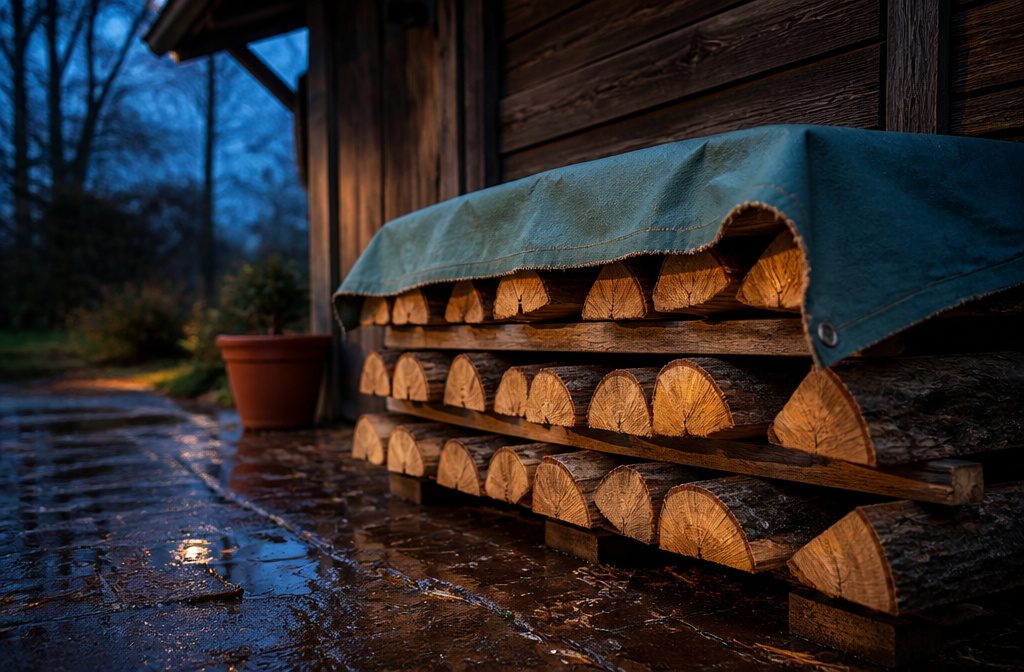
Proper firewood storage keeps wood below 20% moisture, burns clean, and stays pest-free. Most people stack too tight or cover the sides, trapping moisture that undoes months of drying.
The gap matters more than it looks like it should: seasoned wood stacked bark-side-down with open sides can shed water through the cut ends, while wrapped stacks hold together through wind without the tarp-chasing that comes with loose covers.
1. Choose Where the Wood Will Sit

The right spot balances access, drainage, ventilation and distance from your house. Firewood needs at least three feet of clearance from any building, though five feet is better and some sources push that out to ten or even thirty feet.
The gap cuts pest traffic between the pile and your siding, particularly wood-boring insects and rodents looking for winter shelter.
Skip areas that puddle during storms or hold standing water after rain. Poor drainage keeps the bottom layers damp no matter how well you cover the top.
At the same time, avoid deep shade if you can. Direct sun helps dry wood that picks up moisture between storms, though in the Northeast protecting the pile from rain and snow does more for usability than sun exposure alone.
Local conditions swing wide: some regions see eight to twelve feet of accumulated snow each winter, others eighty-eight to one hundred twenty inches of rain spread across the year.
Keep the pile away from walls and trees to improve airflow on all sides. Garages, basements and attics attract pests to indoor wood stores, so bring in only what you need for immediate use rather than stacking cords inside.
2. Keep Wood Off the Ground

Keeping firewood off the ground stops moisture wicking up from the soil and makes it harder for pests to move in.
Pallets work well as a base, and so do firewood racks or shelving systems. Get the wood up at least eighteen inches so air can move underneath and the bottom layer dries instead of rotting.
Stack the wood loosely, no more than two layers deep, and leave space around the entire pile.
Tight stacks trap moisture; loose ones let it escape. If you’re working with a wall-mounted system, lumber racks use wall straps 24 or 55 inches long paired with shelf brackets in 10, 14, or 18-inch lengths.
Each bracket is rated for 300 pounds, so the setup can handle a decent amount of wood without sagging. End caps built from alternately stacked logs or from 2x4s keep the pile from collapsing sideways as you pull pieces out.
3. Stack for Airflow and Stability
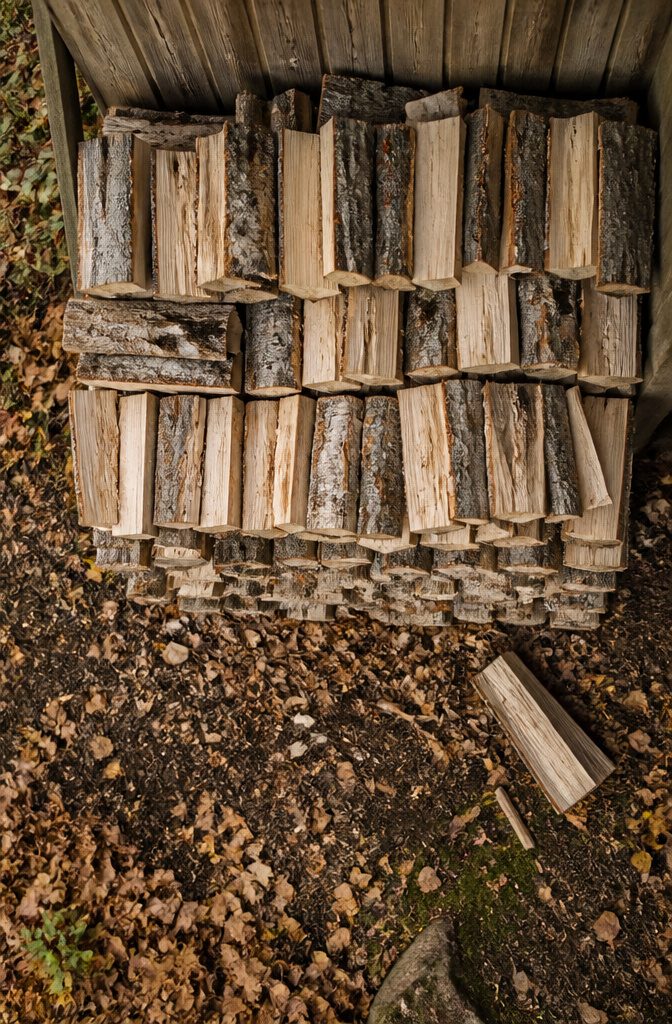
Lumber stacks best horizontally and flat with spacers between each board. The spacers, called stickers, are usually 1/4 to 1/2 inch square and about 7–8 inches long.
Set them at 3-foot intervals across the width of the stack so air reaches all sides and moisture can move out evenly. Without the gaps, the boards trap humidity and warp.
Vertical storage works if the boards stand nearly upright, but most setups keep them flat for stability and easier access.
Firewood needs airflow through the pile, so I alternate the direction of the logs from one row to the next. For green or seasoned wood, stack bark-side-down so water evaporates from the cut ends and the bark itself.
Kiln-dried wood goes bark-side-up to shed any rain or snow that makes it past the roof cover. The difference matters more than it looks like it should.
4. Cover the Top Without Trapping Moisture

A roof overhead keeps rain and snow off the stack, but cover only the top and leave the sides open.
Metal roofing sheets and tarps both work. So do dedicated log stores and seasoning sheds, which add a frame and translucent cover while keeping cross-ventilation running through the pile.
I’ve used the stretch-wrap method for two years now.
Stack the wood on pallets in 4-by-8-foot sections, then pull a roll of clear stretch wrap around each section three times, working down the sides and across the top. A 1,000-foot roll runs $17.99.
For semi-seasoned wood, punch airflow holes through the wrap after you finish. The wrap holds the stack together through wind and snow without the tarp-chasing that comes with loose covers, and the wood stays organized and dry all season.
5. Manage Drying and Wood Condition
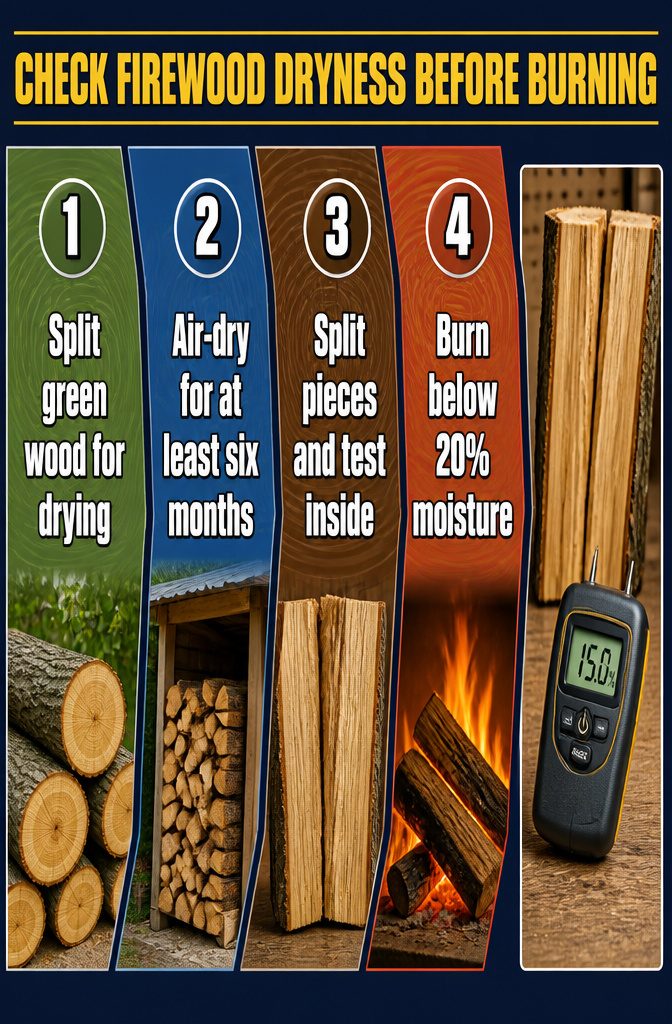
Firewood needs at least six months to reach below 20% moisture, the threshold for clean, efficient burning.
Green wood straight from the tree can hold 100% moisture content or more, which means more smoke and less heat when you try to burn it.
Seasoned wood has been air-dried for months but rarely drops below 20% on its own, especially if the pile sits in shade or near water. Air-drying lumber to about 15% prevents checking and warping before you bring it inside.
In general, joint and plane the wood to within ~1/8" of its final dimension then sticker it for 4-5 days before doing the final milling.
That stickering step gives the wood time to acclimate after rough milling, which cuts down on movement when you make final passes.
The simplest dryness check is looking for end-grain cracks up to 1/4 inch wide, or knocking two pieces together.
Dry wood gives a sharp, crisp sound; green wood thuds. A moisture meter gives more accurate readings and costs under $30.
Most meters have two short probes that insert about 1/4 inch into the wood, so split a few pieces and test inside for a reading that reflects the core rather than just the surface.
Lumber bound for indoor projects needs to acclimate to the humidity of its destination: outdoor furniture around 12%, interior work around 7%.
6. Keep Pests and Household Safety in Mind

The safest way to manage firewood indoors is to bring in only what you will burn in two to three days. Storing more than that raises the chance that pests tucked inside bark crevices will move into the house.
Before carrying any piece across the threshold, inspect it for bark beetles, termites, or borers. Look closely at splits and under loose bark where insects hide.
Use a firewood rack or log basket rather than piling wood directly on the floor. The rack keeps the wood off surfaces and away from walls, giving you a clear view if anything crawls out.
Stack no higher than four feet indoors. Taller piles tip easily and present a real fall risk in a room where children or pets move around.
Keep the indoor stack at a safe distance from stoves and fireplaces. Wood stored too close becomes a fire hazard, and radiant heat can dry out resin pockets in softwood enough to crack and pop unexpectedly.
7. Use Older Wood First and Store an Appropriate Amount
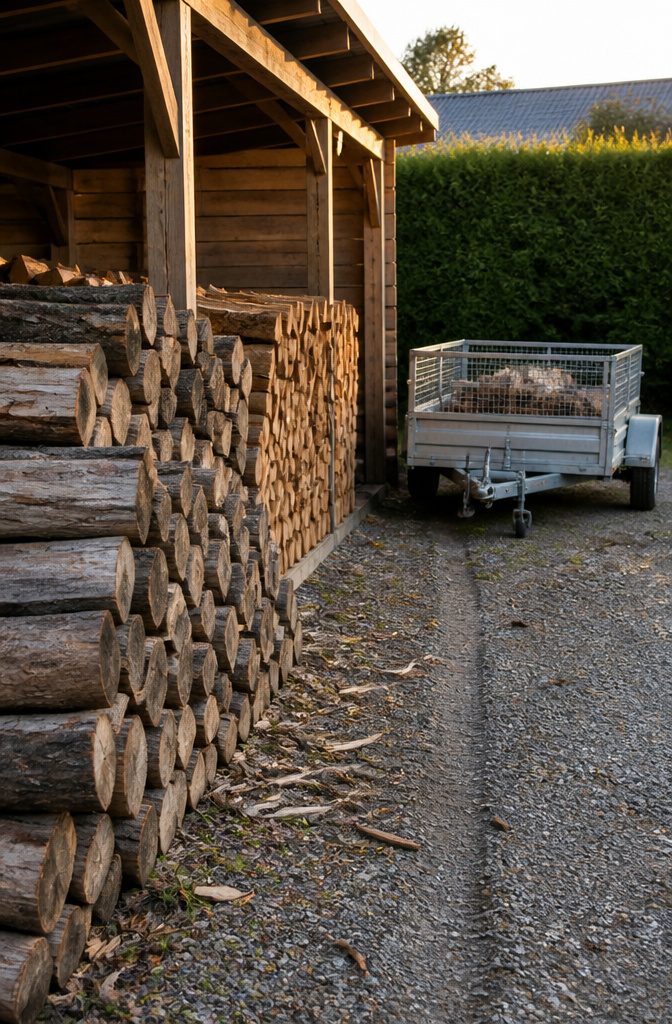
Rotating your stock so older wood gets burned first keeps the pile turning over and lowers the chance of pests settling into logs that have sat too long.
Stack newer seasoned wood toward the back or bottom, older wood where you can reach it easily. The principle is straightforward, but it only works if you’re not sitting on more firewood than you’ll actually use.
Before you stack cords and cords of wood, think through how much you really need. A few bonfires a year call for a much smaller supply than heating a whole house with a wood stove.
Storing more than necessary costs more upfront, takes up space, and raises the risk of fire or infestation even when the wood is stacked well.
One approach is to keep about five to six weeks of firewood close by on a trailer, pulling from a larger supply as needed.
If you’re building or buying a seasoning shed, size matters. A 5 × 3.5 × 5-foot shed holds up to half a cord, enough for occasional fires.
A 10 × 10 × 8-foot shed fits up to three half cords, which works for households burning wood more than twice a week. A 10 × 20 × 8-foot shed can store up to seven cords, the range for families relying on wood heat regularly.
What Seasoned and Kiln-Dried Mean

Seasoned firewood has been air-dried for at least six months, while kiln-dried firewood gets heated to 265°F for 36 hours until its moisture content drops below 20%.
Green wood straight from the cut needs at least six months to reach that same threshold, though drying can stretch longer if the pile sits in shade or somewhere damp.
A seasoning shed cuts drying time in half compared with stacking wood in the open, thanks to better airflow and protection from rain while still letting heat and light reach the pile.
Kiln-dried wood skips the wait entirely and burns cleaner from the start, but seasoned wood gets the job done if you plan ahead and give it the time it needs to shed moisture outdoors.
Hardwood Against Softwood

Hardwood burns longer and puts out more heat than softwood, which is why most people reach for oak, hickory or maple when they are stocking up for winter.
The denser wood takes longer to catch, but once it does, a single log can burn for hours.
Softwood—pine, spruce, fir—lights fast and burns through just as fast, which makes it useful for starting a fire or getting quick warmth on a shoulder-season evening when you don’t need the stove running all night.
Hardwood produces less creosote, the sticky buildup that collects in chimneys and becomes a fire hazard. Softwood burns cooler and leaves more resin behind, so if you burn it regularly, you will be cleaning the flue more often.
That difference matters less if you are burning outdoors in a fire pit, where creosote is not trapped, but for indoor wood stoves and fireplaces, hardwood is the safer, longer-lasting choice.
When to Harvest Firewood

Harvest wood in late summer or early autumn.
The timing fits with normal yard work, and it gives you the months needed to season freshly cut wood before winter fires. If a neighbor is taking down a tree, that’s free lumber and saves them disposal fees.
Dead or damaged wood can carry mold, so check what you’re collecting. Wood that’s been sitting wet or rotting brings problems into your stack before you even start drying it.
Local wood also keeps you from importing insects that don’t belong in your area, and moving it across state lines can break quarantine laws in some places.
Frequently Asked Questions
What is the best way to store wood?
Store lumber flat and horizontal with 1/4 to 1/2 inch spacers placed every 3 feet to allow air circulation between boards.
For firewood, keep it off the ground on pallets or racks at least 18 inches high, stack loosely in no more than 2 layers, and cover only the top while leaving sides open for airflow.
Position the pile at least 3 feet from buildings in a spot that drains well and gets some sun exposure.
Should firewood be covered when stored outside?
Yes, but cover only the top with metal roofing or a tarp, not the sides.
Leaving the sides open allows air to flow through the pile so moisture can escape. Fully wrapping the stack traps humidity and creates conditions that attract pests.
How should firewood be stored indoors while avoiding pests?
Bring in only what you will burn in 2 to 3 days and inspect each piece for insects before carrying it across the threshold.
Use a firewood rack or log basket to keep wood off the floor and away from walls, and stack no higher than 4 feet. Keep the indoor stack at a safe distance from stoves and fireplaces to prevent fire hazards.
What are the best methods for storing firewood to prevent termite infestation?
Keep stacks at least 3 feet from any building, raise them at least 18 inches off the ground on pallets or racks, and inspect wood closely before bringing it inside.
Look under loose bark and in splits where termites and other insects hide. Bring in only a few days’ worth at a time rather than storing cords indoors.
How long should wood be stored before burning?
Firewood needs at least 6 months to dry below 20% moisture content, the threshold for clean and efficient burning.
Green wood straight from the tree can hold 100% moisture or more. A seasoning shed cuts drying time in half compared to stacking wood in the open, while kiln-dried wood skips the wait entirely.
What to store firewood on?
Pallets, firewood racks, or shelving systems all work to get the wood at least 18 inches off the ground.
Stop moisture from wicking up from the soil and allow air to circulate underneath so the bottom layer dries instead of rotting. Wall-mounted lumber racks with 300-pound-rated brackets also handle firewood well.