

I’ve wrestled with more rolled-up rugs than I care to admit, and here’s what I’ve learned: runners typically span 2 to 3 feet wide and stretch 6 to 14 feet long, though I’ve seen bold souls go wider. For narrow hallways, 23 inches works well, leaving about 4 to 5 inches of bare floor on each side creates a gorgeous framed effect. Standard halls require 26 to 28 inches, or 32 if you prefer a more substantial look. The golden rule learned through experience: never let your runner kiss the walls. That bare floor strip provides visual breathing room. Length matters too. Stop short of a door and you’ll notice the awkward gap every time you walk by. Get these basics down, and you’ll avoid the mistakes that come from trial and error.
What Runner Rug Sizes Work in Hallways, Kitchens, and Entryways?
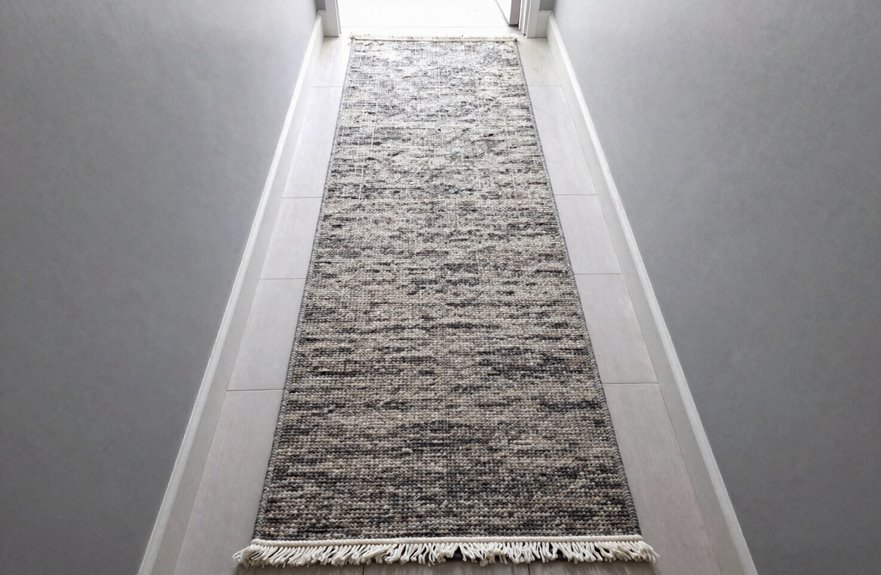
Where exactly should those inches go, and why does a runner that looks perfect in the store somehow turn my hallway into a bowling alley? Hallway runner size isn’t guesswork; it’s math with personality.
For narrow halls, you’ll want 26–30 inches wide, leaving that crucial 4–6 inch floor border on each side like a frame for your floors. Wider halls? Stretch to 32–36 inches with 6 inches showing. I once crammed a 36-incher into my 28-inch hall, and it felt like walking a tightrope.
Length guides your steps: 6–10 feet for short corridors, 10–14 for standard ones, 14-plus for those endless ranch-style hallways. Entryways crave centered placement, stopping shy of door swings. That visible floor border creates breathing room and balance, the difference between “installed” and “intentional.” Measure twice to get the sizing right the first time.
How Do You Measure a Hallway for a Runner Rug?
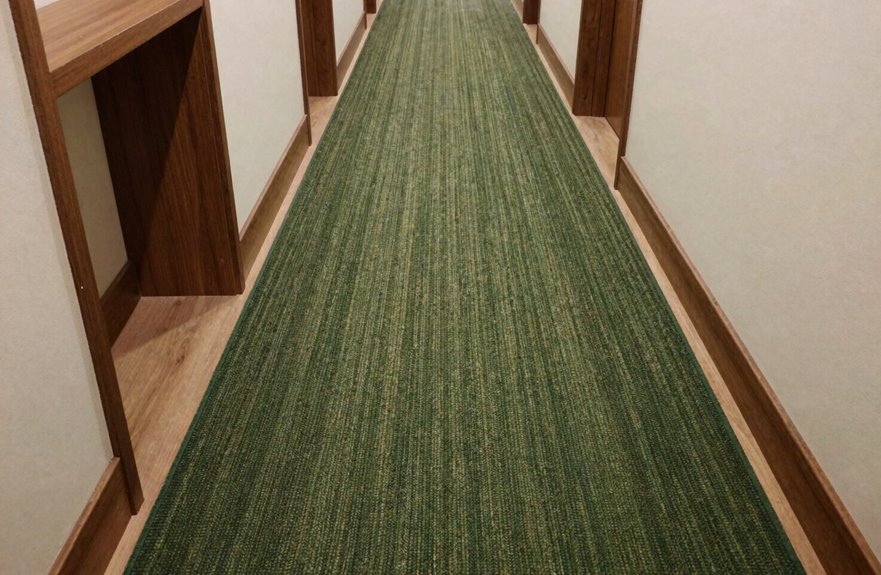
I grab my tape measure with the confidence of someone who’s learned the hard way, because measuring a hallway sounds idiot-proof until you’re staring at a runner that stops three inches shy of your closet door.
First, I measure the full walking path, wall to wall. Then I decode my hallway width like a secret design language: narrow halls love 26–28 inch runners, mid-width spaces crave 28–32 inches, and grand corridors get the 32–36 inch treatment. I always leave 4–6 inches of bare floor on each side for visual balance. Centering is non-negotiable; nothing screams “afterthought” like a lopsided runner. That intentional start-and-stop point transforms your hallway from forgotten passageway to curated gallery. Your feet and eyes will notice the difference.
How Long Should Your Runner Rug Be?
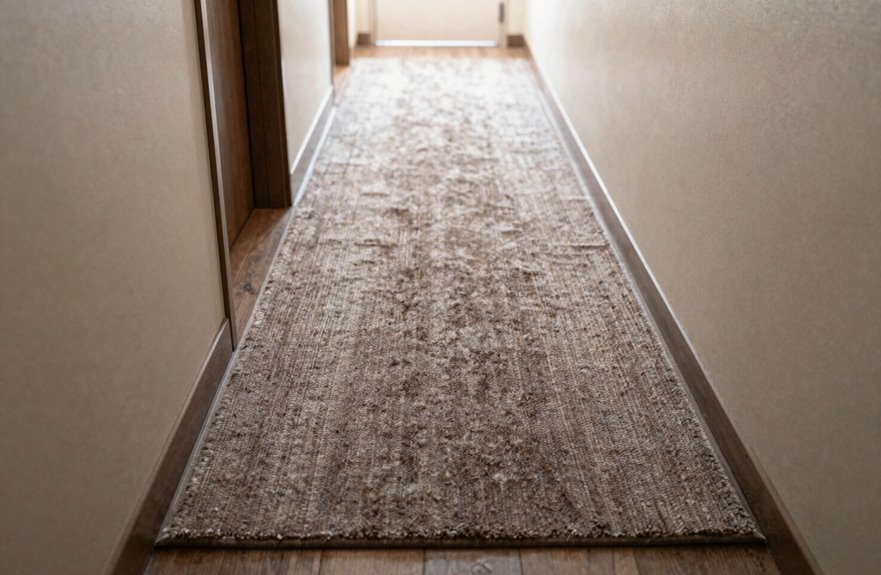
Grab your tape measure first, because nothing kills the vibe like a runner that stops awkwardly mid-hallway. Your hallway’s length dictates everything. You want that sweet spot where the rug anchors the space without turning your walk into a tightrope act. Whether you’re working with a cramped apartment corridor or some grand Victorian stretch, measuring the full walking path lets you see exactly where feet land, where doors swing, and whether you’ll need to hunt down those tricky custom sizes or celebrate finding the perfect fit right off the shelf.
Space-Based Sizing
The hallway stretches before me like a runway I never asked to model on, and suddenly I’m standing there with a tape measure wondering if my runner rug should stop at the door or keep going like it’s chasing something.
Hallway runner width significantly affects the overall appearance and function of the space.
- Narrow halls (3 feet wide): I go with 23 inches, leaving cozy 4–5 inch floor strips, like a frame for your feet.
- Standard halls: 26–28 inches hits that sweet spot, or 28–32 if you’re feeling bold.
- Grand hallways: 32–36 inches balances the space without swallowing it whole.
I always measure my walking path first, then decide how much floor peeks through. 6 inches each side provides a proportionate appearance. You’re the one living there, so your preference should guide the final decision.
Measuring Your Hallway
Once you’ve got width figured out, length is where things get serious, because now you’re committing to how much floor you’re actually covering.
Your hallway width dictates a lot here. Most halls run about 3 feet across, so leaving 4-5 inches of bare floor on each side works well. Wider space. Show more floor, about 6 inches feels balanced. Length follows the same principle: longer halls need longer runners, compact spaces need shorter pieces or accent-runners. L-shaped hallways require custom solutions.
| Hallway Type | My Go-To Length |
|---|---|
| Narrow galley | 6-8 feet, keeps it cozy |
| Wide entryway | 10-14 feet, drama! |
| T-shaped junction | Custom, because math |
| Stair landing combo | Two runners, linked |
How Wide Should Your Runner Rug Be?

How wide should your runner rug be? Width makes or breaks that pulled-together feeling we’re all chasing.
Here’s my tried-and-true approach:
- Measure your hallway first. Grab your tape measure, because guessing leads to that awkward wall-to-wall mistake nobody wants.
- Match width to your space. Narrow halls (around 3 feet) love a 23-inch runner, medium halls want 28–32 inches, and grander spaces can handle 32–36 inches beautifully.
- Aim for that framed look. Always leave 4–6 inches of floor showing on each side. It creates this gorgeous, deliberate border that feels intentional, not accidental.
The width directly influences how centered and rhythmic your hallway feels. When you nail this proportion, your space functions as a cohesive, balanced environment.
How Much Floor Should Show Around Your Runner Rug?
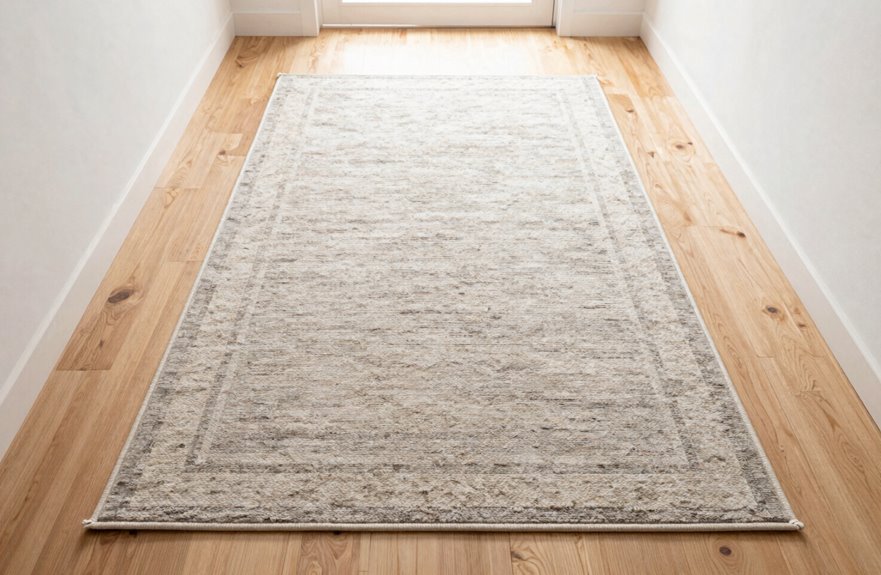
I’ve learned this lesson the hard way. Too much floor showing and your runner looks like a sad little island, too little and you’ve basically installed wall-to-wall carpet with extra steps. Runner size matters here.
In a standard 3-foot hallway, I go with a 23-inch runner. That leaves about 4 to 5 inches of floor on each side, just enough breathing room to frame everything without losing the runner entirely. Wider halls call for wider runners, but stick to roughly 6 inches of exposed floor per side. Proportion determines success.
I always eyeball for consistency, too. Uneven margins make the whole thing feel off-center and rushed, like you measured once and hoped for the best. The goal is that clearly framed look; floor visible, runner celebrated, rhythm established. An intentional hallway reflects careful planning rather than accident.
Why Shouldn’t a Runner Rug Touch the Walls?
Why on earth would you let your runner smooch the walls? That edge-to-edge contact traps your hallway like a forgotten corridor in a budget motel, and you’re better than that. When a runner grazes the baseboards, the space feels instantly smaller, like wearing jeans two sizes too tight.
A runner grazing the walls traps your hallway like a forgotten budget motel corridor—and you’re better than that.
Here’s why we don’t do that:
- It frames your rug like art, not wall-to-wall carpeting nobody asked for
- It creates visual breathing room that actually makes narrow halls feel wider
- It gives you that intentional “I meant to do this” energy guests notice
Center your runner with equal floor showing both sides, and suddenly you’re walking through a space that feels considered and welcoming. You belong in a room designed with intention.
What Runner Size Mistakes Waste Money and Ruin Proportion?
Where do I even start with the runner disasters I’ve witnessed and committed myself? I’ve squeezed a hallway runner size that’s two feet too narrow into a grand entryway, and suddenly the whole space felt timid and apologetic, like it was shrinking from its own walls. I’ve also gone wall-to-wall, edge-to-edge, thinking “more rug equals more luxury.” That approach just looked like I couldn’t commit to real carpet. The worst mistake involves stopping a runner mid-hallway, breaking that gorgeous visual rhythm like a record scratch. Thick shag in tight corridors creates a suffocating effect. In my L-shaped space, mismatched lengths had guests pausing in confusion, uncertain where to walk.
Get your hallway runner size right by leaving breathing room on the sides and aligning it with door frames. This approach transforms the space into somewhere you’ll actually want to spend time.
How Do Pattern and Color Affect Runner Size Perception?
Ever notice how the same hallway runner size can feel totally different just by changing the design? Pattern and color significantly affect how we perceive runner dimensions.
Here’s what actually matters when selecting a runner:
- Bold pattern choices turn narrow halls into visually busy spaces, while subtle geometrics keep eyes moving forward smoothly.
- High-contrast runners pop forward, looking bigger against pale floors, and low-contrast designs blend in and appear smaller.
- Scale matters significantly: huge motifs can overwhelm short corridors, yet expansive halls can absorb tiny repeats without notice.
I once placed oversized florals in my tiny entryway and created a claustrophobic effect. Now I match pattern scale to hallway length like coordinating shoes with an outfit. Measure your space carefully before selecting your runner.