
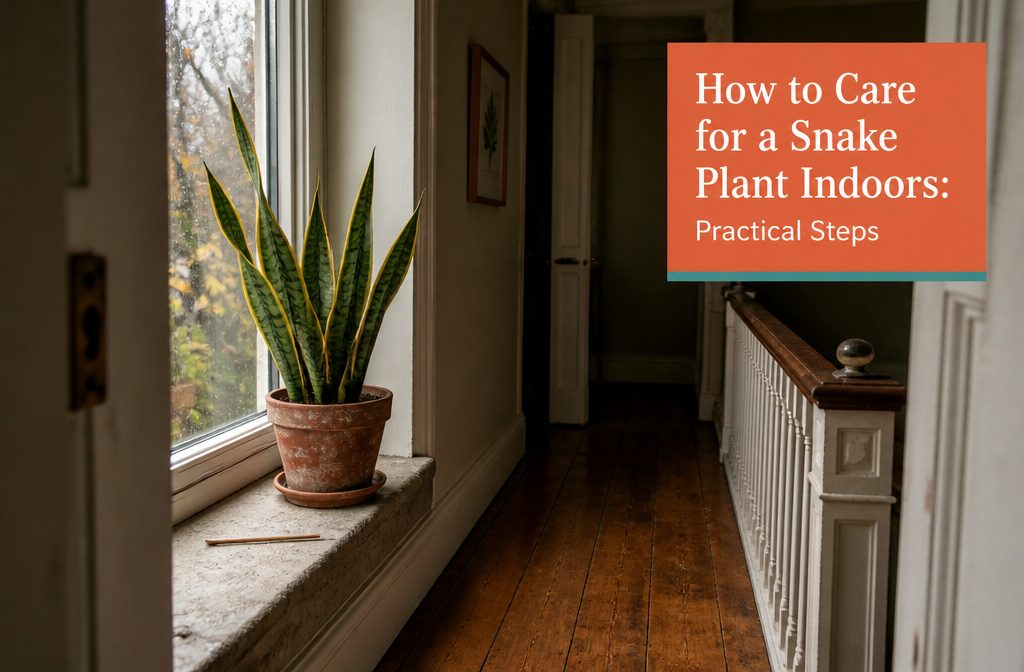
A snake plant stays healthy indoors with watering every two to three weeks during active growth, bright indirect light, and well-draining cactus or succulent mix.
Most failures trace to overwatering, which causes root rot faster than any other mistake. Let the soil dry completely between waterings by checking three or four inches down with a finger or skewer before you add water.
1. Light: Bright Indirect Wins, But Lower Light Works
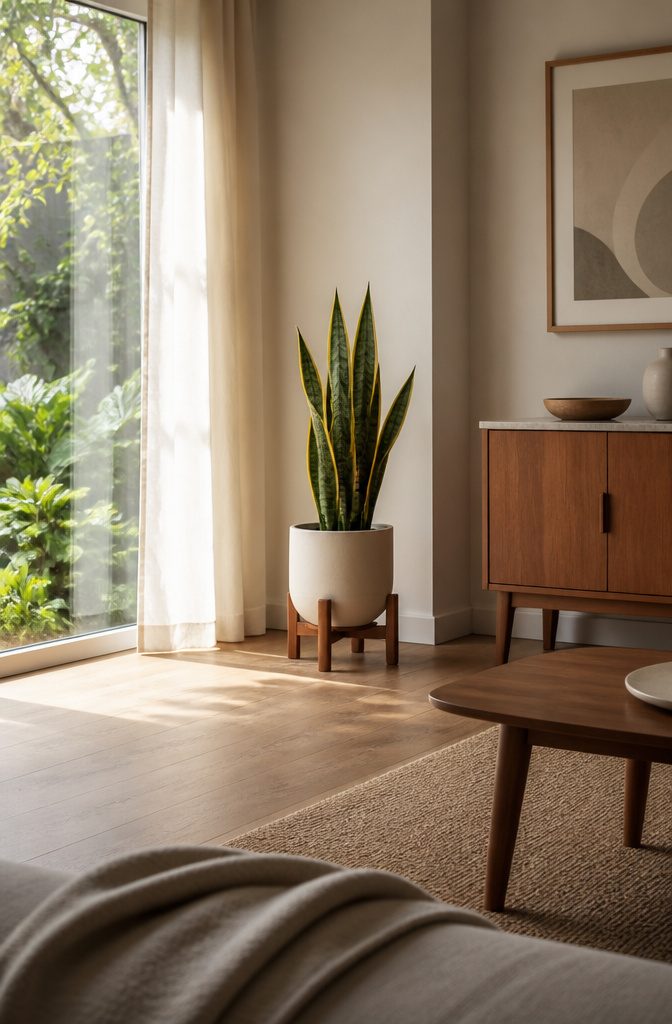
Bright, indirect light is where a snake plant looks its best.
Set it near a window where natural light reaches the foliage without hours of intense sun hitting the leaves directly, and it will grow steadily and hold the sharpest contrast in its variegation.
Six to eight hours a day keeps growth active and pattern vivid.
Lower light still works. The plant tolerates dim corners and offices better than most houseplants, but tolerance means survival, not thriving.
Growth slows in lower light, and variegated varieties often lose some of their pattern intensity or fade toward uniform green. If your snake plant sits unchanged for months or leans hard toward the nearest window, brighter placement will fix both.
Direct sun can scorch leaves, especially if the plant has been sitting in shade and you move it abruptly into strong afternoon light.
A sudden shift burns foliage that has not acclimated. If you need to move a snake plant from low light to a brighter spot, make the transition gradual so the leaves adjust without damage.
2. Watering: Let the Soil Dry Before You Water Again
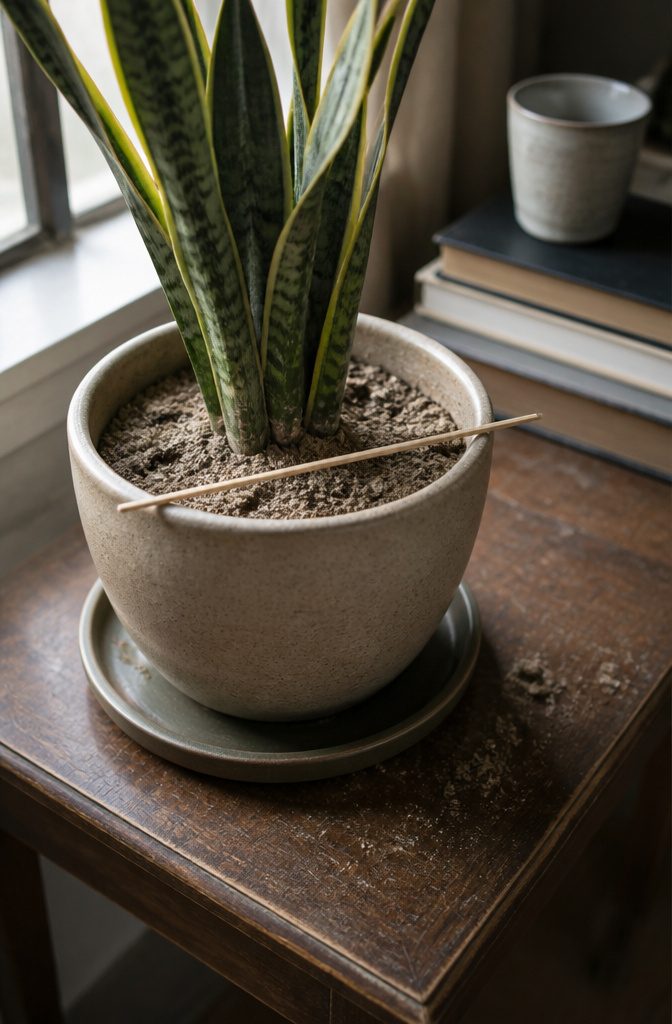
Watering: Let the Soil Dry Before You Water Again
The first thing to get right with a snake plant is letting the soil dry substantially between waterings.
These plants evolved in arid West African rockscapes, storing moisture in thick leaves and rhizomes, so they tolerate a missed watering far better than sitting in wet potting mix.
Check moisture level by pushing your finger, a chopstick or a bamboo skewer three or four inches down into the soil.
If it comes out clean and dry, water. If it emerges damp or darkened, wait.
Snake plants are succulent divas—they love to be neglected a bit. So you only need to water them about once every three to four weeks.
That matches what I see across the board: watering every two to three weeks during the growing season, stretching to monthly or longer in winter. One source uses 300 ml as a baseline measure.
When you do water, soak the soil completely until excess runs from the drainage holes, then empty the saucer or decorative outer pot promptly. Standing water in the bottom invites root rot, the most common way these plants fail.
3. Soil, Pot and Drainage: Well-Draining Mix in a Container With Holes
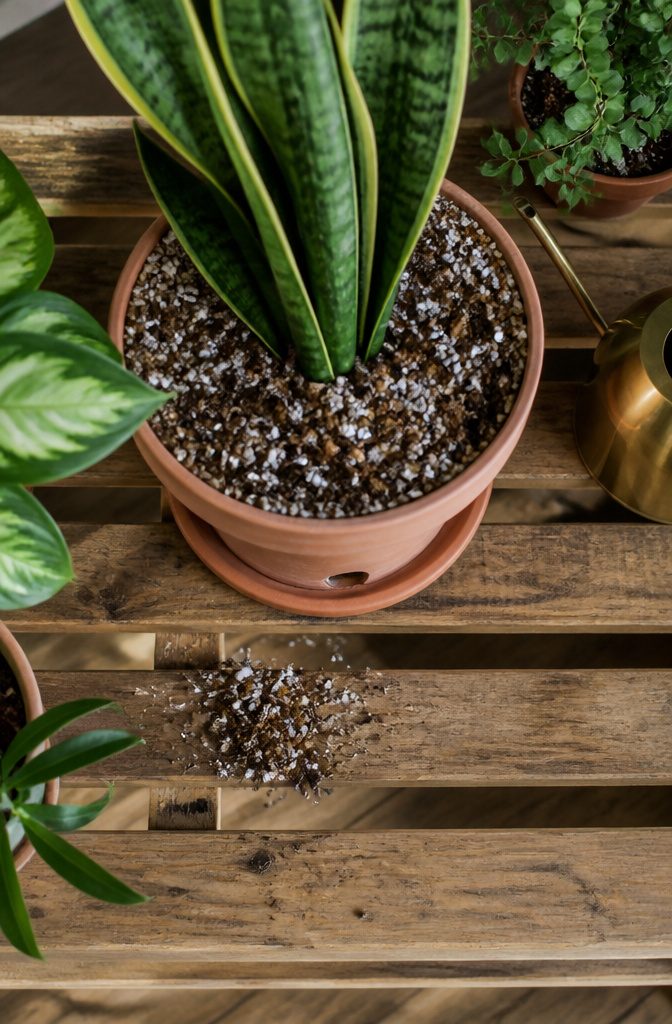
Soil, Pot and Drainage: Well-Draining Mix in a Container With Holes
A loose, well-draining potting mix is what snake plants need most. Cactus or succulent mix is the shared choice across growers, and it works because it sheds water quickly.
If you’d rather mix your own, combine one part perlite with three parts houseplant potting mix. Peat, perlite, coir and coarse sand all show up in working recipes.
Whatever you use, avoid pressing it down hard around the roots. Compacted mix holds water longer and cuts off air from the root zone.
The container matters as much as the mix.
Choose one with drainage holes so excess water can leave after watering. If the grower pot sits inside a decorative container, lift it out and dump any standing water before you put the plant back.
Sitting water is the shortest path to root rot, and root rot kills snake plants faster than anything else. Terracotta pots wick moisture from the soil, which gives you a margin if you tend to water generously.
4. Temperature and Humidity: Household Conditions Are Fine
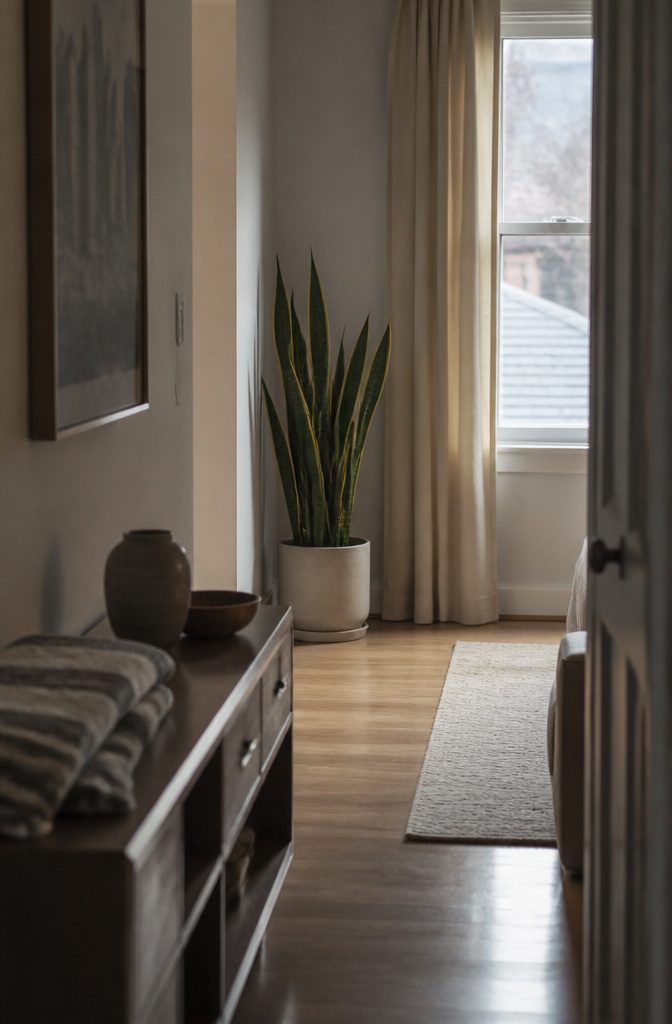
Snake plants put up with temperatures between 60–90°F and handle the 30–60% humidity range found in most homes, which makes them easy to keep happy without adjusting much of anything.
The preferred band runs 65–85°F, but they tolerate the wider spread without complaint. You won’t need a humidifier, a pebble tray, or grouped plants pushing moisture into the air.
What they won’t forgive is prolonged cold. Below 50°F can kill the plant, and anything under 60°F for more than a short stretch risks blackened foliage, cracked leaves, or wrinkled tissue.
In winter, I keep mine away from drafty windows and exterior doors, and I make sure no plant sits where a heating vent blasts hot air directly at it or where an air conditioner runs cold.
Large swings between hot and cold stress the plant even if both ends stay inside the safe range, so stable beats variable.
5. Fertilizing: Modest Feeding During Active Growth
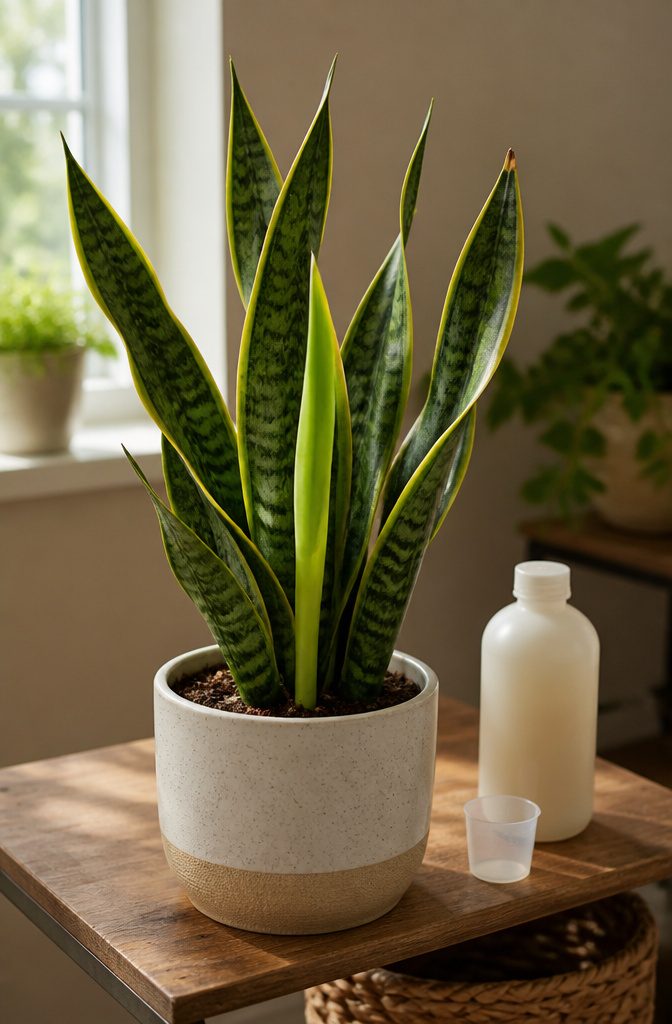
Snake plants need little fertilizer, which makes them easy to keep on track. A balanced liquid fertilizer diluted to half strength at the beginning of spring and again in the middle of summer covers the growing season without overfeeding.
If you brought the plant home recently, wait six months before you start feeding, then use a generic houseplant fertilizer every couple of months after that.
Feeding during active growth in spring and summer supports new leaves, but winter feeding should stop or be reduced when growth slows.
A snake plant in dormancy is conserving energy, and fertilizer applied during that time does not help and can build up salts in the soil.
Time-release pellets work if you prefer to set it once, but they release regardless of season, so stick with liquid if you want control over when the plant gets fed.
6. Repotting: When Roots Crowd the Container
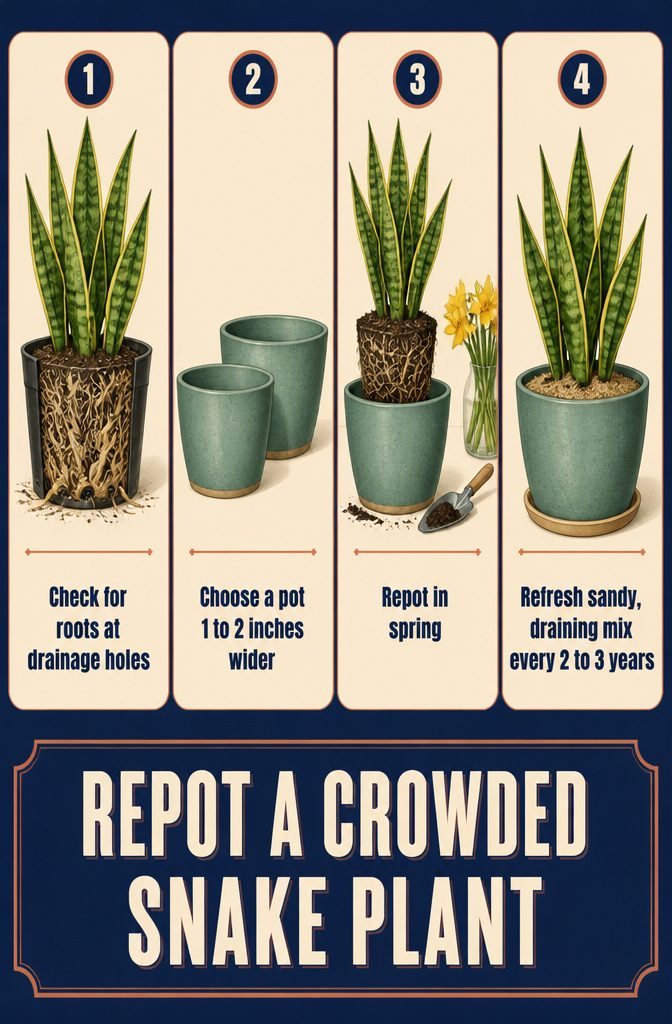
Repotting becomes necessary when roots or rhizomes fill the container so tightly that they push against the sides or grow out through the drainage holes.
Snake plants tolerate being somewhat snug in their pots, but crowded rhizomes can eventually distort plastic containers or leave the plant top-heavy and unstable.
When repotting, I choose a replacement container only 1 to 2 inches wider than the current one.
A much larger pot leaves extra soil around the root system, and that soil takes longer to dry between waterings. The result is roots sitting wet for too long, which raises the risk of rot.
Plants in sandy, well-draining soil typically need repotting every 2 to 3 years. Spring is the best window, when the plant has the energy to recover from any minor damage during the move and adjust to fresh mix.
7. Troubleshooting: What Yellowing, Drooping and Soft Leaves Mean
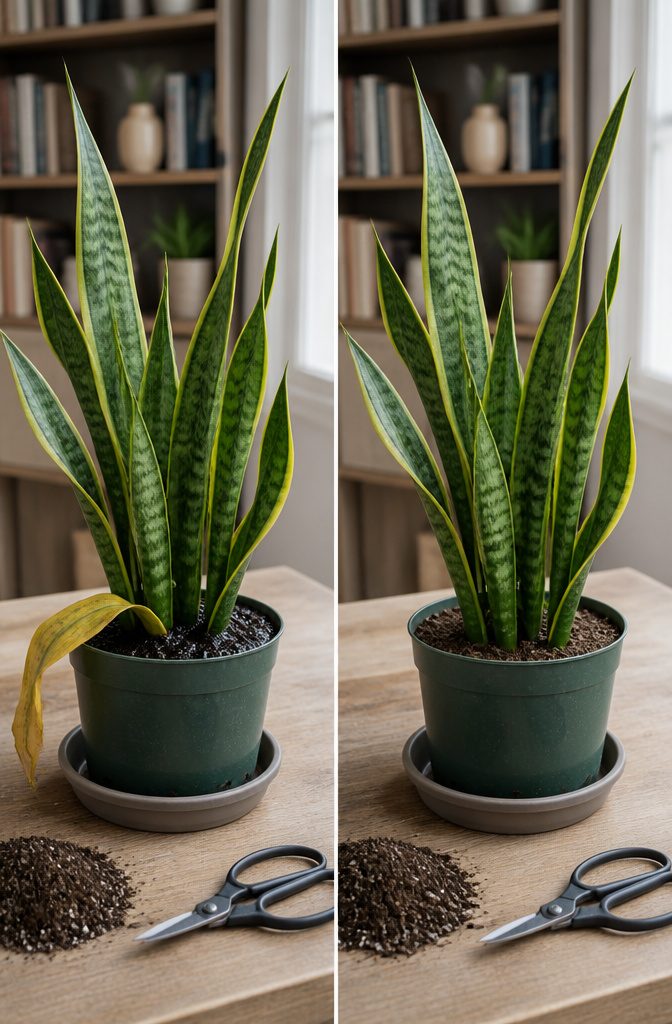
A leaf yellowing without softness may simply be aging, but several at once or a leaf that also feels mushy points to overwatering and possible root rot. Here’s what to check:
- Moisture deep in the pot. Stick a finger two inches down. If it’s still wet days after watering, the soil is staying saturated too long.
- Drainage. Confirm the pot has holes and nothing is blocking them. Check that the plant isn’t sitting in collected water in a saucer or decorative cover.
- The roots themselves. If yellowing continues, unpot the plant and look for soft, brown, or foul-smelling rhizomes instead of firm, light-colored ones. Trim away any damaged sections, repot in fresh cactus or succulent mix, and hold off on water until the soil dries completely.
- Wrinkled or curling leaves. This signals prolonged dryness or roots too damaged to pull moisture up. Check soil moisture through the pot before adding water—a plant with rotted roots can look dehydrated even when wet.
- Faded variegation. Move the plant to brighter indirect light if the patterning dulls.
Temperature swings below 50°F or hot and cold drafts can cause split leaves or brown tips. Adjust placement before the damage spreads.
Pests and Disease: Spider Mites, Mealybugs and Root Rot
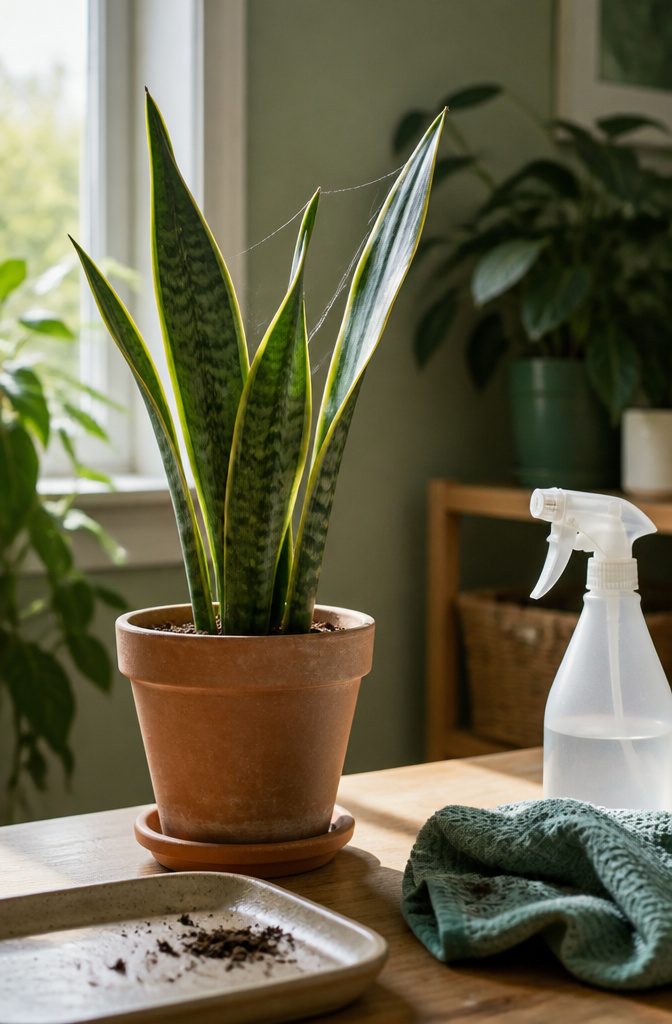
Spider mites, fungus gnats and mealybugs all show up on snake plants when conditions favor them.
Spider mites leave fine webbing and stippling on the leaves, gnats swarm around overly wet soil, and mealybugs look like small white cottony clusters along the leaf joints.
Inspect the plant every few weeks so you catch pests before they spread.
If the soil stays wet too long, let it dry out completely before watering again.
That alone solves most gnat problems. For mites and mealybugs, rinse the leaves under lukewarm water first to knock off the pests, then wipe each leaf with a damp cloth.
Insecticidal soap or horticultural oil finishes the job if rinsing and wiping do not clear them. Neem oil works the same way and doubles as a preventive if pests have been a problem before.
Root rot shows as soft, mushy roots and a foul smell when you pull the plant from its pot. Yellowing leaves and a wilting look despite wet soil are the aboveground signs.
Cut away any rotted roots with clean scissors, let the plant dry for a day, then repot it in fresh, dry soil. Water less often going forward.
Propagation: Division Keeps Variegation, Leaf Cuttings May Not
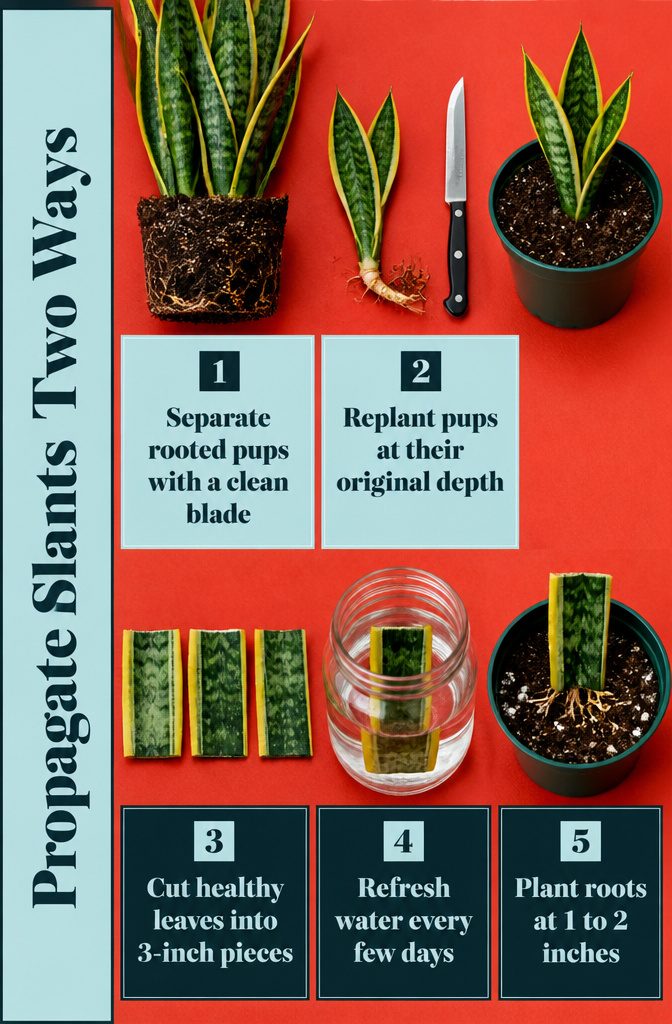
- Divide the plant when it has produced pups with their own roots. Remove the plant from its pot, rinse the soil off the roots, and use a clean, sharp blade to cut the rhizome that connects the pup to the mother plant. Each pup should have an L-shaped rhizome with roots already started. Replant the pup at the same depth it grew before, water it well, and keep it in moderate light while it heals.
- Division preserves the parent plant’s variegation. Leaf cuttings may not. If the yellow, white, or silver pattern matters, stick with division.
- For leaf cuttings, cut a healthy leaf into 3-inch pieces and let the cut surfaces dry for a day until they feel dry rather than moist. Dip the end in rooting hormone, then place the cutting in a jar of clean water near a window.
- Change the water every few days and refill the jar. After two weeks, rinse and refill with fresh water to stop bacterial growth.
- Roots should appear within one to four months. Once they reach 1 to 2 inches long, plant the cutting in soil.
Toxicity and Pets: Keep It Away From Curious Animals
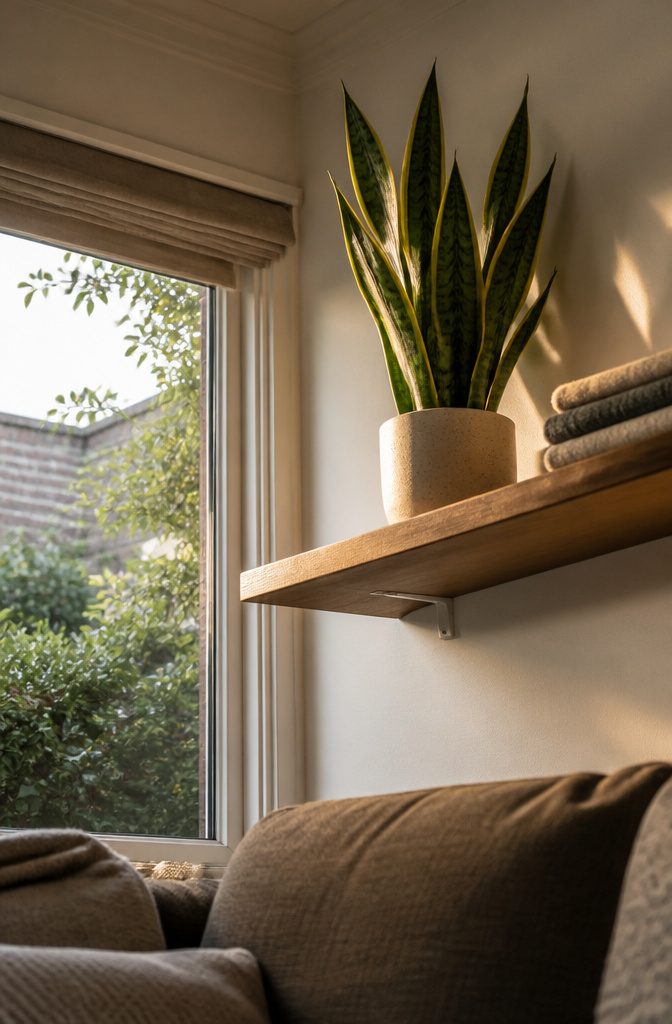
Most sources I read describe snake plants as toxic to pets and people if ingested.
The plant contains saponins, compounds that can cause nausea, vomiting or diarrhea. One source contradicts this and says the plant poses no danger, but the weight of agreement sits on the other side.
I keep mine on a high shelf where the cat cannot reach it. If you have a dog that chews houseplants or a toddler who puts things in their mouth, a floor placement is a bad idea.
The risk is not severe poisoning, but discomfort is still discomfort, and a vet visit or a call to poison control is a weekend ruined.
The disagreement in the literature means I cannot tell you the plant is perfectly safe, and I cannot tell you it will definitely make someone sick.
What I can say is that most of what I found treats it as a plant to keep away from curious animals and small children, and that is what I do.
Plant Names and Varieties: Sansevieria or Dracaena, Plus Named Cultivars
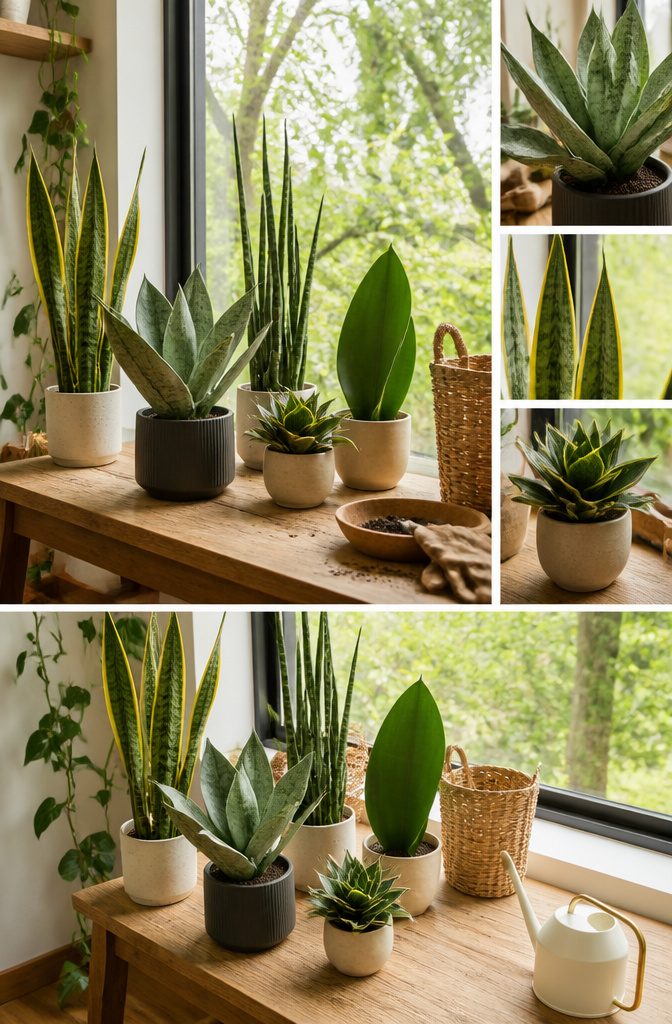
The plant sold as snake plant has been called Sansevieria trifasciata for decades, but botanists moved it into the genus Dracaena based on genetic work, so the accepted name is now Dracaena trifasciata.
Tags and care guides still use both. The reclassification did not change how you grow it.
Common names include mother-in-law’s tongue, viper’s bowstring hemp, and African spear plant. More than 70 species exist, and named cultivars differ in height, color, and leaf shape:
- ‘Laurentii’: upright green leaves edged in yellow, grows up to 4 feet tall.
- ‘Moonshine’: broad, silvery-green leaves with a matte finish.
- ‘Hahnii’ (bird’s nest): compact rosette form, stays 6–8 inches tall.
- ‘Golden Hahnii’: similar rosette shape, reaches about 6 inches or up to 8 inches.
- ‘Zeylanica’: upright sword-shaped leaves with deep green variegation, reaches 2–3 feet indoors.
- ‘Black Coral’: dark green and silvery-gray banding on tall, upright leaves.
- ‘Boncel’: compact fan of fat, pointed leaves.
- ‘Whale Fin’ (Dracaena masoniana): single broad leaf shaped like a whale’s fin.
- ‘Fernwood Punk’: slim, cylindrical leaves in a spiky form.
Frequently Asked Questions
How much sunlight does a snake plant need?
Bright, indirect light for 6 to 8 hours daily produces the best growth and keeps variegation sharp. The plant tolerates lower light but grows more slowly and may fade toward uniform green in dim spots.
How often should you water a snake plant?
Water every 2 to 3 weeks during the growing season, stretching to monthly or longer in winter.
Check that the soil has dried 3 to 4 inches down before watering again, since these plants store moisture and tolerate missed waterings better than sitting in wet mix.
What kind of soil does a snake plant need?
Use a loose, well-draining cactus or succulent mix. If mixing your own, combine 1 part perlite with 3 parts houseplant potting mix to shed water quickly and keep air moving through the root zone.
Does a snake plant need fertilizer?
Feed with balanced liquid fertilizer diluted to half strength at the beginning of spring and again in midsummer.
Skip or reduce feeding in winter when growth slows, since dormant plants do not use the nutrients and excess salts can build up in the soil.
How often does a snake plant need to be repotted?
Repot every 2 to 3 years when roots or rhizomes crowd the container so tightly they push against the sides or grow out through drainage holes.
Choose a replacement pot only 1 to 2 inches wider than the current one so extra soil does not stay wet too long around the roots.
Can you propagate a snake plant?
Divide the plant when it produces pups with their own roots to preserve variegation.
For leaf cuttings, cut a healthy leaf into 3-inch pieces, let them dry for a day, then place in water until roots reach 1 to 2 inches long before planting in soil.
Can snake plants live outside?
Snake plants can survive outdoors year-round in hardiness zones 9 through 12. In colder climates, grow them indoors since prolonged exposure below 50°F can kill the plant.
Why is my snake plant drooping?
Drooping usually signals overwatering and possible root rot, but it can also result from low light, root crowding, temperature stress, or pests. Check soil moisture deep in the pot and inspect the roots for soft, brown, or foul-smelling sections.
Do snake plants flower?
Some varieties produce white, green, or yellow flowers in spring or summer, though flowering indoors is rare. Getting the growing conditions right increases the chances of seeing blooms.