
Styling a deck spans everything from a $2 thrift-store tiki torch to a multi-thousand-dollar pergola, and the right place to start depends on what works least about the space right now.
A deck that bakes in afternoon sun needs shade before it needs seating, and one that reads as builder-basic often wants architectural detail more than another chair.
The fix that makes the biggest difference costs less than you expect.
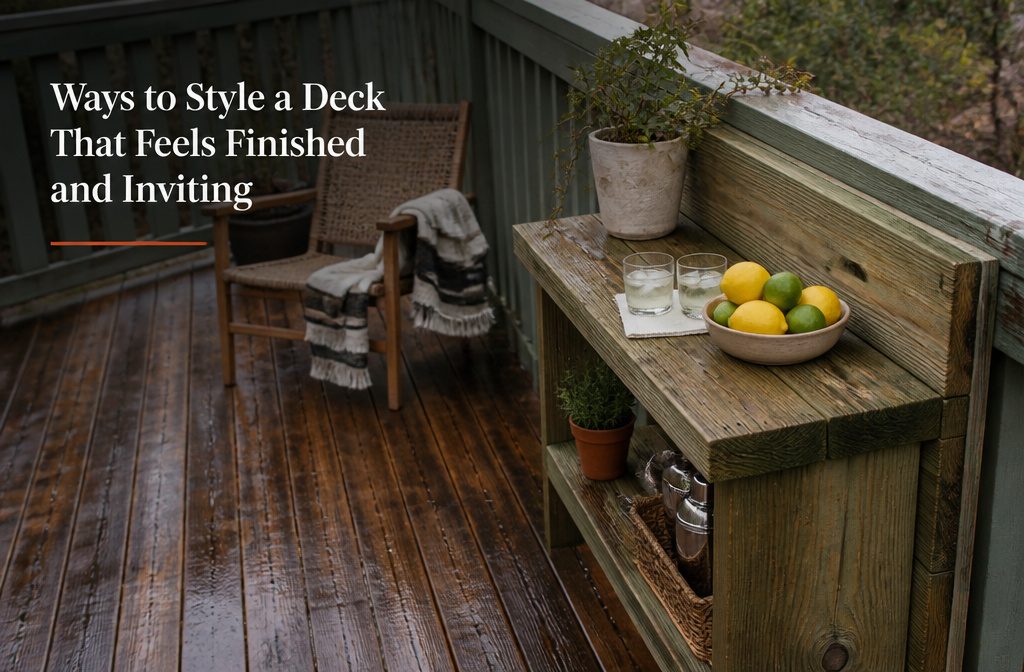
One builder pulled together an outdoor drink station for under $40 using three treated 2×10s and scrap backing, turning a blank stretch of railing into a gathering spot without claiming floor space.
1. Clean, Stain, or Paint the Deck Surface
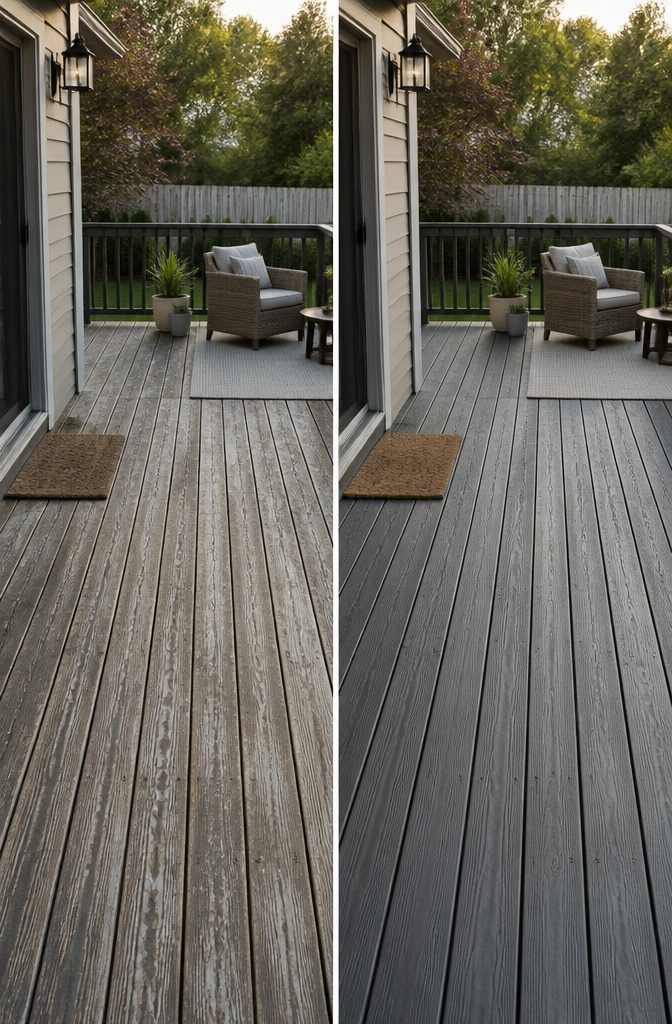
A deck that looks weathered or dusty reads as neglected before anyone even steps onto it.
Cleaning the surface lifts that first impression immediately, and if the boards have gone five years without attention, the difference is dramatic enough that paying someone around $100 to handle it makes sense.
Staining or painting after cleaning takes the refresh further, turning bare wood or faded finish into a deliberate backdrop for everything else you add.
Stain protects and changes the tone at once. Modern deck stains run from classic wood browns through cool grays to bolder colors, and many include a built-in sealer that saves a second step.
Paint works the same way on wood or concrete, and stencils let you layer pattern onto a painted concrete slab without cutting or building anything.
The color you choose here sets the palette for cushions, planters, and rugs, so I’d settle on that scheme before opening the first can.
2. Choose a Color Palette or Design Theme

Choosing a color palette before you buy anything keeps the deck from turning into a disconnected pile of furniture. Start with something you already love—a rug, a pillow, the color of the siding—and pull the rest from there.
If the deck sits next to the back door, let your interior style carry outside so the transition feels intentional rather than like you stepped into someone else’s yard.
The landscape works just as well.
I look at what’s already growing near the deck and pick up those colors in textiles and planters. A simple palette—three colors, maybe four—makes every piece feel like it belongs, even when you add things over time.
Skip this step and you end up second-guessing every purchase, wondering if the new chair works with the cushions you bought last month.
3. Create Activity Zones and Arrange Furniture

I divide the deck by how we actually use it — dining near the house, lounging where the view is best, cooking within a few steps of the kitchen door.
A rug marks each zone without building anything permanent, and furniture groupings do the rest of the work.
I place the largest pieces first.
The dining table goes close enough to the door that carrying plates feels easy. The seating area faces whatever the deck looks out on — a yard, a garden, the street if that is all there is.
On a 300-square-foot deck, one conversation grouping and a small dining setup fit comfortably and seat eight people. A 600-square-foot deck holds both and leaves room for a grill or a fire pit.
I center the rug under the main seating, then set the couch with its front legs on the rug. Chairs go at angles to the couch, and a coffee table sits in the middle.
The rug ties the pieces together instead of letting them float. Without it, the furniture reads as scattered rather than deliberate.
4. Add Seating and Outdoor Furniture

Furniture makes the deck work, and the first move is choosing pieces that fit how you plan to use the space and the number of people you want to accommodate.
I placed a sofa, two chairs, and a coffee table as the foundation of a conversation area—the Fulton Ridge 5-piece set from Lowe’s, with the sofa measuring 90 inches wide × 31 inches deep × 29 inches high, seats eight comfortably when you include a pouf and an extra wicker chair.
I picked low-backed furniture deliberately to keep the lake view clear from inside, since the window wall sits at two feet and anything much taller would block the sight line.
Position the pieces around what you want to look at. I centered the sofa on the picture window, set the chairs at angles to form the grouping, and pulled in dining chairs when more seating was needed.
For a deck focused on meals, an outdoor dining table and weather-resistant chairs in teak or aluminum define that zone instead, with a rug underneath to anchor the setup.
5. Use Outdoor Rugs and Textiles
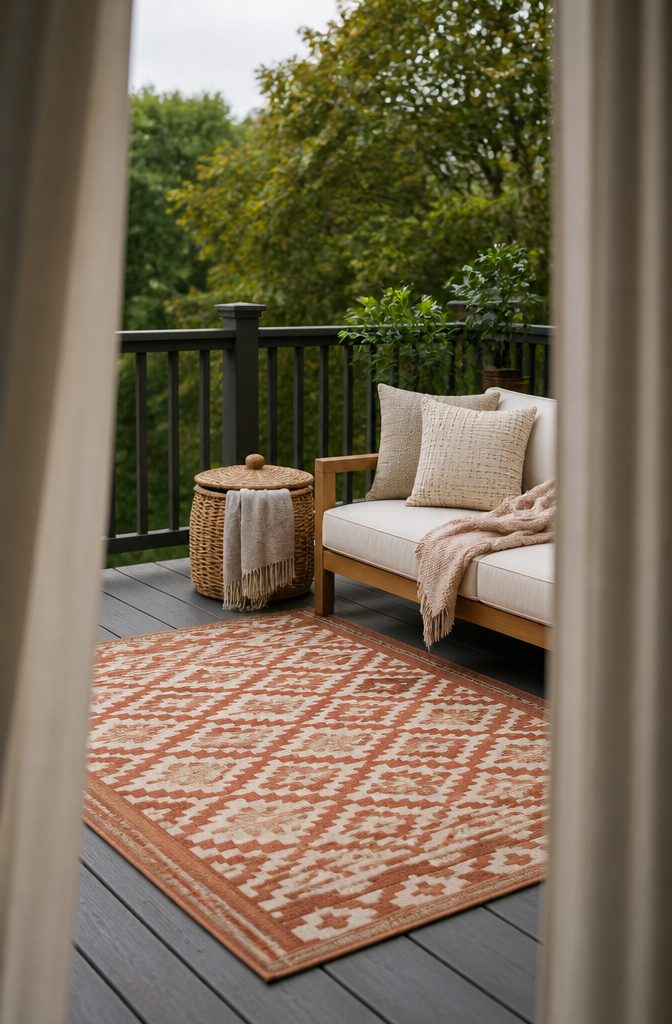
An outdoor rug grounds the seating area and makes the deck read as an actual room instead of furniture sitting on boards.
Look for polypropylene or other synthetic materials — they shed water fast, resist mold, and hose clean without much fuss.
Skip jute or cotton; both soak up moisture and break down outdoors. A flat weave lets water drain through instead of pooling under the rug.
Color and pattern do more work than you’d think. A bold rug becomes the anchor for the space, especially on a multi-level deck where you want to separate zones visually.
I matched mine to the furniture palette so the whole arrangement felt deliberate, not like I bought what was on sale and hoped it worked.
Pillows, throws and outdoor curtains layer in texture and privacy without the cost of building anything permanent.
Light-colored cushions stay cooler in afternoon sun than dark ones, and they show less weather staining. A basket of throws near the seating handles cool evenings and keeps mosquitoes off your legs.
Outdoor curtains soften the edges and block sightlines from neighbors — cheaper and faster than a privacy wall, and you can pull them back when you want the view.
6. Add Plants, Flowers, or Greenery

Plants soften a deck and pull it into the yard in a way few other additions can match.
Flowers in pots add color, greenery adds structure, and trailing vines cascade over the edges to blur the line between built surface and landscape.
The simplest move is to use some of the same plants from your yard beds in your deck containers so the whole space reads as one composition rather than two separate ideas.
Railing planters bring height without taking floor space. They sit at eye level, which makes the deck feel taller and more layered than ground pots alone.
Some years flowers that cascade down the front work well; other years upright blooms or herbs do the job. Citronella and rosemary are worth considering if you rub the leaves to release their smell.
Hanging planters help when floor space is tight, and a vertical garden on a blank wall turns it into something живое. Group containers in odd numbers and vary the heights for a look that feels full without crowding the deck.
Sleek minimalist planters suit a modern setup; terracotta or aged ceramic fits a rustier direction. Tall plants can double as privacy screens along one edge.
7. Add Lighting for Atmosphere and Evening Use

Lighting decides whether a deck stops being useful the moment the sun goes down.
String lights are the simplest entry point — wrap them around railings, drape them from a pergola beam, or loop them along the edge of a roof overhang for instant warmth.
Solar-powered versions skip the outlet hunt and cost nothing to run after the initial purchase.
Lanterns and candles layer in softer light at table height, though real candles melt in direct sun and need watching on windy nights.
Battery-operated candles inside jars sidestep both problems. For path safety and a subtle glow that doesn’t glare into seating areas, solar lamps or recessed riser lights along stairs handle wayfinding without overhead fixtures.
Tiki torches run about $3 new — $2 at a thrift store — and add height around the perimeter, though they’re mosquito magnets in some regions.
A statement fixture hung from a pergola or porch ceiling anchors a dining or seating zone in a way string lights alone can’t.
Go larger than feels safe; size that looks bold in your hand reads right from ten feet away.
8. Add Shade or Shelter
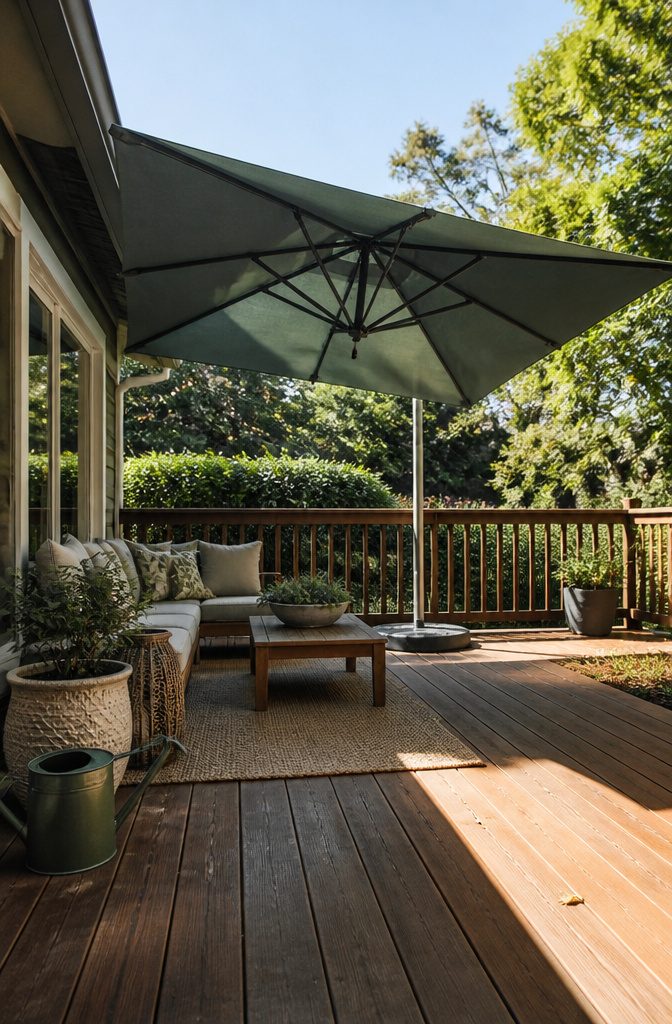
A deck that bakes in afternoon sun or gets soaked in a drizzle empties out fast.
The fix is overhead coverage, and the options span a $50 umbrella to a built-in pergola depending on how permanent you want the shade and how much structure you want overhead.
An umbrella works when you need something mobile and cheap.
Tilt it through the day, fold it down when a storm rolls in, move it to follow the seating. A canopy or retractable awning covers more ground and lets you pull shade on demand.
Trex makes a manually retractable metallic grey canopy that blends into the tree line without fighting it, and a retractable awning keeps the option to let sun through when the weather cooperates.
A pergola adds architecture along with the shade. The Trex Balance pergola anchors a full outdoor room, and the Better Homes & Gardens Meritmoor Aluminum Steel Pergola holds up to weather while defining the space underneath.
Pergolas frame the deck even when the canopy is rolled back, which an umbrella never does.
9. Add Privacy Screens or Dividers

Privacy wraps a deck in function the way a rug does inside.
A screen, lattice, or curtain changes how a deck reads spatially: less porch, more room, and you stop tracking the neighbor’s kitchen window when you sit down with coffee.
A lattice panel or trellis does double work if you plant a climber against it. The crisscrossed wood gives you pattern and partial screening right away, then clematis or beans fill in the gaps by July.
For full coverage without plants, a purpose-built privacy screen blocks sightlines completely and can anchor a lounge area or separate a hot tub from the dining table.
I prefer that division to a wide-open layout, since it gives each zone a back wall and makes the whole deck feel more intentional.
Outdoor curtains soften the vertical plane in a way that wood does not.
Repurposed drop cloths or sale outdoor fabric hung from a rod or cable creates privacy you can pull back when you want it, and the fabric reads warmer than a solid partition.
If you want structure that looks built-in, deck boards turned on edge make a privacy wall that matches the floor, particularly in a rich stain that ties the enclosure to the surface.
10. Add Architectural or Decorative Features
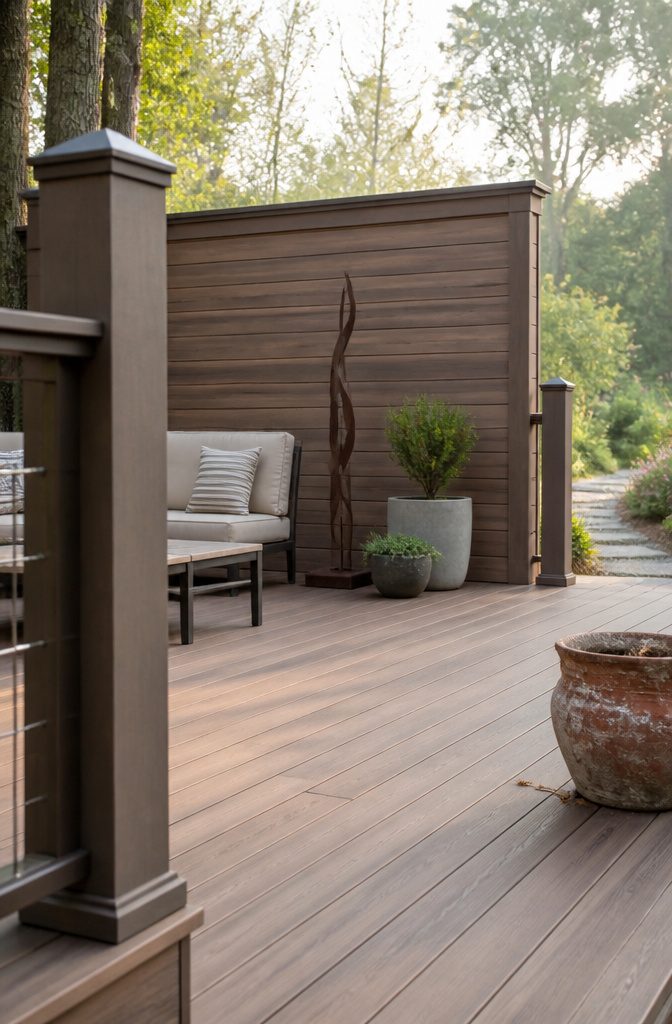
If the deck still reads as builder-basic no matter how much seating or greenery you add, architectural details can give it the finished look furniture alone does not supply.
A few structural touches change the profile of the space and signal that someone thought about it beyond arranging chairs.
Wrapping the top or bottom of posts with trim adds substance without cutting into usable square footage. Lattice panels at one or both ends create privacy and a backdrop for planters.
Decorative post caps come in a range of styles, and some include solar lighting for evenings. A feature wall built from the same material as the decking boards segments the space visually and anchors a seating zone or dining area.
Wall art and sculptural pieces work outdoors as well as they do inside.
Mirrors catch light and make a small deck feel larger. Statuary planters, hanging bird cages filled with succulents, and steel or wood carvings add personality without requiring permanent installation.
Thrift stores and Facebook Marketplace turn up vintage pots and seasonal pieces that refresh the look inexpensively, and there is no reason to limit yourself to items marketed for outdoor use if the deck is covered.
11. Add Storage or Multipurpose Furniture

Multipurpose furniture keeps gear out of sight without giving up floor space.
A storage bench lets you stash cushions, garden gloves, or kids’ toys inside while serving as extra seating when friends come over. Deck boxes work the same way.
Drop a cushion or a few pillows on top and guests sit without realizing they’re on a storage container. Both come in enough styles and colors that you can match what’s already out there.
On a smaller deck, pieces that do double duty make the difference between a space that feels open and one that reads as cluttered.
A bench with built-in storage gives you seating and a home for outdoor gear in a single footprint. The same goes for an ottoman that opens to hold blankets, pool supplies, or grilling tools.
Home improvement stores carry affordable options, or you can build a basic storage chest yourself and add a weather-resistant cushion on top for a custom solution at a fraction of the cost.
12. Create a Fire Feature or Cozy Gathering Point

A fire pit or fire bowl turns a deck into the kind of place people linger after dinner. The warmth matters on cool nights, but so does the way everyone turns their chairs toward the glow.
I’d choose a portable fire bowl over a built-in pit on most decks — you can move it when you need the space back, and it costs a fraction of what masonry runs.
Wood-burning fire pits look right, but they throw sparks, and a wayward spark on a wood or composite deck causes real problems. An electric fire pit or fire bowl solves that without looking like a compromise.
A chiminea is another option that contains the flame better than an open pit, though it still puts out enough heat to keep a small group comfortable for an hour or two on a weeknight.
If the deck is small, a tabletop fire bowl gives you the atmosphere without claiming floor space a full pit would take.
Place it on a low table between chairs, and it becomes the anchor for that corner without boxing you into a permanent layout.
13. Create a Dining, Cooking, or Drink-Serving Area
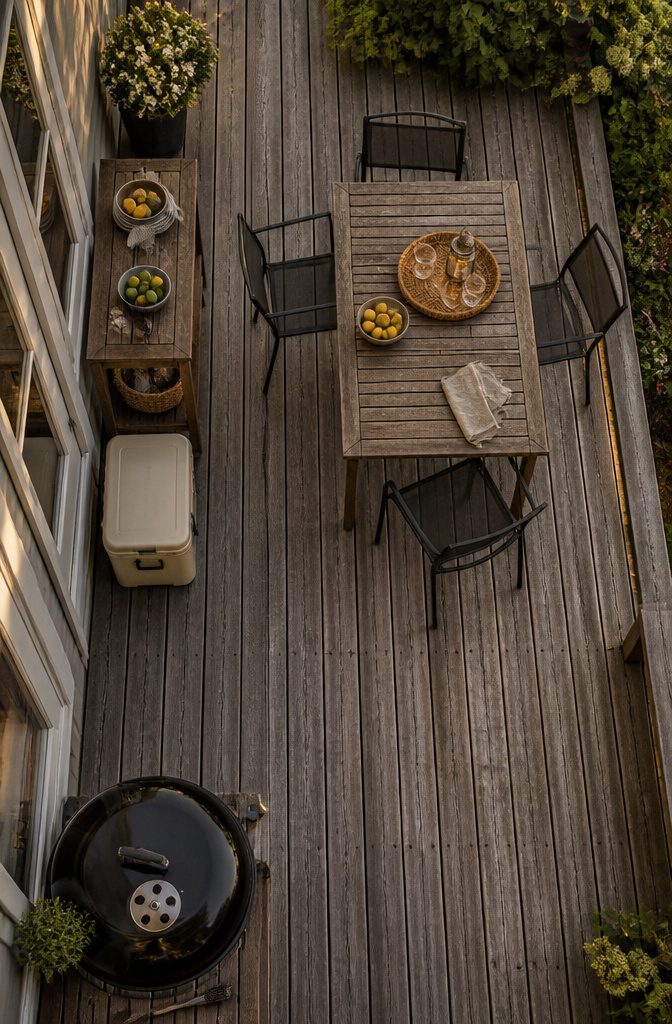
Setting up a place to eat, cook or pour drinks makes a deck feel less like a passthrough and more like a room you actually use.
An outdoor dining table and chairs anchor the space if meals happen there, and a grill or portable cart nearby keeps cooking within reach rather than splitting it between two ends of the yard.
For something smaller, a bar cart or beverage station works on a tighter budget and a smaller footprint.
One builder put together an outdoor drink station using three treated 2×10s at 14 feet and scrap backing, then added seating for under $40 total. The setup gave guests a place to gather without claiming the whole deck.
Even a narrow console table with a cooler underneath and a tray for glasses turns a blank stretch of railing into a serving spot that clears itself when the season ends.
14. Make the Deck Feel Like an Extension of the Home
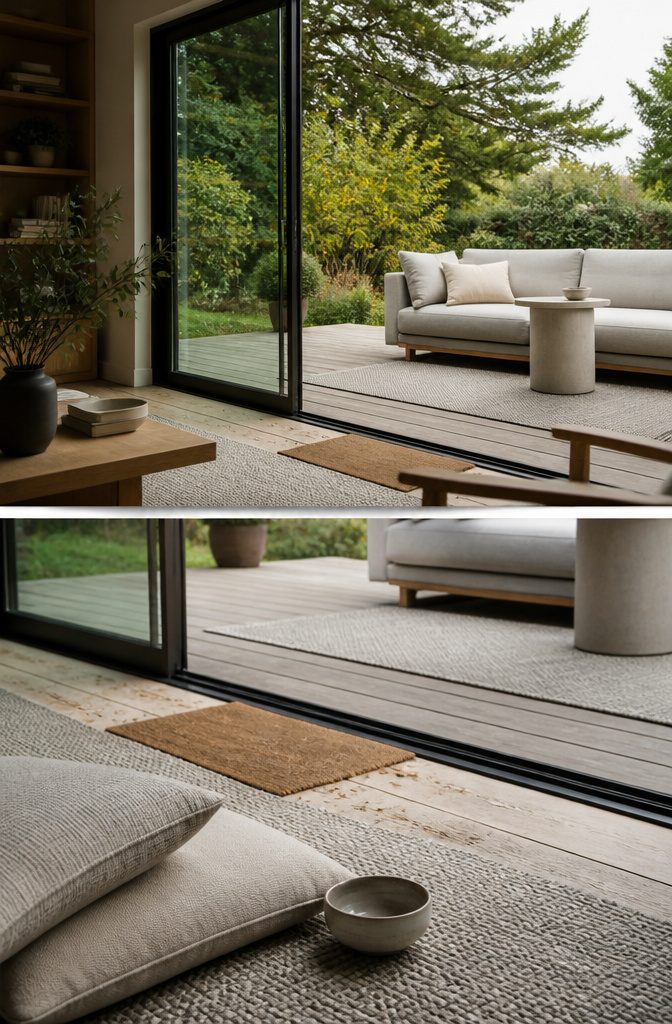
The deck stops feeling like an afterthought the moment it picks up something from the rooms behind it.
I look for one element that can carry through the threshold: a color that matches the interior trim, furniture in the same style family as what sits in the living room, or a rug that echoes the palette inside.
A monochromatic deck in Island Mist gray alongside a home painted in soft grays reads as intentional, not accidental.
The transition matters most at the door. A deck that runs the width of the home and sits just beyond sliding glass doors pulls the two spaces together visually, especially when the furniture layout mirrors what happens inside.
Arranging an outdoor sofa and side table the way you would a second living room signals that the deck belongs to the same house, not to the yard.
15. Add a Distinctive Relaxation or Activity Feature

A reading nook with a comfortable chair and a side table turns an underused corner into the spot everyone gravitates toward. Pair it with a throw blanket and you have a place that actually gets used, not just photographed.
If the deck has posts or a sturdy overhead beam, a hammock or hanging egg chair adds movement and personality in a way fixed seating never will.
Budget-friendly versions are widely available, and a DIY rope-and-dowel hammock costs almost nothing to assemble.
A fountain or small water feature brings the sound of trickling water to the space, which makes evening hours feel more deliberate and less like you’re just sitting outside with nowhere to be.
Many fountains double as visual focal points, so you get both function and form.
An outdoor TV area works if your deck is the place you watch games or stream movies on warm nights, but it locks the layout into one direction and can dominate the space if the screen is large.
Plan for the Deck’s Intended Use First

The choices you make about furniture and layout should follow what you actually plan to do on the deck.
Sources agree on this: start by deciding whether the space needs to handle cooking, dining, lounging with a book, or weekend gatherings, then let those activities guide where furniture goes and how you divide the space.
If grilling and serving are part of the plan, you need counter height near the door and room to move between grill and table without stepping through a conversation.
A fire pit pulls chairs into a tighter circle than a dining setup does. A deck built for movie nights outdoors calls for different sight lines than one meant for coffee at sunrise.
Sun patterns decide comfort as much as furniture does. Walk the deck at the times you intend to use it and note where direct sun falls.
If afternoon heat lands exactly where you hoped to eat dinner, add an umbrella, a canopy, or a pergola before you commit to the layout. Shade keeps the space usable and protects finishes from fading.
Adapt Choices to the Space You Have

Small decks are not a reason to dial back your ideas.
Vertical planters let you add greenery without giving up floor space, and multipurpose furniture like a bench with built-in storage does two jobs at once: seating and a spot to stash cushions or outdoor gear.
I keep the count of items intentional rather than crowding every surface, and a simple color palette holds it all together so the space reads as open instead of cluttered.
Larger decks call for the opposite approach. A rug can separate a lounging zone from a dining area, and placing furniture to frame a view or conversation makes the deck feel organized rather than like everything is floating.
One source created a cozy seating area for less than $40, proof that adapting to the space you have matters more than square footage.
Shop Smart and Build Gradually on a Budget
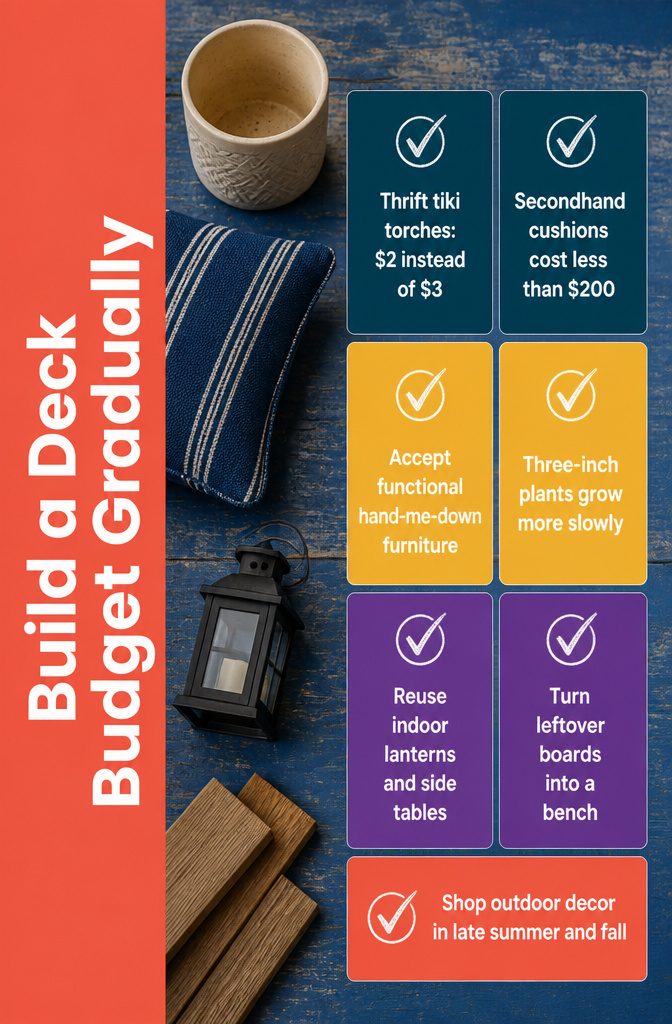
I found ways to build a styled deck without draining the account in one season:
- Shop secondhand first. Thrift stores and garage sales carry outdoor furniture at a fraction of retail — tiki torches that sell new for $3 can turn up at a thrift store for $2, and cushions priced at $200 new often land secondhand for far less.
- Accept hand-me-downs. When someone upgrades their patio set, take the old one. Functional furniture costs nothing if you’re willing to work with what’s available.
- Buy small plants. A three-inch pot grows into the same plant a gallon container holds, just slower. The wait is worth the savings.
- Shop your home. Move indoor pieces that work outside — lanterns, small side tables, decorative objects — and treat the deck as an extension of your living space rather than a separate zone that needs all-new inventory.
- Use leftover deck boards. Scraps from the original build become a simple bench or planter box with basic cuts and screws. Paint or stain them to match, or leave them raw.
- Wait for end-of-season sales. Buy outdoor decor in late summer and fall when retailers clear inventory. Add the essentials now and layer in the extras as the budget allows over the next year or two.
Frequently Asked Questions
How do I make my deck look nicer?
Start by cleaning, staining, or painting the surface to lift the whole appearance before you add anything else.
Then choose a color palette, arrange furniture into zones based on how you’ll use the space, and layer in an outdoor rug, plants, and lighting to make it feel like a finished room.
Add architectural details like post caps, lattice panels, or a feature wall if the deck still reads as builder-basic after furniture and greenery are in place.
What is the best way to decorate a deck?
Decide what you’ll actually do on the deck first, then let those activities guide where furniture goes and how you divide the space.
A deck meant for dining needs the table near the door and counter height for serving; one built for lounging calls for seating aimed at the best view.
Add a rug to anchor each zone, then layer in plants, lighting, and textiles to finish the look.
How do you decorate my deck on a budget?
Shop secondhand first at thrift stores and garage sales, accept hand-me-downs when someone upgrades their patio set, and buy small plants that will grow rather than paying for gallon containers.
Move indoor pieces that work outside, use leftover deck boards to build simple furniture, and wait for end-of-season sales to stock up on the extras.
Add the essentials now and layer in the rest over the next year or two as the budget allows.
What kind of outdoor rug is best for a deck?
Choose polypropylene or another synthetic material designed to handle moisture and UV exposure. These rugs shed water fast, resist mold, and hose clean without much fuss.
Avoid jute or cotton, since both soak up moisture and break down outdoors, and look for a flat weave that lets water drain through instead of pooling under the rug.
What are the deck color trends for 2026?
Warm browns and cool grays are leading, with rich natural browns offering a classic grounded look and gray or driftwood tones suiting modern or coastal homes.
Soft neutrals like greige, taupe, and sandy tones are also gaining traction as versatile options that work across design styles. The trend leans toward treating decks as outdoor living spaces with coordinated lighting, activity zones, and low-maintenance materials.
Should your deck be lighter or darker than your house?
A deck that picks up a color from the home’s exterior trim or siding reads as intentional rather than accidental.
A monochromatic deck in soft grays alongside a home painted in the same palette ties the two spaces together visually, especially when the deck runs the width of the home just beyond sliding glass doors.
Make the deck feel like an extension of the house, not a separate structure that belongs to the yard.